There are movies that make you cry because they practically order you to. Then there are movies that barely raise their voice, leave a tiny detail sitting in the corner of the frame, and somehow wreck you three hours later while you’re brushing your teeth.
Don’t Say Good Luck is very much the second kind.
At first glance, Julia Hart’s 2026 coming-of-age musical drama looks like a familiar high-school story: Sophie Birenbaum is a theater kid, she unexpectedly gets the lead in her school’s production of Waitress, friendships get complicated, and there’s the usual chaos of rehearsals, auditions, teenage embarrassment and parents who seem determined to make everything more awkward.
Except Sophie’s mother, Elizabeth, is sick again.
And suddenly the school musical isn’t really about the school musical.
That’s what I loved about this movie. It doesn’t constantly announce what everyone is feeling. It lets characters avoid conversations, change the subject, lean against a kitchen counter for a second too long, or smile when they clearly want to cry. The result is a movie that becomes more painful the more closely you watch it.
Here are the details that stuck with me most.
The title is doing way more work than it seems
The whole “don’t say good luck” thing could have been nothing more than a cute theater tradition. Instead, the movie turns it into one of its most quietly brutal ideas.
For theater people, “break a leg” is already a strange phrase. But in Sophie and Elizabeth’s world, “good luck” has become almost unbearable.
Why?
Because luck is exactly what their family has stopped trusting.
Elizabeth’s cancer has returned, and there’s something particularly cruel about the randomness of that. You can do everything right and still get the worst possible news. You can be careful, hopeful, positive, organized — and none of it guarantees anything.
So when Elizabeth tells Sophie to say “break a leg,” it feels almost like a rejection of the idea that their lives are controlled by luck.
There’s something defiant about it.
Don’t leave this to chance. We’ll face whatever happens.
That makes the title much sadder once you understand what it represents.
Sophie’s curling-iron accident isn’t just a funny opening gag
This was probably the moment where I realized the movie was going to be playing a different game.
Sophie burns herself with a curling iron shortly after overhearing her father talking about medical results. On a first watch, it’s easy to read the scene as classic teenage chaos: she’s distracted, nervous about the audition, and accidentally hurts herself.
But emotionally, the scene makes perfect sense.
Sophie has just encountered something terrifying that she cannot control or even fully understand.
Then she gets burned.
Suddenly there is a very specific pain with a very specific location. She can look at it. Touch it. Treat it. Put something on it.
Her mother’s illness is the opposite.
It’s invisible.
It’s inside the person Sophie loves most, and there’s nothing she can do about it.
That contrast makes the burn one of the movie’s smartest little pieces of visual storytelling. And when the mark is still visible during the audition, it becomes even more effective. Sophie is literally carrying a fresh wound while performing in front of people who have no idea what is happening inside her family.
Elizabeth never needs a big speech to tell us she’s getting worse
Melanie Lynskey absolutely destroys me in this movie, mostly because she refuses to play Elizabeth as a walking tragedy.
Elizabeth still cooks. She still organizes things. She still deals with the twins. She still helps Sophie get ready.
She is trying to make the household look normal.
And that’s exactly why the physical details hurt.
Watch how often she uses the kitchen counter for support. Notice the way she moves when she thinks nobody is watching. Pay attention to the pauses.
There are moments when Elizabeth appears perfectly fine until you realize she has been standing still for an extra second because she needs to catch her breath.
That’s the kind of performance I find much more devastating than a giant crying scene.
The movie understands something uncomfortable about serious illness: people don’t stop being parents just because they’re sick.
Elizabeth still wants to know about Sophie’s rehearsal. She still wants the boys to behave. She still wants her family to eat dinner.
Her body is failing her, but her instincts as a mother haven’t disappeared.
That contradiction is everywhere.
Ted’s beard might be the most obvious symbol — and somehow it still works
Max Greenfield’s Ted is fascinating because he spends so much of the movie doing things.
Fixing something.
Cleaning something.
Driving somebody somewhere.
Dealing with the twins.
Changing the subject.
Doing anything except sitting still long enough to admit what’s happening.
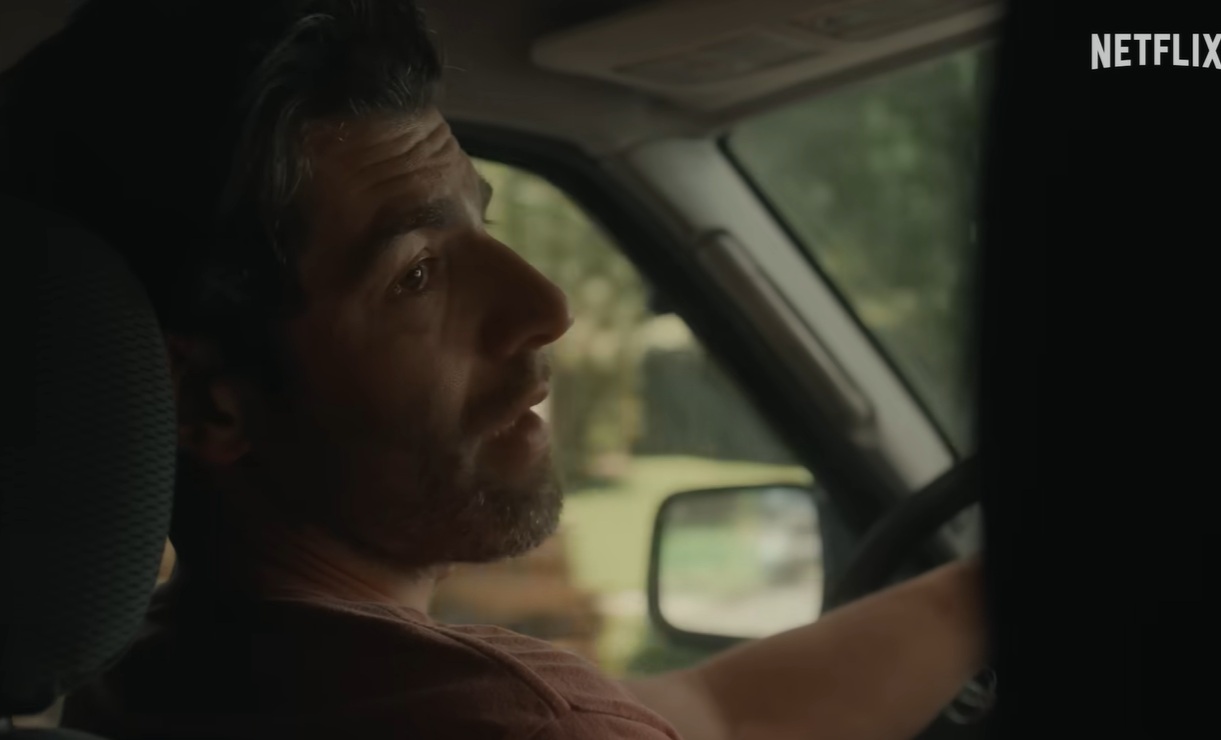
And then there’s the beard.
It almost feels like Ted has physically constructed another layer between himself and everyone else. You can’t always see his mouth or jaw clearly, but you can feel the tension underneath it.
His coping strategy is basically: keep moving and nobody has to say it out loud.
When Sophie tries to talk about Elizabeth’s prognosis, Ted redirects the conversation toward practical problems. Rehearsal schedules. Transportation. School stuff.
At first, that behavior can look frustrating.
Later, it becomes heartbreaking.
Because Ted isn’t ignoring the problem.
He knows exactly what the problem is.
He simply doesn’t know how to survive saying it.
Mallory is one of the movie’s best surprises
I went into Mallory expecting the standard “popular theater girl who hates the new lead” storyline.
Thankfully, the movie has much more interesting plans for her.
Her initial reaction to Sophie getting Jenna isn’t exactly warm, but the more we see her, the clearer it becomes that Mallory takes theater seriously. She isn’t simply angry because Sophie stole a spotlight from her. She’s watching someone she thinks may not understand what the role demands.
Then she notices what Sophie is actually carrying.
There’s a rehearsal moment where Sophie gets distracted by a message from her father. Mallory could easily make a scene out of it. Instead, she covers for her.
That tiny decision changes everything.
Mallory realizes that the girl standing beside her isn’t just nervous about a school production.
She’s terrified.
And from that point on, Mallory becomes one of the few people who can give Sophie something her family can’t: a place where Sophie doesn’t have to explain herself.
That friendship ended up being one of my favorite parts of the film.
Why Waitress is such a painful choice for Sophie
Choosing Waitress for the school production is almost unfairly clever.
The musical is already obsessed with motherhood, identity, exhaustion, trapped lives and the desire to become someone other than the person circumstances have forced you to be.
So Sophie playing Jenna creates this strange overlap between fiction and reality.
She isn’t simply performing someone else’s story.
She is discovering pieces of her own.
And then comes “She Used to Be Mine.”
Yeah.
That scene.
The obvious interpretation is that Sophie is singing about Jenna.
But emotionally, the performance feels like she’s singing about Elizabeth too.
And maybe about herself.
Sophie is grieving the version of her mother who existed before cancer became part of the family vocabulary. She’s grieving the version of herself who could worry about ordinary teenage things without everything suddenly feeling temporary.
Meanwhile Elizabeth is sitting in the audience, watching her daughter become someone new.
That makes the number feel less like a showstopper and more like a conversation between mother and daughter that neither of them is brave enough to have directly.
That’s why the scene lands so hard.
The ending understands that grief doesn’t always look like a funeral
This is probably my favorite decision in the entire film.
The movie could have gone for the obvious emotional climax: hospital room, final goodbye, everyone crying, maybe a speech designed to destroy the audience.
Instead, it does something much more intimate.
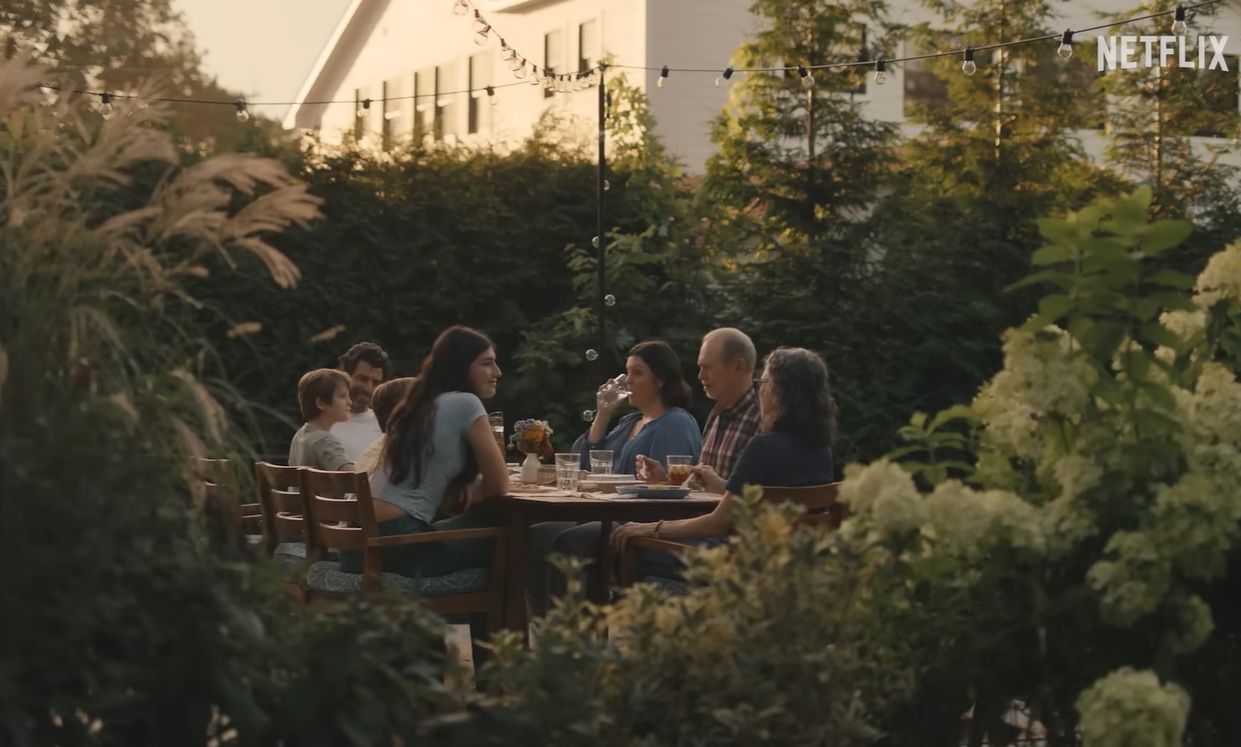
The family’s annual trip to the Crane House can’t happen because Elizabeth is too sick to travel.
So the theater kids bring the Crane House to her.
They build a miniature version in the backyard using old set materials, painted canvas and spare lumber from the Waitress production.
And honestly, I think this is where the movie finally tells us what it has been saying all along.
Theater isn’t just an escape from real life.
Theater is how these characters learn to live with real life.
They can’t cure Elizabeth.
They can’t undo the diagnosis.
They can’t make Sophie’s childhood continue forever.
But they can build something.
They can take scraps from a production and turn them into a place where a family can have one more good day together.
That’s incredibly sad, but it isn’t hopeless.
A few details that make the ending hit harder
| Detail | What it suggests |
|---|---|
| The canceled Crane House trip | The family can no longer pretend everything is normal |
| The old theater materials | Sophie’s two worlds — family and theater — finally merge |
| The miniature house | Memory becomes something physical |
| The entire theater group helping | Grief stops being something Sophie has to carry alone |
| Elizabeth experiencing the backyard “trip” | Love finds a way around physical limitations |
What gets me is how small the gesture is.
Nobody saves the day.
Nobody defeats cancer.
Nobody gives a magical speech that fixes Sophie’s pain.
They just show up.
And sometimes that’s the most meaningful thing another person can do.
The movie’s real subject isn’t cancer
This is where I think some of the discussion around Don’t Say Good Luck misses the point.
Yes, the film is about a family dealing with a mother’s terminal illness.
But I don’t think cancer is actually the heart of the story.
The heart of the story is what happens when you realize an ordinary life isn’t guaranteed to stay ordinary.
Sophie is growing up at exactly the moment when she desperately wants to remain a kid.
She has rehearsals, friends, school drama, crushes and performances.
At the same time, she’s learning that parents aren’t invincible.
That’s an incredibly specific kind of coming-of-age story.
Most teenage movies are about discovering who you are.
Don’t Say Good Luck asks a harder question:
Who do you become when the people who made your childhood feel permanent suddenly don’t seem permanent anymore?
And I think the movie’s answer is Sophie.
Not because she becomes fearless.
She doesn’t.
Not because she learns how to accept everything.
She doesn’t.
She learns how to keep going while carrying something enormous.
That’s different.
Is Don’t Say Good Luck Based on a True Story or a Book? Netflix Movie Reality Explained
The tiny moments are the ones I can’t stop thinking about
After sitting with the movie for a while, these are the details that stayed with me more than the big musical numbers:
- Elizabeth leaning against the counter when she thinks nobody is paying attention.
- Ted finding another practical task whenever emotions get too close.
- Sophie staring at her phone during rehearsal instead of fully being in the scene.
- Mallory quietly covering for her rather than humiliating her.
- The curling-iron burn appearing again after we understand what it represents.
- Elizabeth watching Sophie perform while knowing that Sophie is indirectly singing about her.
- The theater kids turning leftover scenery into something the family desperately needs.
- The film repeatedly choosing ordinary gestures over dramatic speeches.
That’s why I think Don’t Say Good Luck is going to be one of those movies people revisit differently.
The first time, you follow Sophie.
The second time, you watch Elizabeth.
The third time, you’ll probably start watching Ted.
And suddenly that kitchen counter, that beard, that text message, that awkward pause, that stupid little theater superstition — all of it means something else.
That’s the trick the movie pulls off.
It doesn’t hide its emotions.
It simply puts them somewhere you have to look for them.
And when you finally notice them, Don’t Say Good Luck stops feeling like a high-school musical about a girl dealing with a sick parent.
It becomes something much more painful and much more human: a story about people trying to create one more ordinary, beautiful moment when they already know ordinary life is running out.