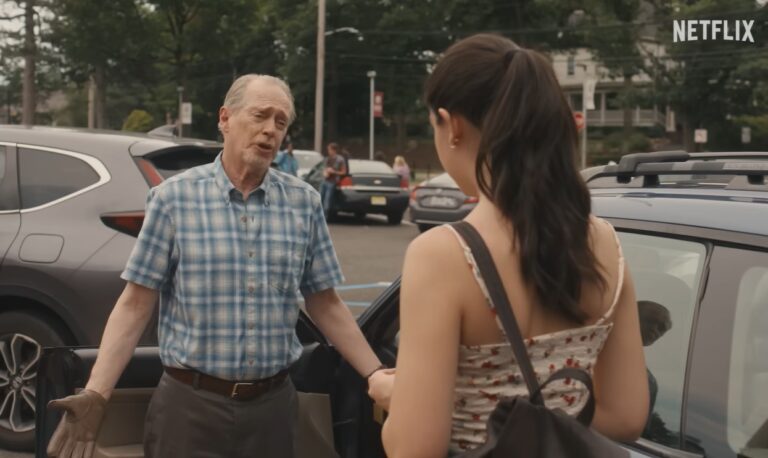
If Don’t Say Good Luck left you staring at the credits wondering why you voluntarily did this to yourself, I get it. Julia Hart’s 2026 Netflix coming-of-age drama is the kind of movie that sneaks up on you. At first, it looks like a familiar high-school theater story: auditions, backstage nerves, friendships, crushes, and the desperate hope of landing the role you’ve been dreaming about. Then the floor drops out.
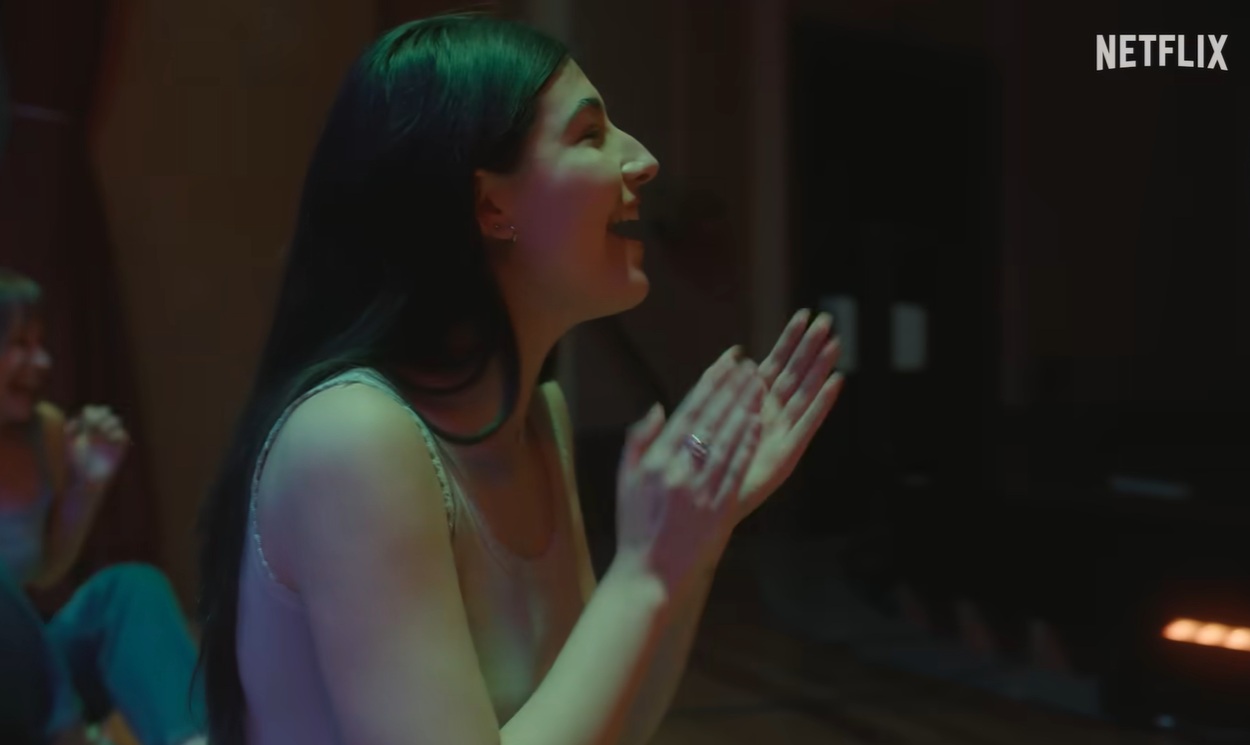
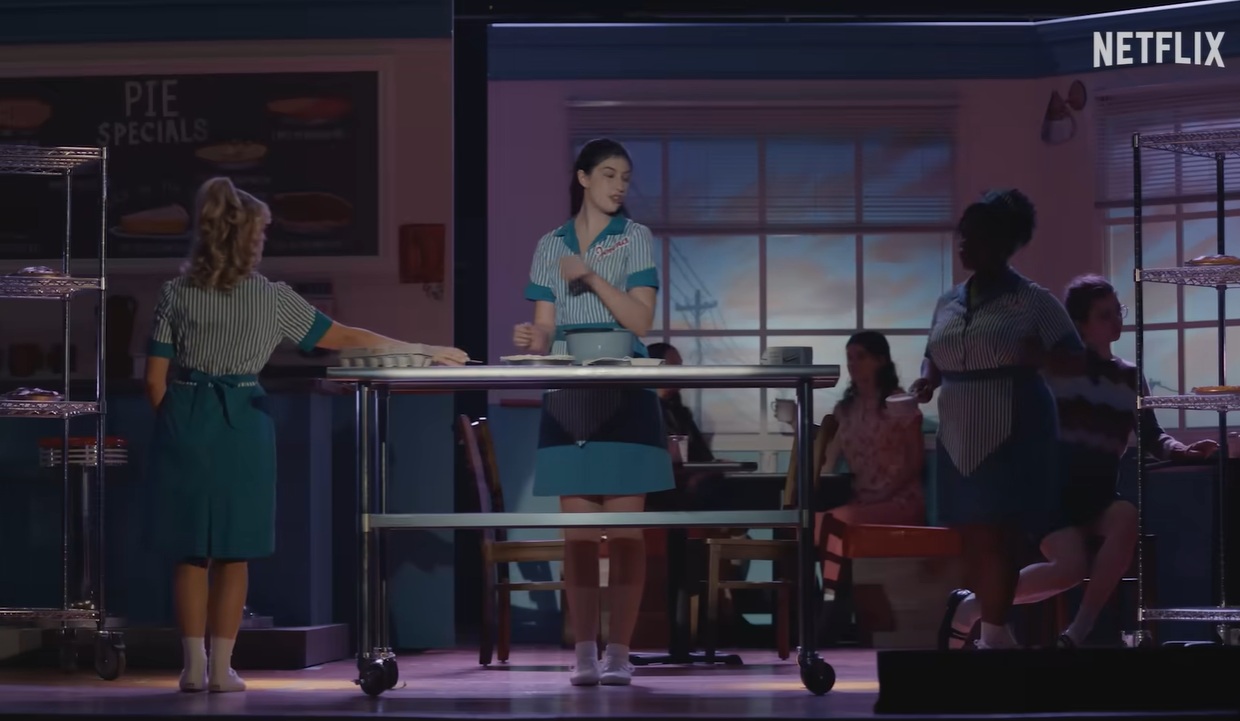
Sophie Birenbaum is chasing the role of Jenna in her school production of Waitress when she learns that her mother’s cancer has aggressively returned. Suddenly, every rehearsal, every lyric, and every moment she spends worrying about the production carries a completely different weight.
And yes, Sunny Sandler singing “She Used to Be Mine” is brutal. I mean that as the highest compliment possible.
What I particularly like about Don’t Say Good Luck is that it doesn’t treat theater as decorative teenage fluff. The stage becomes Sophie’s escape hatch, her hiding place, and eventually the only language she has for emotions she cannot comfortably say out loud. That makes the film hit harder than a lot of conventional “teen movie + illness” dramas.
So if you’re hunting for movies like Don’t Say Good Luck—especially stories about teenagers, music, theater, family pressure, illness, ambition, and the sort of emotional devastation that requires a suspicious amount of tissues—these are the ten I’d put at the top of the list.
| Movie | What You’ll Get | Tear Factor |
|---|---|---|
| Miss Stevens | Theater, grief, complicated teenagers | ★★★★☆ |
| Clouds | Music, cancer, true story | ★★★★★ |
| CODA | Singing, family, impossible choices | ★★★★★ |
| Stargirl | Teen music, individuality, heartbreak | ★★★☆☆ |
| Sing Street | Music, family problems, teenage escape | ★★★★☆ |
| The Fault in Our Stars | Young love, illness, grief | ★★★★★ |
| Tick, Tick… Boom! | Theater obsession, mortality, ambition | ★★★★★ |
| Me and Earl and the Dying Girl | Friendship, filmmaking, terminal illness | ★★★★★ |
| Words on Bathroom Walls | Teen life, stigma, mental health | ★★★★☆ |
| A Walk to Remember | School theater, romance, illness | ★★★★★ |
1. Miss Stevens (2016)
This is the first movie I’d recommend if what grabbed you about Don’t Say Good Luck was the theater rather than the musical numbers.
Lily Rabe plays a high-school teacher who takes three students to a weekend drama competition. What sounds like a fairly modest indie setup gradually becomes an intimate portrait of grief, insecurity, loneliness, and the strange emotional intensity of teenagers who are still figuring out how to exist.
And then there’s Timothée Chalamet.
His performance is almost painfully vulnerable. There’s a particular dramatic monologue that makes it very clear why he was going to become one of the defining young actors of his generation.
Miss Stevens is quieter than Don’t Say Good Luck, but I actually prefer that restraint. It doesn’t tell you exactly what to feel every five minutes. It trusts the performances.
Why watch it: If you want another emotionally serious movie where teenage theater feels like something that genuinely matters, not just a cute plot device, start here.
2. Clouds (2020)
This one comes with a warning: you are probably going to cry.
Clouds tells the true story of Zach Sobiech, a teenager diagnosed with terminal osteosarcoma. Knowing he has very little time left, Zach turns to music, recording songs that become a way of saying goodbye to the people he loves.
The connection to Don’t Say Good Luck is obvious, but it never feels like a cheap imitation. Sophie uses musical theater to process her mother’s illness; Zach creates music while confronting his own mortality.
That difference actually makes Clouds more devastating.
The film understands something that many cancer dramas completely miss: teenagers don’t stop being teenagers just because something terrible happens. They still joke around. They fall in love. They argue with their parents. They make stupid decisions. They make art.
And sometimes that ordinary teenage behavior makes the tragedy hurt even more.
3. CODA (2021)
If you haven’t seen CODA, move it near the top of your list.
Ruby Rossi is the only hearing member of her Deaf family and spends much of her life helping them communicate with the hearing world. Then she discovers singing and realizes she may have a real future in music.
The problem? Pursuing that future means leaving the family that depends on her.
That’s where CODA absolutely destroys me.
Like Sophie, Ruby is carrying an enormous family responsibility while trying to figure out who she is. The difference is that CODA is ultimately warmer and more hopeful, but the emotional pressure is very real.
And the musical scenes are fantastic. When Ruby sings, the movie understands that the performance isn’t simply about whether she can hit the notes. It is about finally expressing something she has been unable to explain to the people around her.
That is precisely the emotional territory Don’t Say Good Luck explores so well.
4. Stargirl (2020)
Yes, this is another Julia Hart film, and that makes it an especially interesting companion to Don’t Say Good Luck.
Stargirl follows Leo, an ordinary high-school student whose life changes when the eccentric, musical, wildly individualistic Stargirl arrives at school. She plays ukulele, sings, behaves unpredictably, and refuses to care much about fitting into the social hierarchy.
I’ll admit it: Stargirl is considerably sweeter than Don’t Say Good Luck. Sometimes almost aggressively so.
But Hart’s fingerprints are unmistakable. She has a particular affection for teenagers who feel slightly out of step with everyone around them. Music becomes part of how those characters communicate, flirt, rebel, and understand themselves.
If you loved the gentle visual style and emotional sensitivity of Don’t Say Good Luck, this is an easy recommendation.
5. Sing Street (2016)
This might be my favorite movie on this entire list.
Set in 1980s Dublin, Sing Street follows Conor, a teenager dealing with family problems and a miserable new school. He tells a girl he likes that he’s in a band.
There is, unfortunately, one small problem.
He isn’t.
So he creates one.
What follows is one of the most joyous movies ever made about teenagers using music as an escape from a world they don’t control.
The family situation is painful, the school environment is ugly, and adulthood looks pretty bleak. But Conor and his friends respond by writing songs, making videos, dressing ridiculously, and dreaming themselves into a different future.
That’s the connection I love most with Don’t Say Good Luck: art becomes survival.
No cancer storyline is required. No melodramatic speech is necessary. Sometimes a kid just needs a guitar, a camera, or a stage to survive the circumstances adults have created around them.
6. The Fault in Our Stars (2014)
Yes, it’s famous. Yes, you’ve probably heard every joke about it.
Watch it anyway.
Hazel Grace Lancaster meets Augustus Waters at a cancer support group, and their relationship develops while both understand that illness has already altered the shape of their lives.
What works here is the refusal to make Hazel simply “the sick girl.” She’s funny, frustrated, romantic, sarcastic, stubborn, and terrified. Augustus is similarly more complicated than the standard tragic-love-interest template.
If Don’t Say Good Luck hit you because of its portrayal of a teenager trying to maintain some version of normal life while illness dominates the family, The Fault in Our Stars belongs on the same emotional shelf.
Just don’t expect it to be gentle.
7. Tick, Tick… Boom! (2021)
This is the one I would recommend specifically to theater kids.
Andrew Garfield plays Jonathan Larson, the composer who would eventually create Rent. The film focuses on Larson before that success, when he is approaching 30 and desperately trying to finish the musical he believes will prove that he has something worth saying.
Meanwhile, his friends are dealing with the AIDS crisis, relationships are falling apart, money is tight, and the clock in his head won’t stop ticking.
The similarities to Don’t Say Good Luck aren’t one-to-one, but emotionally they’re fascinating.
Both films understand the peculiar torture of caring deeply about performance while real life refuses to cooperate. You can have the biggest audition of your life tomorrow, but your family crisis doesn’t care.
That collision between creative ambition and mortality is what makes Tick, Tick… Boom! so powerful.
And Garfield is phenomenal.
8. Me and Earl and the Dying Girl (2015)
The title sounds like a guaranteed emotional ambush. It is.
Greg is a socially detached high-school student who makes bizarre little parody versions of famous movies with his friend Earl. When Greg’s mother forces him to spend time with Rachel, a classmate diagnosed with leukemia, his carefully controlled life begins to unravel.
What I appreciate most is how strange this movie is.
It doesn’t turn illness into a neat lesson. It doesn’t make every character noble and perfectly articulate. Greg is selfish. He’s awkward. Sometimes he’s downright infuriating.
That’s precisely why the emotional payoff works.
Like Don’t Say Good Luck, it explores how teenagers often respond to terrifying circumstances indirectly. Some sing. Some make movies. Some joke constantly because admitting they’re scared would be unbearable.
9. Words on Bathroom Walls (2020)
This is the least obvious recommendation here, but I think it’s one of the most worthwhile.
Adam is a high-school student diagnosed with schizophrenia after an incident at school. He transfers to a Catholic school, where he meets Maya and attempts to keep his condition hidden while building a life that feels remotely normal.
The movie isn’t about musical theater, but it shares an important theme with Don’t Say Good Luck: the fear that other people will stop seeing you as a person once they know what is happening to you.
Adam wants to be a teenager first and a diagnosis second.
That emotional conflict gives the film much more weight than its conventional teen-romance structure might suggest.
10. A Walk to Remember (2002)
Here is the old-school choice.
Before every YA adaptation became a franchise, A Walk to Remember delivered the classic combination of high school romance + school play + devastating illness.
Landon Carter gets involved with Jamie Sullivan while participating in a school production. Their relationship gradually deepens, and then the movie reveals the secret Jamie has been carrying.
Is it subtle? Absolutely not.
Does it manipulate your emotions? Shamelessly.
Does it work anyway?
Unfortunately, yes.
The school-play storyline gives the film a theatrical connection to Don’t Say Good Luck, while Jamie’s illness creates the same horrible contrast between teenage happiness and the knowledge that something devastating is waiting around the corner.
If you want something unapologetically sentimental, this is the one.
My Personal Ranking
If I were choosing based purely on how likely each movie is to scratch the Don’t Say Good Luck itch, I’d go:
- CODA — Best combination of music, family pressure, and emotional payoff.
- Clouds — The closest match if the cancer storyline destroyed you.
- Sing Street — Best movie about teenagers using music to escape reality.
- Miss Stevens — Best theater-focused companion.
- Tick, Tick… Boom! — Essential for anyone obsessed with musical theater.
- Me and Earl and the Dying Girl — Weird, funny, and genuinely painful.
- The Fault in Our Stars — The obvious tearjerker, but still effective.
- A Walk to Remember — Old-fashioned and shamelessly sentimental.
- Words on Bathroom Walls — Different subject, very similar emotional vulnerability.
- Stargirl — The softest recommendation, but a worthwhile Hart double feature.
What makes Don’t Say Good Luck stick with me isn’t simply the cancer storyline. We’ve seen tragic illness in teen movies countless times. It’s the way Sophie keeps being a teenager while everything around her is falling apart. She still wants the role. She still wants to perform. She still wants to be seen. And when she sings, all those competing emotions finally have somewhere to go.
That’s why the best movies on this list aren’t necessarily the ones with the saddest endings. They’re the ones that understand what teenagers do when reality becomes too enormous to process: they make something. They sing. They act. They film. They fall in love. They joke. They create a version of themselves that can survive another day.
And honestly, if that’s what you’re looking for after Don’t Say Good Luck, I’d start with CODA or Sing Street. Keep Clouds for a day when you’re emotionally prepared to have your entire evening ruined.