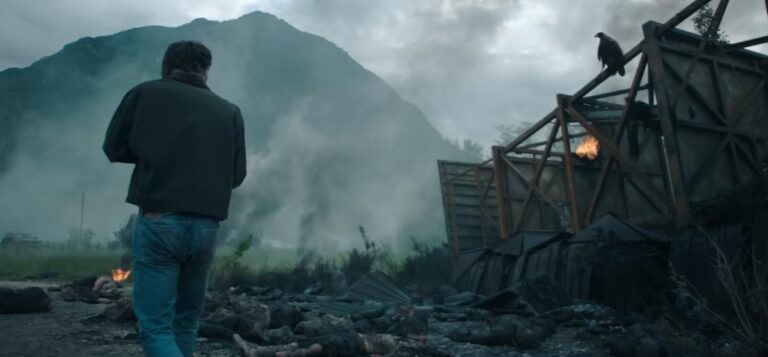
The Resident Evil franchise has had a strange relationship with the big screen. For years, fans have watched Hollywood take the name, characters, monsters, and basic mythology of Capcom’s survival horror series and push them in wildly different directions. Milla Jovovich’s films leaned hard into action spectacle, while Resident Evil: Welcome to Raccoon City tried to get closer to the games but left audiences divided. Now, another movie is coming, and this one feels different from the moment you hear who is behind it.
Zach Cregger, the director who turned Barbarian into one of the nastier horror surprises of recent years, is steering the new film. He is also coming off Weapons, and that combination makes this project especially interesting. The new Resident Evil movie arrives in theaters on September 18, 2026, with a much more stripped-down approach to the material: less mythology overload, fewer familiar action heroes, and a much stronger emphasis on fear, isolation, scarce resources, and the simple question of whether ordinary people can survive the night.
That approach has already set off plenty of discussion across Reddit, gaming forums, horror channels, and trailer breakdown communities. Some fans are thrilled by the change. Others are understandably nervous about another interpretation of a franchise that has been through more cinematic reinventions than it probably needed. But the early details suggest that Cregger is at least trying to understand what makes Resident Evil frightening in the first place.
Dark Matter Season 2 Where to Watch Free: 2026 Streaming Guide and Release Schedule
The Long Road to Another Resident Evil Movie
Getting a Resident Evil adaptation right has never been easy. The games have accumulated decades of characters, viruses, corporations, conspiracies, timelines, laboratories, military operations, and increasingly bizarre mutations. Trying to squeeze all of that into a single feature can leave filmmakers with two choices: drown the audience in exposition or throw the lore aside and make a generic action movie wearing the Resident Evil name.
Sony Pictures and Constantin Film are taking another route this time. They have placed the film in the hands of Zach Cregger, whose work on Barbarian demonstrated a strong instinct for suspense, tonal shifts, and keeping an audience uncomfortable without explaining every little thing. Shay Hatten is co-writing the screenplay, while Cregger has reportedly been given considerable freedom to build a new starting point for the franchise.
That freedom matters. Instead of attempting to cram decades of game continuity into a roughly ninety-minute horror film, the project appears focused on the experience of being trapped somewhere you absolutely do not want to be. The premise puts survival first and mythology second, which is arguably much closer to the feeling of the older games than a movie overloaded with explanations about Umbrella Corporation history.
Reports surrounding the production have even compared the movie’s energy to Mad Max: Fury Road, only filtered through survival horror. That comparison sounds strange until you consider the intended pacing: a short, breathless movie that keeps moving rather than stopping every few minutes to explain another piece of franchise history. If that description survives into the finished cut, this could be a very physical horror film.
Resident Evil 2026 Release Date and IMAX Plans
The theatrical date is set for September 18, 2026. Before that wide release, the movie is scheduled to premiere at the 21st Fantastic Fest on September 17, giving festival audiences the first major look at Cregger’s take on the franchise.
For horror fans who care about presentation, there is another important detail: the movie has been specifically filmed for IMAX. That should make the hospital interiors, dark corridors, city streets, and creature work particularly oppressive on a giant screen. Resident Evil has always benefited from environments where the player feels boxed in, and a large-format presentation could make those spaces feel even more hostile.
| Detail | Information |
|---|---|
| Movie | Resident Evil |
| Director | Zach Cregger |
| Co-writer | Shay Hatten |
| Fantastic Fest Premiere | September 17, 2026 |
| U.S. Theatrical Release | September 18, 2026 |
| Format | IMAX and standard theatrical release |
International viewers should see staggered releases around the same period. The exact timing will depend on individual markets, but the September theatrical launch is clearly being positioned as a major global horror release rather than a smaller genre experiment.
A Resident Evil Story Without Leon or Claire
Perhaps the boldest decision is what the movie does not do. There is no Leon S. Kennedy taking center stage, no Claire Redfield leading the escape, and no Jill Valentine or Chris Redfield arriving with a familiar weapon loadout to save everyone. Instead, Cregger’s film follows someone who looks much more like the person sitting in the theater.
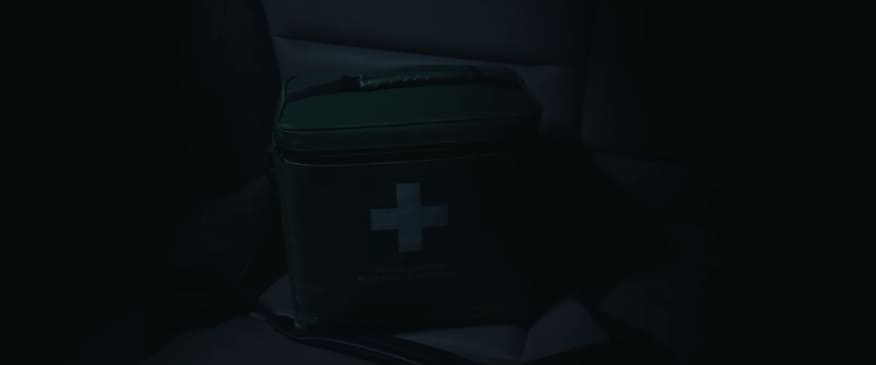
Austin Abrams plays Bryan Hodukavich, an ordinary medical courier whose routine delivery suddenly turns into a nightmare. Abrams has already shown his dramatic range in Euphoria, and he previously worked with Cregger on Weapons. Here, the role is built around vulnerability rather than military competence. Bryan is not supposed to know exactly what to do when the world collapses around him.
That choice has become one of the more popular elements of the movie among fans discussing the project online. A heavily trained protagonist can be entertaining, but there is something much more uncomfortable about watching an ordinary person search for whatever supplies he can find while trying to stay alive. That helplessness is a huge part of what made early Resident Evil games work.
The Main Cast
- Austin Abrams as Bryan Hodukavich — a medical courier caught inside the outbreak.
- Paul Walter Hauser as Carl — a mysterious Umbrella Corporation employee trapped in the crisis.
- Zach Cherry as Dave — a frightened scientist trying to survive the underground corporate nightmare.
- Kali Reis as Pauline — an ex-military character whose physical skills become vital during the group’s escape.
- Johnno Wilson as Max — an intimidating Umbrella enforcer charged with containing the viral threat.
The supporting cast also gives the movie room to create different kinds of tension. Bryan represents the completely unprepared civilian, while Pauline brings military experience, Dave carries scientific knowledge, and Max represents the cold corporate response to the outbreak. Carl sits somewhere in the middle, adding another layer of uncertainty because his connection to Umbrella immediately raises questions about what he knows.
The Plot: One Night, One Hospital, No Easy Way Out
The story takes place over a single horrifying night in a modern-era setting that runs parallel to the events associated with the Raccoon City outbreak. That compressed timeline is important because it removes the feeling that the characters have days to understand what is happening. Things go wrong, the doors close, and suddenly survival becomes the only objective.
Bryan arrives at a remote Raccoon City General Hospital carrying an extremely important package. It should be a routine delivery. Instead, the building goes into lockdown almost immediately as a weaponized strain of the T-Virus begins spreading through the facility.
From there, the hospital becomes the movie’s central nightmare. Corridors fill with blood, infected bodies begin moving through the building, and mutated creatures turn familiar medical spaces into something almost impossible to navigate safely. Bryan is trapped alongside a small group of traumatized scientists and other survivors, none of whom seem to have a reliable answer for what is happening outside their immediate surroundings.
There is no comfortable stockpile of weapons waiting for him. Bryan has to make use of whatever resources he can find while searching for a way through the infected hospital. The larger goal is brutally simple: survive long enough to escape Raccoon City before morning.
Where the Games Enter the Movie
Although the story is designed as an original standalone narrative, Cregger has reportedly woven recognizable ideas from the games into the filmmaking itself. That may prove more effective than simply copying famous characters or recreating individual scenes. The games are not defined only by their plots; they are also defined by how they make the player move through dangerous spaces.
Trailer breakdowns have already drawn attention to first-person sequences that resemble the point-of-view perspective used in more recent Resident Evil games. That visual choice could make the audience feel less like an observer and more like they are trapped inside Bryan’s head. It is a small distinction, but in horror it can completely change the level of tension.
Then there are the zombies. Several teaser images and trailer moments have shown infected bodies falling from windows and spilling onto city streets. The imagery has sparked plenty of conversation about how graphic the finished film might become, especially given the emphasis on practical creature effects, physical gore, and grotesque mutations.
And that is where the movie could separate itself from previous adaptations. If the monsters have real weight, texture, and physical presence rather than looking like polished digital effects, the hospital setting could become genuinely unpleasant to watch in the best possible horror-movie sense.
What Fans Are Saying About the Reboot
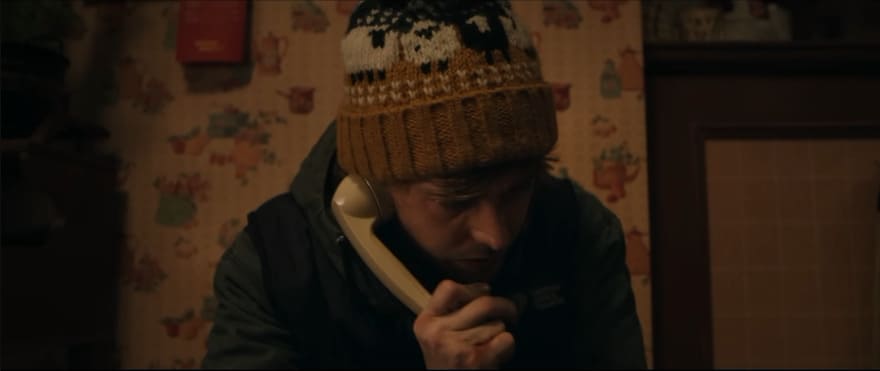
The online reaction is sitting somewhere between excitement and cautious optimism. On Reddit, ResetEra, horror forums, and YouTube trailer channels, Cregger’s involvement is easily one of the biggest reasons people are willing to give the project a chance. His reputation for building tension without immediately showing the audience everything has created expectations that this might finally feel like horror rather than another action franchise.
There is still some resistance from longtime fans. The absence of Leon, Claire, Jill, and Chris is an obvious sticking point for anyone who wants a movie that directly adapts the classic games. Those characters are so closely tied to the identity of Resident Evil that removing all of them is a significant gamble.
But plenty of fans are making the opposite argument. Bryan being inexperienced is exactly the point. If he panics, makes mistakes, runs out of ammunition, or has no idea what creature is coming through the next door, the danger becomes easier to believe. A survival horror movie needs characters who can actually lose.
That philosophy also connects neatly with the older games. You entered a room without knowing what was waiting behind the door. You counted ammunition. You searched for healing items. You wondered whether using a valuable resource now would leave you helpless ten minutes later. Watching a normal courier go through that same kind of decision-making could capture the spirit of classic Resident Evil without recreating the exact plot of a game.
Why the 2026 Reboot Has My Attention
I am far more interested in this version of Resident Evil than I expected to be. Not because it promises to reproduce every detail from the games, but because it seems willing to understand what made those games stressful in the first place. The idea of following Bryan through one horrible night, with limited resources and no legendary hero waiting around the corner, gives the story a much sharper survival-horror edge.
The release strategy helps too. A September theatrical launch, a Fantastic Fest premiere, and an IMAX presentation all point toward a movie that wants its atmosphere to do some of the heavy lifting. If the creature effects are as physical and nasty as the early material suggests, seeing those hospital corridors on a huge screen could be a particularly uncomfortable experience.
There are obvious risks. A Resident Evil movie without its most recognizable protagonists could frustrate fans who have waited years for a faithful adaptation. The ninety-minute runtime could also work against the film if the story moves so quickly that the characters never have time to develop beyond their survival roles.
Still, the basic idea is sound. Give us a frightened civilian, put him inside a sealed hospital crawling with infected creatures, take away the safety net of familiar heroes, and make the night feel like it will never end. That is a much more promising foundation for Resident Evil than another oversized action spectacle.
The new movie arrives in U.S. theaters on September 18, 2026, following its Fantastic Fest premiere the previous day. If Zach Cregger can maintain the pressure, keep the gore practical and ugly, and resist the temptation to bury the story under franchise mythology, this could finally be the kind of live-action Resident Evil film that understands the difference between watching someone fight monsters and actually feeling trapped with them.