There are two kinds of animated movie endings. One gives you a neat little emotional goodbye, rolls the credits, and sends you home smiling. The other makes you sit there thinking, Wait… what exactly did I just watch?
Minions & Monsters very clearly belongs to the second group.
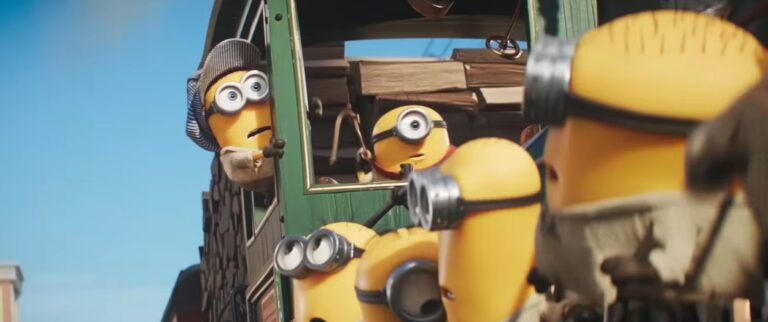
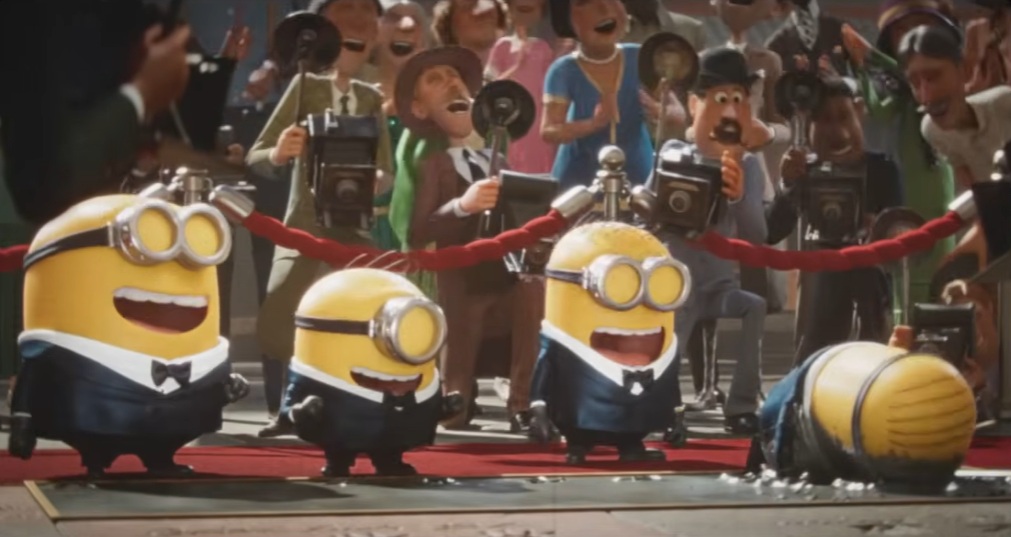
At first, the 2026 Illumination movie looks like another gloriously ridiculous Minions adventure, this time throwing the little yellow chaos machines into 1920s Hollywood, monster movies, forbidden magic, cosmic creatures, and enough destruction to make old-school Universal Monsters fans grin. James and Henry become silent-film stars, lose their careers when talkies take over, and eventually decide that the only sensible solution is to make their own monster movie.
Naturally, they don’t settle for fake monsters.
They steal a magical spellbook, summon actual cosmic horrors, and accidentally turn their independent production into a full-scale battle for Los Angeles.
That alone would make for a pretty entertaining Minions movie. But the Minions & Monsters ending pulls the rug out from under the entire story.
And honestly? I think it’s one of the more clever meta jokes Illumination has played with this franchise.
The Monster Battle Is Bigger Than It Looks
Before getting to the twist, the movie gives us a wonderfully chaotic finale.
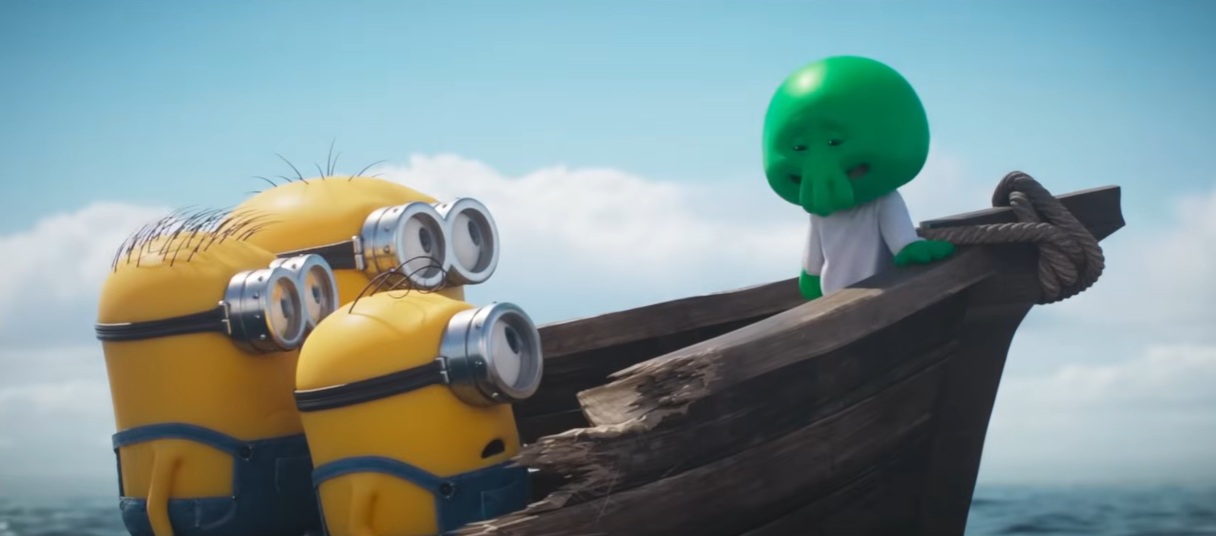
Goomi, the strange green cosmic creature at the center of the story, has been manipulating James and Henry into using the ancient spellbook. His real objective is far less innocent than making a good monster picture. He wants to unleash Irene, a gigantic orange creature capable of tearing through Los Angeles like a living natural disaster.
Henry eventually discovers what is really happening, but Goomi and his followers Phillips and Howard trap him on the film set.
Then Irene arrives.
And she is enormous.
The military throws everything it has at the creature, with predictably terrible results. Irene isn’t just tough; she can essentially rebuild herself after being blown apart. At one point, James drives a milk truck directly into the monster in an attempt to rescue Henry, which is exactly the kind of insane visual gag you’d expect from a Minions movie.
For a moment, it looks like the heroes have reached the end of the road.
Then Dort returns.
The human pilot, previously established as an ally of the Minions, comes back with an entire airborne force operated by Minions. The resulting attack is basically a miniature sci-fi war movie. Lasers, ships, explosions and thousands of tiny yellow pilots converge on Irene until the creature is finally destroyed.
But Goomi still remains.
James and Henry recover the spellbook and use it to reverse the summoning. Goomi, Phillips and Howard are dragged back into the supernatural realm from which they came.
The heroes survive.
The monster is gone.
The movie appears to be over.
Except it absolutely isn’t.
The Real Minions & Monsters Twist
This is where the film gets genuinely interesting.
After the apparent ending, we suddenly jump to a modern-day museum exhibition devoted to the legendary events of the 1920s.
A guide named Olivia is telling visitors about James, Henry and the bizarre monster incident. Everything is presented like a genuine historical event.
If you’ve been following the Despicable Me timeline closely, this should immediately set off alarm bells.
Because something doesn’t add up.
The main Minion tribe was supposedly frozen away for decades. So how could these Minions have been running around 1920s Hollywood making monster movies?
The answer arrives with one of those visual reveals that is almost impossible not to enjoy.
The camera keeps pulling back.
The museum isn’t really a museum.
It’s a film set.
Studio lights appear overhead. Boom microphones come into view. Green screens surround the supposedly historical location.
Then someone shouts:
“Cut!”
And suddenly the entire movie changes meaning.
The 1920s adventure wasn’t a lost chapter of Minion history. It was a movie being made inside the modern-day Despicable Me universe.
James and Henry aren’t famous historical Minions.
They’re filmmakers.
The monsters weren’t necessarily rampaging through real 1920s Los Angeles.
They were characters in a production.
And the strange humans and creatures we’ve been watching for the previous hour are revealed as actors and performers celebrating after the shoot.
That is the joke, but it also solves a surprisingly serious continuity problem.
Why This Fixes the Timeline
The easiest way to understand the ending is to separate the story into two layers.
| Layer | What We See |
|---|---|
| The fictional movie | 1920s Hollywood, Irene, Goomi, Dort and the monster war |
| The real franchise timeline | Modern-day Minions making that movie |
That distinction is important because the 2015 Minions movie established a very different history for the central Minion population.
Kevin, Stuart, Bob and their fellow Minions spend a huge portion of their history isolated in an ice cave after their disastrous encounter with Napoleon Bonaparte. They eventually emerge in the 1960s.
So a literal 1920s Minion Hollywood adventure would create a pretty obvious continuity headache.
The film’s meta ending basically says: Relax. That wasn’t really happening.
I like this solution far more than some complicated explanation involving alternate timelines.
It also fits the Minions perfectly. These characters have always been obsessed with famous people, historical events and ridiculous schemes. Turning them into filmmakers who decide to recreate their own imaginary monster epic feels completely on brand.
The “Second Minion Tribe” Theory Gets Interesting
This is where the ending becomes more than a simple fourth-wall joke.
One of the most interesting ideas surrounding the movie is what fans have started calling the Tribe Expansion Theory.
The basic problem is simple: the Minion population seen later in the Despicable Me movies is enormous. Yet the original group shown in the earlier timeline appears much smaller.
So where did all those extra Minions come from?
The movie’s James-and-Henry setup provides an amusing potential answer.
Perhaps there were other Minion groups scattered around the world while the primary tribe was isolated. James and Henry could belong to one of these separate groups, explaining why their history doesn’t perfectly overlap with Kevin, Stuart and Bob.
I wouldn’t treat every part of that theory as hard canon, though. That’s where fan speculation gets especially fun. The movie gives viewers enough material to connect the dots, but it doesn’t hand us a giant timeline chart and say, “Here is exactly how everything works.”
And that’s probably for the best.
A franchise like Despicable Me benefits from leaving a little room for fans to argue about the weird stuff.
The Spellbook Mid-Credits Scene Is the Real Fan Service
Just when you think the movie has finished playing with continuity, the mid-credits scenes start throwing gasoline onto the fire.
The magical spellbook eventually ends up with Gru’s familiar Minions.
Kevin, Stuart and Bob get their hands on it while a young Gru and Agnes are nearby. Predictably, nobody decides to put the dangerous magical artifact somewhere safe.
Stuart discovers a transformation spell and uses it on Gru’s ordinary puppy.
The result?
Kyle.
Yes, the strange-looking dog from the original Despicable Me finally gets an absurd origin story.
The sequence doesn’t just explain Kyle’s unusual appearance; it turns one of the franchise’s old visual jokes into another piece of magical chaos.
And then things get even sillier.
The Minions use the spellbook to prank a younger Dr. Nefario, while Agnes discovers an illustration of a cute pink mythical creature.
Naturally, she wants it.
The Minions summon it.
And instead of unleashing another Irene-style nightmare, the creature becomes a harmless little companion for Agnes.
That last gag feels particularly appropriate for her character. Agnes has always had a weakness for adorable mythical creatures, so watching her casually adopt another magical monster is exactly the sort of tiny continuity joke that makes a credits sequence worth watching.
Why I Think the Meta Ending Actually Works
I’m usually skeptical when a franchise suddenly announces that everything we just watched was “a movie within the movie.”
It’s an easy trick to abuse.
Here, though, it works because Minions & Monsters is built around filmmaking from the beginning.
James and Henry aren’t randomly transformed into directors in the final act. Their entire story is about show business. They rise through silent cinema, lose their place when talkies arrive, and become obsessed with creating something spectacular enough to bring audiences back.
So when the film finally reveals itself as a production, it doesn’t feel completely disconnected from the story.
The movie has been preparing for that joke.
There are also plenty of visual opportunities to play with classic cinema. The silent-film aesthetic, old Hollywood sets, monster-movie imagery and exaggerated performances give Illumination a playground that is much bigger than the usual Minion slapstick routine.
You can feel the influence of old Universal horror, giant-monster cinema and classic Hollywood melodrama.
And that’s probably my favorite part.
The film isn’t only making fun of old movies. It actually seems to love them.
The monsters are ridiculous, but they’re presented with enough theatrical flair that the whole thing feels like a kid discovering old monster movies for the first time and deciding to recreate every cool moment at once.
Is Minions & Monsters Streaming on Disney Plus or Peacock? Where to Watch the 2026 Movie Online
What the Ending Means for the Franchise
The biggest takeaway isn’t that the entire movie “didn’t happen.”
That’s too simplistic.
The movie happened as a movie inside the universe.
James and Henry really are filmmakers. The production really happened. The characters surrounding them really exist as performers within that fictional production. What changes is our understanding of the 1920s events themselves.
That distinction allows Illumination to play with franchise history without permanently rewriting it.
It also gives the studio an excuse to revisit practically any period, genre or historical setting in future stories.
Want medieval Minions?
Make a movie about it.
Want Minions doing a noir detective story?
Sure.
Want them making a terrible space opera?
Why not?
Once the franchise establishes that its ridiculous historical adventures can be productions created by the Minions themselves, the possibilities become almost limitless.
And honestly, that may be the smartest thing about the whole ending.
Minions & Monsters doesn’t just bend the timeline. It turns the timeline into part of the joke.
For me, that’s why the ending lands. It doesn’t try to make the Minions’ increasingly ridiculous history completely logical. Instead, it embraces the chaos and turns the lack of logic into the central gag.
The Kyle reveal, the spellbook, the enormous second-tribe implications and the final studio-set reveal all point toward the same idea: this franchise has always treated history as a playground.
Now the movie has basically admitted it.
And when the credits start rolling, you aren’t really asking whether Irene could survive a military strike anymore.
You’re asking the much more dangerous question:
What other completely insane “historical event” were the Minions secretly filming?