There are movie endings that make you cheer, endings that make you angry, and then there are endings that follow you out of the theater.
Disclosure Day gave me the third kind.
Steven Spielberg’s 2026 sci-fi thriller spends most of its runtime convincing us that the biggest mystery is simply whether aliens exist and what the government has been hiding. By the time the credits arrive, though, it becomes pretty clear that Spielberg is playing a different game. The aliens are almost secondary. The real question is whether humanity is capable of hearing something truly unfamiliar without immediately turning it into a weapon, a conspiracy, a political slogan, or another reason to panic.
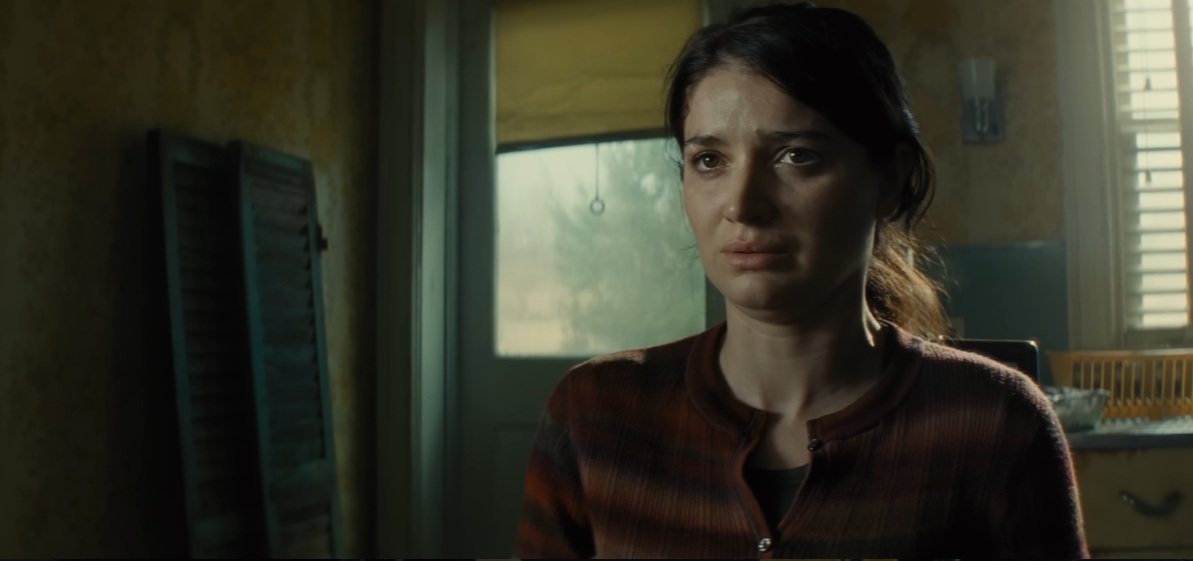
And then Margaret Fairchild looks straight into the camera and says one word:
“Listen.”
Cut to black.
Honestly? I loved it.
It’s frustrating in exactly the way a good ending should be frustrating. We don’t get the alien’s full message. We don’t get a convenient explanation of what happens to Earth the next morning. There’s no giant spaceship hovering above Washington, no sequel-baiting handshake between humans and extraterrestrials. Instead, we get Earth and the Moon drifting through an almost hypnotic credit sequence.
That final image is doing much more work than it first appears to.
The Real Twist of Disclosure Day Isn’t the Aliens
The final act brings together practically every thread the movie has been pulling since the beginning.
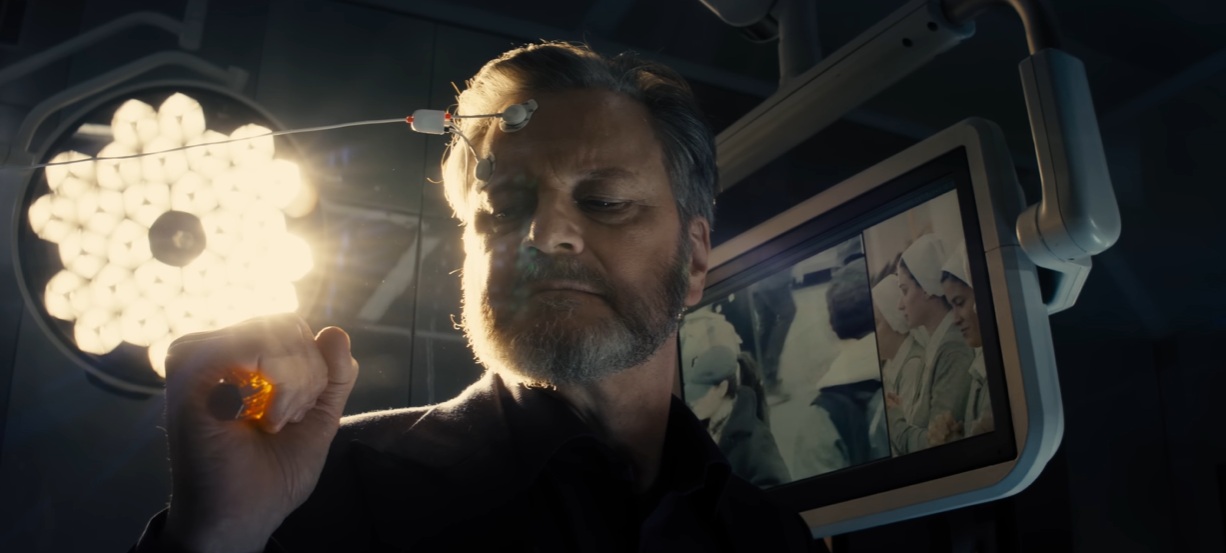
Daniel Kellner, played by Josh O’Connor, has escaped Wardex Corporation, the organization that has spent decades burying evidence of extraterrestrial contact. Wardex isn’t just hiding a few classified photographs. Its entire operation stretches back to the Roswell incident in 1947 and involves generations of experimentation, surveillance, and attempts to understand the visitors.
Margaret Fairchild, played by Emily Blunt, is dealing with something even stranger. Her strange visions and reality-bending experiences eventually connect her to memories that had been suppressed since childhood.
The big revelation is that Daniel and Margaret weren’t random victims.
They were selected.
Their encounters in 1996 changed them biologically and psychologically, effectively turning them into two different components of a communication system. Daniel can process the aliens’ mathematical and linguistic structures. Margaret possesses an extraordinary ability to understand human emotion and reproduce emotional meaning.
That distinction becomes incredibly important during the finale.
Daniel can understand what the aliens are saying.
Margaret can understand what humanity needs to hear.
That’s a much more interesting idea than simply giving our heroes superpowers.
The Broadcast Is the Moment the Movie Finally Earns Its Title
The break-in at Margaret’s old television studio is where everything becomes wonderfully chaotic.
Wardex cuts the power. The plan appears to be collapsing. Then an alien device restores electricity, allowing Daniel and the others to transmit decades of hidden evidence to the world.
And suddenly, there’s nowhere left for the truth to hide.
The footage goes global.
People see the captured extraterrestrials. They see the injuries. They see the evidence that governments and corporations have concealed contact for generations.
Most importantly, the world is forced to experience the same revelation at the same time.
That changes the geopolitical situation almost instantly.
The nuclear countdowns stop.
The possibility of World War III evaporates, at least for that moment.
I think this is one of the smartest details in the entire ending. Humanity isn’t saved because an alien fleet destroys its weapons. Humanity stops because people suddenly realize how absurdly small their immediate conflicts look when placed against the reality of extraterrestrial life.
The disclosure itself becomes the intervention.
And that’s where Disclosure Day gets surprisingly philosophical.
So What Does the Alien Actually Say?
This is the question everybody will be arguing about.
Daniel approaches the imprisoned extraterrestrial known as “In Vivo 17.” The creature whispers something into his ear in its own language. Daniel smiles.
He understands.
Then he tells Margaret.
We never hear the translation.
Instead, Margaret walks toward the camera and says:
“Listen.”
That omission is deliberate within the story. The audience is placed in exactly the same position as the billions of people watching the broadcast. We know that something important has been communicated, but we’re denied the comfort of having every word translated for us.
And that makes the line more powerful.
Earlier in the film, Margaret’s involuntary alien speech is connected to a message essentially warning humanity not to fear what it doesn’t understand. The final instruction feels like an evolution of that idea.
Not run.
Not fight.
Not believe.
Listen.
There’s a huge difference.
Listening requires patience. It requires accepting that you might not already have the answer. And for a movie obsessed with governments, media manipulation, military escalation, and misinformation, that’s almost a radical proposition.
Why Margaret Gets the Final Word
This is probably my favorite character detail in the finale.
Daniel is the translator, but Margaret is the communicator.
His role is to decode the alien message. Hers is to decide how that message should reach humanity.
That’s why it would feel strangely wrong if Daniel simply stood in front of the camera and delivered a long scientific explanation.
Instead, Margaret gives us one word.
She doesn’t explain the universe.
She doesn’t tell humanity whether the aliens are friendly.
She doesn’t reveal their origin.
She tells us what we should do next.
Listen.
Her entire character arc suddenly snaps into focus. She has spent the film developing an almost supernatural understanding of emotion, while Daniel has been learning how to interpret something radically non-human. Together, they form a bridge between two civilizations.
The Earth and Moon imagery reinforces exactly that relationship.
Why the Earth and Moon Matter So Much
The credit sequence initially looks like a beautiful piece of cosmic imagery.
Then you start thinking about it.
The Moon appears in close detail, distant and almost lifeless. Slowly, the camera reveals Earth hanging beyond it, vibrant and full of movement.
It’s a gorgeous contrast.
The Moon feels silent.
Earth feels noisy.
And that’s basically the movie in miniature.
Humanity has spent decades fighting, hiding information, manipulating public opinion, and preparing to destroy itself. Meanwhile, the universe has apparently been trying to communicate with us.
The Moon therefore becomes more than a celestial object. It represents the unknown sitting directly beside the familiar.
We’ve been looking at the sky forever, yet we’ve barely understood what we’re looking at.
There’s also something clever about the Moon’s tidal relationship with Earth. Because the Moon is tidally locked, the same side generally faces our planet. From Earth, we never see the entire lunar surface.
That makes the Moon a perfect metaphor for the Wardex conspiracy.
The truth isn’t necessarily absent.
We’re simply not seeing all of it.
The hidden side of the Moon becomes a visual representation of the hidden side of human history.
The Earth and Moon Also Represent Daniel and Margaret
This is where the ending gets surprisingly elegant.
Daniel and Margaret aren’t identical halves of the same character. They’re opposites who complete the same function.
Daniel looks outward.
He deals with mathematics, patterns, codes and alien communication.
Margaret looks inward.
She understands fear, empathy, emotional reactions and the psychological state of humanity.
Put those two abilities together and you get something the film has been missing for decades:
communication without domination.
That’s why the Earth-Moon pairing feels so appropriate.
The two bodies are permanently connected by gravity, even though they’re separated by an enormous distance. Neither one exists in isolation.
Daniel and Margaret have a similar relationship.
They are separated by personality and function, but their experiences have tied them together.
And suddenly the title Disclosure Day feels less like a reference to a government announcement and more like the beginning of a new relationship.
The disclosure isn’t the end.
It’s the first conversation.
The Ancient Symbols Make the Ending Even Stranger
There are also those small visual clues surrounding In Vivo 17.
The alien’s clothing contains symbols resembling ancient Egyptian hieroglyphics and geometric markings. The implication is potentially enormous: extraterrestrial contact may have happened long before Roswell.
If that’s intentional, then Wardex hasn’t been hiding an event from 1947.
It has been hiding an entire chapter of human history.
The Moon sequence seems to quietly push this idea further. Its careful geometric compositions and the apparent relationship between lunar formations and Earth imagery create the suggestion that humanity’s history may have been observed—or even influenced—for far longer than anyone realizes.
I wouldn’t necessarily take that as proof that the movie is saying aliens literally built ancient civilizations. Spielberg leaves enough ambiguity here for viewers to argue about it.
And I prefer it that way.
The movie gives us clues instead of an encyclopedia entry.
Disclosure Day 2026 Ending Explained: What Happened to Margaret and Daniel?
Why There Isn’t a Post-Credits Scene
Thank goodness.
In a different kind of blockbuster, the screen would eventually fade back in and we’d see a government official meeting an alien ambassador.
Or maybe a spaceship would appear above the White House.
Or we’d get a mysterious close-up of another alien opening its eyes.
Any of those scenes might have been entertaining. They also would have weakened this ending considerably.
Disclosure Day doesn’t need to promise us another chapter.
The unanswered question is the chapter.
A post-credits scene would turn the final “Listen” into setup. Without one, the word remains an instruction directed at us.
That’s a much bolder choice.
The film ends before humanity gets to decide what the disclosure actually means.
And that feels right.
My Take: The Ending Is About Humanity More Than Extraterrestrials
I went into Disclosure Day expecting a conspiracy-heavy alien thriller. What I didn’t expect was for the final few minutes to turn the whole movie into a meditation on communication.
The aliens aren’t necessarily terrifying because they’re powerful.
They’re terrifying because we don’t understand them.
And humanity has a pretty terrible habit of turning uncertainty into violence.
That’s what makes the final scene work for me. Margaret isn’t promising that everything will be okay. She’s not saying the aliens are our friends. She’s not even telling us that humanity deserves to survive.
She’s asking us to stop talking long enough to hear something bigger than ourselves.
The Earth and Moon then appear together, suspended in the darkness.
One is alive, crowded, beautiful and catastrophically noisy.
The other is distant, quiet and mysterious.
They’ve been sharing the same cosmic space for billions of years.
Maybe that’s the point.
Disclosure Day isn’t really asking whether we’re alone.
It’s asking what we’d do if we finally discovered that we aren’t.
And after Margaret says “Listen,” Spielberg refuses to answer that question for us.
Honestly, that’s exactly why I think this ending will stick around in people’s heads long after the credits finish.