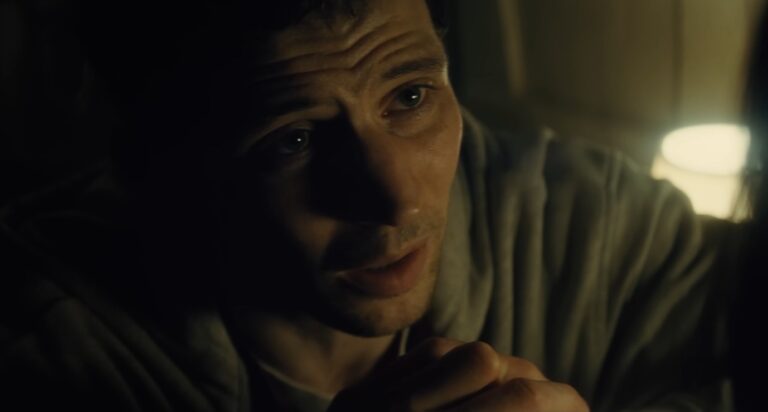
There was always going to be confusion around Hope. When a director like Na Hong-jin follows up The Wailing, one of the most unsettling Korean horror films of the last decade, people are going to look for connections. And honestly, I can’t blame them. Put Hwang Jung-min back in front of Na’s camera, drop the story into another isolated Korean community, throw in a mysterious outbreak of violence, and suddenly the internet has decided we’re watching The Wailing 2.
We’re not.
Hope is not a direct sequel to The Wailing. There is no continuation of the Gokseong storyline, no return of its supernatural figures, and no attempt to explain the deliberately maddening mysteries that made the 2016 film such a nightmare to discuss afterward. Hope is its own story, built around science fiction, extraterrestrial horror and survival rather than the demons, folklore and spiritual paranoia of its predecessor.
That doesn’t mean the comparison is pointless, though. Far from it. The similarities are obvious enough that anyone familiar with Na Hong-jin’s work will probably spend the first part of Hope wondering whether there’s some hidden connection waiting to be revealed. That’s where things get interesting.
Is Hope Movie About Aliens? Everything We Know About Na Hong-jin’s New Sci-Fi Movie
So, Is Hope Connected to The Wailing?
No — not as a story. Think of Hope as a new universe rather than the next chapter of The Wailing. The films share creative DNA, certain narrative ideas and even major talent, but there isn’t a confirmed story connection tying Hope Harbor to Gokseong.
And frankly, that’s probably the better choice.
The Wailing ended in exactly the sort of place where a sequel would be incredibly difficult to pull off without ruining something. Its ambiguity is part of its power. The film leaves you questioning what actually happened, who was telling the truth and whether the characters ever understood the forces surrounding them. Turning that nightmare into a conventional franchise would risk stripping away the very uncertainty that made it memorable.
Instead, Na Hong-jin takes the basic feeling of helplessness and throws it into a completely different genre.
Why Everyone Keeps Comparing the Two Movies
The first obvious connection is Hwang Jung-min. His presence alone is enough to make longtime Na Hong-jin fans suspicious.
In The Wailing, Hwang played Il-gwang, the eccentric shaman whose increasingly frantic behavior culminated in one of the film’s most unforgettable sequences. It was a performance that could switch from absurd to terrifying without warning, which is exactly the sort of thing Hwang does ridiculously well.
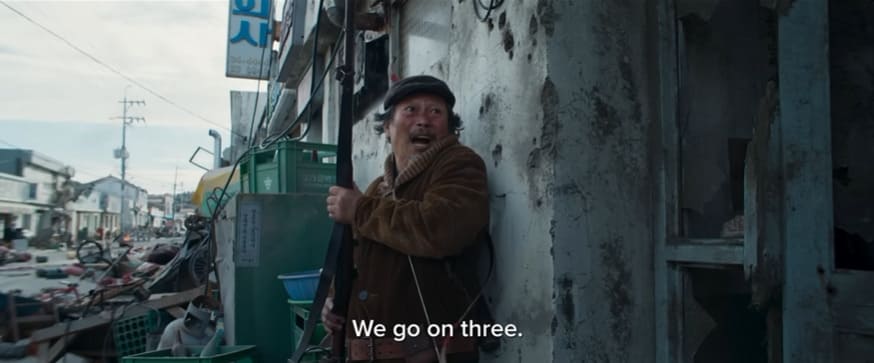
In Hope, he returns under Na’s direction as Bum-seok, a small-town police chief caught in the middle of an escalating catastrophe. He’s not playing the same character, and the story doesn’t treat him as a continuation of Il-gwang. But watching the same actor occupy another troubled rural Korean character while Na Hong-jin directs? Yeah, I understand why people started connecting dots that aren’t actually there.
Then there’s the setting.
The Wailing places its characters in the isolated mountain community of Gokseong. Hope moves its story to Hope Harbor, a remote port town near the heavily fortified Korean DMZ. Both locations feel cut off from the rest of the world, and that isolation matters because neither community is prepared for what arrives.
The Similar Story Structure Is Hard to Ignore
Both movies initially feel like localized police mysteries before expanding into something much bigger and much nastier.
In The Wailing, strange illnesses and brutal murders force a relatively ordinary police officer to investigate something he barely understands. What begins as a disturbing local incident eventually becomes a battle against forces that may be supernatural — or something even harder to comprehend.
Hope follows a surprisingly similar escalation. Mutilated livestock and bizarre incidents put the local authorities on alert. At first, it seems like another strange case that someone has to solve. Then the situation gets dramatically worse.
The crucial difference is what is waiting behind the curtain.
| Feature | The Wailing | Hope |
|---|---|---|
| Genre | Occult Horror / Mystery | Science Fiction / Action Thriller |
| Primary Threat | Supernatural and spiritual forces | Hostile extraterrestrial organism |
| Setting | Remote mountain village | Isolated port town |
| Central Investigation | Mysterious illness and murders | Strange animal mutilations and attacks |
| Core Fear | Faith, paranoia and the unknown | Survival, invasion and human helplessness |
Hope Takes Na Hong-jin Somewhere Completely Different
This is probably the biggest surprise for anyone expecting another The Wailing. Na Hong-jin hasn’t simply made the same movie with a larger budget. He’s taken his obsession with fear and uncertainty and pushed it into blockbuster territory.
The Wailing was patient, grimy and deeply uncomfortable. It let scenes breathe until you weren’t sure whether you were watching horror, dark comedy or a police drama. Hope is considerably more aggressive. Once the science-fiction threat becomes clear, the film starts throwing destruction, pursuit sequences and large-scale survival scenarios at the audience.
Personally, this is where I find the project most fascinating — and also where I can understand some fans being disappointed.
If you want another slow-burn nightmare with the oppressive atmosphere of The Wailing, Hope isn’t really interested in giving you that. It wants scale. It wants spectacle. It wants aliens, chaos and people desperately trying to survive something they cannot comprehend.
That’s a risky move for a filmmaker whose reputation was built partly on restraint. But I’d rather see Na take that risk than watch him spend another decade trying to recreate his previous masterpiece.
A Huge Cast and an Even Bigger Ambition
The production scale makes the difference impossible to ignore.
Hope brings together major Korean talent including Hwang Jung-min, Zo In-sung and Jung Ho-yeon, while also expanding into an international cast featuring Michael Fassbender, Alicia Vikander, Taylor Russell and Cameron Britton. Fassbender and Vikander are particularly intriguing because their roles involve mysterious extraterrestrial beings brought to life through performance-capture technology.
That international casting isn’t just cosmetic. It signals how much bigger Na Hong-jin wants this world to feel. The Wailing was intensely local in its storytelling, even though its themes traveled remarkably well. Hope is built from the beginning as something much broader.
And apparently, this isn’t even the whole story.
Na Hong-jin Has Already Talked About a Sequel
This is another reason the internet got its wires crossed.
Following the film’s high-profile Cannes premiere, Na Hong-jin discussed the possibility of continuing the story and revealed that the broader narrative had already been developed beyond the first movie. That sparked headlines about the director having a sequel ready.
But the sequel being discussed is a continuation of Hope, not The Wailing.
That’s a pretty important distinction, especially when you’re dealing with headlines that are designed to generate clicks. Someone sees “Na Hong-jin confirms sequel” next to a picture of the director who made The Wailing, and suddenly social media has invented The Wailing 2 before the movie even has a chance to establish itself.
Why the Marketing Makes the Confusion Worse
Distributors haven’t exactly discouraged the comparison either.
North American marketing has understandably leaned hard on Na Hong-jin’s reputation. Promotional material has repeatedly highlighted him as the director of The Wailing, which makes perfect sense from a marketing perspective. If you’ve spent years building a reputation for psychological and supernatural horror, you absolutely want those fans to know about your next film.
The problem is that casual viewers can easily interpret that messaging as a franchise connection.
Film YouTubers and horror channels have only added fuel to the fire. Comparisons between the two films are everywhere, from cinematography and camera movement to the way ordinary people become trapped inside increasingly bizarre situations. Even when the movies aren’t directly connected, they clearly feel like they came from the same filmmaker.
Is Hope a Spiritual Successor to The Wailing?
Yes, and this is where the comparison actually becomes useful.
Calling Hope a sequel is wrong. Calling it completely unrelated to The Wailing would also miss the point. The two movies are connected by Na Hong-jin’s fascination with ordinary people confronting forces that are vastly beyond their ability to understand.
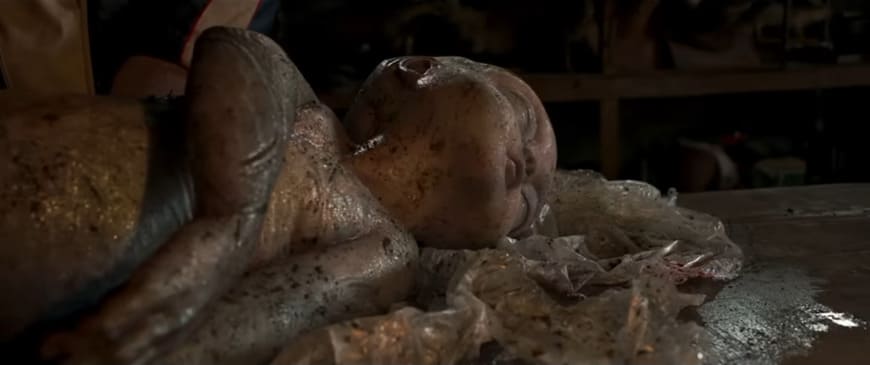
The Wailing asks questions about faith, evil, suspicion and the desperate human need to find an explanation for suffering. Hope approaches similar anxieties through science fiction. Instead of demons, shamans and spiritual corruption, the threat comes from somewhere beyond Earth.
The emotional nightmare is remarkably familiar: people are facing something they don’t understand, and every attempt to regain control only seems to make things worse.
That’s classic Na Hong-jin territory, even if the genre has changed completely.
Should The Wailing Fans Watch Hope?
Absolutely — just don’t walk in expecting The Wailing 2.
If what you loved about The Wailing was its supernatural mythology, deliberate pacing and suffocating ambiguity, Hope may initially feel almost alien. That’s not necessarily a bad thing. Na is clearly trying to break away from the expectations attached to his name rather than spend the rest of his career making variations of the same horror movie.
If you’re willing to accept a louder, bigger and more action-heavy version of his filmmaking style, there’s a lot to appreciate here. The movie still carries his obsession with paranoia and human weakness, but now those ideas are being thrown against a science-fiction canvas.
And honestly, I’m glad he didn’t make The Wailing 2.
That film doesn’t need one. Its unanswered questions are better left festering in the back of your mind. Hope gives Na Hong-jin the chance to explore similar fears without chaining himself to the mythology of his most famous movie.
The Bottom Line on Hope and The Wailing
Hope is not a sequel to The Wailing, and there is no need to treat it as one. The two films exist as separate stories with different characters, different threats and radically different genre identities.
What they share is more interesting than a simple franchise connection. They share a filmmaker who seems obsessed with watching ordinary people lose their grip on reality when something impossible enters their lives. One movie uses Korean folklore and supernatural horror. The other uses extraterrestrial science fiction and blockbuster-scale destruction.
So if you’re searching for The Wailing 2, you’re going to be disappointed. If you’re looking for the next strange, ambitious and occasionally insane project from Na Hong-jin, however, Hope is exactly the kind of left turn I wanted to see.
Separate universe? Yes. Spiritual successor? Absolutely. Direct sequel? Not even close.