
If you went into Hope expecting another eerie South Korean mystery from Na Hong-jin, there is a very good chance the movie will completely blindside you. This is the filmmaker behind The Chaser, The Yellow Sea, and The Wailing — movies built around dread, paranoia, violence, and the horrible feeling that something is fundamentally wrong. Hope takes that reputation and throws it straight out of the window.
So, is Hope about aliens? Yes. Absolutely. There is no clever “”maybe it was supernatural”” escape hatch here. The mysterious creature teased in the early marketing is part of a much larger extraterrestrial threat, and Na Hong-jin uses that premise to turn an isolated Korean fishing community into the center of a brutally chaotic sci-fi nightmare.
And honestly, that is one of the most interesting things about the movie. Hope does not feel like a conventional alien-invasion blockbuster. It starts small, almost deceptively small, before gradually revealing just how ridiculous the scale of the disaster really is. By the time the extraterrestrial threat becomes impossible to ignore, the movie has already thrown its characters into a situation where running away is barely an option.
Project Hail Mary Streaming Release Date: Amazon MGM Studios Window Explained
Yes, Hope Is About Aliens — But It Gets Much Stranger
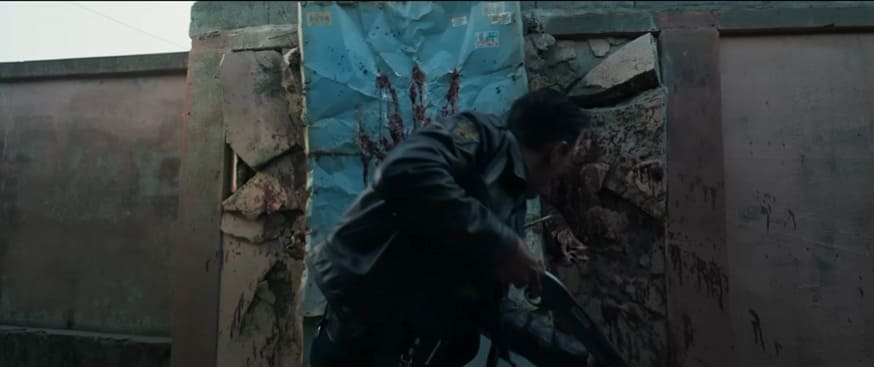
The basic premise sounds simple enough. A remote South Korean village called Hope Harbor is suddenly disturbed by reports of a strange animal roaming nearby. Locals initially believe they are dealing with some kind of dangerous beast, with rumors of a tiger helping to fuel the panic.
That explanation does not survive for long.
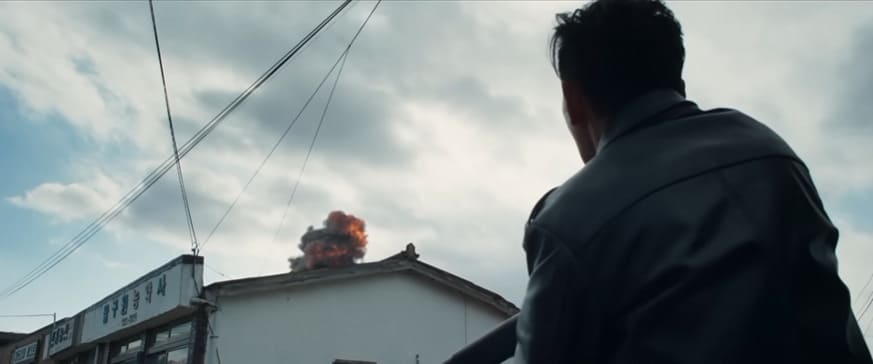
As fires spread through the surrounding area and communication with the outside world is disrupted, the residents begin to understand that the creature is not an ordinary animal. What appears to be a localized incident turns into something far more terrifying: an extraterrestrial invasion involving multiple alien creatures and beings with their own social hierarchy.
This is where Hope separates itself from the typical alien movie. There is no comfortable military command center explaining the situation to everyone. There is no polished squad of soldiers arriving with futuristic weapons five minutes later. The people caught in Hope Harbor are ordinary residents, police officers, hunters, and locals who have absolutely no idea what they are dealing with.
That makes the first major encounters especially chaotic. People make bad decisions because they do not understand the threat. They panic. They argue. They chase things they should probably be running from. And, in classic Na Hong-jin fashion, human stupidity becomes almost as dangerous as the monsters themselves.
What Happens in Hope Harbor?
The story follows several groups of characters as the situation deteriorates. Local police chief Bum-seok, played by Hwang Jung-min, is drawn into the investigation alongside rookie deputy Sung-ae, portrayed by Hoyeon. Their initial assignment sounds like routine law enforcement work, but the case quickly becomes something no police manual could possibly prepare them for.
At the same time, Sung-ki, played by Zo In-sung, organizes a group of local hunters to track the creature through the mountains. This section of the story is particularly effective because the hunters enter the wilderness believing they are the ones in control.
They are not.
The moment the hunters realize they are being hunted instead of doing the hunting is exactly the kind of reversal that makes the premise work. The movie keeps taking familiar monster-movie setups and twisting them into increasingly nasty situations. A group goes after the creature. The creature turns the tables. Someone thinks they have found an escape route. That escape route becomes another trap.
The result is a movie that spends very little time allowing its characters to feel safe.
Na Hong-jin Goes Much Bigger Than The Wailing
Anyone expecting Hope to be a straightforward spiritual successor to The Wailing should adjust their expectations immediately. There are similarities in the sense that both films place ordinary people in situations they cannot comprehend, but the approach here is far more aggressive.
The Wailing thrives on uncertainty. Hope is much more interested in momentum.
The film reportedly runs for around 160 minutes, and that runtime is doing a lot of work. Na Hong-jin has room to move between investigation, character conflict, monster attacks, survival sequences, dark comedy, and increasingly large-scale action. Sometimes that ambition is thrilling. Sometimes it feels like the movie has absolutely no interest in knowing when enough is enough.
That is both the strength and weakness of Hope.
When the movie is firing on all cylinders, the sheer madness is difficult to resist. When the action starts piling one absurd event on top of another, the seams become much easier to notice. This is not a carefully controlled sci-fi thriller. It is a movie that wants to throw the audience into the passenger seat and drive directly through a wall.
Michael Fassbender and Alicia Vikander Are Actually Aliens
Then there is the casting, which might be the most unexpected part of the entire project.
Michael Fassbender, Alicia Vikander, and Taylor Russell play extraterrestrial characters. That is not a fan theory or some post-credit surprise. These Hollywood stars are part of the alien side of the story, portraying members of an extraterrestrial civilization from a distant planet called Ghertu.
This casting decision immediately makes more sense once the movie’s larger mythology starts to emerge. These are not simply mindless monsters that crash onto Earth and start destroying everything they see. The extraterrestrials have their own social structure, divisions, status, and internal conflicts.
That gives Hope a strange extra layer. The humans are fighting for survival, but the aliens are not necessarily operating as one unified force either. Their own relationships and hierarchy complicate what could otherwise have been a fairly standard “”humans versus monsters”” setup.
Na Hong-jin reportedly spent years developing the project, and that long gestation period is easy to believe. Hope feels like a filmmaker trying to cram several different movies into one enormous experiment.
Why the Action Has Divided Viewers
This is where I think the movie becomes genuinely difficult to judge.
There is a lot to admire in the action. The film moves between foot chases, cars, horseback sequences, monster attacks, and desperate attempts to escape the collapsing situation. Hoyeon’s Sung-ae is particularly notable, with the actress reportedly spending months learning to drive a manual-transmission vehicle for demanding stunt work.
That commitment shows. Some of the chase sequences have a raw physicality that polished Hollywood blockbusters often lose. There is a sense that the characters are barely holding things together, which fits the movie’s increasingly desperate atmosphere.
But the visual effects are another story.
Some viewers have criticized the CGI, particularly during sequences where the extraterrestrial creatures interact heavily with vehicles, environments, or human characters. The effects can occasionally look unfinished rather than frightening. For a movie asking the audience to believe in enormous alien creatures, that is a serious problem.
And then there is the durability of the human characters. Characters survive impacts that should realistically leave them unconscious, crippled, or dead. Cars are thrown around. People get slammed into things. Buildings and vehicles take catastrophic damage. Yet the central characters keep moving.
At some point, you stop wondering how they survived and simply accept that the movie has its own physics.
The Humor Is Either Brilliant or Completely Exhausting
One of the strangest choices in Hope is the amount of dark, vulgar humor buried inside the violence.
The movie is not afraid to let characters behave like idiots in moments when a more serious film would demand solemnity. That can be hilarious. It can also destroy tension when a scene desperately needs to remain frightening.
The heavy use of profanity has also become a talking point among viewers, with one particular Korean curse reportedly repeated around 140 times. That tells you quite a lot about the film’s personality. Hope is not interested in being elegant.
It is loud, messy, occasionally ridiculous, and completely comfortable with making its characters look stupid.
Personally, I find that refreshing up to a point. The problem is that the movie occasionally crosses the line between deliberately chaotic and simply exhausting. There are moments when I wanted Na Hong-jin to slow down, cut a scene shorter, or let the horror breathe instead of immediately throwing another piece of insanity at the screen.
What Does the Title Hope Mean?
The title initially sounds almost comically optimistic for a movie filled with alien creatures, death, destruction, and terrified villagers.
There is an obvious literal explanation: Hope Harbor is the name of the community where the story takes place. But the title also works as a thematic idea.
Everyone in the film is desperately searching for some reason to keep going. The humans want to survive. The extraterrestrial characters have their own reasons for fighting. Nobody wants their world to end, and every group is essentially trying to preserve some version of a future.
That makes “”hope”” less of a comforting concept and more of a survival instinct. When everything else has collapsed, it is the last thing people refuse to give up.
What Viewers Like — And What They Absolutely Don’t
The reaction to Hope has been noticeably divided, which feels appropriate for such an aggressively unconventional movie.
| What Works | What Doesn’t |
|---|---|
| Wild, unpredictable action | Uneven CGI in some sequences |
| Strong Korean cast | Characters sometimes survive absurd injuries |
| Fassbender and Vikander’s unusual alien roles | Long runtime can test patience |
| Genre-blending atmosphere | Heavy profanity and dark humor may become repetitive |
| Distinctive sci-fi mythology | Story can become deliberately chaotic |
Fans who enjoy unpredictable genre cinema have plenty to chew on. People looking for a clean, logically constructed alien thriller may walk away considerably less impressed.
And that divide is not necessarily a bad thing. I’d much rather watch a strange movie that occasionally makes baffling decisions than another perfectly assembled sci-fi product that I have forgotten five minutes after leaving the theater.
Does Hope Set Up a Sequel?
The story does not treat its ending as a neat full stop. Na Hong-jin has reportedly already written a script for a direct sequel, which makes the unresolved elements of the first film considerably more interesting.
That possibility also changes the way the title can be interpreted. If the characters manage to carry even the smallest chance of survival into another chapter, then “”hope”” becomes more than a thematic word attached to a village. It becomes the thing keeping the entire story alive.
Whether another film actually delivers on that promise is a separate question. For now, Hope clearly wants to be the beginning of something larger rather than a completely self-contained alien invasion story.
So, Should You Watch Hope?
If your idea of a good alien movie is a restrained invasion thriller with military strategy, clean world-building, and carefully explained rules, Hope may drive you insane.
If you want South Korean genre filmmaking, bizarre extraterrestrials, brutal action, dark comedy, huge monsters, Hollywood stars playing aliens, and a director willing to make some genuinely strange choices, this is a much easier recommendation.
The movie is not flawless. The CGI can be distracting, the pacing occasionally buckles under the weight of its enormous runtime, and some of the character survival stretches credibility to breaking point. But there is something undeniably exciting about a filmmaker with Na Hong-jin’s track record deciding to make a giant, violent alien movie instead of simply repeating the formula that made him famous.
So yes, Hope is an alien movie. But calling it an alien movie barely describes what it is actually trying to do. It is part creature feature, part survival thriller, part dark comedy, part cosmic horror, and part chaotic Korean action film. Sometimes those ingredients clash horribly. Other times, the collision is exactly what makes the movie worth watching.
And frankly, after sitting through enough interchangeable sci-fi blockbusters, I will take a messy Na Hong-jin experiment over another safe alien invasion any day.