
There are certain filmmakers whose names immediately make me expect a particular kind of movie. With Ridley Scott, I want atmosphere, scale, striking production design, and images that stay in my head after the credits. The Dog Stars delivers all of that, but what surprised me most is how little it seems interested in being a conventional post-apocalyptic blockbuster.
Based on Peter Heller’s 2012 novel, The Dog Stars arrives as a very different kind of survival story. Yes, the world has collapsed. Yes, there are armed survivors, dangerous strangers, abandoned buildings, and the constant possibility of violence. But Scott isn’t particularly interested in showing us the apocalypse as an endless fireworks display.
Instead, he asks a much more uncomfortable question: What is left of a person when survival becomes the only thing they are good at?
That choice makes The Dog Stars one of the more unusual sci-fi films of 2026. I can absolutely understand why some viewers will find it too slow. I also understand why others, myself included, may find that slower rhythm exactly what makes it work.
A Post-Apocalyptic Story That Actually Feels Lonely
The setup is brutal without being overly complicated.
Nine years after a devastating avian flu pandemic wipes out more than 90% of the world’s population, Hig has built a fragile existence inside an abandoned airport hangar in Colorado. He’s a former pilot and mechanic, living with his dog Jasper and Bangley, an ex-Marine whose entire personality seems to have been rebuilt around one principle: trust nobody and stay alive.
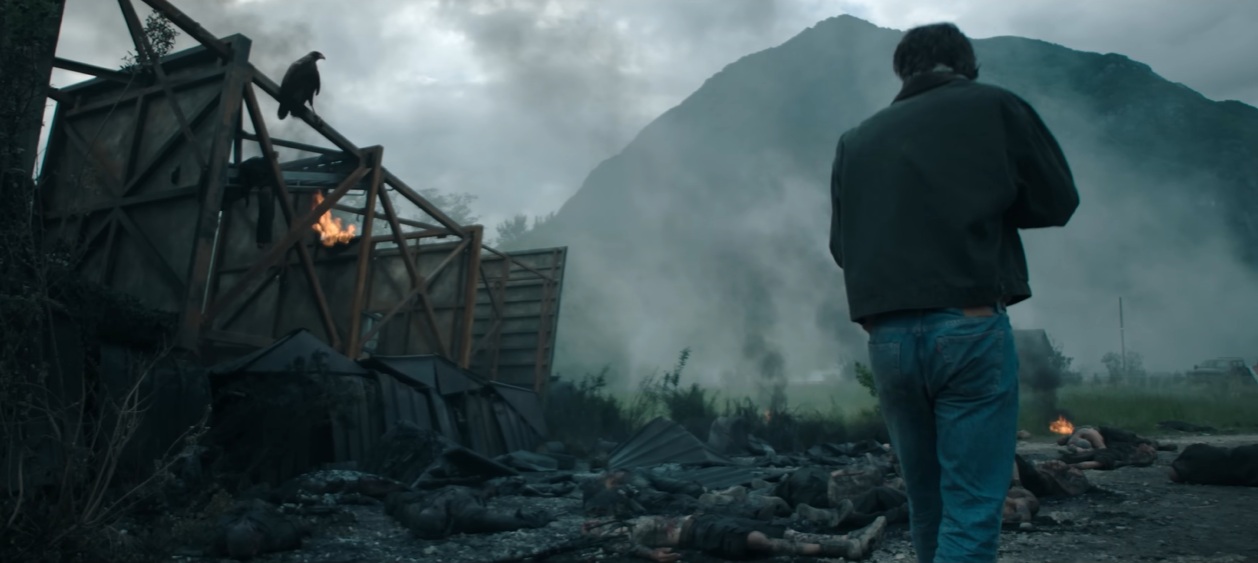
Hig is different.
He can still fly. He still looks at the mountains and wonders what’s beyond them. He still cares about animals, machines, gardening, and other people. Those things might sound insignificant compared with ammunition, food, and fuel, but that’s precisely the point.
The film understands that civilization doesn’t disappear all at once. Buildings remain. Cars remain. Aircraft remain. Personal memories remain.
What disappears is the assumption that any of those things will still matter tomorrow.
That gives The Dog Stars a melancholy atmosphere that I found much more interesting than another movie about survivors fighting increasingly ridiculous armies of villains.
Hig’s yellow Cessna becomes particularly important. His flights aren’t simply reconnaissance missions. They’re his connection to the world that existed before the pandemic and perhaps his only remaining source of genuine freedom.
Then comes the radio transmission.
A faint voice appears on the old equipment during one of Hig’s flights, coming from somewhere beyond the territory he knows. It’s a tiny moment, but it completely changes the emotional direction of the story. For Hig, that voice represents the possibility that humanity might not be finished yet.
And honestly, that’s where the movie grabbed me.
Jacob Elordi Gives Hig a Surprisingly Quiet Performance
Jacob Elordi has the physical presence you’d expect from a major Hollywood leading man, but The Dog Stars wisely refuses to turn him into an unstoppable action hero.
Hig is exhausted.
He is grieving.
He is lonely.
Most importantly, he still wants to care about something.
Elordi plays all of that without constantly announcing it to the audience. There are long stretches where his character barely says anything, and his face does most of the work. His relationship with Jasper is especially effective because the dog isn’t treated like a cheap emotional prop. Jasper represents routine, companionship, and the tiny piece of normality Hig refuses to abandon.
Some of the film’s best moments involve nothing more than Hig repairing equipment, preparing for another flight, or spending time with the dog.
That’s probably where viewers will divide.
If you need something dramatic happening every few minutes, The Dog Stars may test your patience. If you enjoy movies that allow characters to simply exist inside their environment, there’s a lot to appreciate here.
Josh Brolin Almost Steals the Movie
Josh Brolin’s Bangley is the perfect counterweight to Hig.
Where Hig wants to believe there might still be something worth saving, Bangley assumes the worst because expecting the worst has kept him alive.
Their relationship is one of my favorite parts of the film.
Bangley isn’t just the stereotypical grumpy survivalist. Brolin gives him a surprisingly complicated mixture of aggression, humor, fear, and genuine affection. He can be intimidating one minute and almost absurdly funny the next.
The two men have completely different definitions of survival.
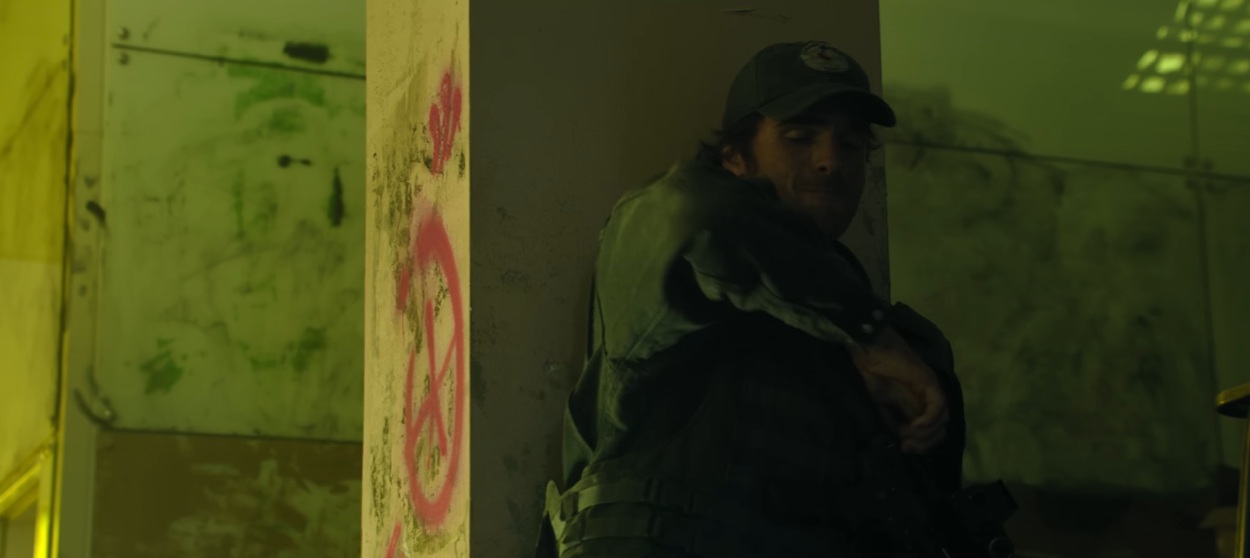
Hig wants to remain human. Bangley wants to remain alive.
The tension between those ideas gives the first half of the movie much of its emotional weight.
And Scott wisely lets their relationship develop through everyday details rather than turning every disagreement into a giant dramatic confrontation.
Ridley Scott’s World Is the Real Star
Visually, this is where The Dog Stars feels unmistakably like a Ridley Scott film.
The movie’s post-apocalyptic Colorado doesn’t look like a theme park built for a disaster movie. It looks abandoned.
That’s an important distinction.
Empty roads are slowly being reclaimed by vegetation. Old structures sit exposed to the weather. The landscape is beautiful precisely because nature doesn’t care that humanity has disappeared.
Cinematographer Erik Messerschmidt gives the movie an impressive visual contrast between the open skies and the decaying world below.
The skies feel almost inviting, while the ground often feels heavy and suffocating. Hig’s flights consequently become some of the film’s most beautiful sequences.
I particularly liked that Scott doesn’t seem desperate to fill every frame with digital destruction. There are no endless CGI crowds or ridiculous visual effects designed simply to remind us that the world ended.
The production design does more with less.
The hangar looks like a place people have actually been surviving in for years. Clothing is worn rather than stylishly distressed. Equipment has been repaired, modified, reused, and repaired again.
That tactile quality makes the world believable.
The Movie’s Biggest Risk Is Also Its Biggest Strength
Here’s the part where I suspect The Dog Stars will lose some viewers.
It takes its time.
The movie runs for around 1 hour and 58 minutes, but it doesn’t feel structured like a traditional summer sci-fi release. There are long stretches devoted to flying, maintaining equipment, exploring abandoned spaces, observing the landscape, and allowing Hig’s thoughts to breathe.
There isn’t a constant stream of action pushing the plot forward.
For me, that worked more often than it didn’t.
The film is essentially a post-apocalyptic neo-western with the soul of a character drama. Its real conflict isn’t simply Hig versus dangerous survivors. It’s Hig versus the temptation to stop caring.
That makes the quieter scenes meaningful.
Still, I wouldn’t recommend this blindly to someone expecting Gladiator-style spectacle or the relentless military intensity of Black Hawk Down. Those viewers may find the middle section painfully restrained.
What Works
- Ridley Scott’s visual direction gives the ruined world an extraordinary sense of scale.
- Jacob Elordi delivers a restrained performance built around grief rather than conventional heroics.
- Josh Brolin brings humor and menace to Bangley without making him predictable.
- The relationship between Hig and Jasper provides genuine emotional warmth.
- The film’s hopeful outlook feels refreshing in a genre often obsessed with nihilism.
- The practical-looking production design makes the setting feel lived-in and believable.
What May Not Work
- The deliberately slow pacing won’t appeal to every sci-fi fan.
- Action is used sparingly.
- Some of the introspective passages may feel repetitive.
- Viewers expecting a traditional survival thriller could be disappointed.
Margaret Qualley and the Supporting Cast
Margaret Qualley brings some welcome unpredictability when she enters the story, while Guy Pearce, Allison Janney, and Benedict Wong help expand the film beyond Hig and Bangley’s isolated world.
The supporting performances aren’t really there to dominate the story. Instead, they offer different ideas about what rebuilding society might actually mean.
That’s another thing I appreciated.
The film doesn’t treat the apocalypse as an excuse to create one giant group of evil survivors. Different people have different answers to the same question: what kind of person should you become when nobody is watching?
Some choose control.
Some choose violence.
Some choose community.
And some simply keep moving because stopping would force them to think about everything they’ve lost.
The Optimism Is Surprisingly Bold
Ridley Scott has apparently been interested in pushing against the modern tendency to make every post-apocalyptic story completely miserable.
You can feel that philosophy throughout The Dog Stars.
Gardening matters.
Animals matter.
Friendship matters.
Flying matters.
A quiet conversation matters.
These things aren’t presented as distractions from survival. They are the reason survival has any value in the first place.
That gives the movie an almost old-fashioned sincerity that I found refreshing.
It would have been very easy to make The Dog Stars another grim story where everyone is secretly terrible and the world deserves to remain dead. Scott instead asks whether humanity can recover precisely because some people refuse to surrender their compassion.
That doesn’t always work perfectly, but I respect the attempt.
Facing El Chapo 2026 Ending Explained: Who Dies and What Happens to the Officers?
The Dog Stars 2026 Review: My Verdict
| Category | My Take |
|---|---|
| Story | 8/10 |
| Performances | 9/10 |
| Cinematography | 9.5/10 |
| Production Design | 9/10 |
| Pacing | 7/10 |
| Atmosphere | 9.5/10 |
| Overall | 8/10 |
I went into The Dog Stars expecting another impressive Ridley Scott science-fiction spectacle. What I got was considerably quieter and, in some ways, more interesting.
This isn’t really a movie about the end of civilization.
It’s about what you do after the end.
Jacob Elordi gives Hig the kind of vulnerable performance that could easily have become overly sentimental in another movie, while Josh Brolin provides the necessary rough edges. Their chemistry gives the story a human center, and Jasper the dog adds an emotional dimension that feels surprisingly genuine rather than manipulative.
The biggest selling point, though, is Scott’s filmmaking. The landscapes are gorgeous, the production design feels tangible, and the aerial sequences are spectacular without turning into empty visual noise.
Would I recommend it to everyone?
Probably not.
If you’re looking for constant action, zombies, massive set pieces, or a traditional survival thriller, this is not that movie. But if you’re willing to slow down and spend nearly two hours inside the head of a grieving pilot trying to rediscover a reason to hope, The Dog Stars has something special going for it.
For me, that makes it one of the more memorable sci-fi dramas of 2026.
My rating: 8/10.
Not perfect. Not always easy to sit through. But visually gorgeous, unusually sincere, and far more emotionally thoughtful than I expected.


