Netflix has released plenty of gripping true-crime documentaries over the years, but A Toxic Love Story genuinely caught me off guard. I started watching it expecting another familiar story about an obsessive ex, cyber harassment, and a criminal investigation that seemed straightforward. Instead, I ended up pausing the documentary several times just to process what had happened.
The biggest strength of this documentary isn’t simply the shocking case itself. It’s the way the story deliberately manipulates your assumptions before pulling the rug out from under you. Looking back after the ending, almost every early scene feels completely different.
If you’re here because you finished the documentary and immediately searched for an ending explanation, you’re definitely not the only one.
At First, Everything Looks Obvious
For nearly the first half of the documentary, the evidence appears overwhelming.
Ian Diaz, a U.S. Deputy Marshal, marries Angela after a whirlwind romance. Soon afterward, Angela begins receiving disturbing anonymous emails filled with violent threats. Then things become much darker when someone posts Craigslist ads using Angela’s identity, encouraging strangers to carry out an assault while ignoring any resistance because it was supposedly “part of the fantasy.”
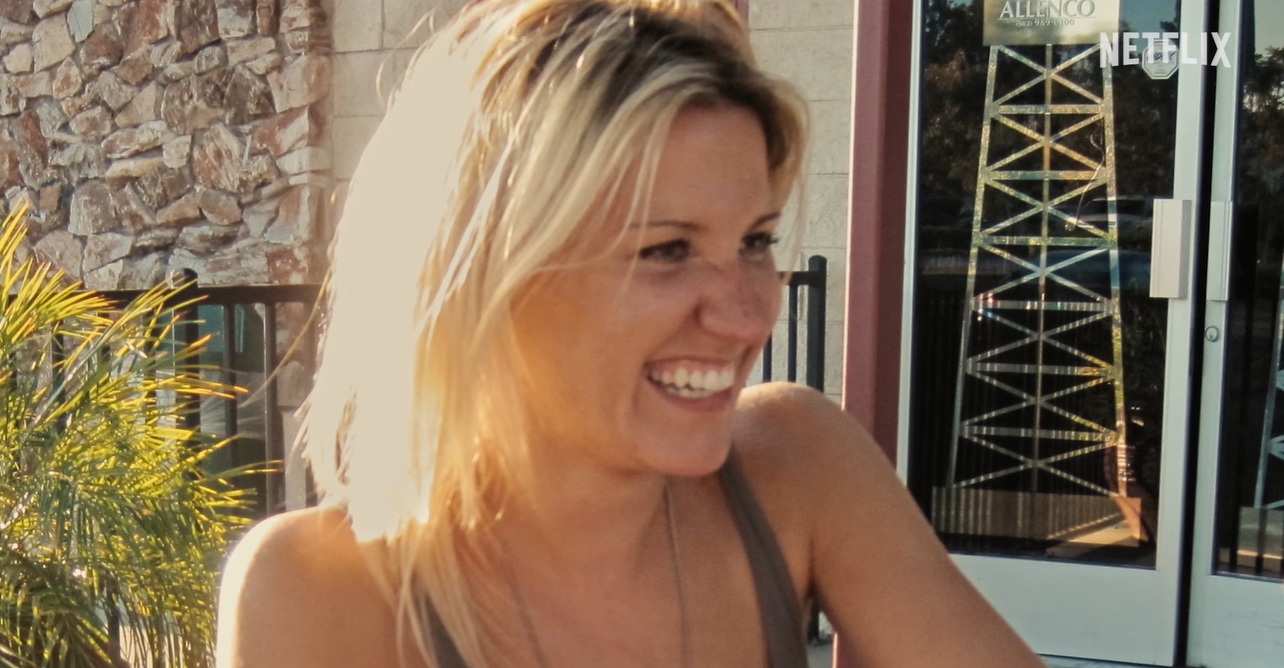
It’s horrifying.
Naturally, suspicion falls on Ian’s former fiancée, Michelle Hadley. She had history with Ian, they previously lived together, and investigators quickly built what looked like an airtight case.
Watching those early interviews, I honestly believed Michelle was guilty. That’s exactly why this documentary works so well—it places viewers in almost the exact same position as investigators back in 2016.
The Documentary’s Biggest Twist Isn’t Even the Ending
Most crime documentaries save one major reveal for the final minutes.
A Toxic Love Story flips that formula.
Halfway through, everything begins falling apart.
Investigators uncover that Angela fabricated major parts of her own life, including a pregnancy and serious illnesses she allegedly used to gain sympathy. Once those lies surfaced, digital investigators started questioning every other piece of evidence connected to the harassment campaign.
That’s when the story completely changes.
Instead of proving Michelle was behind the threats, forensic evidence began pointing inside Ian and Angela’s own home.
Suddenly, the supposed victim became the prime suspect.
I remember thinking, “Well…that’s the twist.”
It wasn’t.
The Real Ending Changes the Entire Story
The final act introduces another layer that completely redefines everything viewers have watched.
Federal investigators dug deeper than the original local investigation ever did.
Rather than stopping with Angela’s conviction, they analyzed government devices connected to Ian Diaz. According to the documentary, that deeper investigation uncovered evidence suggesting Ian wasn’t simply fooled by his wife.
He allegedly helped create the entire nightmare.
That’s the moment where every earlier scene suddenly feels uncomfortable to revisit.
Every emotional interview.
Every police interaction.
Every expression of concern.
You begin asking yourself whether you were watching genuine fear—or an elaborate performance.
That realization hit me harder than any dramatic courtroom reveal.
Ian and Angela Worked Because Their Personalities Matched
One thing I appreciated about the documentary is that it doesn’t try to turn the story into a Hollywood-style mastermind narrative.
Instead, it presents two people whose worst traits amplified each other.
From interviews shown throughout the film, investigators describe Ian as someone obsessed with control.
Angela, meanwhile, seemed desperate for sympathy and attention.

Separate, those characteristics are concerning.
Together, they allegedly created one of the most disturbing false-victim stories I’ve seen covered in modern true crime.
Instead of focusing only on technical evidence, the documentary spends time exploring the psychological side of manipulation.
That choice makes the ending feel much heavier than simply revealing “who did it.”
Michelle Hadley Is the Emotional Center of the Documentary
For me, Michelle isn’t just the innocent victim.
She’s the reason the documentary works emotionally.
Imagine spending months in jail for crimes you never committed while strangers online believe you’re a violent stalker.
Your reputation disappears overnight.
Friends disappear.
Your career collapses.
Even after being cleared, none of those lost years magically return.
One detail really stayed with me.
Michelle explains that while Ian eventually sold the condo they’d once shared, she never recovered the money she’d invested in it.
That small fact somehow hurts almost as much as the larger story.
Justice eventually arrived—but not every loss could be repaired.
Why Did Ian Turn Against Angela?
This remains the biggest question after the credits roll.
If Ian supposedly helped orchestrate everything, why would he suddenly expose Angela’s lies about the fake pregnancy?
The documentary doesn’t provide one definitive answer, which honestly makes it more interesting.
The two explanations that make the most sense are:
- Self-preservation. Once Angela’s fabrications became impossible to hide, Ian may have believed sacrificing her was the easiest way to protect himself.
- Overconfidence. He may have assumed investigators would stop once Angela became the obvious culprit, never expecting federal investigators to analyze his own digital activity years later.
Personally, I lean toward the first explanation.
Throughout the documentary, Ian comes across as someone who always wanted to stay one move ahead.
When that strategy stopped working, protecting himself likely became the only priority.
The Biggest Lesson Isn’t About Technology
Many viewers focus on the cyberstalking aspect.
That’s understandable.
Fake emails.
Anonymous accounts.
Craigslist posts.
Digital evidence.
But I actually think the documentary is about something much scarier.
Technology was simply the weapon.
Manipulation was the real crime.
The most unsettling scenes aren’t the computer forensics—they’re watching how easily authority figures accepted a convincing story because it fit existing assumptions.
Once investigators believed Michelle was an obsessed ex, nearly every new piece of evidence reinforced that belief.
It’s an uncomfortable reminder that confirmation bias doesn’t only exist online.
Where To Watch A Toxic Love Story 2026 Movie Online Free Streaming Legally
Where Everyone Ended Up
| Person | Outcome |
|---|---|
| Michelle Hadley | Cleared of all allegations, rebuilt her life, became a mother, and finally moved forward. |
| Angela Diaz | Served her prison sentence and reportedly left California after her release. |
| Ian Diaz | Later convicted on federal charges connected to the scheme and sentenced to a lengthy prison term. |
My Biggest Takeaway After Watching
I’ve watched a lot of true-crime documentaries over the past decade.
Some are shocking.
Some are emotional.
Some rely on sensational editing more than actual storytelling.
A Toxic Love Story stands out because it weaponizes the audience’s own expectations.
It quietly convinces you that you’ve already solved the mystery.
Then it asks an uncomfortable question:
What if your certainty was exactly what the real perpetrators were counting on?
That’s what stayed with me long after the credits ended.
Not the cyber evidence.
Not the courtroom scenes.
Not even the arrests.
It was realizing how easily an innocent person can become the villain when a believable narrative forms before the facts are fully understood.
The documentary also deserves credit for resisting the temptation to sensationalize Michelle Hadley’s recovery. Instead of ending with revenge or dramatic confrontation, it finishes on something much more meaningful: her rebuilding a life that someone else tried to erase. That ending feels quietly powerful because it reminds viewers that survival itself can be a victory.
For true-crime fans, this is easily one of Netflix’s most unsettling documentaries in recent years. It doesn’t rely on graphic violence or elaborate reenactments. The horror comes from ordinary people, digital deception, and the frightening realization that reality can be manipulated with enough patience and planning. By the time the credits roll, you’ll probably do exactly what I did—rewind several scenes, rethink your first impressions, and wonder how many other stories in the real world look completely different once every piece of evidence finally comes to light.