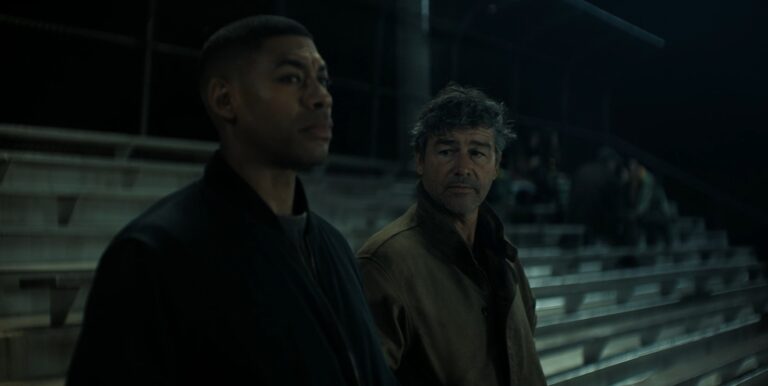
Netflix releases true-crime documentaries every year, but most of them follow the exact same formula. A shocking crime, a few interviews, dramatic music, a predictable courtroom ending, and that’s it. A Toxic Love Story (2026) refuses to play by those rules, and honestly, that’s exactly why I couldn’t stop thinking about it long after the credits rolled.
I expected another documentary about a toxic relationship spiraling out of control. What I got instead was a psychological maze that constantly challenges everything you think you know. Every time I became convinced I’d figured someone out, the film completely flipped my perspective without feeling cheap or manipulative.
That’s surprisingly rare.
This isn’t a documentary that relies on shocking twists for entertainment. Instead, it slowly builds a web of lies, digital deception, and emotional manipulation until you’re questioning nearly every assumption you’ve made during the previous hour.
A Romance That Looks Too Perfect
Everything begins with what appears to be a dream relationship.

Ian Diaz, a respected U.S. Marshals Service deputy, meets Angela Connell in California. Their relationship moves incredibly fast. Within weeks they’re living together, engaged, and planning an entire future together. Soon comes marriage, exciting family news, and what looks like the picture-perfect suburban American life.
If this opening feels almost suspiciously perfect, you’re paying attention.
The documentary intentionally spends enough time letting viewers settle into that comfortable narrative before quietly introducing tiny cracks beneath the surface. Nothing screams danger immediately, yet something always feels just a little off.
That slow burn deserves credit because many documentaries rush directly into chaos. This one earns every uncomfortable moment.
When Online Harassment Stops Being “Just Internet Drama”
The real nightmare begins through anonymous emails.
An account operating under the disturbing alias LilithIsTruth starts sending increasingly aggressive messages filled with threats, insults, and bizarre mythological references. At first it resembles another cyberstalking case.
Then everything escalates.
Fake online advertisements begin appearing across Craigslist, impersonating Angela and inviting strangers to visit the couple’s home under horrifying circumstances. The instructions specifically encourage visitors to ignore resistance because it’s supposedly “part of the fantasy.”
Reading about this sounds disturbing.
Watching investigators explain how easily this translated into real-world danger is genuinely unsettling.
Once strangers actually begin arriving at the property, the documentary shifts from digital mystery into something far darker.
The Investigation Seems Almost Too Easy
Law enforcement quickly finds what appears to be an obvious suspect.
Michelle Hadley, Ian’s former fiancée, becomes the center of the investigation almost immediately.
Looking only at the surface, the story seems painfully familiar:
- Former partner
- Recent breakup
- New relationship
- Jealousy
- Escalating harassment
Case closed?
Not even close.
One thing I appreciated is how the documentary doesn’t openly tell viewers what to believe. Instead, it presents events almost exactly as investigators experienced them at the time. You’re encouraged to reach the same conclusions they did—which makes later discoveries far more powerful.
The Documentary Completely Changes Direction
About halfway through, the entire tone changes.
Without revealing the biggest surprises, federal digital forensic specialists begin re-examining evidence that local investigators originally considered airtight.
This becomes less about relationship drama and far more about technology.
- IP addresses
- Metadata
- Email routing
- Device histories
- Digital fingerprints
Instead of dramatic witness testimony, the documentary lets forensic evidence slowly dismantle assumptions piece by piece.
As someone who watches far too many true-crime documentaries, I genuinely appreciated this shift. Too many productions lean on emotional interviews while barely explaining the investigation itself.
Here, the investigation becomes the story.
Digital Evidence Doesn’t Care About Personal Opinions
One of the strongest aspects of A Toxic Love Story is its emphasis on forensic analysis over emotional speculation.
People lie.
Memories become distorted.
Media narratives evolve.
Digital evidence is much harder to manipulate once specialists begin digging deeply enough.

The documentary demonstrates how dangerous premature conclusions become when investigators stop asking difficult questions simply because a theory appears convincing.
That lesson feels incredibly relevant today.
We’re constantly surrounded by screenshots, edited videos, anonymous accounts, AI-generated content, fake profiles, and manipulated conversations.
This case almost feels like a warning from the future despite beginning nearly a decade ago.
More Than True Crime
Calling this “another stalking documentary” would honestly undersell what Netflix accomplished.
Several major themes quietly run underneath the investigation.
Identity manipulation
The internet allows ordinary people to construct almost unlimited versions of themselves. The documentary explores how terrifying that becomes when deception enters real life.
Authority bias
People naturally trust official titles.
Police trust fellow officers.
Communities trust respected professionals.
Media trusts early investigations.
The documentary repeatedly asks whether those assumptions sometimes create dangerous blind spots.
Public judgment
One accusation.
One headline.
One viral story.
That’s sometimes enough to permanently define someone’s reputation before evidence has fully emerged.
The film never lectures viewers about these issues.
It simply shows what happened and lets the audience wrestle with uncomfortable questions afterward.
What Makes This Documentary Different?
| Strength | Why It Works |
|---|---|
| Excellent pacing | Every revelation feels earned instead of manufactured. |
| Strong forensic focus | Digital investigation receives genuine attention instead of becoming background filler. |
| Emotional restraint | The documentary avoids excessive dramatization and trusts viewers to connect the dots. |
| Real interviews | Contemporary interviews add weight without overwhelming the investigation. |
| Constant perspective shifts | Viewers repeatedly reassess earlier assumptions naturally. |
None of these elements would matter individually.
Together, they create something surprisingly addictive.
A Toxic Love Story Ending Explained: The Shocking True Story and Deception Breakdown
My Biggest Takeaway
What frustrated me most wasn’t the crime itself.
It was watching how easily everyone—including investigators, media outlets, and ordinary people—accepted the simplest explanation because it fit an already familiar narrative.
We’ve all seen similar stories before.
Jealous ex.
Obsessive stalker.
Relationship revenge.
Once that storyline appears believable, people stop looking for alternatives.
That’s probably the most disturbing part of the entire documentary.
Not the emails.
Not the online harassment.
Not even the criminal investigation.
The speed with which assumptions become accepted as truth.
Is It Worth Watching?
Absolutely.
Even if you think you’ve consumed every worthwhile true-crime documentary on Netflix, this one deserves attention.
It avoids sensationalism more often than expected, focuses heavily on evidence instead of cheap emotional manipulation, and rewards viewers who pay close attention to details.
I also appreciated that it doesn’t rely entirely on shocking twists to stay interesting. The investigation itself is compelling enough that even knowing the real-world case beforehand wouldn’t completely ruin the experience.
If anything disappointed me, it’s that some supporting individuals deserved more screen time. A few interviews feel surprisingly brief considering how significant those people became during the investigation. Another twenty or thirty minutes could have expanded those perspectives without hurting the pacing.
Still, that’s a relatively minor complaint.
A Toxic Love Story succeeds because it refuses to hand viewers simple answers. It asks uncomfortable questions about digital identity, institutional trust, online deception, and how easily public opinion can destroy someone’s life before facts catch up.
That’s exactly what great true crime should do.
Instead of leaving me shocked by a criminal case, it left me questioning how confidently we judge people based on incomplete information. Honestly, that’s a much more unsettling feeling than any jump scare or dramatic courtroom reveal Netflix could have manufactured.