There are Batman stories where Bruce Wayne loses a fight.
Then there are stories where losing the fight changes everything.
Batman: Knightfall – Part 1: Knightfall belongs firmly in the second category.
I went into this movie knowing exactly what was coming. Anyone familiar with the classic Knightfall comics knows the image: Bane, exhausted Batman, one horrifying knee, and a spine that simply cannot take another hit. So I figured the big question wouldn’t be what happens? It would be whether the animated film could make that moment actually hurt.
It does.
And honestly, what surprised me most wasn’t the brutality of Bane’s victory. It was how carefully the movie spends its entire runtime making Bruce Wayne responsible for his own destruction.
Bane doesn’t magically become stronger than Batman. He wears Batman down until there’s almost nothing left to beat.
That’s what makes the ending so nasty.
Bane Doesn’t Hunt Batman. He Dismantles Him.
The smartest thing about this version of Bane is that he doesn’t treat Batman like a guy waiting for the right punch.
He treats him like a system.
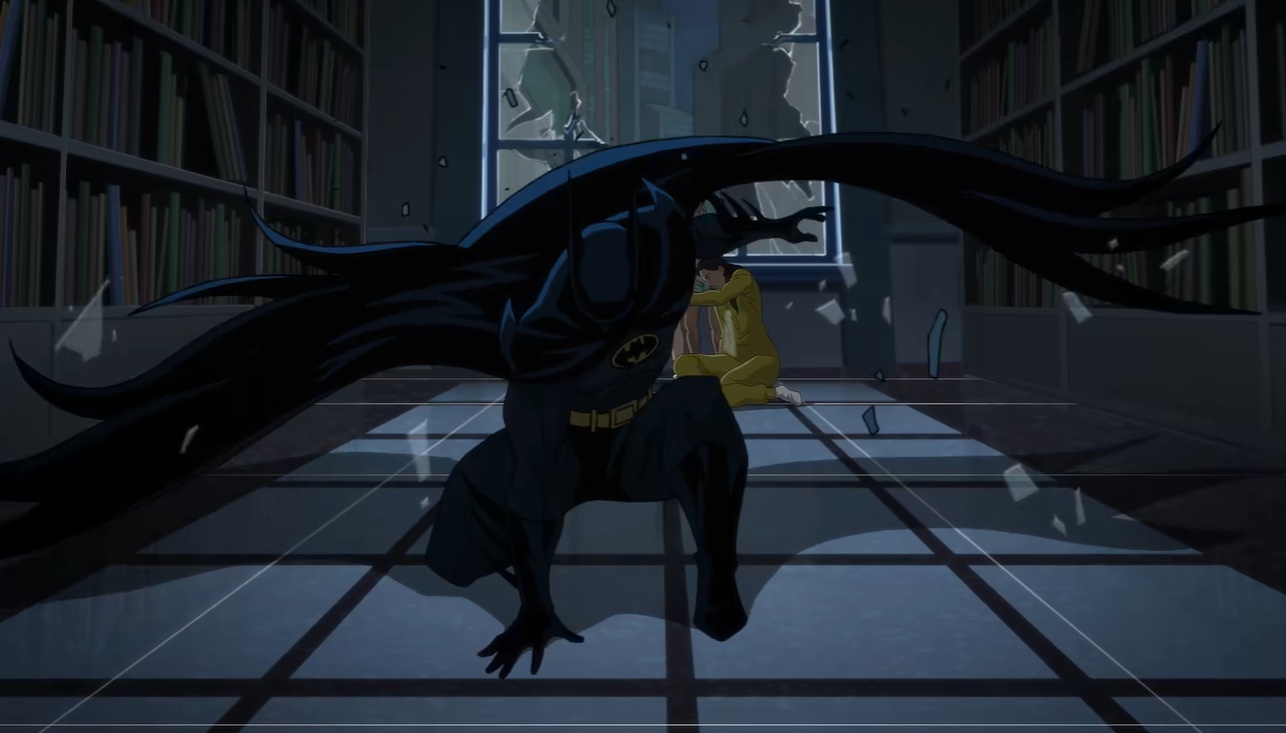
And systems can be overloaded.
The movie’s opening attack on Arkham Asylum is basically Bane pulling the pin on a grenade and handing it to Gotham. Once the inmates escape, Bruce suddenly has too many fires burning at once.
Joker.
Scarecrow.
Riddler.
Ventriloquist.
Victor Zsasz.
Harvey Dent.
Batman keeps putting them down, one crisis after another, but there is no recovery period. No quiet night in the Batcave. No opportunity to breathe, patch himself up and think three moves ahead.
That’s exactly what Bane wants.
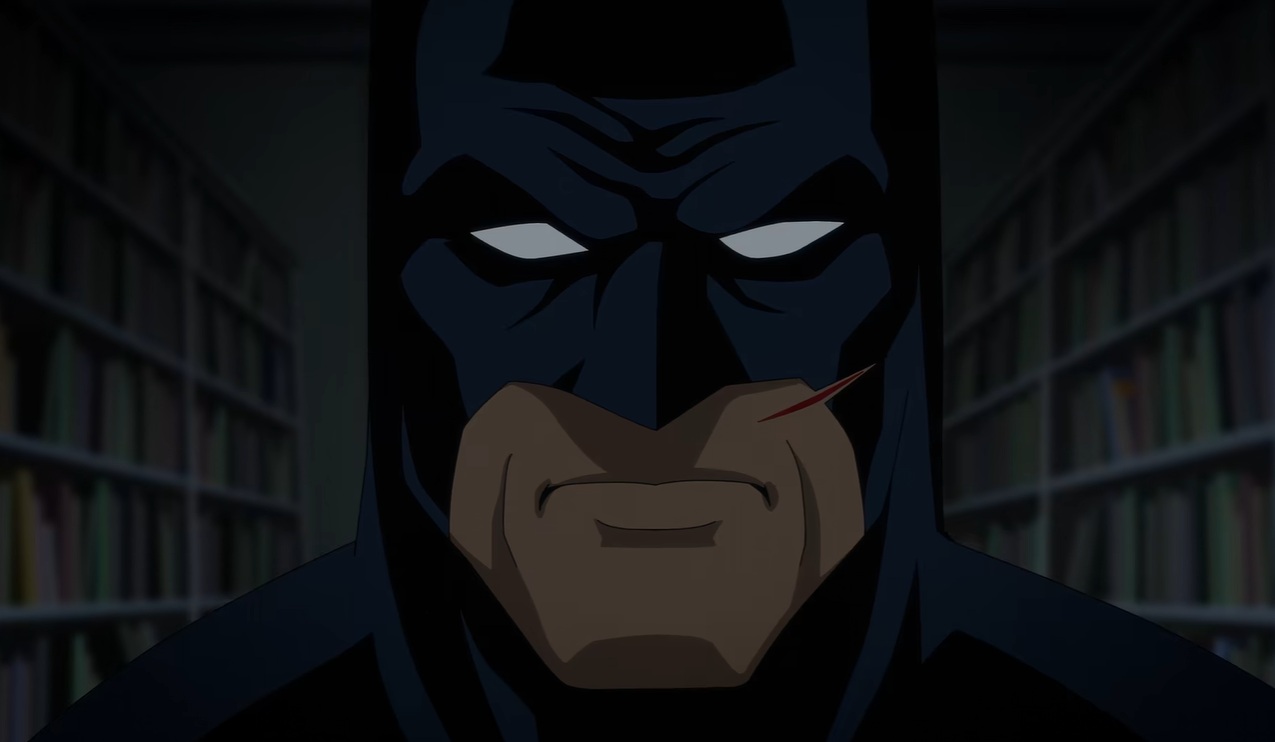
I loved this aspect because it makes Bruce’s eventual defeat feel earned rather than convenient. Batman isn’t suddenly incompetent. He’s simply running on an empty tank.
The animation repeatedly sells this through little details. His movements become heavier. His reactions aren’t quite as sharp. His voice sounds increasingly strained. He looks less like the untouchable creature Gotham fears and more like an aging man who hasn’t slept properly in days.
And that’s the trap.
Bruce knows he’s exhausted.
He keeps going anyway.
That’s Batman’s greatest strength and, in this story, his fatal weakness.
The Batcave Isn’t Safe Anymore
The final confrontation gets especially ugly because Bane doesn’t just find Bruce.
He finds home.
Watching Bane penetrate the Batcave is disturbing for a completely different reason than the eventual fight. The Batcave is supposed to be the one place where Bruce has control. Every computer, vehicle, weapon and contingency plan exists because he designed it that way.
Then Bane walks straight into it.
Alfred is overwhelmed. Tim Drake tries to protect his mentor and gets caught in the nightmare. By the time Bruce finally confronts Bane, this isn’t the calculated Batman we’ve been watching earlier.
It’s an angry, exhausted Bruce Wayne.
And that distinction matters.
Bane has spent the entire movie taking away Bruce’s advantages. Now he takes away his emotional control too.
That’s when the fight becomes almost painful to watch.
Bane’s Victory Is Brutal Because Bruce Never Had a Chance
Let’s be honest: the fight is a massacre.
Bruce throws everything he has at Bane, but the physical difference is ridiculous by this point. Bane’s Venom-enhanced strength gives him an enormous advantage, but the movie doesn’t portray the serum as some magic shortcut to becoming unstoppable.
Bane was already terrifying.
Venom simply pushes him beyond the physical limits of an exhausted Bruce Wayne.
Batman tries gadgets. He tries technique. He tries sheer aggression.
Nothing works.
And then comes the moment.
Bane gets hold of Bruce, lifts him up and drives him down across his knee.
The sound is enough.
You don’t need some huge musical cue telling you that this is the point of no return. The image and the impact do all the work.
Batman is broken.
Not metaphorically.
Physically.
And Bane knows exactly what he’s accomplished.
The Bat-Signal Scene Is Even Crueler Than the Back Break
This is probably the part of the ending that stuck with me most.
Bane could have simply left Bruce in the Batcave.
He could have killed him.
He could have disappeared and allowed Gotham to slowly discover what happened.
Instead, he turns Batman’s defeat into a public announcement.
Bruce’s broken body is carried into Gotham and displayed over the Bat-signal in front of the police and the city.
That is such a nasty piece of symbolism.
The Bat-signal has always represented Gotham calling for Batman.
Now Batman is literally lying broken on top of it.
That’s not just a villain celebrating a victory. That’s Bane attacking the idea of Batman itself.
For years, Gotham has treated the Dark Knight almost like an urban myth. Criminals know he’s human, but fear makes him larger than life. He appears from nowhere, survives impossible situations and disappears before anyone can really understand him.
Bane destroys that illusion in one public spectacle.
Suddenly everyone knows the truth.
Batman can be beaten.
Batman can bleed.
Batman can break.
And Gotham has to keep going without him.
Why Bane’s Plan Works So Well
If I had to reduce Bane’s strategy to a few steps, it’s basically this:
| Bane’s Move | What It Does to Batman |
|---|---|
| Free Arkham’s inmates | Forces Bruce into nonstop combat |
| Create multiple simultaneous crises | Prevents Batman from resting |
| Exploit Bruce’s obsession | Keeps him fighting past his limits |
| Invade the Batcave | Removes his final safe space |
| Defeat him physically | Leaves Bruce permanently incapacitated |
| Display him publicly | Destroys Batman’s psychological power |
That’s why I think this is one of the better interpretations of the Knightfall premise.
Bane doesn’t win because the script suddenly forgets how Batman works.
He wins because he understands exactly how Batman works.
Bruce’s refusal to stop becomes the weapon used against him.
Jean-Paul Valley Is the Real Nightmare Waiting in the Wings
And then there’s Jean-Paul Valley.
This is where the ending stops being a story about Batman’s defeat and starts becoming something much more dangerous.
Valley isn’t simply another hero waiting to wear the costume.
He’s been psychologically conditioned by the Order of Saint Dumas, with the programming known as “The System” buried deep inside him.
That’s a terrifying foundation for someone inheriting the Batman identity.
Bruce Wayne built his entire crusade around rules.
Valley has something else inside him.
Violence.
Religious conditioning.
Obsession.
And a willingness to cross boundaries that Bruce spent his entire life refusing to cross.
So when Jean-Paul eventually becomes Azrael and takes over as Gotham’s Batman, the question isn’t whether he’ll be effective.
He absolutely will be.
The question is what happens when Batman stops caring where the line is?
That’s the hook I think Knightquest needs to lean into.
What Batman: Knightfall Part 2 Needs to Deliver
The setup for the next chapter is pretty clear.
Bruce is going to have to recover from a catastrophic physical and psychological collapse while Jean-Paul Valley takes over the role he can no longer perform.
And Jean-Paul isn’t going to be a simple replacement.
He’s going to be an escalation.
Expect his Batman to become increasingly armored and weaponized, with a much more aggressive approach to Gotham’s criminal population. The escaped Arkham villains are no longer dealing with Bruce Wayne’s carefully controlled methods.
They’re dealing with somebody who genuinely believes fear and violence are the solution.
Meanwhile, Bruce’s story becomes almost the opposite of the traditional Batman fantasy.
He can’t simply put the suit back on.
He can’t ignore the injury.
He has to rebuild himself.
That’s where the training and recovery storyline becomes so important. Bruce eventually seeks help from elite fighters, including Lady Shiva, as he works toward reclaiming his physical abilities.
For me, that’s actually one of the most exciting parts of the whole trilogy.
Bane breaks Bruce’s body.
Jean-Paul threatens to corrupt Batman’s identity.
And Bruce has to figure out whether he can come back without becoming obsessed with proving himself.
The Ending Changes What Batman Means in Gotham
That’s why the final image works so well.
Bane doesn’t just defeat Batman.
He creates a vacancy.
And somebody is going to fill it.
The tragedy is that Gotham may not realize how dangerous that replacement will be until it’s too late.
Batman: Knightfall Part 1 leaves Bruce Wayne at his absolute lowest point, but it doesn’t feel like the end of his story. It feels like the moment the old Batman dies and something much stranger takes his place.
I also appreciate that the movie doesn’t make Bane’s victory feel cheap. There’s no convenient last-second gadget or miraculous escape. Bruce spends the entire movie burning through his physical and mental reserves, and eventually the bill comes due.
That’s what makes the final scene stick.
You know Batman will eventually return.
The real question is whether Gotham will even recognize him when he does.
Because after watching Jean-Paul Valley step into that costume, I’m much more interested in what kind of Batman Gotham gets next than I am in simply watching Bruce put the cowl back on.
And that is a pretty damn good place to end Part 1.