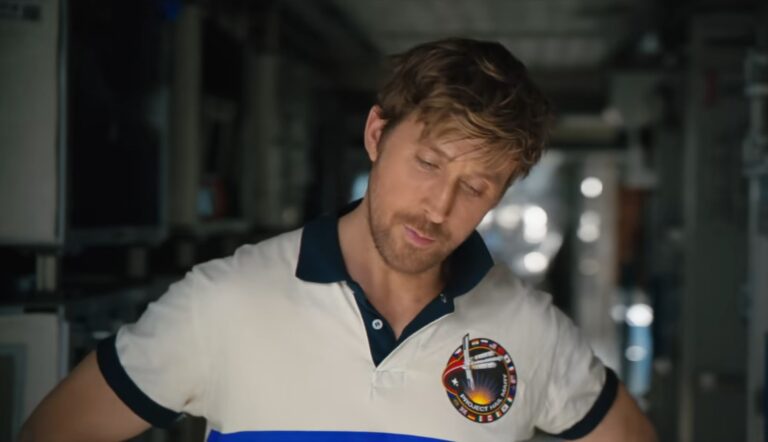
There are plenty of things I loved about Project Hail Mary, but the ending is the part that stayed in my head long after the movie was over. The big emotional payoff is obviously Ryland Grace and Rocky finding a way to save both of their worlds. Still, there is another story happening quietly in the background: what happens to Earth after the Taumoeba mission actually works?
The movie gives us just enough information to know that humanity survives, but it doesn’t spend much time showing what that survival really looks like. And honestly, I think that makes the ending more interesting.
Earth doesn’t magically snap back to normal the second the Astrophage problem is solved. The planet has already spent years being pushed toward a catastrophic ice age. Oceans have frozen, ecosystems have collapsed, agriculture has been devastated, and humanity has had to make some truly horrifying decisions just to stay alive.
So what does the world look like after Grace’s mission succeeds?
Earth Was Already Deep Into a Climate Disaster
When the Beetle probes eventually return to Earth carrying the Taumoeba solution and Grace’s data, the planet isn’t simply having a slightly colder winter.
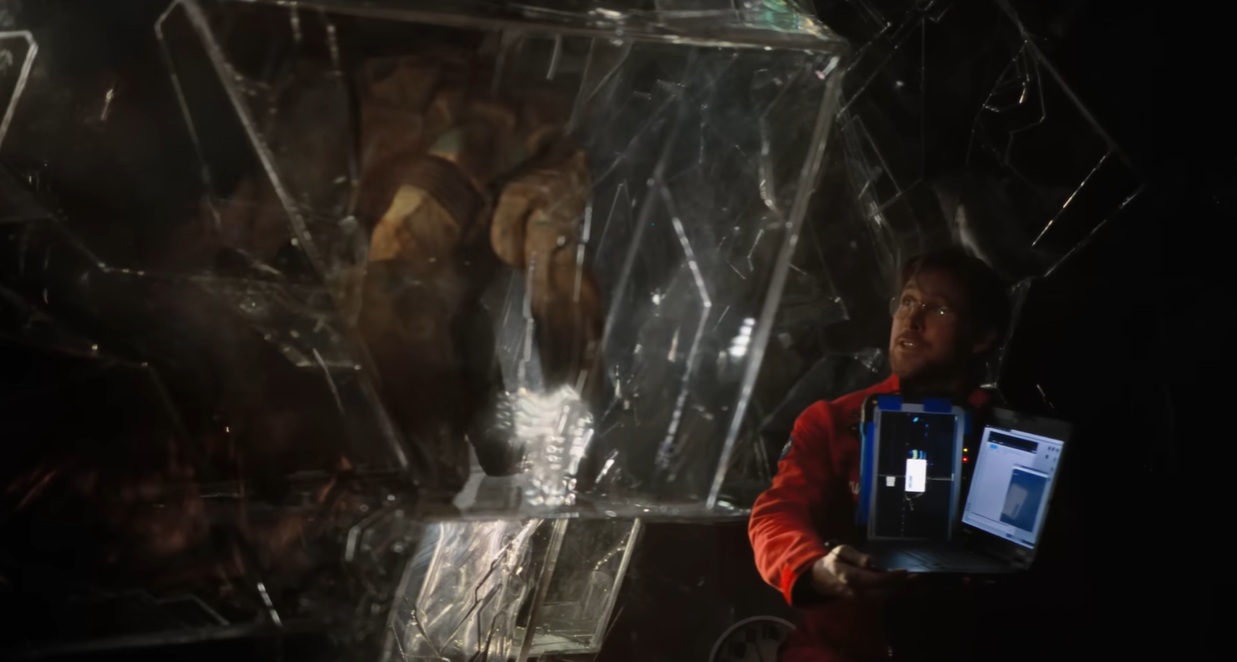
The Astrophage crisis has been going on for years.
The Sun’s energy output has been severely reduced, and that has had a devastating effect on Earth’s climate. The original projections were terrifying: if nothing changed, the planet was heading toward a global freeze that could eventually make large parts of Earth almost impossible for humans to inhabit.
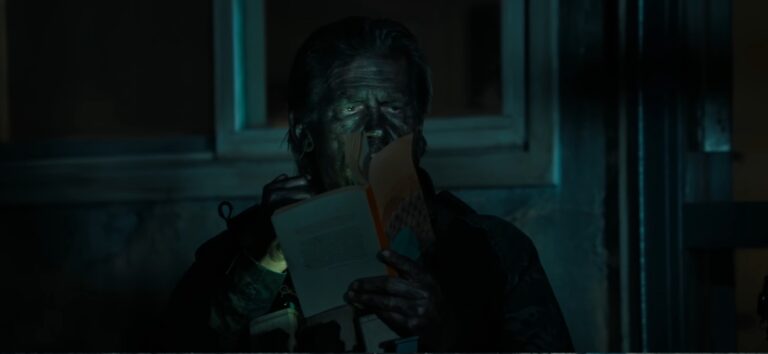
The movie’s later glimpse of Eva Stratt is especially effective because it doesn’t feel like a traditional happy ending. We aren’t shown a perfectly restored Earth with green fields and clear skies everywhere. Instead, the world looks like a place that has been through hell.
And that’s exactly how I would expect it to look.
Humanity didn’t sit around waiting for Ryland Grace to save the day. While Grace was millions of miles away trying to understand the Astrophage problem, the people on Earth had to make increasingly desperate decisions.
One of the most extreme measures involved Antarctica.
The Desperate Attempt to Keep Earth Warm
Humanity needed additional greenhouse warming to slow down the approaching catastrophe. The response was brutal: enormous quantities of ice were deliberately disrupted, releasing trapped gases and adding heat-trapping material to the atmosphere.
It’s one of those ideas that sounds completely insane until you remember the alternative.
There was no comfortable solution.
Earth was heading toward an extinction-level climate event, and every additional year bought humanity more time to solve the Astrophage problem.
That makes the eventual success of the Hail Mary mission feel even bigger. Grace wasn’t simply trying to make the Sun brighter. He was racing against a planetary clock.
The Taumoeba Was the Real Game Changer
The genius of Grace and Rocky’s solution isn’t that they somehow “destroy” Astrophage with a weapon.
They find something that can eat it.
Taumoeba becomes the biological countermeasure humanity desperately needs. But getting that solution back to Earth is only half the battle.
The real target is Venus.
Astrophage’s relationship with Venus and the Sun is at the heart of the entire disaster. The microbes aren’t simply sitting around the Sun doing nothing. Venus provides an enormous environment where Astrophage can reproduce and continue feeding the cycle that is slowly starving our star of its energy.
Once humanity gets the engineered Taumoeba into Venus’s atmosphere, things can change very quickly.
The Taumoeba has access to something it desperately wants: Astrophage in enormous quantities.
That turns Venus into a giant biological battlefield.
The Taumoeba population can multiply while consuming the Astrophage population. As that cycle collapses, the supply of Astrophage traveling toward the Sun is effectively cut off.
And that is the moment Earth’s recovery finally becomes possible.
Why Didn’t Earth Immediately Thaw?
This is probably the part of the Project Hail Mary ending that deserves more attention.
If Taumoeba solves the Astrophage problem, why isn’t Earth suddenly warm again?
Because planets don’t work like light switches.
Even after the Sun begins recovering, Earth’s climate has enormous thermal inertia. The planet has already absorbed years of cooling. Massive quantities of ice have accumulated, oceans have partially frozen, and the atmosphere and ecosystems have been pushed far outside their normal conditions.
There is also the albedo effect.
Ice and snow reflect a large amount of incoming sunlight back into space. The more of Earth’s surface becomes covered in ice, the more sunlight gets reflected instead of absorbed.
That creates a nasty feedback loop:
- More ice means more reflected sunlight.
- More reflected sunlight means less warming.
- Less warming allows even more ice to remain.
- More surviving ice makes recovery even harder.
So even with the Sun eventually returning to normal, Earth still has a huge problem to solve.
The Astrophage crisis may be over, but the climate crisis has momentum.
Earth’s Recovery Would Take Years
Once Sol returns to normal luminosity, the planet finally has enough incoming energy to begin reversing the freeze.
But “beginning to recover” is not the same thing as “back to normal.”
The giant ice sheets would take enormous amounts of energy to melt. Ocean temperatures would respond slowly. Atmospheric circulation would have to settle into new patterns, and ecosystems that had been pushed toward extinction would need to recover.
Agriculture would be especially vulnerable.
Imagine trying to feed billions of people after years of extreme cooling. Growing seasons would have been disrupted, traditional agricultural regions could become unusable, and food supply chains would have suffered catastrophic damage.
Even after temperatures started climbing again, the old world wouldn’t simply reappear.
That is why the ending feels bittersweet rather than purely triumphant to me.
Humanity wins.
But it wins after being pushed incredibly close to the edge.
What Happens to Earth 16 Years Later?
One of the most reassuring pieces of information comes from the later timeline involving Ryland Grace and Erid.
Sixteen years after Grace’s decision to remain with Rocky instead of returning directly to Earth, the people of Erid are able to observe Sol.
The message is incredibly simple but emotionally huge:
Earth’s Sun is back to its normal luminosity.
That confirms that the Taumoeba solution worked on the scale that mattered most.
The Astrophage population in the solar system has been defeated, and Sol has recovered its normal energy output.
For Grace, that information must be extraordinary. He gave up his chance to return home personally, but he eventually learns that Earth survived.
And that’s really the emotional heart of the ending.
He doesn’t get the conventional hero reward. He doesn’t fly home to a cheering crowd. He doesn’t walk through a restored Earth.
Instead, he gets confirmation that the people he left behind are still alive.
Was Earth Fully Restored?
This is where I think fans sometimes expect a cleaner answer than the story actually provides.
The ending confirms the recovery of the Sun. It strongly implies that Earth survives and eventually becomes habitable again. But it doesn’t mean every ecosystem, city, coastline and agricultural region returns to exactly the way they were before the Astrophage crisis.
Earth would have scars.
| Problem | Likely Long-Term Effect |
|---|---|
| Global cooling | Years of climate instability |
| Massive ice coverage | Slow retreat as temperatures recover |
| Frozen oceans and disrupted currents | Major changes to weather patterns |
| Agricultural collapse | Food shortages and rebuilding |
| Emergency atmospheric intervention | Long-lasting atmospheric effects |
| Ecosystem losses | Slow biological recovery |
| Returning sunlight | Gradual restoration rather than instant warming |
That makes the ending much more believable.
The planet isn’t “fixed.” It becomes survivable again.
Those are two very different things.
The Part of the Ending I Like Most
For me, the most satisfying thing about the Project Hail Mary ending is that the movie doesn’t need to show a perfect future Earth.
The real victory happened earlier.
Humanity found a solution before the planet crossed the point of no return. The Taumoeba stopped the Astrophage cycle, Sol recovered, and Earth was given the one thing it desperately needed: time.
The climate could slowly rebuild from there.
I also love that the story avoids making Grace’s sacrifice meaningless. He doesn’t return to Earth, but his decision to stay with Rocky doesn’t doom humanity. Quite the opposite. His work gives Earth a chance to survive while giving Erid a chance to survive too.
That’s what makes the final glimpse of Earth hit harder than a traditional Hollywood ending would have.
There is no giant celebration.
There is no montage showing every frozen landscape turning green overnight.
There is simply the knowledge that the Sun is shining normally again.
After everything humanity went through, that is enough.
So, What Really Happened to Earth’s Climate?
Earth entered the post-Taumoeba era in terrible shape. The planet was already deep into a severe artificial ice age, and humanity had resorted to extreme geoengineering measures to buy additional survival time.
Once Taumoeba began consuming Astrophage around Venus, the infection’s supply chain was broken. Sol could gradually recover its lost luminosity.
But Earth’s climate recovered much more slowly than the Sun.
The enormous ice sheets, frozen oceans, damaged ecosystems and altered atmosphere meant that warming had to happen over a long period. The albedo effect made the early stages of recovery particularly difficult.
Eventually, though, the planet had a path forward.
Sixteen years later, Sol’s return to normal brightness provides the clearest indication that the worst was over.
So no, the Taumoeba didn’t magically turn Earth back into its old self.
It did something much more important.
It gave Earth a future.
And honestly, that’s a much better ending for Project Hail Mary than simply showing a completely restored planet. The scars matter. Grace’s sacrifice matters. Rocky matters. And the fact that billions of people get another chance, even after the world has been pushed to the brink, is what makes the ending work for me.
The Sun comes back.
Earth survives.
And somewhere far away, Ryland Grace gets to know that his home is still there.