There are thrillers that leave you thinking because the mystery is brilliant. Then there are thrillers that leave you thinking because the ending refuses to let you breathe for five minutes.
The Whisper Man (2026) belongs firmly in the second category.
James Ashcroft’s adaptation of Alex North’s novel spends most of its 114 minutes building a grim little world where grief, missing children, old crimes, and buried family secrets constantly overlap. But the final act is where the movie really swings for the fences. Sometimes it lands beautifully. Other times, honestly, it pushes the symbolism so hard that you can almost see the machinery behind the curtain.
Still, I have to give it credit: the ending is far more interesting than a simple “serial killer returns” story.
The mystery eventually leads back to Frank Carter, the original Whisper Man, but the person continuing his work isn’t some secret accomplice hiding in the shadows.
It’s his son.
And that’s where the movie’s nastiest idea finally becomes clear.
Who Is the New Whisper Man?
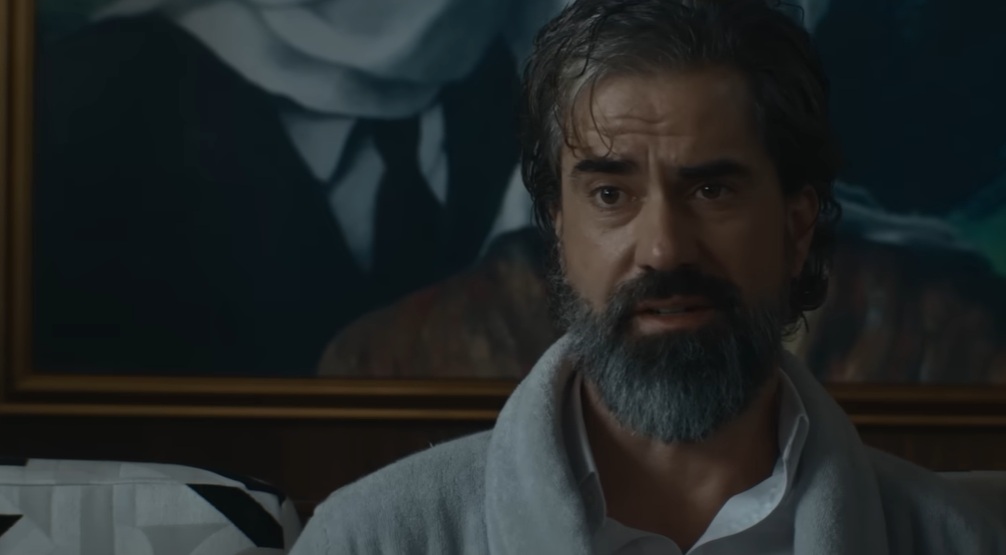
The obvious suspect for much of the movie is Norman Collins, played by Hamish Linklater.
Norman is exactly the kind of character a crime thriller wants you to distrust. He’s obsessed with true crime, collects antiquities, sneaks around Tom Kennedy’s house, and has an unhealthy fascination with Frank Carter.
The film deliberately piles suspicion onto him.
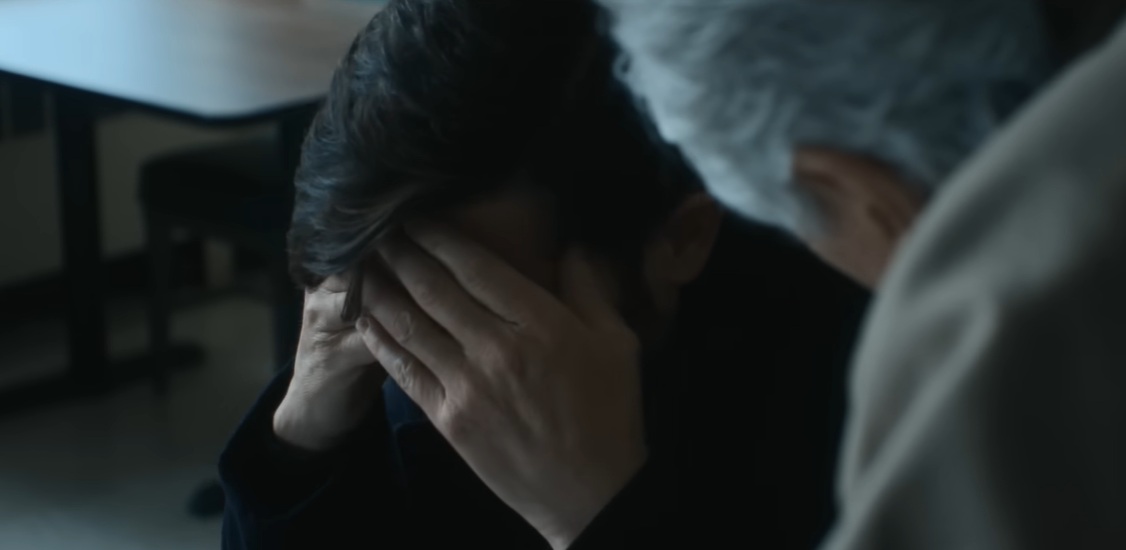
And for a while, I bought it.
Norman has been communicating with Frank Carter in prison through Dominic Barnett, and the investigation eventually uncovers something genuinely horrifying beneath Tom’s house.
The police find the mummified remains of Tony Smith, the fifth victim from Carter’s original killing spree. Tony was the one body Pete Willis never managed to recover.
They also discover Barnett’s corpse.
That sounds like the big answer, but it isn’t.
Norman had been sent to the property because Frank Carter knew where Tony’s body was hidden. Carter essentially used the information as bait for Norman’s obsession. Barnett, who had previously been involved with the property, ridiculed Norman’s fascination with Carter and paid for it with his life.
But Norman insists on one thing:
He didn’t abduct Jake.
He’s telling the truth.
Before investigators can get everything out of him, Norman kills himself, leaving behind one final piece of the puzzle. His connection to Carter wasn’t about becoming the next Whisper Man.
It was about giving Frank Carter access to someone outside prison.
And that someone turns out to be much closer to him than anyone expected.
Francis Carter Jr. Is the Real Killer
The real perpetrator is Francis Carter Jr., the biological son of Frank Carter.
That’s the twist that completely changes how you should read the earlier scenes.
Francis has been hiding behind the identity of George Carrington, presenting himself as a mentee connected to psychologist Richard Sharmatz.
But Sharmatz is dead.
Amanda Beck eventually discovers his mutilated body hidden inside a barrel, and the pieces finally start falling into place.
Francis isn’t simply copying his father’s murders because he enjoys violence.
He wants something much uglier.
He wants his father’s approval.
That distinction matters.
Francis grew up without a normal relationship with Frank Carter. Instead of having an ordinary father figure, he had a monster whose reputation became almost mythical. The Whisper Man wasn’t simply Francis’s biological father. He became the defining absence in his life.
So Francis attempts to recreate his father’s legacy.
He abducts children.
He imitates the mythology.
He becomes the thing his father was.
And, perhaps most tragically, he believes that doing all of this might finally make Frank acknowledge him.
That’s what makes Francis more pathetic than frightening at certain points. And I mean that as a compliment to the character, not the writing. The movie understands that evil doesn’t always begin with some grand desire for power.
Sometimes it begins with a damaged person desperately asking:
“Will you finally love me if I become what you wanted?”
The Final Confrontation With Pete and Amanda
The climax becomes brutally personal when Amanda tracks Francis to the house where Jake is being held.
The confrontation doesn’t go cleanly.
Francis attacks Amanda and stabs her, leaving her with a permanent limp. Pete Willis is also critically wounded when Francis drives a screwdriver into him.
And this is where the film finally pays off Pete’s entire emotional arc.
Pete knows he’s dying.
He also knows Jake is still in danger.
So he uses whatever strength he has left to get Jake to run.
That moment matters because Pete has spent decades carrying guilt over his relationship with Tom. He was a father who was physically present but emotionally distant, and Tom has spent much of his life believing that his father’s work mattered more than his family.
Pete doesn’t get to repair everything with a conversation.
He repairs it with an action.
He chooses his family when it matters most.
Tom eventually arrives, and Francis is finally incapacitated after falling through a rotten section of flooring.
Francis survives the fall and is arrested.
Pete doesn’t.
His death is tragic, but it also gives the movie’s father-son story the resolution it has been building toward.
And then the film gets even darker.
Why Does Frank Carter Kill His Own Son?
This is easily the most disturbing scene in the entire movie.
Francis Carter Jr. is taken into custody and placed in prison.
You’d expect that to be the end of the nightmare.
Nope.
A corrupt guard opens Francis’s cell and allows Frank Carter Sr. to enter.
The old killer looks at his son and begins talking about the importance of physical contact between a parent and an infant. He refers to skin-to-skin contact, recalling the idea of bonding a baby to its father.
Then he strangles Francis with a shirt.
That’s it.
No reunion.
No father-son confession.
No moment of pride.
Frank kills him.
And honestly, it’s a nasty little piece of storytelling.
Francis spent the entire film trying to earn recognition from his father, only to discover that Frank never intended to give him the love he wanted.
The Real Meaning of Frank’s Final Act
Earlier, Frank says something that essentially unlocks the entire Carter storyline:
“When we are denied our father’s love, we mythologize them.”
That line is the key.
Francis didn’t really know his father. He knew the legend.
He filled the empty space with mythology.
Frank became larger than life in his son’s imagination, and Francis spent years trying to become worthy of that imaginary version of him.
The tragedy is that there was never going to be a happy ending.
Frank doesn’t see Francis as a son who needs affection. He sees him as someone who has contaminated the legacy of the Whisper Man with weakness.
Francis wanted love.
Frank saw that desire as pathetic.
So the father kills the son.
It’s horrifying because Francis gets exactly what he has been chasing throughout the story: a private moment alone with his father.
And it kills him.
Why Doesn’t Frank Cover Francis’s Eyes?
There is a particularly nasty detail in this scene that is easy to overlook.
Frank’s usual methodology carries its own ritualistic behavior, but when he kills Francis, he doesn’t follow the same pattern.
He simply strangles him.
That difference matters.
Francis isn’t being treated as another victim in the traditional sense.
He’s being erased.
Frank is essentially destroying the final person who can claim ownership of his legacy.
There is something almost possessive about it. The Whisper Man’s mythology belongs to Frank, and he refuses to let his son inherit it.
It’s cruel, but thematically it fits the Carter family perfectly.
The father passes trauma to the son, the son turns that trauma into violence, and the father destroys the son for becoming what he taught him to be.
That’s the cycle.
Pete’s Death Finally Repairs His Relationship With Tom
If the Carter storyline is about a family that can’t escape its damage, the relationship between Pete Willis and Tom Kennedy is the opposite.
It’s about a family that almost does.
Tom has carried resentment toward Pete for years. He remembers a father who wasn’t emotionally available when he needed him.
But after Pete dies protecting Jake, Tom begins remembering something from childhood.
He used to imagine a mysterious figure called Mister Night.
Mister Night would enter his room, read stories, and kiss him goodnight.
Tom assumed it was an imaginary friend.
Then comes the realization:
It was Pete.
Pete had been visiting him secretly.
The father Tom believed had never shown enough love had, in his own imperfect way, been trying to be there.
This revelation doesn’t magically erase years of resentment. And I’m glad the movie doesn’t pretend it does.
Instead, it changes Tom’s understanding of his childhood.
Sometimes love is present but badly expressed.
Sometimes parents fail spectacularly at saying what their children need to hear.
And sometimes the truth arrives far too late.
The Cracked Ceiling Is One of the Film’s Best Visual Metaphors
There’s a recurring image of a damaged ceiling in Pete’s house.
It’s not subtle.
The crack represents the fractured relationship between Pete and Tom.
For most of the movie, the damage is simply there, hanging over them.
After Pete’s death, Tom and Jake move into Pete’s old home.
Then the movie shows us the ceiling again.
The crack has been repaired.
I normally roll my eyes when movies underline their symbolism this aggressively, but here it actually works.
Pete can’t repair his relationship with Tom through years of conversations that never happened.
Instead, his final sacrifice gives Tom the chance to understand what his father was incapable of expressing.
And Tom now has a choice Pete didn’t always make.
He can be present for Jake.
The cycle doesn’t have to continue.
Who Is the Girl in the Blue Sweater?
Then comes the movie’s final supernatural curveball.
Throughout the story, Jake talks about a mysterious girl in a blue sweater.
She appears when he’s frightened.
She stays with him when he’s trapped.
She warns him about danger.
At first, it’s easy to assume she’s simply another manifestation of Jake’s trauma.
But the final scene complicates that interpretation.
Tom is looking through photographs belonging to his late wife, Rebecca.
He finds an old picture of her as a teenager.
She’s wearing a blue sweater.
And she looks exactly like the girl Jake has been describing.
Tom freezes.
The movie doesn’t explain the supernatural mechanics.
It doesn’t need to.
The implication is obvious.
Rebecca may actually have been watching over her son.
Is Rebecca Really a Ghost?
This is where The Whisper Man wisely refuses to give us a clean answer.
There are two ways to read the girl.
The supernatural interpretation
Rebecca’s spirit remains connected to Jake and protects him after her death.
Under this reading, the girl in the blue sweater is genuinely Rebecca’s ghost.
She appears when Jake needs protection because, in death, she continues doing what she did as his mother.
The psychological interpretation
Jake is a traumatized child dealing with the death of his mother, the disappearance of other children, and the terrifying behavior surrounding his family.
His mind creates a comforting figure based on memories of Rebecca.
The blue sweater becomes an emotional symbol rather than physical proof of a ghost.
And personally, I prefer keeping both interpretations alive.
If the movie had suddenly explained exactly how Rebecca’s spirit was operating, it would have weakened the ending.
The uncertainty is what makes the final image stick.
What the Ending Is Really Saying
The film ultimately creates two opposing family stories.
| Family | Legacy | Outcome |
|---|---|---|
| Carter | Rejection, violence, obsession | The cycle destroys itself |
| Willis-Kennedy | Estrangement, sacrifice, love | The cycle begins to heal |
Frank Carter creates a legacy based on fear.
Francis tries to inherit it.
Frank kills him.
Pete, meanwhile, spends his life struggling to communicate with Tom. When the moment comes, he sacrifices himself to save Jake.
That sacrifice doesn’t make Pete a perfect father.
It simply proves that the damage doesn’t have to be the final word.
And that’s what I think the film gets right.
My Take on The Whisper Man’s Ending
I’m torn on the ending, but mostly in a good way.
The Francis Carter reveal works extremely well because it turns the serial-killer mystery into something much more personal. He isn’t just another monster. He’s a son desperately trying to become important to the father who abandoned him.
The prison scene is even better. It’s vicious, uncomfortable, and completely devoid of the sentimental reunion Francis has spent the entire movie chasing.
The Rebecca twist is riskier.
Some viewers will love the supernatural implication. Others will probably think the film should have stayed firmly grounded in psychological crime territory. I’m somewhere in the middle. I like the ambiguity, especially because Jake’s perception has been so important throughout the story.
My biggest complaint is that the symbolism occasionally becomes a little too obvious. The repaired ceiling, the generational trauma, the mirrored father-son relationships—it’s all effective, but the movie sometimes seems worried that we’ll miss the point.
We wouldn’t.
The strongest idea is already sitting right there:
A child can inherit his parents’ wounds without inheriting their destiny.
Francis chooses to become his father.
Tom gets another chance to become a different kind of father.
And Jake stands between those two possibilities.
That’s why the ending works despite its occasional excess. The Whisper Man isn’t ultimately about a serial killer returning from the past.
It’s about what parents leave behind when they’re gone.
Sometimes it’s fear.
Sometimes it’s damage.
And, if we’re lucky, sometimes it’s enough love to stop the damage from spreading.
That final image of Jake and Tom beginning again, with Rebecca’s possible presence lingering just outside the frame, is exactly the kind of ending that stays with you.