I’ll admit it: Heart of the Beast had me interested long before the first full trailer could properly explain what this movie was trying to be. A survival thriller starring Brad Pitt, directed by David Ayer, and built around a stranded former Special Forces soldier and his battered military dog? That combination sounds almost suspiciously engineered to hit every emotional button at once.
And then there’s Odin.
Anyone who has watched enough survival movies knows exactly what happens when Hollywood introduces a dog and makes us genuinely care about him. You start enjoying the story, then the animal gets hurt, and suddenly the entire movie becomes an exercise in emotional punishment. I was expecting Heart of the Beast to play that card too. Thankfully, the available spoilers suggest otherwise.
Is Heart of the Beast Based on a True Story The Truth Behind Brad Pitt’s Survival Movie
Does Odin Die in Heart of the Beast?
This is easily the question dominating online discussions about the movie. Reddit users have been dissecting every trailer shot, leaked production detail, and promotional comment looking for evidence that Odin survives the Alaskan nightmare.
The answer appears to be a reassuring yes: Odin survives.
That detail has already become one of the strangest marketing stories surrounding the film. Producer Richard Raymond reportedly addressed the issue publicly and confirmed that the retired combat dog does not die. For a movie built around survival, that is an enormous spoiler to hand the audience before release.
Personally, I think it was the right decision.
There are plenty of viewers who simply won’t watch a dog-centered survival movie if they suspect the animal is being introduced purely to be killed in the third act. Knowing Odin survives doesn’t destroy the tension for me. If anything, it shifts the question from “Will the dog die?” to something much more interesting: how badly will these two characters be broken before they get out?
What Heart of the Beast Is Actually About
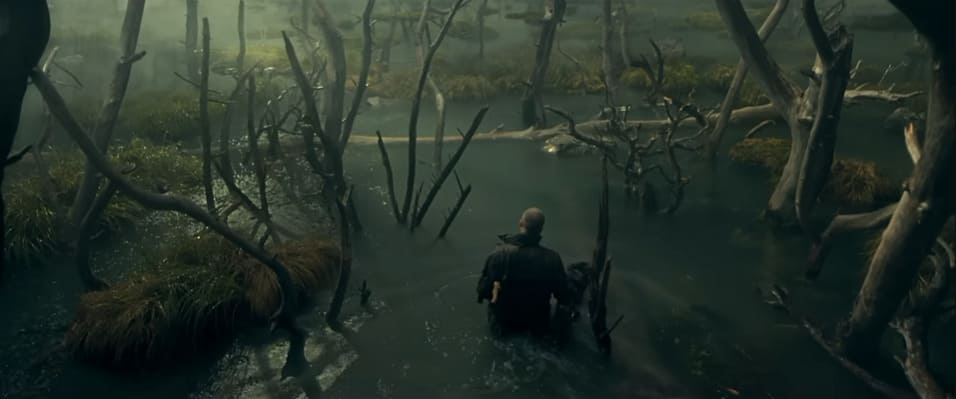
The basic setup is brutally simple. James Belmont is a former Army Special Forces officer who has withdrawn from normal life, carrying the psychological baggage of his military past with him. His closest companion is Odin, a retired combat dog whose own history is written all over his body, including a prosthetic leg and distinctive silver teeth.
Then their aircraft crashes in the Alaskan wilderness.
The pilot is killed. Belmont is badly injured. There is no comfortable rescue scenario waiting around the corner, and the surrounding wilderness is basically designed to make every bad decision worse.
At first glance, this sounds like another man-versus-nature survival movie. That description undersells it. The interesting part is that Belmont isn’t really surviving for Odin. They are surviving with each other.
That distinction matters.
Belmont has the military experience, tactical knowledge, and discipline. Odin has instincts, physical capabilities and training that become increasingly valuable as Belmont’s injuries worsen. When the soldier can no longer rely on his own body, the dog becomes more than emotional support. Odin becomes an active part of the survival strategy.
The Wilderness Is the Real Villain
If the leaked story details are accurate, Heart of the Beast isn’t interested in making Alaska look like a beautiful postcard. The landscape is hostile, exhausting and almost constantly threatening to kill the protagonists.
There are freezing temperatures, limited supplies, injuries, predators and the simple problem of trying to move through terrain that doesn’t care whether you’re a highly trained soldier or a completely unprepared civilian.
One of the most talked-about sequences involves Belmont and Odin being pursued by a pack of wolves during a blizzard. That’s the kind of scene where I can already imagine the audience collectively holding its breath. Belmont’s military training gives him a plan, but nature doesn’t exactly follow plans.
And that’s where the movie seems to be at its strongest. The conflict isn’t simply “hero shoots dangerous animal.” The threat comes from exhaustion, exposure and bad conditions piling up until even a sensible decision becomes dangerous.
There Is Also a Rescue Story Happening Elsewhere
The film reportedly cuts between Belmont and Odin’s desperate trek and a parallel rescue operation.
J.K. Simmons plays a retired military commander and mentor to Belmont, and his character apparently refuses to accept the official conclusion that the crash site is too dangerous to reach. Instead, he pushes ahead with an unauthorized search.
Anna Lambe’s character adds another important piece to the puzzle. She plays a local Indigenous tracker whose knowledge of the terrain becomes essential to the rescue effort.
I like this structure much more than the usual survival-movie formula where the protagonist disappears and everyone else simply waits around. The rescue team gives the movie a second ticking clock. Belmont and Odin are fighting the wilderness while Simmons’ character is fighting bureaucracy, weather and time.
| Character | Role in the Story | Why It Matters |
|---|---|---|
| James Belmont | Former Special Forces soldier | Must survive despite severe injuries and psychological trauma |
| Odin | Retired combat dog | Belmont’s companion and active survival partner |
| J.K. Simmons’ Character | Retired military commander | Leads the unofficial rescue effort |
| Anna Lambe’s Character | Local Indigenous tracker | Provides crucial knowledge of the wilderness |
Heart of the Beast Ending Spoilers
Here is where the movie apparently goes all-in on the emotional payoff.
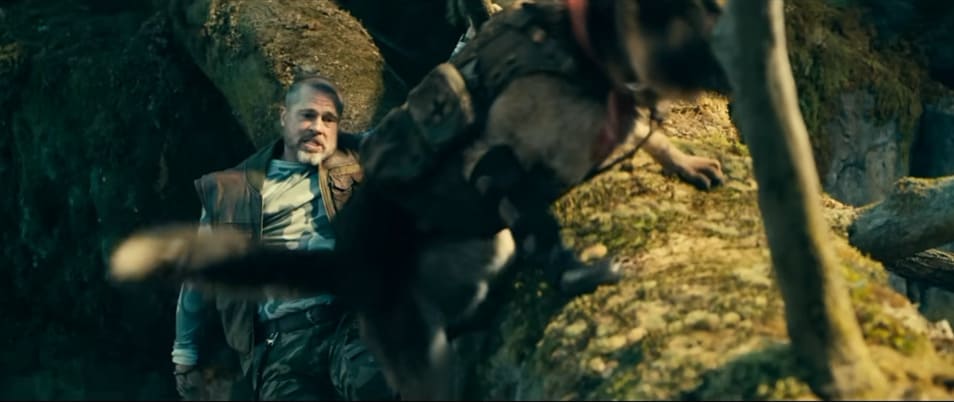
Belmont and Odin eventually reach the final stage of their journey while both are in terrible condition. Belmont is suffering from massive blood loss, and the pair encounter one last nightmare in the form of a huge grizzly bear.
This isn’t just another action sequence. The reported ending places Odin in a position where Belmont has to completely trust him. The former soldier, who spent his entire life relying on training and control, is eventually forced to surrender that control to his dog.
Both are badly injured during the confrontation, but neither dies.
They finally make it through the tree line, where the rescue party reaches them. After everything the pair have endured, the movie reportedly moves away from spectacle and into something quieter: a military medical facility, recovery, and the realization that surviving the wilderness was only the beginning of Belmont’s healing process.
Why the Dog’s Survival Actually Makes the Ending Better
I’m glad the filmmakers didn’t go for the obvious gut punch.
Would killing Odin have created a more shocking ending? Absolutely. Would it have been better? I’m not convinced.
A dead dog would turn the entire relationship into another Hollywood trauma device. Belmont loses the one creature that kept him moving, the audience cries, and the movie gets to pretend it delivered something profound simply because it hurt us.
Keeping Odin alive gives the story somewhere else to go.
The two characters have been damaged physically and psychologically, but their bond survives. That makes the final medical-facility scenes potentially much more meaningful. Belmont doesn’t emerge from Alaska magically cured. He simply has a reason to keep going.
And Odin is that reason.
The Meaning Behind the Title
The title Heart of the Beast seems deliberately open to interpretation.
Obviously, the wilderness contains actual beasts, from wolves to bears and everything else capable of turning an already terrible day into a catastrophe. But the deeper meaning appears to concern the survival instinct buried inside both Belmont and Odin.
For Belmont, the “beast” is partly the hardened soldier he became after years of combat. For Odin, it is the animal instinct that keeps him alive when conventional human logic stops working.
They aren’t opposites. They’re mirrors.
That is probably the aspect of the movie I’m most curious about. The action and survival sequences need to work, obviously, but Brad Pitt has a much harder job here if the film wants to make James Belmont feel like a damaged human being rather than just another grizzled action hero.
My Take on the Heart of the Beast Spoilers
The story sounds familiar. There’s no denying that. Crash in the wilderness, injured protagonist, extreme weather, predators, rescue mission, emotional recovery — we’ve seen pieces of this movie before.
What could make Heart of the Beast stand apart is the relationship at its center.
Odin isn’t simply there to make James look sympathetic. He’s apparently essential to the plot, the action and the emotional arc. That’s a much better use of a canine character than having the dog spend two hours looking adorable before becoming somebody’s tragic motivation.
I’m still skeptical about some of the more convenient elements in the reported plot. Survival stories live or die by credibility, and once the injuries become severe enough, every miraculous escape starts feeling suspicious. David Ayer also has a tendency to favor intensity over subtlety, so I’m expecting this movie to occasionally stomp on the emotional gas pedal when a lighter touch might have worked better.
Still, the premise has teeth.
If the final cut delivers the harsh Alaskan survival sequences, gives the rescue storyline enough room to breathe, and lets Belmont and Odin’s relationship carry the emotional weight instead of drowning everything in melodrama, Heart of the Beast could be one of the more satisfying survival thrillers of 2026.
And yes, I’m relieved Odin survives. After all the misery this dog apparently has to endure, I’m perfectly happy to let Hollywood give him the ending he deserves.
Heart of the Beast is scheduled to hit theaters on September 25, 2026.