There is a very good movie hiding somewhere inside The Last House.
That is probably the most frustrating thing about Louis Leterrier’s 2026 Netflix sci-fi horror. The setup is fantastic. A normal family wakes up to find their home completely sealed off from the outside world. An impossible rainstorm pounds the neighborhood without stopping. The exits cannot be opened. The windows cannot be broken. The neighbors are trapped, too. And whatever is moving through the rain seems to be watching.
That sounds like the beginning of a nasty, claustrophobic survival thriller. For a while, The Last House actually delivers.
Then it starts explaining itself.
And that is where things get messy.
Starring Greta Lee and Wagner Moura, the movie clearly wants to be several things at once: a family drama, a contained horror story, a cosmic creature feature, and an environmental warning about humanity’s treatment of the planet. I admire the ambition. I really do. But ambition only gets you so far when the screenplay keeps throwing interesting ideas onto the table without properly developing them.
By the time the credits rolled, I was left with the same uncomfortable feeling I had throughout much of the second half: this could have been so much better.
The Premise Is Exactly the Kind of Nightmare Horror Fans Want
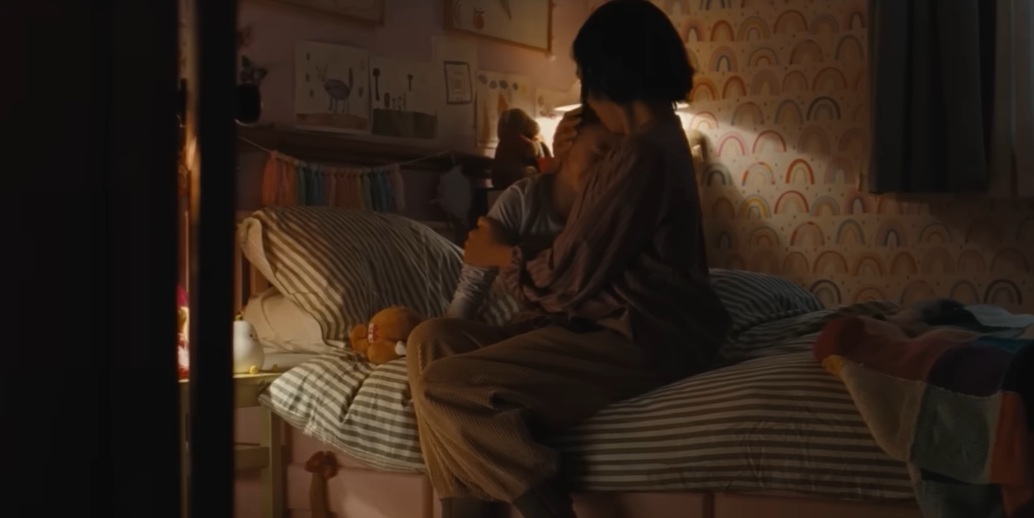
The story centers on the Delgado family, living an ordinary suburban life near Seattle. Jason, played by Wagner Moura, is a practical father who enjoys fishing and working on his dream car. Ann, played by Greta Lee, is trying to keep the family together while raising their two children, Graham and Ruth.
Nothing about their lives initially suggests that they are about to become prisoners in their own home.
Then the rain arrives.
It isn’t a normal storm. It doesn’t pass after an hour. Or a day. It simply keeps coming.
When the family attempts to leave to buy a Christmas tree, they discover that something has sealed every possible exit. Doors won’t open. Windows won’t break. The garage is useless. Even physically attacking the walls gets them nowhere.
That is an excellent horror hook because the movie doesn’t need a monster immediately.
The house itself becomes the monster.
The Delgado family can see the outside world, but they cannot reach it. Their neighbors are trapped as well, turning the entire suburban neighborhood into a collection of isolated prisons. Then those strange figures begin appearing in the rain.
At this point, I was completely on board.
The movie understands that helplessness can be scarier than violence. Watching people realize that their familiar home has become an inescapable box is far more effective than throwing a creature at the camera every five minutes.
Unfortunately, The Last House eventually forgets that lesson.
Five Years Inside One House
The most interesting aspect of the film is the passage of time.
This isn’t a two-day lockdown. The Delgado family remains trapped for five years.
That gives the story room to explore something many survival movies barely touch: what prolonged isolation actually does to a family.
Food becomes scarce. Comfortable routines disappear. The house deteriorates. Relationships become strained. The children grow older. Every familiar object begins to carry a different meaning.
The production design deserves real credit here. The house gradually changes from a comfortable suburban property into something closer to a decaying bunker. Its transformation mirrors the family’s psychological deterioration, and some of the strongest scenes come from simply watching the environment become less recognizable.
Greta Lee and Wagner Moura also carry considerably more emotional weight than the script sometimes deserves.
Their performances are grounded when the movie allows them to be. There is believable tension between the two parents as they struggle with impossible decisions and try to protect their children while having absolutely no idea what is happening outside.
The family drama is where The Last House feels most confident.
There are moments when I genuinely wanted the movie to stay there.
It should have.
The Problem: The Movie Can’t Decide What It Wants to Be
The biggest weakness is tonal.
One scene feels like an intimate family drama. The next feels like a dark horror movie. Then the film suddenly shifts toward something resembling a creature-heavy B-movie.
None of those genres are inherently bad.
The problem is that The Last House doesn’t connect them particularly well.
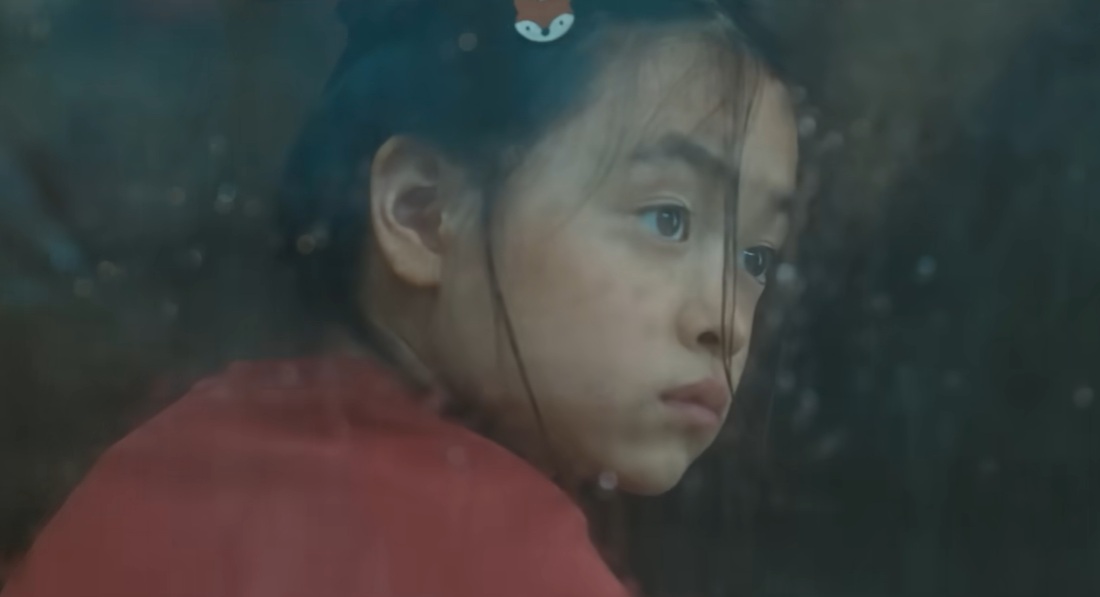
The screenplay by Matthew Robinson repeatedly jumps between emotional realism and increasingly absurd science-fiction concepts. Characters react to impossible situations with wildly different levels of seriousness, and the pacing becomes strangely uneven.
The result is a movie that can be tense for ten minutes and then completely undercut itself with a scene that feels like it belongs in another film.
That tonal whiplash becomes especially noticeable in the final third.
The movie keeps escalating because it apparently believes that bigger automatically means better. It doesn’t.
Sometimes a locked door is more frightening than a giant monster.
The Science Doesn’t Hold Together
This is where viewers expecting a coherent sci-fi mystery are likely to get angry.
The film raises plenty of questions about the phenomenon surrounding the houses. What exactly is sealing the buildings? Why does the rain behave this way? How widespread is the disaster? What are the creatures? Why are the Delgado family affected in this particular way?
You might expect the screenplay to gradually answer these questions.
Instead, many of them are either vaguely addressed or simply abandoned.
The so-called magnetic force behind the lockdown is never explored with enough consistency to make it convincing. The practical survival issues of remaining trapped for five years are also treated selectively. The movie wants you to accept the premise because it needs the premise to work, but it doesn’t always do the hard work required to make its world feel believable.
That doesn’t mean every sci-fi horror film needs a scientific explanation for everything.
It does mean that the rules need to feel consistent.
Here, they often don’t.
The Ending Goes Completely Off the Rails
And then we reach the ending.
Oh, the ending.
After spending so much time building a mysterious survival thriller, The Last House suddenly goes all-in on cosmic horror.
Massive tentacled creatures enter the picture, apparently connected to the rain and the strange forces trapping humanity inside their homes. The scale of the story suddenly becomes enormous.
Then comes one of the film’s strangest ideas: Ruth, the youngest Delgado child, can somehow understand and communicate with these creatures.
This could have been fascinating.
Instead, the movie rushes through the idea just when it should be slowing down.
The explanation eventually connects the disaster to environmental destruction, ocean pollution, and the enormous amount of plastic humanity has dumped into the world’s seas. The flooding becomes an almost literal image of nature reclaiming the land.
I understand what the movie is trying to say.
I just wish it trusted its audience enough to say it with more subtlety.
The environmental message is not the problem. The delivery is.
The dialogue becomes increasingly blunt, and the symbolism starts feeling less like subtext and more like someone standing beside the screen holding up a giant sign.
So What Actually Happens?
The Delgado family’s five-year imprisonment eventually reaches its breaking point when their resources run out.
The foundation of the house collapses, leaving the family facing what appears to be certain death. The creatures emerge around the destruction, but instead of simply killing the survivors, they allow them to escape.
The rain finally stops.
The family finds a small boat and leaves the remains of their home behind. They name the boat after their deceased dog, creating one of the film’s few genuinely touching emotional details amid all the chaos.
But the world outside isn’t waiting for them to return.
It has been transformed.
The landscape is flooded, familiar landmarks are gone, and humanity appears to be entering an entirely different era. The family uses a radio to broadcast a message into the unknown.
Then they hear a response.
“Hello?”
Cut to black.
The implication is obvious enough: this isn’t the end of humanity’s story. It’s Day 1 of something else.
As a final image, I actually like it.
As the payoff to everything that came before it, I’m much less convinced.
What Works in The Last House
Despite my complaints, I don’t think this is a terrible movie.
There is a lot here that works.
- Greta Lee and Wagner Moura are excellent, particularly when the film focuses on the parents’ relationship.
- The house’s gradual deterioration gives the movie a strong visual identity.
- The early isolation sequences are genuinely uncomfortable.
- The rain creates a wonderfully oppressive atmosphere.
- Some of the creature imagery is surprisingly effective.
- The environmental concept has potential, even if the screenplay handles it too bluntly.
- The film understands how frightening it can be to lose control over a familiar space.
The first half, especially, has the kind of slow-burning tension that made me wish the movie had more confidence.
It doesn’t need to explain everything.
It needs to make me afraid of what I don’t understand.
And for a while, it does exactly that.
What Doesn’t Work
The weaknesses become harder to ignore as the story expands.
The biggest issues are:
| Problem | My Take |
|---|---|
| Pacing | Strong early tension gives way to an uneven second half |
| World-Building | Too many rules are introduced without satisfying explanations |
| Tone | Family drama, horror, sci-fi, and creature feature don’t always blend |
| Ending | Visually ambitious but dramatically rushed |
| Environmental Message | Relevant idea, painfully heavy-handed execution |
| Performances | Much stronger than the screenplay surrounding them |
The strange thing is that the movie doesn’t fail because it lacks ideas.
It fails because it has too many ideas and not enough discipline.
Where to Watch The Last House (2026) Online: Full Video Streaming Platform List for US Viewers
Is The Last House Worth Watching on Netflix?
For me, this is a reluctant recommendation.
If you’re looking for a tightly written sci-fi horror movie with airtight world-building and a carefully constructed mystery, skip it. You will probably spend more time questioning the rules than enjoying the story.
If you like strange Netflix genre movies, survival horror, creature features, and stories where the premise matters more than scientific accuracy, give it a shot.
Just know what you’re getting into.
The Last House is much better when it is a family trapped inside a terrifying mystery than when it tries to explain the mystery.
That distinction matters.
The movie’s first half had me genuinely interested. I liked the claustrophobia. I liked the slow deterioration of the house. I liked the tension between Jason and Ann. I liked the feeling that something enormous was happening outside while these people were powerless to understand it.
Then the film starts throwing answers at me, and most of those answers aren’t nearly as interesting as the questions.
That is the real disappointment.
My Rating: 6/10
The Last House isn’t a disaster. It isn’t a hidden masterpiece either.
It is a messy, ambitious sci-fi horror film with a fantastic central premise, strong performances, impressive atmosphere, and a third act that seems determined to make the entire movie considerably stranger than it needed to be.
I walked away remembering the house, the rain, the family, and that unsettling feeling of being unable to escape.
I barely remembered the explanations.
And honestly, that tells me everything I need to know.
If you’re watching with friends on a weekend and want something weird, tense, occasionally creepy, and easy to argue about afterward, The Last House is worth the two hours.
If you’re hoping Netflix has delivered the next great survival horror classic, lower those expectations before opening the door.
You might still enjoy what’s inside.