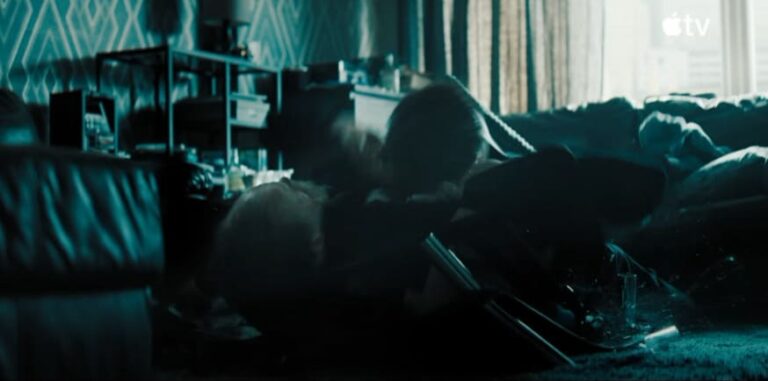
There is a particular kind of disappointment that only comes from watching a movie you really wanted to love.
You know the feeling. You read a thriller that got under your skin, imagined how certain scenes might look on screen, heard that a major studio had picked it up, saw a cast packed with recognizable names, and thought: Okay, this could actually work.
Then the movie arrives.
And somehow, the thing you loved most about the book is the first thing the adaptation throws overboard.
That is more or less my experience with Netflix’s The Whisper Man. Alex North’s 2019 novel is not simply a serial-killer story. Its real strength comes from the uncomfortable space between grief, childhood imagination, guilt, and the possibility that something genuinely sinister is hiding just outside the bedroom window. The killer is frightening, obviously, but the book’s atmosphere is what made it memorable.
The film understands the basic story. Unfortunately, understanding the plot is not the same thing as understanding why the story worked.
So, is The Whisper Man movie faithful to the book? Technically, yes. Emotionally, not nearly enough.
The Story Still Has the Same Chilling Skeleton
The adaptation doesn’t completely abandon North’s novel. Far from it.
At the center is Tom Kennedy, played by Adam Scott, a widowed crime writer trying desperately to rebuild his life after the death of his wife. His young son Jake is struggling with the loss in his own way, and their decision to move into a new house is supposed to represent a fresh beginning.
Naturally, this being The Whisper Man, the new beginning lasts about five minutes.
Their new community carries a horrible history. Years earlier, Frank Carter murdered five young boys after luring them from their homes. His method gave him his infamous nickname: the Whisper Man, because he would whisper outside children’s windows at night before they disappeared.
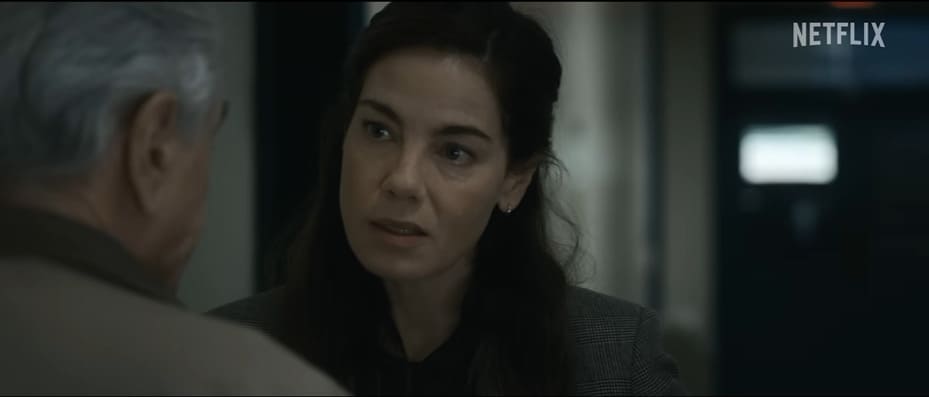
Then another child goes missing.
The similarities are impossible to ignore.
The movie retains the major pieces of this setup, including the investigation, the historical connection to Carter, and the increasingly disturbing relationship between Tom and Jake. Pete Willis, the detective who originally caught Carter, remains an important part of the story, while Amanda Beck investigates the new disappearance.
And, of course, Michael Keaton appears as Frank Carter.
That casting choice alone tells you that the filmmakers knew exactly where some of their ammunition was.
The Biggest Change Is Not the Plot — It’s the World
Here’s where the adaptation starts losing me.
North’s novel has a very specific atmosphere. Featherbank isn’t just a backdrop where murders happen. The gloomy English setting gives the story a strange, almost folkloric quality. There’s something old-fashioned and deeply uncomfortable about the idea of a killer standing outside a child’s window in an isolated village.
The film relocates everything to New Jersey.
That’s a huge creative decision, and I don’t think it works as well.
There is nothing inherently wrong with setting a psychological thriller in New Jersey. The production reportedly makes extensive use of real locations and creates a grimy suburban-industrial look. Some of the imagery is genuinely effective.
But the change removes a layer of identity.
In the book, Featherbank feels like somewhere the Whisper Man could have existed for generations. In the movie, the story sometimes feels like it has been dropped into a familiar American true-crime thriller template.
That’s a problem because The Whisper Man never needed to become another generic American serial-killer mystery.
It already had its own personality.
The Movie Is Simply Too Fast
This is probably my biggest complaint.
The novel takes its time.
And that’s exactly what it needs.
North allows the reader to sit with Tom’s grief, Jake’s strange behavior, Pete’s guilt, and Amanda’s investigation. The tension isn’t built entirely around discovering who did it. You’re constantly wondering what Jake knows, what Tom is missing, and whether the strange things happening around them have a rational explanation.
A 114-minute movie obviously cannot reproduce an entire novel.
But the adaptation doesn’t merely shorten the story. It compresses the psychology.
That distinction matters.
Several events are rearranged or pushed together so the film can move more efficiently toward its major revelations. On paper, that’s understandable. On screen, though, it means characters sometimes seem to make decisions because the screenplay needs the next scene to happen.
The book lets dread accumulate.
The movie often lets information accumulate.
Those aren’t the same thing.
And horror lives or dies on that difference.
Adam Scott Gets One of the Better Adaptation Jobs
Adam Scott’s performance as Tom is one of the film’s stronger elements.
He understands that Tom isn’t supposed to be an action hero or some brilliant detective who magically solves everything. He’s a father who’s exhausted, grieving, confused and increasingly terrified that he doesn’t understand his own child.
Scott sells that vulnerability.
My frustration isn’t really with the performance. It’s with the material he’s given.
The novel spends far more time inside Tom’s head. We understand his regrets and anxieties in a way the movie struggles to communicate. Without that internal perspective, Tom can occasionally feel less emotionally complicated than he should.
The film gives us the outline of a grieving father.
The book gives us the messy human being underneath it.
That’s a significant difference.
Michael Keaton Completely Steals the Movie
Then Michael Keaton shows up as Frank Carter and suddenly the movie wakes up.
Keaton understands something important about Frank: he doesn’t need to shout to be frightening.
There’s a controlled nastiness to his performance. His scenes with Robert De Niro have a completely different energy from the rest of the movie. The conversations feel dangerous even when almost nothing physically happens.
The interrogation material is easily among the film’s best scenes.
It’s also frustrating because it demonstrates what the adaptation could have been if it had trusted psychological tension more often.
Keaton doesn’t need a cheap jump scare.
He just sits there and talks.
And somehow that’s worse.
Robert De Niro Is a Much More Complicated Choice
Robert De Niro playing Pete Willis sounds fantastic on paper.
In practice, I’m not convinced.
The book’s Pete is a deeply damaged man. His alcoholism, guilt and emotional exhaustion are central to his character. There’s a fragility to him that makes his history with the Whisper Man especially painful.
De Niro brings enormous screen presence, but that presence can work against the character.
Instead of disappearing into a broken, almost haunted detective, he sometimes feels like Robert De Niro playing a damaged detective.
That’s a subtle distinction, but book readers will notice it.
His chemistry with Keaton is excellent, which makes the choice even more interesting. The two actors generate enough tension to make their scenes compelling, but I kept thinking about how different Pete feels from the man North created.
Amanda Beck Deserved Better
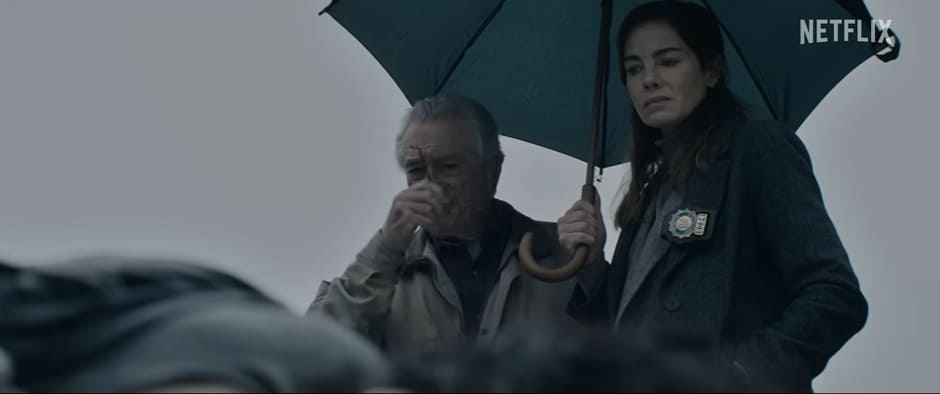
Michelle Monaghan’s Amanda Beck is another example of the adaptation simplifying a character who had considerably more substance on the page.
In the novel, Amanda feels like an intelligent investigator with her own perspective and investigative instincts. The film turns her into something closer to a familiar procedural detective.
She does what the plot requires.
She investigates.
She asks questions.
She connects clues.
But she rarely feels like a person whose presence fundamentally changes the story.
That’s a shame because a stronger Amanda could have helped preserve the investigative complexity that makes the book work.
Jake’s Story Loses Some of Its Mystery
This is where the adaptation really hurts itself.
Jake’s strange experiences are essential to the book’s atmosphere. His imaginary friend, his conversations, and the mysterious girl in the blue sweater create uncertainty about what is real and what isn’t.
The book doesn’t rush to explain everything.
That’s part of the fun.
You are left wondering whether you’re dealing with trauma, imagination, something supernatural, or something much uglier.
The movie doesn’t give this material enough breathing room.
The result is that some of Jake’s experiences can feel confusing rather than deliberately mysterious.
There is a huge difference between ‘I don’t know what’s happening, and I love it’ and ‘I don’t know what’s happening because the movie skipped something.’
The book achieves the first.
The film occasionally falls into the second.
Book vs. Movie: How Much Actually Changed?
| Element | Book | Movie | My Take |
|---|---|---|---|
| Tom Kennedy | Deeply internal and emotionally layered | More straightforward | Mixed |
| Jake | Central to the psychological mystery | More compressed | Disappointing |
| Featherbank | Distinctive English setting | Relocated to New Jersey | Major downgrade |
| Frank Carter | Terrifying psychological presence | Excellent Michael Keaton performance | Strong |
| Pete Willis | Fragile, damaged detective | More traditionally tough | Mixed |
| Amanda Beck | Detailed investigator | More conventional procedural character | Weaker |
| Supernatural Ambiguity | Important atmospheric element | Reduced | Missed opportunity |
| Pacing | Slow-burn and deliberate | Faster and more conventional | Weaker |
| Overall Atmosphere | Gothic, intimate, unsettling | American crime thriller | Uneven |
So, Is The Whisper Man Faithful to the Book?
If you’re asking whether the movie follows the basic plot, yes.
If you’re asking whether it captures the feeling of Alex North’s novel, that’s much harder to defend.
The names are there. The central mystery is there. Frank Carter is there. The disappearances are there. The father-son relationship is still at the center. The major pieces haven’t been thrown away.
But adaptation isn’t just a checklist of characters and plot points.
The best adaptations understand what made the original special and then find a cinematic language capable of reproducing that feeling.
That’s where The Whisper Man struggles.
The film is perfectly watchable. There are some excellent performances, several genuinely creepy sequences, and a few scenes that reminded me why I was excited about the project in the first place.
But too much of the book’s slow psychological suffocation has been replaced by conventional thriller mechanics.
And that’s the real disappointment.
If you’ve never read Alex North’s novel, you may have a pretty good time. Go in expecting an atmospheric serial-killer thriller rather than a deeply unsettling psychological horror story, and the movie becomes easier to appreciate.
But if you’re coming directly from the book?
Prepare yourself.
The movie hasn’t forgotten what happens.
It has simply forgotten, in too many places, why those things were frightening in the first place.
For me, the verdict is pretty clear: read the book first, watch the movie second, and don’t expect the two experiences to feel remotely identical. The novel still has the sharper teeth.