Minions & Monsters (2026) is the kind of animated movie that made me genuinely excited during its first half and then had me checking the runtime during its second. That sounds harsher than it is, because there is a lot to admire here. In fact, I’d argue that Illumination has accidentally made one of its most interesting Minions movies yet. The problem is that the studio seems to lose its nerve halfway through and retreats into the exact blockbuster formula it had spent the first 45 minutes mocking.
And that is frustrating.
The premise alone is ridiculously promising. Instead of dropping Kevin, Stuart, Bob, James, Henry and the rest of the yellow troublemakers into another generic supervillain adventure, Minions & Monsters takes them back to 1920s Hollywood, when silent movies were becoming a cultural obsession and the studio system was still finding its shape. The Minions arrive with a simple ambition: make a monster movie.
Naturally, things go catastrophically wrong.
They accidentally become Hollywood celebrities, stumble into the bizarre politics of the movie business, and eventually unleash actual monsters using an ancient magical spellbook. What begins as a playful trip through early cinema turns into a planet-saving disaster movie.
On paper, this is exactly the sort of ridiculous premise that should work for the Minions. And surprisingly often, it does.
The First Half Is So Much Better Than It Had Any Right to Be
I wasn’t expecting Minions & Monsters to be this visually clever.
The opening immediately signals that Illumination is trying something different. The modern Universal globe effectively travels backward through cinematic history before the movie settles into its retro-era aesthetic. Even the Illumination branding gets a period makeover, and that small detail tells you what kind of movie you’re watching.
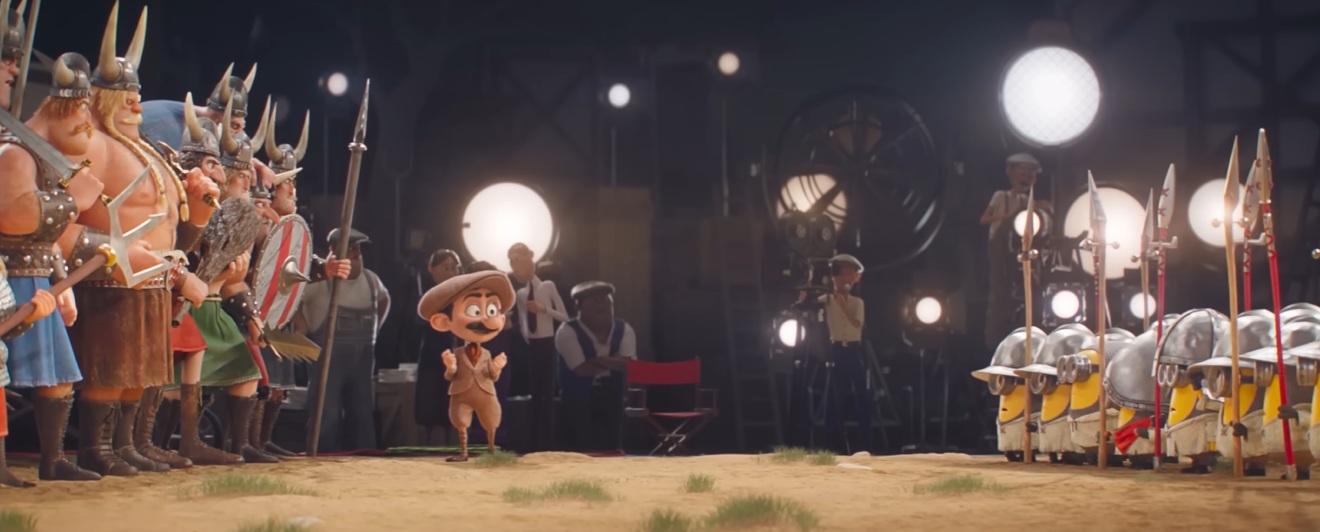
For roughly the first half, Minions & Monsters feels less like another franchise installment and more like Illumination genuinely having fun with film history.
The Minions are almost perfectly suited to silent comedy. They barely need understandable dialogue, so the filmmakers can lean heavily into exaggerated physical performances, visual gags, ridiculous reactions and carefully timed chaos. It isn’t just nostalgia for old movies thrown at the screen either. There is a real understanding of why silent cinema worked.
The film plays with the visual language associated with Charlie Chaplin and Buster Keaton, while sprinkling in broader references to classic Hollywood. There are nods that should make cinephiles smile without completely confusing younger viewers.
And I loved that balance.
Some of the background jokes are genuinely worth pausing for, although obviously that’s not exactly how you’re supposed to watch a 90-minute theatrical movie. The Old Hollywood setting is packed with little details, visual jokes and historical parodies that give the world considerably more personality than the usual Minions playground.
Then there is the wonderfully bizarre George Lucas gag.
It is completely unnecessary. It is also exactly the kind of joke I want from a movie this weird.
For once, the Minions aren’t simply being thrown into a new location so the studio can sell a different batch of merchandise. The setting actually influences the comedy.
That is a big deal.
The Cast Gives This Movie More Personality
Pierre Coffin remains the essential ingredient. His Minion voices are still a mixture of recognizable languages, nonsense, noises and manic delivery, but the performances work because the characters are doing something rather than simply screaming in the background.
The human cast is where things get particularly interesting.
Christoph Waltz as Max, a filmmaker who sees potential in the Minions, gives the movie an unexpected warmth. He isn’t treated as a disposable human character whose only purpose is to explain the plot. Max actually feels invested in the ridiculous filmmaking dream.
Jeff Bridges has enormous fun as Frank and Elwood, the twin studio executives whose personalities bounce between intimidating authority and absurd comedy. The two characters could have become one-note caricatures, but Bridges’ performance gives them enough eccentricity to remain entertaining.
Then there’s Trey Parker as Goomi.
This is probably my favorite performance in the movie.
Goomi is a small green creature who initially looks like he has been designed specifically to sell plush toys. Parker completely refuses to play him straight. Instead, Goomi becomes this strange, unpredictable little personality who can derail a scene simply by existing.
Whenever the movie starts feeling too polished, Goomi shows up and injects some weirdness back into it.
Allison Janney’s Olivia brings another strong presence to the Hollywood storyline, while Jesse Eisenberg’s deadpan delivery works particularly well with Dort, the mysterious character stuck inside a retro robot costume.
The Dort and Debbie storyline, with Zoey Deutch voicing the suffragette Debbie, is also much sweeter than I expected. It isn’t groundbreaking romance, but it gives the movie a little emotional texture that most Minions stories wouldn’t bother pursuing.
And Then the Movie Does the Thing I Didn’t Want It to Do
This is where my enthusiasm drops.
Once the magical spellbook is opened and the real monsters arrive, Minions & Monsters basically abandons its best idea.
The monsters themselves are entertaining. Phillips, Howard and the enormous orange, multi-eyed creature provide plenty of visual spectacle. Younger viewers are almost certainly going to have a fantastic time watching everything explode, transform, chase, crash and generally descend into animated mayhem.
But for me, the shift is painfully obvious.
The movie goes from a smart parody of Old Hollywood and silent cinema to a much more conventional animated action finale.
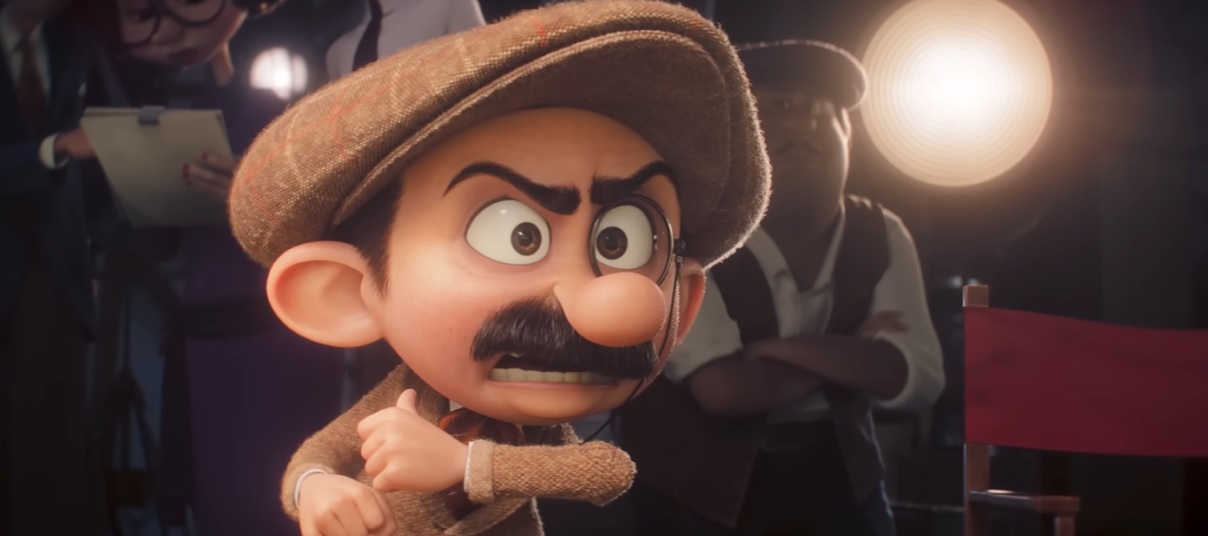
Suddenly there are giant monsters, escalating destruction, frantic chase sequences and increasingly enormous visual effects. The creativity hasn’t disappeared entirely, but the movie becomes much less distinctive.
This is especially annoying because the first half proves that the filmmakers could have done something far more interesting.
I kept thinking: Why are we back here?
Why does every animated franchise eventually feel obligated to end with something enormous destroying a city?
The giant orange monster looks spectacular, but spectacle isn’t the same thing as invention. The movie had already found its identity. It didn’t need to become another loud CGI-heavy climax just because that is what modern animated blockbusters are expected to do.
The 90-minute runtime doesn’t help either. The final act moves at such a ridiculous speed that several story threads feel like they’re being shoved toward the finish line.
What Works Best
- The 1920s Hollywood setting gives the film a genuinely fresh identity.
- The silent-movie comedy is far more sophisticated than I expected.
- Trey Parker’s Goomi is an absolute scene-stealer.
- Christoph Waltz and Jeff Bridges add unusual personality to the human side of the story.
- The visual references reward older viewers without making the movie inaccessible to kids.
- John Powell’s score makes the film feel considerably more cinematic than it otherwise might.
What Doesn’t
- The monster storyline feels considerably more generic than the Hollywood premise.
- The third act is overloaded with action.
- Several character arcs are wrapped up too quickly.
- The movie seems unwilling to trust its own strangest and smartest ideas.
- Parents may find some of the darker imagery and humor surprising for a Minions movie.
John Powell’s Score Deserves More Attention
One thing I don’t want buried under the criticism of the finale is John Powell’s music.
The score is fantastic.
Powell understands exactly what the movie needs during its Old Hollywood sequences. The orchestral writing gives the filmmaking sections a sense of scale and old-fashioned glamour without turning the movie into a parody of itself.
Then the monsters appear and the music becomes bigger, more aggressive and more dramatic.
That contrast helps enormously.
If the screenplay sometimes feels like two different movies stitched together, Powell’s score is one of the few elements capable of making those two halves feel connected. There is real cinematic ambition here, and the music is a huge part of it.
Is Minions & Monsters Appropriate for Young Kids?
This is probably where parents should pay attention.
Despite the colorful characters and familiar Minions branding, Minions & Monsters occasionally gets darker than you might expect. The story involves an ancient spellbook, supernatural creatures, potentially deadly monsters and imagery that leans into pseudo-demonic and macabre territory.
There is also some exaggerated slapstick violence, a brief bit of animated nudity and a surprising use of the word “bastard.”
None of this makes the film remotely adult-only, but I can absolutely understand why some parents might hesitate with very young children.
Older kids should have no problem with it. In fact, they will probably love the monster chaos.
The bigger question is whether a toddler who expects nothing but cheerful Minion nonsense is ready for a movie that suddenly starts throwing supernatural creatures and apocalyptic destruction at the screen.
My Minions & Monsters Rating
| Category | Rating |
|---|---|
| Story | 8/10 |
| Animation | 8.5/10 |
| Humor | 8/10 |
| Voice Cast | 9/10 |
| Music | 9/10 |
| First Half | 9.5/10 |
| Second Half | 6.5/10 |
| Family Entertainment | 8/10 |
| Overall | 8/10 |
I know an 8/10 sounds generous after all that complaining about the finale, but that’s because I genuinely enjoyed Minions & Monsters.
The first half is too good to ignore.
It is clever, visually playful, unexpectedly affectionate toward film history and packed with ideas that make the movie feel like someone at Illumination finally asked, “What if we actually did something different with these characters?”
Then the second half reminds you that this is still a giant studio animated movie designed to entertain a massive audience.
I don’t hate the monster finale. That’s the important distinction. I just wanted more from it.
Is Minions & Monsters (2026) Available on Netflix US? How to Watch Online
Final Verdict: The Minions Are Better When They’re Allowed to Be Weird
Minions & Monsters isn’t perfect, but it is one of the more creatively satisfying entries in the franchise. The Old Hollywood concept is inspired, the voice cast is excellent, the visual comedy is frequently brilliant and John Powell’s score gives the movie an unexpected sense of grandeur.
The biggest disappointment is that Illumination discovers something genuinely fresh and then abandons it for the safest possible ending.
Still, I’d rather watch a movie that swings for something unusual and stumbles than another completely predictable Minions adventure that never takes a risk.
And Minions & Monsters absolutely takes a risk.
For roughly 45 minutes, I was having a blast. I was laughing at the visual jokes, looking for cinematic references and genuinely impressed by how naturally the Minions fit into silent-era comedy. The finale couldn’t match that level of creativity, but it did provide enough energy and spectacle to keep the movie entertaining.
So yes, I recommend it.
Just don’t go in expecting 90 uninterrupted minutes of Old Hollywood brilliance. The movie eventually trades its clever period satire for monster mayhem, and that’s where it loses some of its magic.
My verdict: 8/10.
If Illumination continues pushing the franchise in this direction rather than simply making the Minions louder, bigger and more chaotic, there might actually be considerably more life left in these little yellow lunatics.
And honestly? That is the most surprising thing about Minions & Monsters.