
The Gentlemen Season 2 takes the first season’s ridiculous mixture of aristocrats, gangsters, weed money and British upper-class manners and pushes it somewhere much nastier. Eddie Horniman is no longer simply the unlucky duke who inherited a criminal empire he never asked for. This time, he has a plan. And, honestly, that plan is exactly the kind of insane idea that makes Guy Ritchie’s world so much fun when it works.
Eddie and Susie Glass decide that simply running an illegal cannabis operation isn’t enough anymore. They want something much bigger: they want to change the rules of the British cannabis market itself. Their answer is a political push toward marijuana decriminalization, allowing them to potentially move from an underground empire into a legitimate business while keeping all the infrastructure and connections they already built.
On paper, it’s clever. In practice, it’s completely bonkers.
And that’s precisely why this storyline became one of the most interesting parts of the season for me. Instead of treating legalization as some dry political subplot, The Gentlemen turns it into another criminal battlefield. Parliament becomes just another room where people threaten each other, reputations become weapons, and everyone is trying to figure out who can be squeezed hardest without the whole thing exploding.
The Voice Season 30 Release Date: Premiere Schedule, New Coaches, and Game-Changing Rules Revealed
Eddie’s Biggest Gamble Yet
Season 1 was largely about Eddie trying to survive a world he barely understood. He had the title, the estate and the family name, but none of that prepared him for dealing with people like Bobby Glass or Susie. By Season 2, that awkward phase is basically gone.
Eddie understands the business now. More importantly, he understands that the illegal status of the operation is also its biggest weakness. As long as the Glass organization has to operate in the shadows, there is always another gang, police investigation, rival supplier or ambitious criminal waiting to take a swing at them.
So Eddie comes up with the most Eddie solution imaginable: stop fighting the system from outside and manipulate the system from inside.
The plan revolves around getting marijuana decriminalization through the British political establishment. If that happens, Eddie and Susie could potentially move their enormous growing infrastructure into a legal market before ordinary competitors have even figured out where to begin.
That’s the part I really like. Eddie isn’t suddenly pretending to be a social reformer. His motivations are brutally practical. He wants security, control and a way to protect the fortune attached to his family’s name. The political campaign is simply another business strategy.
Why the Plan Makes Sense in Their World
The real advantage isn’t just having access to cannabis. Eddie and Susie already have the land, production facilities, criminal contacts, distribution networks and experience. If the law changes, they aren’t starting from zero like a normal company.
They would already have an enormous head start.
- Existing production: Their underground growing operation is already established.
- Distribution: The Glass network knows exactly how to move product.
- Money: They have the capital to expand extremely quickly.
- Connections: Eddie’s aristocratic background gives them access to people most criminals could never reach.
That combination makes the political strategy dangerous because it isn’t really about one law. It’s about who controls the market after the law changes.
Lord Hawthorne Becomes the Perfect Target
Of course, Eddie and Susie can’t exactly walk into Westminster and announce that they would like Parliament to make their criminal business more convenient.
They need someone respectable.
Enter Lord Hawthorne, played by Hugh Bonneville. He’s exactly the sort of establishment figure Eddie and Susie need: influential, connected and deeply invested in maintaining the appearance of respectability.
That last part is also what makes him vulnerable.
Instead of traditional political lobbying, Eddie and Susie approach the problem the way they approach everything else. They look for leverage. Once they discover information capable of damaging Hawthorne’s carefully protected reputation, he becomes extremely useful.
Watching Susie work this angle is particularly entertaining. She doesn’t need to shout or threaten someone every five seconds. Her strength is that terrifyingly calm attitude where you can practically see her calculating the consequences before anyone else in the room has caught up.
Eddie brings a different kind of pressure. His aristocratic background gives him an unusual ability to move between respectable society and the criminal world. He’s becoming increasingly comfortable in both, which is arguably much more frightening than if he had simply turned into another gangster.
Bobby Glass Has a Very Different Idea
Here’s where the marijuana decriminalization plot becomes genuinely interesting instead of just being another elaborate criminal scheme.
Bobby Glass hates the idea.
From his perspective, Eddie and Susie are threatening the very thing that made the Glass empire powerful. Cannabis is valuable partly because it is illegal. Remove that scarcity and the entire business model changes.
Bobby’s argument is straightforward. A regulated market means more competition, lower prices and potentially thinner margins. Suddenly the organization that built its power in the shadows has to compete with legitimate companies that don’t have to worry about police raids or hiding production facilities.
It’s a classic clash between the old guard and the new generation.
Bobby wants to protect what already works. Eddie and Susie want to control what comes next.
I actually think this conflict gives the season much more weight than the political plot would have had on its own. Without Bobby’s opposition, Eddie’s idea could feel like a clever shortcut. With Bobby standing in the way, it becomes a genuine power struggle inside the empire.
The Italian Mafia Makes Everything Worse
Because apparently trying to manipulate British politics while running a massive criminal organization wasn’t complicated enough, Eddie and Susie start looking toward continental Europe.
Their relationship with the Italian Mafia opens another door, bringing international money, logistics and criminal influence into the equation. It also pushes Eddie further away from the reluctant aristocrat we met earlier.
This is where I think the season gets particularly ruthless with his character.
Eddie originally wanted to protect his family and get rid of the criminal mess surrounding his inheritance. Now he’s willingly making alliances with people who are every bit as dangerous as the criminals he once wanted to escape.
Every new solution creates a bigger problem.
| Character | What They Want | How It Affects Eddie |
|---|---|---|
| Eddie Horniman | Legitimacy and control | Pushes him deeper into organized crime |
| Susie Glass | Expansion and long-term power | Turns the political strategy into a practical operation |
| Bobby Glass | Protect the existing empire | Creates an internal conflict with Eddie and Susie |
| Lord Hawthorne | Protect his position and reputation | Becomes a tool in the decriminalization campaign |
The Biggest Irony: Legitimacy Makes Eddie More Violent
This is probably my favorite part of the entire storyline.
Eddie’s objective sounds almost respectable. He wants to create a legal future for the business and stop living permanently at the mercy of criminals. You might expect that journey to make him less violent.
It does the exact opposite.
The closer Eddie gets to legitimacy, the more brutal the road becomes.
Political pressure attracts criminal retaliation. Criminal alliances create new enemies. Family problems become weapons. Religious extremists such as Gospel John enter the picture, and Eddie’s already complicated relationship with Freddy becomes another potential disaster waiting to happen.
Then the consequences become painfully personal.
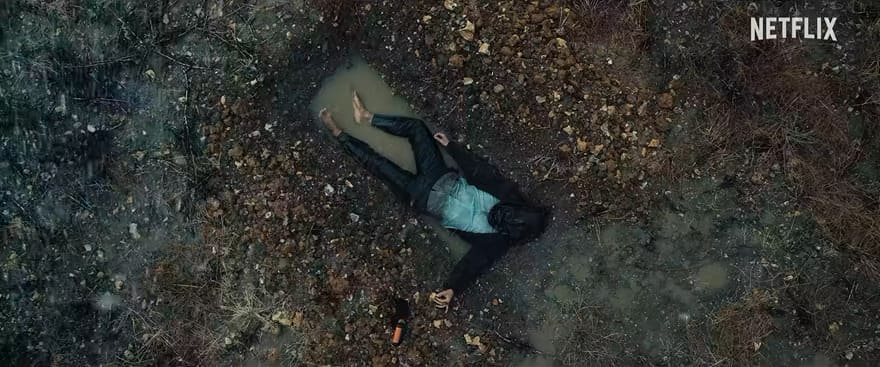
The assassination of Eddie’s new wife, Bella, after their wedding is the moment when the fantasy of simply escaping the criminal world completely collapses. There is no clean exit anymore. Eddie has spent so long building an empire capable of protecting himself and his family that he has helped create a world where everyone close to him can become a target.
Eddie Isn’t the Same Man Anymore
This is where The Gentlemen Season 2 succeeds for me, even when the story occasionally becomes almost absurdly complicated.
Eddie’s transformation isn’t subtle. He’s becoming colder, more decisive and much more willing to order or participate in violence. The reluctant duke from the first season has effectively disappeared.
What replaces him is someone who understands how power actually works.
And that’s considerably scarier.
The comparison to Michael Corleone is obvious, but it fits because Eddie’s evolution follows the same basic emotional trajectory: a man initially separated from the family business gradually becomes the person most capable of controlling it.
The difference is that Eddie still has that strange British aristocratic polish. He can walk into an elegant dinner wearing an expensive suit and discuss politics with a smile, then turn around and make decisions that would horrify the people sitting beside him.
That contrast is where the character is at his best.
Does the Marijuana Plot Actually Work?
As a piece of television storytelling, I think it mostly does, although I wouldn’t pretend every part of it is perfectly balanced.
The strongest element is the way the cannabis decriminalization idea connects nearly every major conflict. It affects Eddie’s relationship with Bobby, changes Susie’s ambitions, brings international criminals into the picture and forces Eddie to interact with the British establishment.
It doesn’t sit in the background. It keeps moving the entire story forward.
My only real complaint is that the season sometimes piles so many schemes on top of each other that the central objective can get buried underneath the chaos. One minute we’re dealing with political leverage, then organized crime, then family betrayal, then another dangerous player appears. That’s classic Guy Ritchie, obviously, but there were moments when I wanted the story to slow down for five minutes and let the consequences breathe.
Still, when the pieces click together, this is exactly the kind of ridiculous, stylish criminal television I want from The Gentlemen.
Why Season 2’s Political Story Matters
The marijuana storyline isn’t really about marijuana. That’s the trick.
It’s about who gets to control a market when the rules suddenly change.
Eddie and Susie aren’t simply trying to make cannabis legal because they believe the world would be better that way. They’re trying to make sure they’re standing in the best possible position when the market changes. Bobby sees that as a threat. The Italian Mafia sees an opportunity. Politicians see influence and danger. Criminal rivals see a chance to steal the whole thing.
Everyone wants the same future for completely different reasons.
And Eddie, perhaps more than anyone, has learned that having legitimate power and criminal power aren’t necessarily opposites. In his world, they can be used together.
Season 2 Leaves Eddie in a Much Darker Place
By the end, Eddie and Susie have pushed their operation far beyond the small criminal empire Eddie inherited. They’ve built something much larger, more international and considerably more dangerous.
But Eddie has paid for it.
He wanted legitimacy because he believed it could finally give him control over his life. Instead, the pursuit of legitimacy forces him to become exactly the kind of man he once wanted to avoid.
That’s why the marijuana decriminalization storyline works better than I initially expected. It’s not just a clever excuse for political blackmail or another way to move the plot from one gangster confrontation to the next. It’s the mechanism that completes Eddie’s transformation.
And if The Gentlemen continues down this road, Season 3 has a serious problem to solve: Eddie finally has the power he wanted. The question now is what the hell he’s going to do with it.