There are certain movie adaptations that make you wonder whether the people behind them have ever actually played the game. Resident Evil has had more than its share of those. For years, Hollywood seemed fascinated by the name, the monsters, the weapons and the explosions, but strangely uninterested in the thing that made Capcom’s survival horror games so memorable in the first place: fear.
Zach Cregger’s Resident Evil feels different.
After watching this movie, my biggest reaction wasn’t simply, “That was scary.” It was, “Finally.”
Finally, someone understood that Resident Evil doesn’t need to become a superhero movie with zombies. It needs darkness, bad decisions, limited options, ugly creatures and that horrible feeling that opening the next door might be the worst decision you’ve made all night.
Cregger, coming off Barbarian and Weapons, seems to understand that instinctively. His 2026 reboot doesn’t attempt to cram decades of Capcom mythology into a single screenplay. Instead, it takes us back to Raccoon City and asks a much simpler question:
What would it actually feel like to be an ordinary person trapped inside the Resident Evil outbreak?
That decision makes all the difference.
A Resident Evil Movie That Actually Feels Like Resident Evil
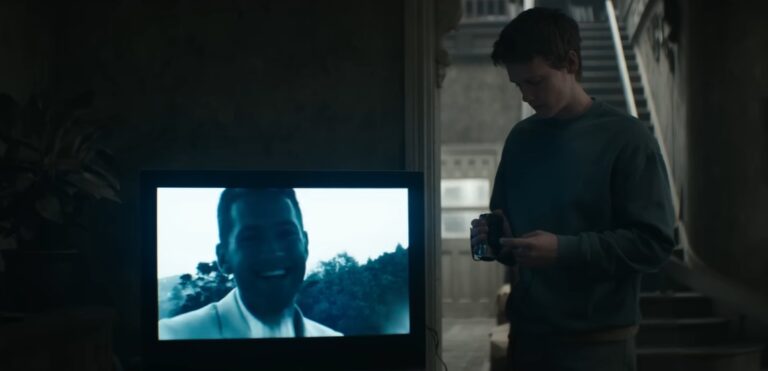
The film follows Bryan, played by Austin Abrams, a medical courier whose seemingly routine delivery puts him directly inside the Raccoon City disaster.
And I absolutely loved this choice.

Bryan isn’t Leon Kennedy. He’s not Chris Redfield. He isn’t trained to clear rooms, throw grenades or perform ridiculous action-movie stunts. He’s just a guy who happens to be in exactly the wrong place when everything falls apart.
That immediately changes the tension.
When Bryan hears something moving in a dark hallway, he doesn’t confidently reach for a shotgun. He freezes. He looks around. He breathes heavily. He tries to figure out where the sound came from.
That’s Resident Evil.
The story runs alongside the larger events of the Raccoon City outbreak without constantly dragging the most recognizable game characters into the foreground. We get glimpses of Umbrella, the quarantine operation and the horrifying experiments happening behind closed doors, but the movie never loses sight of Bryan’s increasingly desperate struggle to survive.
It’s a surprisingly smart way to approach an established franchise.
Instead of recreating Resident Evil 2 scene by scene, Cregger builds a parallel nightmare inside the same universe.
The 90-Minute Runtime Is One of Its Biggest Strengths
I was honestly surprised by how much I appreciated the 90-minute runtime.
Modern franchise movies often feel like they are terrified of being short. Everything needs another subplot, another character, another explanation, another post-credit tease. Resident Evil doesn’t fall into that trap.
The movie gets in, creates absolute chaos, and gets out.
There is very little wasted material. Bryan has a problem. The city is collapsing. The infection is spreading. The exits are disappearing.
Good luck.
That momentum gives the movie an almost breathless quality. There are no huge stretches where characters stand around explaining Umbrella’s history to each other. The audience gets enough information to understand what’s happening, then we’re pushed back into the nightmare.
For me, that’s exactly how it should be.
| Element | My Take |
|---|---|
| Runtime | Lean and effective |
| Atmosphere | One of the movie’s biggest strengths |
| Action | Brutal rather than superhero-like |
| Horror | Consistently tense |
| Story | Simple, focused and surprisingly effective |
| Game Connection | Strong in spirit without becoming a remake |
Zach Cregger Understands That Darkness Is a Weapon
What impressed me most about Cregger’s direction is how comfortable he is with not showing everything immediately.
There are long stretches where the movie trusts darkness to do the heavy lifting.
A hallway might be almost completely black. A flashlight sweeps across a room. Something moves in the background. Bryan doesn’t notice it.
We do.
Then the movie waits.
That patience is incredibly effective.
Cregger also reportedly pulled back on some of the darker humor during editing after early audiences reacted more strongly to the frightening material. I think that was the right call. Resident Evil has always had strange humor around the edges, but this particular movie benefits from taking its survival horror premise seriously.
There are moments where I genuinely wanted Bryan to stop moving and stay exactly where he was.
Of course, he doesn’t.
Nobody ever does in horror movies.
Austin Abrams Is the Secret Weapon
Austin Abrams could have easily played Bryan as a generic frightened protagonist. Instead, he gives the character a level of awkwardness and vulnerability that makes the whole thing work.
Bryan isn’t cool.
That’s important.
He doesn’t suddenly become an expert fighter because the plot needs him to. He makes mistakes. He panics. He struggles with weapons. He looks physically exhausted.
And when he finally manages to fight back, it feels earned.

The performance reminded me why ordinary protagonists can be so much more effective in horror than professional killers or military commandos. If Bryan gets cornered by a zombie, I actually believe he might die.
That uncertainty carries the movie.
The supporting cast also adds texture to the Umbrella side of the story. Zach Cherry, Kali Reis and Paul Walter Hauser help create the sense that the outbreak isn’t simply a monster problem. There are people behind it, people covering it up and people trying to survive the consequences of decisions made in laboratories far away from the streets.
Paul Walter Hauser in particular gets a role that allows him to lean into something colder and more serious than his usual comedic presence.
The Monsters Are Exactly What I Wanted
Let’s talk about the zombies.
Because if you’re making Resident Evil, you better get the creatures right.
Thankfully, this movie doesn’t treat them like disposable CGI targets.
The zombies feel heavy, rotten and physical. Their movements have an ugly unpredictability that makes every encounter uncomfortable. They don’t simply sprint toward the camera so the heroes can mow them down.
They lurk.
They stumble.
They disappear into darkness.
And sometimes they appear exactly when you thought the room was safe.
The mutated creatures are even better. The production leans heavily into practical effects, prosthetics and physical creature work, with digital effects used to enhance rather than completely replace them.
That makes a huge difference.
You can almost feel the texture of the creatures through the screen.
The hospital sequences are especially nasty, with body horror that feels much closer to the games than the glossy monster spectacle we’ve seen in previous adaptations.
And watching these creatures in an IMAX theater is a completely different experience from watching a regular zombie movie at home.
The screen feels enormous.
The sound feels even bigger.
Then something starts walking toward Bryan.
And suddenly I wasn’t enjoying my comfortable theater seat quite as much.
The Sound Design Might Be the Most Underrated Part
Ryan and Hays Holladay’s score deserves serious attention.
Rather than drowning every scene in massive orchestral music, the soundtrack uses industrial textures, synthesizers, metallic sounds and minimalist melodies to create an almost constant feeling of unease.
There are moments where the music barely seems to exist.
Then you notice a low mechanical pulse.
Then another.
Then the footsteps begin.
That approach reminded me of the old PlayStation-era Resident Evil games, where silence could sometimes be more frightening than the soundtrack itself.
The save-room influence is also a nice touch. Those quieter musical moments don’t simply function as nostalgia bait. They provide tiny islands of calm before the movie throws you back into the nightmare.
And when the action kicks in, the score becomes much more aggressive.
It’s less “epic Hollywood action sequence” and more your heartbeat getting louder because you know something is coming.
The Best Part: It Doesn’t Try Too Hard to Please Everyone
One thing I respect about this reboot is that it doesn’t seem desperate to explain itself.
You don’t need a ten-minute lecture about the T-virus.
You don’t need every Umbrella executive introduced with a dramatic speech.
You don’t need every classic character squeezed into the story just because fans know their names.
The film assumes that the world is already bigger than what we’re seeing.
That’s a confident choice.
There are references and familiar ideas for longtime fans, but the movie remains accessible if you don’t know every detail of Capcom’s mythology.
For longtime players, though, there are plenty of moments where you’ll recognize the DNA immediately:
- Claustrophobic corridors and limited visibility
- Umbrella’s sinister presence in the background
- Grotesque biological mutations
- A civilian struggling with basic survival
- The constant feeling that ammunition and safe routes are running out
- A city becoming progressively more hostile
None of that feels like cheap fan service.
It feels like the filmmakers actually understand the source material.
Is It Perfect? Not Quite
As much as I enjoyed Resident Evil, I don’t think it’s flawless.
The film’s relentless pacing can become exhausting, particularly because the story rarely gives the audience much room to breathe. That’s part of its appeal, but I can also see some viewers wanting a little more character development outside Bryan’s immediate survival story.
The alternate-timeline approach may also frustrate fans who wanted a more direct adaptation of Resident Evil 2.
If you came into the theater expecting Leon, Claire and a scene-for-scene recreation of Raccoon City Police Department, this isn’t that movie.
But honestly?
I’m glad it isn’t.
We’ve already seen attempts to recreate recognizable pieces of the games. What we haven’t seen enough of is a filmmaker asking what the games feel like when you’re trapped inside them.
Cregger’s movie gets much closer to that feeling.
My Verdict: This Is the Resident Evil Movie I’ve Been Waiting For
I’ve watched enough video game adaptations to become skeptical whenever someone announces another reboot.
Usually, the marketing promises that this time things will be different.
Then the movie arrives and you’re sitting there wondering why everyone has machine guns and why the zombies suddenly feel like an afterthought.
Resident Evil (2026) doesn’t make that mistake.
It understands that survival horror is about vulnerability.
It’s about walking into a room without knowing what’s inside.
It’s about hearing something behind you.
It’s about realizing you have one bullet left.
It’s about choosing between two terrible options and hoping you’ve picked the less terrible one.
That is where Zach Cregger’s film succeeds.
Austin Abrams gives the movie an appropriately human center, the creature work is excellent, the sound design is fantastic, and the stripped-down screenplay keeps everything moving without drowning the horror in franchise mythology.
Most importantly, it feels like someone involved actually loved the games.
Not the brand.
Not the merchandise.
The games.
And that distinction matters.
After years of Resident Evil movies that struggled to capture the spirit of Capcom’s survival horror, Cregger finally delivers something that feels like a genuine cinematic extension of that experience.
I left the theater wanting to play Resident Evil 2 again.
For me, that’s probably the best compliment I can give it.
Resident Evil (2026) is scary, nasty, fast and refreshingly confident. It isn’t trying to be the biggest video game movie ever made. It just wants to lock you inside Raccoon City for 90 minutes and make you wonder whether you’ll get out.
And honestly, I wouldn’t have wanted it any other way.
Rating: 9/10
в