
The Evil Dead franchise has always understood one simple truth: the dead never stay buried for long. That has been the foundation of the series since Sam Raimi unleashed the first wave of Deadite madness decades ago. But the ending of Evil Dead Burn takes that idea and twists it into something much darker.
Instead of simply giving audiences another blood-soaked survival story, the film pushes the mythology forward. It asks one terrifying question: what if destroying the body of a Deadite was never enough?
The answer is both fascinating and frustrating.
On one hand, Evil Dead Burn delivers everything fans expect from the franchise — brutal violence, psychological torment, impossible survival situations, and a protagonist forced to fight demons that are both supernatural and painfully personal. On the other hand, some of the mythology changes introduced in the final act feel like a risky gamble.
Whether you love it or hate it, the movie clearly wants to break the old rules.
And that is exactly where the ending becomes so interesting.
Alice’s Final Battle: Survival Comes With a Price
The emotional center of the story is Alice, a woman already carrying enormous trauma before the Deadites arrive.
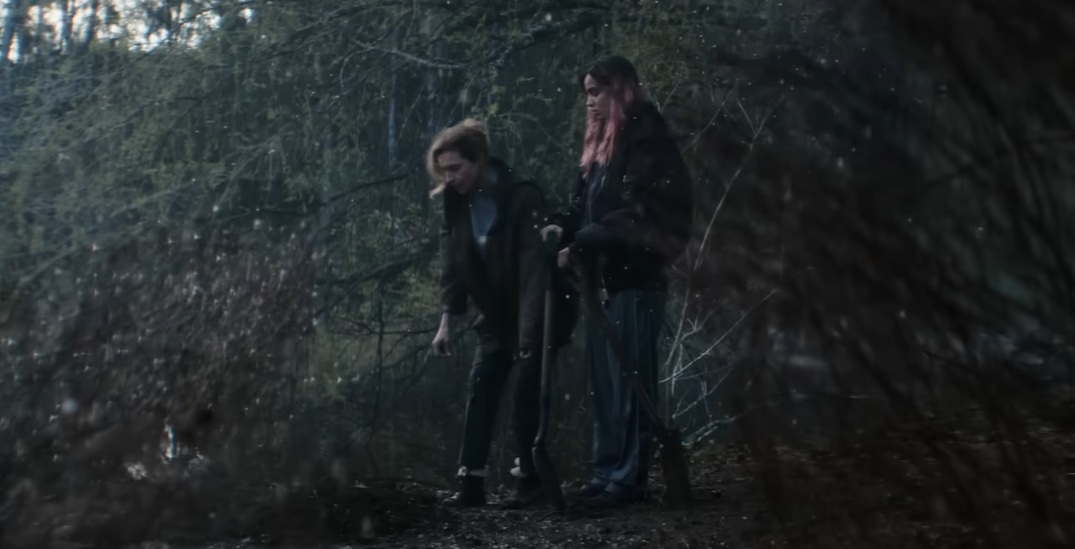
Unlike previous protagonists who simply find themselves trapped in the wrong place at the wrong time, Alice’s nightmare is much more personal. She enters a damaged family environment filled with resentment, secrets, and painful memories. The supernatural horror only amplifies the human horror that was already there.
When the Kandarian dagger enters the story, everything changes.
The ancient weapon becomes more than just another Evil Dead artifact. It represents control. For the first time, Alice has something capable of fighting back against a force that has taken away everyone’s power around her.
The final confrontation inside the mansion is exactly the type of chaotic nightmare fans expect from the franchise:
- Deadite versions of her enemies hunting her through the house
- The family’s buried trauma exploding alongside the supernatural curse
- Alice using the Kandarian dagger as her final weapon
- The destruction of the mansion becoming a symbolic attempt to destroy her painful past
But the most important battle is not against the Deadites.
It is against Will.
The possessed version of Alice’s abusive husband attempts one final manipulation. Instead of appearing as a pure monster, he returns looking human. He tries to convince Alice that he still loves her, that everything can be forgiven, and that she should trust him again.
It is a classic Deadite strategy — using emotional weakness as a weapon.
The difference is that Alice finally sees through it.
She refuses to let him control her anymore. The moment is not simply about killing a monster. It is about breaking a cycle that has destroyed her life.
Using the Kandarian dagger, Alice destroys Will and escapes the burning remains of the nightmare she entered.
But then the movie delivers its final punch.
As emergency responders arrive, Alice appears calm. She lights a cigarette, something her husband previously controlled and forbade. It is a small action, but it represents something much bigger — freedom.
Then her eyes flash red.
And suddenly, everything changes.
Is Alice Becoming a Deadite?
The final shot is easily one of the most debated moments in the entire movie.
The film refuses to give audiences a simple answer, and honestly, that is both its biggest strength and its biggest weakness.
A traditional Evil Dead ending usually leaves viewers with chaos, blood, and a clear supernatural threat. Instead, Evil Dead Burn creates uncertainty.
Did Alice become infected?
Did the Kandarian dagger save her, but leave behind some kind of corruption?
Or is the red flash simply showing that surviving the Deadites has permanently changed her?
The movie seems to suggest that fighting evil always leaves scars.
Alice wins, but she does not walk away untouched.
This is a much more interesting direction than simply creating another survivor who defeats the monsters and moves on. The trauma remains, and the possibility that Alice is now connected to the evil she fought creates a much larger story.
The First Post-Credits Scene: Grandma Polly’s Escape
The first post-credits sequence brings back one of the movie’s most disturbing characters: Grandma Polly.
Earlier, Polly becomes another victim of the Deadite infection, and her fate appears sealed. However, the post-credits scene reveals something much worse.
She survived.
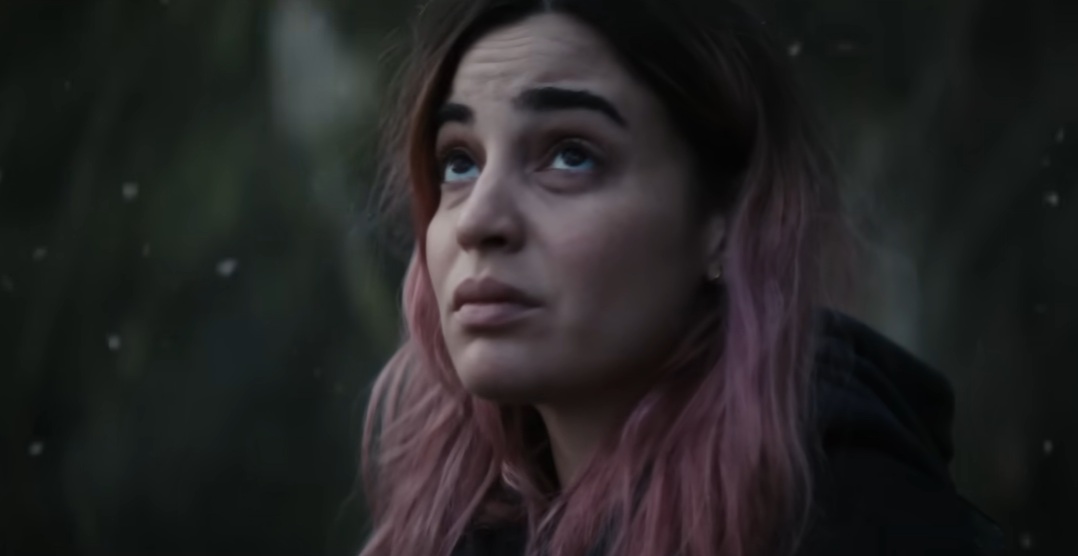
In classic Evil Dead fashion, Polly’s escape is both horrifying and strangely darkly funny. After surviving extreme injuries, she becomes a walking reminder that Deadites do not follow normal rules of life or death.
The highway sequence works because it brings back the franchise’s traditional balance between horror and twisted comedy.
The best Evil Dead stories have always been uncomfortable because they make audiences laugh at exactly the moment they should probably be looking away.
But the bigger implication is far more serious.
Polly escaping means the evil from the mansion was never truly contained.
The nightmare is no longer isolated.
It is spreading.
Ellie’s Return Changes Everything
The second post-credits scene is where Evil Dead Burn truly changes the franchise.
The return of Ellie Bixler directly connects the movie with the events of Evil Dead Rise, and this is the moment where the mythology takes its biggest risk.
The scene involving Ellie’s ashes is designed specifically to shock longtime fans.
Ellie was one of the most memorable Deadite villains in recent years — terrifying, unpredictable, and brutally entertaining. Bringing her back is obviously designed to capitalize on a character audiences loved to fear.
And honestly, it works.
The character remains one of the strongest modern additions to the franchise, so seeing her return immediately creates excitement.
But it also creates a major lore problem.
The Necronomicon’s New Rule
The biggest question is simple:
How can Ellie return if her body was destroyed?
Previously, the Evil Dead mythology followed a fairly clear idea. A demon possessed a physical body. Destroy the body, and the threat was removed.
But this ending introduces something completely different.
The evil does not need the original body anymore.
It can survive through remains.
Ashes.
Objects.
Fragments.
Anything connected to the possessed host.
| Old Evil Dead Rule | New Possibility |
|---|---|
| Destroy the body to stop the Deadite | Evil can survive beyond the body |
| Possession requires a living host | Remains and objects may carry the curse |
| Stories mostly exist separately | Events can directly connect |
Some fans will absolutely love this expansion. Others may feel that it removes the simplicity that made the original movies terrifying.
This is where the movie becomes controversial.
The idea is genuinely creative, but changing the rules of a horror universe is dangerous. If everything can always return, victories start losing their meaning.
The strongest horror stories need consequences.
If the heroes can never truly win, audiences eventually stop fearing the villains and simply expect another resurrection.
Evil Dead Burn Ending Explained: Who Survives the Family Reunion From Hell?
The Future of the Evil Dead Universe
The biggest takeaway from the ending is that Evil Dead Burn is not trying to close the door.
It is opening several new ones.
Alice represents one possible future: a survivor who may become the next person forced to fight the darkness.
Ellie represents the opposite: pure evil returning stronger than before.
Grandma Polly represents something even more dangerous — the idea that the infection can escape normal boundaries.
The franchise is moving away from disconnected horror stories and toward a larger mythology.
Whether that is the right decision remains a huge question.
The original charm of Evil Dead came from feeling trapped inside a nightmare with no escape. Expanding the universe creates exciting possibilities, but it also risks losing the intimate terror that made the series legendary.
If the filmmakers can balance the bigger mythology with the brutal, personal horror that made the franchise famous, there is still enormous potential.
The ending of Evil Dead Burn is messy, ambitious, and definitely not perfect.
But boring?
Absolutely not.
It leaves behind exactly what a great horror ending should leave behind: questions, arguments, theories, and the uncomfortable feeling that somewhere in the darkness, something evil is still waiting.


