When I walked out of Evil Dead Burn, I honestly thought I had just seen one of the nastiest entries the franchise has produced. The gore was relentless, the practical effects were disgusting in all the right ways, and the chainsaw-level brutality never really let up. That was enough to satisfy the horror fan in me.
Then I watched it again.
And suddenly the violence wasn’t the thing grabbing my attention anymore.
The biggest surprise hiding inside Sebastien Vanicek’s film isn’t another bucket of blood or another over-the-top kill. It’s the way the movie quietly rewrites what it actually means to become a Deadite. That’s the part I completely missed the first time, and judging by the endless discussions across horror communities, I wasn’t alone.
The more I thought about it, the more convinced I became that Evil Dead Burn isn’t trying to make the demons stronger.
It’s trying to make them smarter.
The Demon Doesn’t Attack Your Body First
For decades, Evil Dead taught us one simple lesson.
Get scratched.
Get bitten.
Get possessed.
That formula worked because it was brutally simple. The evil force spread like an unstoppable infection, and once it found you, there was basically no escape.
Evil Dead Burn quietly shifts that entire idea.
Physical contact still matters, but it almost feels secondary. What really opens the door is emotional collapse.
That’s a massive change.
Every major possession in the movie happens after someone reaches their psychological breaking point. The demons don’t rush in immediately. They wait.
That patience makes them infinitely more disturbing.
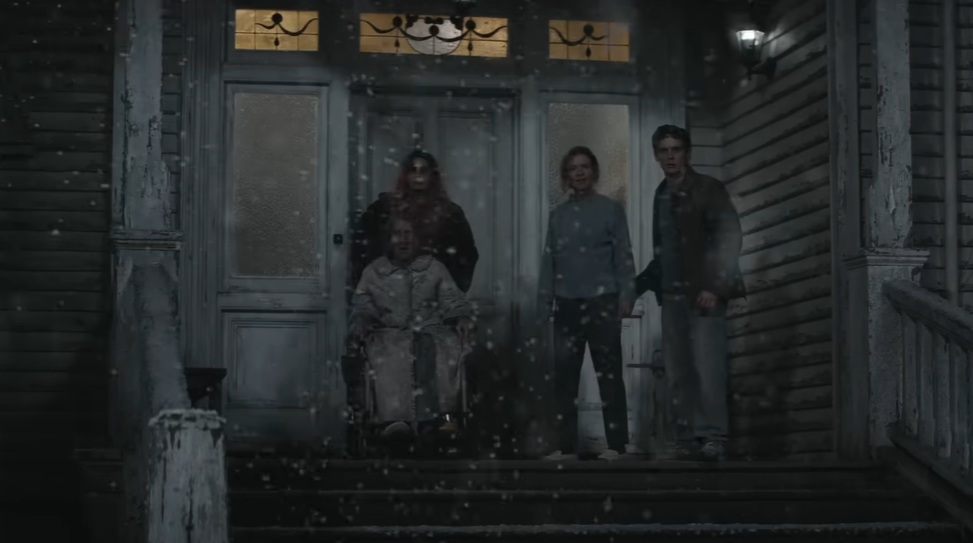
Edgar is probably the clearest example. His burned arm doesn’t instantly transform him into another screaming monster. Instead, he spends scene after scene trying to stay in control. He looks exhausted. Confused. Angry.
Almost like he’s fighting someone inside his own head.
Only after another crushing family confrontation does everything finally snap.
That doesn’t feel accidental.
It feels designed.
Grief Becomes the Real Infection
One thing that stood out during my second viewing was how often conversations become more dangerous than physical attacks.
Characters aren’t simply injured.
They’re emotionally cornered.
Every argument drags old wounds back into the open, and every painful memory seems to make the demonic influence stronger.
I’ve seen plenty of horror films where trauma exists only as background motivation.
Here, trauma almost functions like another character.
The demons don’t create suffering.
They feed on suffering that already exists.
That’s a much darker idea than another supernatural virus.
Alice Is Fighting Two Monsters
I actually think the movie works better if you stop thinking about it as a possession story.
At its core, it’s about surviving abuse.
Alice spends most of the film confronting memories she’d rather bury forever. Every encounter with the possessed members of the Price family forces her to relive parts of her marriage she desperately wanted to escape.
That’s what makes the Deadites unusually cruel.
They don’t just threaten her physically.
They know exactly what to say.
Every insult lands because it comes from genuine history instead of random horror dialogue.
For me, that’s one of the smartest writing decisions in the film.
Instead of generic evil laughter, every taunt feels painfully personal.
Those Eyes Are Far More Disturbing Than White Ones
This is probably my favorite visual decision in the entire movie.
Earlier modern Evil Dead films leaned heavily into completely white eyes. They instantly told the audience that the human being was gone.
Vanicek does something far creepier.
The pupils stay visible.
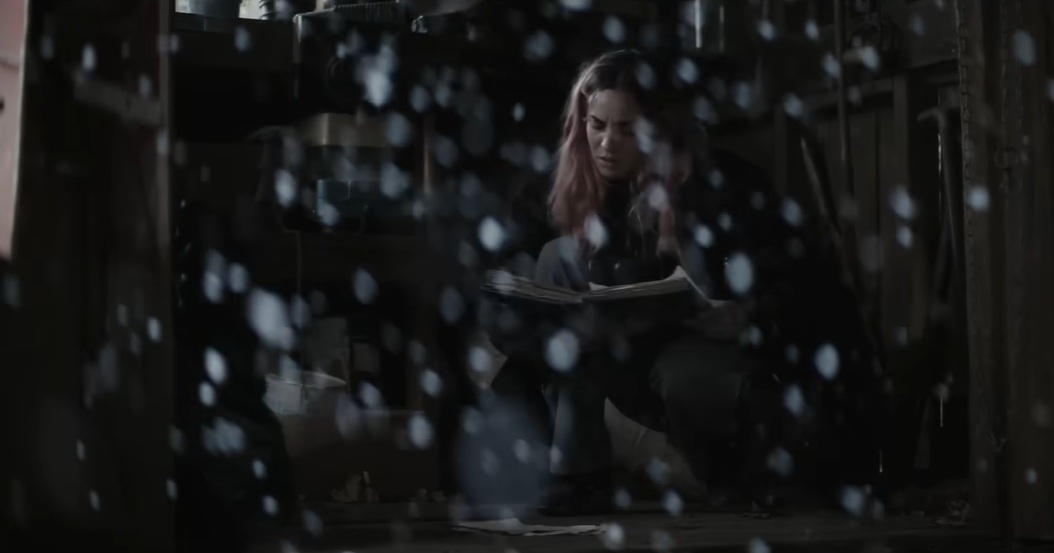
At first I barely noticed it.
Later I couldn’t stop looking.
Those tiny black pupils create an awful feeling that the original person might still be trapped somewhere inside.
You aren’t staring at a monster anymore.
You’re staring at someone who can still see everything happening but can’t stop it.
That tiny design choice completely changes the emotional impact of every possession scene.
Sometimes horror isn’t about making something look less human.
Sometimes it’s about making it look almost human.
Fire Doesn’t Cleanse Evil Anymore
The cremation sequence deserves a lot more attention than it’s getting.
Normally horror movies treat fire as the final answer.
Burn the body.
Destroy the curse.
Move on.
Evil Dead Burn flips that expectation upside down.
Will’s death already happens inside flames while supernatural forces are at work. Instead of ending the possession cycle, the fire almost finishes the ritual.
It’s such a nasty little twist because it takes one of horror’s oldest safety nets and quietly removes it.
By the time Edgar opens that coffin, the audience realizes the rules have changed.
That moment landed much harder for me than any jump scare.
Small Details That Become Bigger Later
One thing I genuinely appreciate is how often the movie rewards paying attention.
- Possessions never reach their final stage immediately. There is usually an emotional turning point first.
- Family conversations become more dangerous than physical attacks. Every confrontation weakens someone mentally.
- The Deadites remember everything. They weaponize memories instead of simply roaring at their victims.
- The camera constantly lingers on facial expressions before transformations. It’s almost warning viewers that the breaking point is coming.
None of these moments scream for attention.
They’re just sitting there waiting for a second viewing.
How Evil Dead Burn Changes Deadite Possession
| Classic Evil Dead | Evil Dead Burn |
|---|---|
| Possession spreads quickly through physical attacks. | Psychological vulnerability becomes just as important as physical contact. |
| Victims often transform almost immediately. | Transformation happens gradually as emotional resistance collapses. |
| White, lifeless eyes symbolize total corruption. | Visible pupils suggest the human consciousness may still be trapped inside. |
| Fire is usually considered a way to destroy evil. | Fire becomes part of the curse instead of its solution. |
| Deadites mainly terrorize physically. | Deadites weaponize memories, guilt, and emotional trauma. |
Alice’s Final Scene Says More Than People Think
I’ve seen plenty of debate surrounding the ending, but my interpretation hasn’t really changed.
The cigarette matters.
Not because smoking is somehow heroic.
Because it represents choice.
Earlier flashbacks make it clear that Alice’s husband controlled even the smallest parts of her life. Lighting that cigarette isn’t about nicotine.
It’s about taking ownership of herself again.
That tiny action says more than another speech ever could.
Then comes the blink.
Those faint red eyes.
That’s where the internet exploded.
Was she infected?
Was the evil still hiding inside her?
Or were we simply seeing someone physically and emotionally destroyed after surviving unimaginable violence?
I actually hope the filmmakers never answer it.
Some mysteries become weaker the second they’re explained.
This one gets stronger every time fans argue about it.
Evil Dead Burn 2026: Souheila Yacoub’s Character Name, Backstory, and Hidden Motivations Explained
Why This Is One of the Smartest Evil Dead Movies
What surprised me most wasn’t the gore.
It wasn’t the practical effects.
It wasn’t even the outrageous kills.
It was realizing that Evil Dead Burn spends almost the entire runtime teaching viewers new possession rules without ever stopping to explain them out loud.
That’s confident filmmaking.
Instead of delivering long speeches about supernatural mythology, the movie lets character reactions tell the story.
Every emotional breakdown becomes another step toward becoming a Deadite.
Every painful memory becomes another weapon.
Every family secret becomes another crack in someone’s defenses.
That approach gives the horror real weight because the monsters aren’t just invading bodies anymore—they’re exploiting grief, guilt, fear, and years of emotional damage.
Whether this becomes the permanent direction for the franchise or simply Vanicek’s personal interpretation, I honestly hope future films build on these ideas. Evil Dead has never been afraid to reinvent itself, and Evil Dead Burn proves there’s still plenty of terrifying ground left to explore.
If you only watched the movie once, I’d seriously recommend giving it another look. Ignore the blood for a while. Watch the conversations instead.
That’s where the demons are doing their real work.