For decades I’ve watched horror franchises introduce “strong” protagonists who somehow become fearless action heroes halfway through the movie. That’s never been what made Evil Dead memorable for me. The best entries have always been about ordinary people breaking under impossible pressure before finding just enough strength to survive another minute.
That’s exactly why Alice, played by Souheila Yacoub, immediately stood out in Evil Dead Burn (2026).
She’s not another copy of Ash Williams. She isn’t trying to replace Mia or Beth either. Instead, director Sébastien Vaniček builds a completely different type of survivor—someone whose biggest enemy already existed long before the Deadites appeared.
Alice Isn’t Running From Demons at First
One thing I appreciated almost immediately is that the supernatural horror doesn’t define Alice from the opening scene.
Her life is already a disaster.
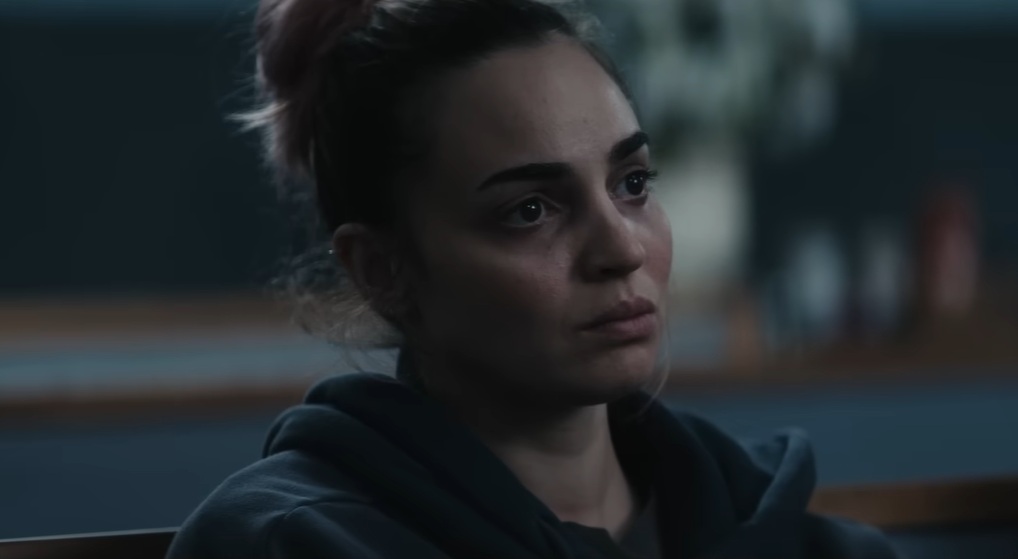
Before anyone opens forbidden books or blood starts covering every wall, she’s carrying emotional baggage that feels painfully believable. Her marriage to William wasn’t a loving relationship hidden behind horror clichés. It was toxic, controlling, and emotionally exhausting.
William’s sudden death doesn’t free her.
If anything, it traps her even more.
His wealthy family quickly turns Alice into the easiest person to blame. Rather than dealing with their own grief, they project every ounce of anger onto the woman they never truly accepted.
That emotional setup gives the entire movie weight. When the horror begins, Alice isn’t escaping monsters alone—she’s escaping years of manipulation.
The Worst Family Reunion Imaginable
The setting deserves credit because it feels intentionally uncomfortable.
The isolated country estate isn’t simply another creepy haunted location. It’s where Alice and William once celebrated their marriage, making every hallway another reminder of a relationship she’d rather forget.
She only attends the gathering because Joseph, William’s younger brother, reaches out with what appears to be genuine kindness. Her close friend Thya also joins her, giving Alice at least one person she can actually trust.
Of course, this is Evil Dead.
Nothing stays civil for very long.
Once demonic forces are unleashed, the gathering transforms into pure chaos as family members become grotesque Deadites. Yet what makes these monsters unsettling isn’t only their appearance.
They know exactly where Alice is emotionally vulnerable.
Every insult carries years of resentment.
Every taunt feels personal.
That’s something I thought the screenplay handled surprisingly well.
Alice’s Character Is Built Around Three Simple Motivations
Unlike many horror leads whose goals constantly change, Alice’s journey stays remarkably focused.
1. She Wants Her Freedom
At first, Alice simply wants closure.
She hopes one difficult evening will finally allow her to leave William’s family behind forever.
Instead, she’s trapped with them.
As the estate becomes increasingly isolated, that emotional imprisonment becomes physical. Escaping the house eventually represents escaping years of guilt that never truly belonged to her.
2. She Refuses to Stay Defined by Her Marriage
One of the film’s smartest ideas is treating marriage vows almost like a supernatural curse.
The Deadites don’t merely attack Alice’s body.
They attack her identity.
They constantly weaponize memories of William, reminding her of every accusation, every argument, and every emotional scar she tried to bury.
That makes the final confrontation feel symbolic rather than simply violent.
She’s fighting to reclaim ownership of her own life.
3. She Protects the People Who Actually Care
Alice never tries to save everyone.
Honestly, that makes her decisions feel more believable.
Her strongest connections are with Joseph and Thya because they’re among the few people treating her like a human being instead of a convenient target for blame.
Those relationships become the emotional backbone of the survival story.
Souheila Yacoub Never Plays Alice Like an Action Hero
This may be my favorite aspect of the performance.
Modern horror sometimes feels obsessed with creating instantly iconic protagonists.
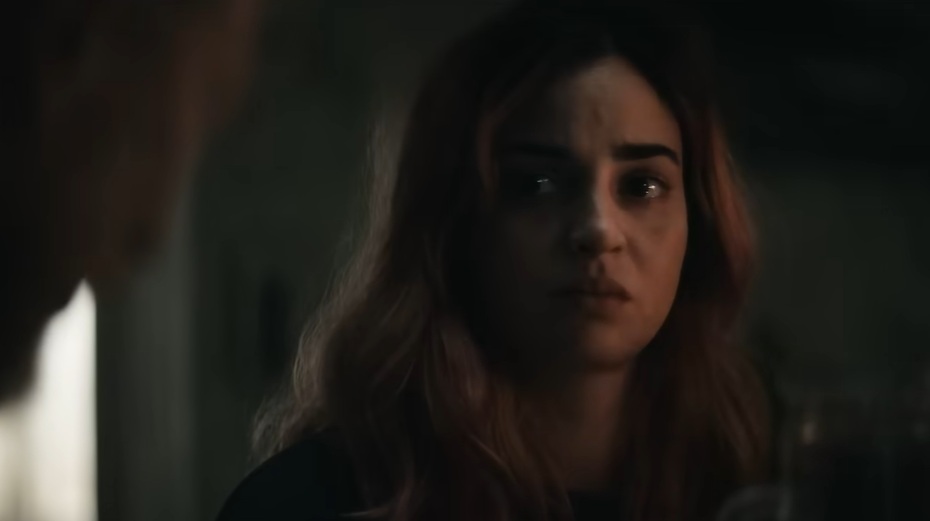
Alice doesn’t fit that mold.
- She panics.
- She makes mistakes.
- She cries.
- She hesitates.
- Sometimes she survives through luck more than skill.
That vulnerability actually makes every victory satisfying.
When Alice finally fights back, it doesn’t feel like someone discovering hidden superpowers.
It feels like someone reaching the absolute limit of what another human being can endure.
For me, that’s infinitely more compelling.
Gore Finally Means Something Again
Let’s be honest.
People watch Evil Dead expecting outrageous practical effects and gallons of blood.
Burn absolutely delivers that.
The difference is that the violence rarely feels random.
Almost every brutal encounter reflects Alice’s psychological state.
- Her emotionally abusive family literally becomes monstrous.
- Years of manipulation return in physical form.
- Every Deadite attack feels deeply personal.
- The gore reinforces the emotional story instead of distracting from it.
That approach reminded me why practical horror effects often leave a stronger impression than endless CGI monsters.
How Alice Compares to Previous Evil Dead Heroes
| Character | Primary Conflict | Fighting Style | Emotional Journey |
|---|---|---|---|
| Ash Williams | Demonic survival | Aggressive and confident | Accepts the role of an unlikely hero |
| Mia Allen | Addiction and possession | Relentless determination | Reclaims control over herself |
| Beth | Protecting family | Protective instinct | Finds strength through responsibility |
| Alice | Abuse, guilt and emotional manipulation | Desperate survival | Breaks free from psychological control |
Why Alice Feels Different
I’ve seen plenty of discussions comparing Alice to earlier Final Girls, but I think those comparisons miss the point.
She’s intentionally less polished.
Less confident.
Less prepared.
That vulnerability isn’t weakness.
It’s the entire reason her story works.
You spend nearly two hours watching someone gradually stop believing the lies other people forced onto her.
The Deadites simply accelerate a battle she was already fighting.
That’s a surprisingly mature direction for a franchise usually celebrated for exploding heads and flying limbs.
Thankfully, Evil Dead Burn never forgets those elements either.
The chains of emotional abuse and the rivers of blood end up serving exactly the same story.
Why This Version of the Final Girl Stands Out
What really separates Alice from many recent horror protagonists is that she never feels invincible. Even when she finally starts fighting back, every decision comes with fear, hesitation and visible exhaustion.
That grounded approach makes the horror far more effective. Instead of cheering because someone suddenly becomes an action hero, you’re hoping Alice can simply survive another few minutes. Every injury feels painful, every escape feels earned, and every emotional breakthrough matters just as much as the physical battles.
Souheila Yacoub’s performance keeps the audience invested because Alice never stops feeling like a real person trapped inside an impossible nightmare.
Final Thoughts
After revisiting several entries in the franchise, I genuinely think Alice deserves a place alongside the strongest modern Evil Dead protagonists—not because she’s tougher than Ash or Mia, but because she feels authentic from beginning to end.
Souheila Yacoub delivers a performance filled with vulnerability, quiet resilience and believable fear. The film isn’t just about Deadites invading an isolated estate. It’s about escaping emotional control, rejecting years of manipulation and finding the courage to finally live on your own terms.
When the credits rolled, I remembered the gore, the practical effects and the relentless tension, but Alice stayed with me the longest. That’s not something every horror movie manages to achieve.