Steven Spielberg’s Disclosure Day is the kind of science-fiction movie that practically begs to be dissected the second the credits roll. The film spends most of its runtime dangling enormous questions in front of us—Who has been hiding the aliens? Why were Margaret and Daniel chosen? What does Wardex actually know? And, perhaps most importantly, what do the extraterrestrials want from humanity?
Then Spielberg reaches the final minutes and does something that will either strike you as brilliant or drive you absolutely insane.
He gives us an answer.
One word.
“Listen.”
That is where Disclosure Day ends.
No extended explanation. No giant alien battle. No convenient montage explaining what happens to Earth afterward. Not even a cheeky post-credits scene. The screen simply goes black, leaving audiences to sit with the message and make sense of it themselves.
Personally, I love the nerve of it. I also understand why some viewers are going to hate it.
After spending so much time building Wardex’s conspiracy, Margaret and Daniel’s strange childhood connection, and the looming threat of global nuclear conflict, you might reasonably expect the final act to explode into something enormous. Instead, Spielberg deliberately pulls the volume down. The biggest revelation in human history arrives not with a war cry, but with a request for silence.
And that changes how the entire movie reads.
What Actually Happens in the Final 20 Minutes?
The final stretch begins after Margaret and Daniel finally uncover the truth about their childhoods. Their memories had been buried for years, manipulated by forces they barely understood, and Wardex had every reason to make sure they stayed buried.
Hugo Wakefield’s underground network becomes their last refuge. But Hugo isn’t simply another conspiracy theorist waiting to expose a government secret. He understands that Margaret and Daniel are connected to the extraterrestrials in a way nobody else is.
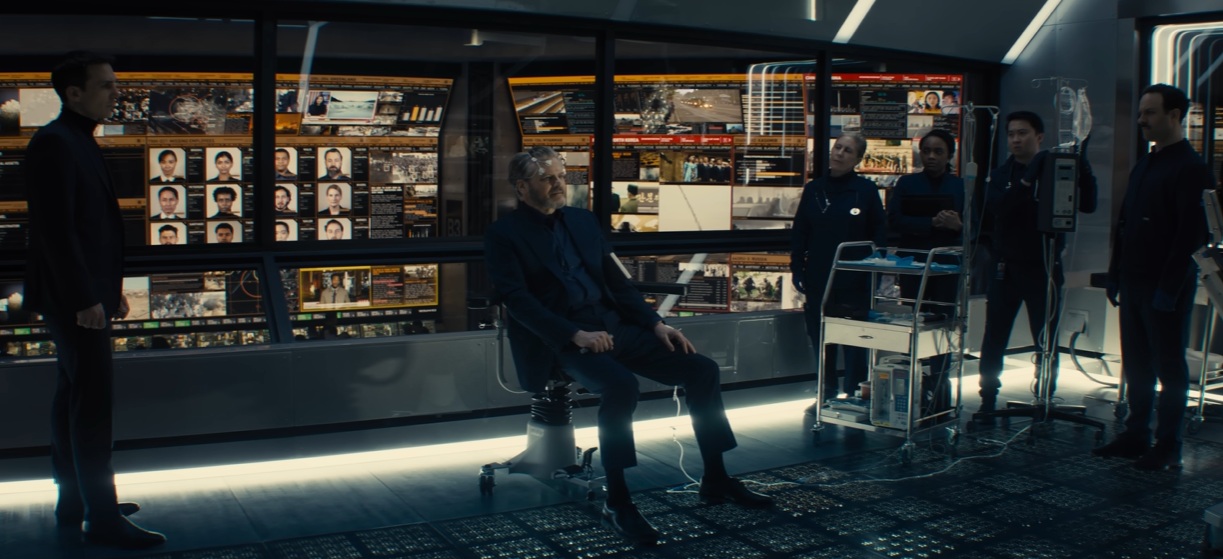
To unlock Margaret’s memories, Hugo recreates her childhood bedroom with obsessive precision. It is creepy, intimate and incredibly effective. Using a stolen alien cylinder, he triggers memories Margaret has spent decades unable to access.
The resulting flashback reveals one of the movie’s biggest twists:
Margaret and Daniel were both abducted as children in 1996.
But Spielberg refuses to turn the scene into a standard alien-abduction nightmare.
The entities don’t torture them. They don’t experiment on them in some grotesque laboratory. Instead, the aliens disguise themselves as familiar animals, apparently trying to make the children feel safe. The whole sequence has an unsettling fairy-tale quality, with the children eventually taken to a strange cottage-like environment aboard an extraterrestrial craft.
And then comes the real revelation.
The aliens weren’t simply studying Margaret and Daniel.
They were preparing them.
Margaret and Daniel Were Chosen for a Reason
This is where Disclosure Day gets much more interesting than a simple “aliens have been visiting Earth” story.
Margaret and Daniel were effectively engineered into human intermediaries.
Daniel received an extraordinary mathematical ability that allows him to interpret complex mathematical structures as a form of language. What looks like incomprehensible alien communication to everyone else becomes almost intuitive to him.
Margaret’s abilities are radically different.
She possesses an almost terrifying level of empathy and linguistic understanding. She can communicate across human languages and, more disturbingly, perceive the emotional history buried inside another person’s mind.
She doesn’t merely understand what people say.
She understands why they say it.
That distinction matters enormously to the ending.
Daniel can understand the aliens.
Margaret can understand humanity.
That makes the pair feel less like random victims of an extraterrestrial experiment and more like a deliberate bridge between two civilizations.
Hugo’s statement that it has “always been the two of you” suddenly carries much more weight.
The entire movie has been moving toward this partnership without Margaret and Daniel fully realizing what they are.
| Character | Gift | Narrative Purpose |
|---|---|---|
| Margaret Fairchild | Universal language and profound empathy | Understanding humanity |
| Dr. Daniel Kellner | Advanced mathematical perception | Understanding extraterrestrial communication |
| Hugo Wakefield | Knowledge and coordination | Connecting the evidence |
| Noah Scanlon | Control and secrecy | Preventing disclosure |
That division is crucial because the ending isn’t really about defeating an alien enemy.
It’s about establishing communication.
Why Wardex Wants the Truth Buried
The Wardex conspiracy could easily have turned into the weakest part of Disclosure Day. Fortunately, the movie gives Noah Scanlon a more complicated motivation than simple greed.
For decades, Wardex has controlled evidence of extraterrestrial contact. Alien craft, bodies, technology and communication systems have all been hidden from the public.
The company has even used reverse-engineered alien cylinders to manipulate human minds and suppress inconvenient information.
It’s horrifying.
But Scanlon doesn’t necessarily believe he’s saving Wardex for its own sake.
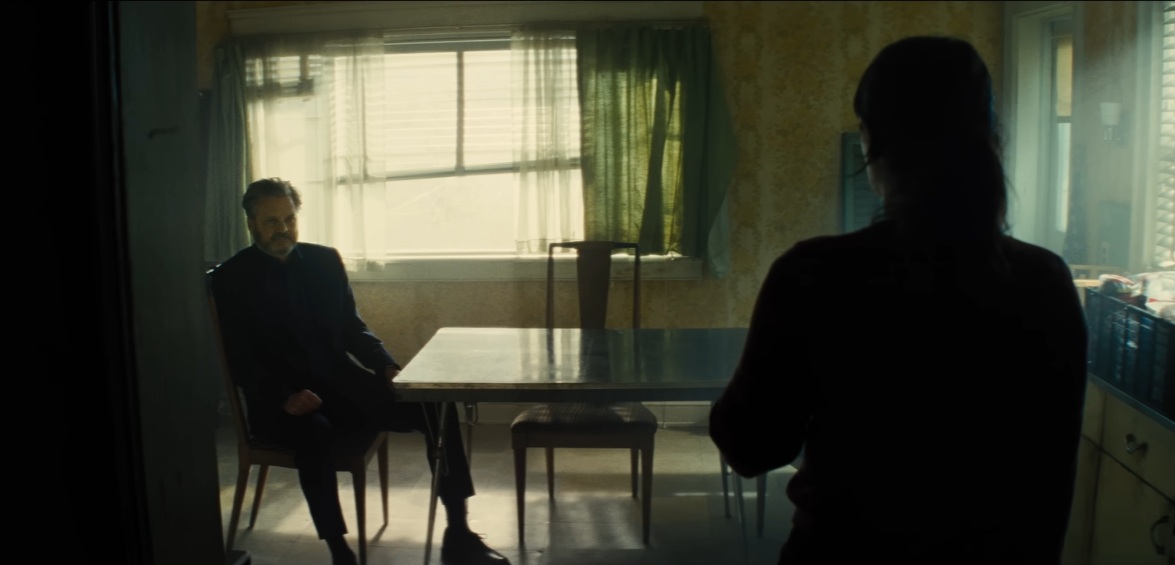
He genuinely believes humanity cannot handle the truth.
That becomes especially important when the movie reveals the wider geopolitical crisis unfolding in the background. While Margaret and Daniel are being hunted, international tensions are pushing the world toward nuclear war.
The irony is almost painfully obvious.
Humanity is preparing to destroy itself while simultaneously being terrified of discovering that something else exists beyond Earth.
Scanlon’s argument is essentially that disclosure would push an already unstable civilization over the edge.
And, for much of the movie, it’s difficult to completely dismiss him.
The Television Station Break-In
Margaret, Daniel, Hugo and the whistleblowers eventually realize that possessing the truth isn’t enough.
They need to show it to everyone.
Their target is a television station in Kansas City where Margaret once worked. The plan is audacious: hijack the scheduled news broadcast and transmit the evidence Wardex has buried for decades.
This is where the film finally starts moving at full speed.
Margaret uses her abilities to persuade former colleagues to cooperate. The evidence is prepared. The broadcast is almost ready.
Then Wardex arrives.
Scanlon’s agents storm the building, and when he realizes he can’t stop the transmission physically, he orders the power grid shut down.
For a moment, it looks like the entire plan has collapsed.
The studio goes dark.
And then Jane Blankenship arrives.
Having escaped Scanlon’s psychological control, Jane brings the stolen alien cylinder with her. Margaret uses the device to restore power and bypass the blackout.
The broadcast goes live.
This is the moment Disclosure Day has been building toward from the opening scenes.
Humanity Finally Sees the Truth
What follows isn’t an alien invasion.
It’s something arguably more frightening for the people who have spent decades controlling the truth:
Everyone finds out.
Government footage appears on screens around the world. Evidence of alien encounters, recovered technology and decades of suppression floods international broadcasts.
There is no longer any way to put the secret back in the box.
And something fascinating happens.
The nuclear crisis freezes.
Countries that were moments away from catastrophic conflict suddenly have something much larger to process. Political arguments that seemed like matters of life and death become almost absurd when humanity is forced to confront the existence of another intelligent civilization.
I found this part of the movie surprisingly moving.
It’s idealistic, perhaps even aggressively so, but Spielberg has never been afraid of wonder. Disclosure Day argues that discovering we’re not alone could force humanity to reconsider the reasons we keep dividing ourselves.
Not because aliens magically make everyone nicer.
Because perspective changes.
What Happens to Noah Scanlon?
One of the best decisions in the finale is refusing to give Scanlon a conventional villain’s death.
There is no dramatic execution.
No last-second shootout.
No heroic character delivering a speech before pulling the trigger.
Scanlon simply watches his life’s work collapse.
He believed secrecy was necessary because humanity was too fragile to deal with the truth. Now he watches billions of people receive that truth simultaneously—and instead of civilization immediately imploding, humanity pauses.
That doesn’t prove Scanlon was completely wrong.
But it proves he no longer controls the outcome.
He sits down and watches.
It’s a quiet defeat, and honestly, it works much better than another action sequence would have.
Who Is In Vivo 17?
Then Disclosure Day drops its final major bombshell.
Hugo’s team reveals an actual living extraterrestrial.
Not a blurry photograph.
Not recovered wreckage.
Not classified documents.
A living alien.
The creature, known as In Vivo 17, has been rescued from a Wardex detention facility and brought into the television studio.
It is old.
It is fragile.
It doesn’t look like the terrifying cosmic monster some viewers might have expected.
That choice matters.
The alien doesn’t arrive as an invader.
It arrives almost like a prisoner who has finally been allowed to speak.
In Vivo 17 approaches Margaret and Daniel and begins producing a complicated sequence of clicks, tones and mathematical patterns.
Daniel listens.
Because this is what he was created to do.
He understands the message.
And then he whispers the translation to Margaret.
The Meaning of “Listen”
Margaret walks toward the camera.
Millions—or potentially billions—of people are watching.
She looks directly into the lens.
Then she says:
“Listen.”
Cut to black.
That’s it.
And yes, I can already imagine the arguments this ending will generate.
Some viewers will say Spielberg spent two hours setting up enormous mysteries only to refuse to explain them.
Others will recognize that the refusal is the point.
The movie has spent its entire runtime showing humanity not listening.
Governments don’t listen to whistleblowers.
Wardex doesn’t listen to the people it manipulates.
Political leaders don’t listen to one another.
Humanity doesn’t listen to the possibility that the unknown might not be hostile.
Margaret’s own life has been shaped by memories she couldn’t access because other people decided what she was allowed to know.
Even the aliens have been communicating with humanity for decades, yet humans have largely responded with fear, secrecy and attempts at control.
So the final message isn’t “prepare.”
It isn’t “run.”
It isn’t “fight.”
It’s listen.
And that is a much stranger ending.
The Earlier Message Makes the Final Word Even More Important
Earlier in the film, Margaret unexpectedly speaks an alien language during a weather broadcast. Daniel translates the phrase as:
“Don’t be afraid of what you don’t know.”
That line essentially functions as the movie’s thesis.
Fear of the unknown has driven almost every major decision in the story.
Wardex fears social collapse.
Scanlon fears humanity’s reaction.
Governments fear losing control.
Margaret fears the memories inside her own mind.
Daniel fears what his strange abilities mean.
Humanity fears the aliens.
But the aliens themselves don’t appear to be demanding submission.
They’re asking humanity to understand.
And understanding requires listening.
Steven Spielberg Disclosure Day 2026 Review: Is the UFO Thriller Worth the Hype?
Why Spielberg Ends the Movie Before the Aftermath
This is probably the most frustrating part for audiences who want concrete answers.
What happens the next morning?
Does society collapse?
Do governments reorganize?
Do nations cooperate?
Does Wardex disappear?
Does humanity establish diplomatic relations with the extraterrestrials?
Does In Vivo 17 explain where the aliens came from?
We don’t know.
And the movie deliberately refuses to tell us.
I actually think showing the aftermath would weaken the ending.
The moment the movie explained exactly what happens after disclosure, the story would become another conventional science-fiction narrative about the consequences of first contact.
Instead, Spielberg stops at the moment of possibility.
The choice belongs to us.
That is also where Disclosure Day separates itself from the darker alien stories that have influenced it. There are echoes of Close Encounters of the Third Kind, but the film isn’t interested in making first contact purely mysterious or transcendent. There are also obvious thematic connections to War of the Worlds, yet the aliens aren’t simply an existential threat waiting to destroy humanity.
The real enemy here is our inability to communicate.
My Take on the Disclosure Day Ending
I’m torn—and that’s exactly why I think the ending works.
If you came into Disclosure Day expecting every mystery to receive a neat explanation, the final scene will probably infuriate you. The movie deliberately withholds the information that a traditional blockbuster would normally dump into the final ten minutes.
But if you treat the ending as a thematic statement rather than a setup for another franchise installment, it becomes considerably more satisfying.
“Listen” isn’t a cliffhanger in the conventional sense. It’s a challenge.
The aliens have finally spoken.
Margaret has translated their message.
Humanity has been given the truth.
Now the difficult part begins.
We have to decide what to do with it.
And that makes the abrupt cut to black feel less like Spielberg refusing to finish his story and more like him refusing to finish it for us.
I’m not sure every piece of Disclosure Day earns its enormous buildup. Some of the Wardex material occasionally feels like it belongs in a more conventional conspiracy thriller, and the movie’s optimism about humanity changing overnight is definitely something you could argue with.
But that final word?
“Listen.”
That’s bold.
That’s uncomfortable.
And after a movie about a civilization screaming at itself while an entirely different intelligence has been trying to communicate with it, it’s also probably the only ending that really fits.
Disclosure Day doesn’t end by telling us what humanity will become. It ends by asking whether we’re finally capable of hearing the answer.