
When I finished Desire (Deseo) on Netflix, my first reaction wasn’t shock—it was confusion. The final twenty minutes move so quickly that it’s easy to miss who actually does what. After watching the ending a second time, though, I realized the movie isn’t trying to hide the truth. It’s showing how one terrible decision triggers another until nobody in the Cortina family can claim clean hands.
That’s what makes the ending stick with you. This isn’t a story where one obvious villain commits a murder. It’s about a family that slowly crosses every moral line imaginable, and by the time the credits roll, every major character has contributed to the tragedy in some way.
Let’s break down the pool scene, the timeline, and why the ending is far darker than it first appears.
The Cortina Family Was Already Falling Apart
One mistake many viewers make is assuming everything begins when Matías enters the family’s life.
It doesn’t.
The affair simply exposes problems that have existed for years.
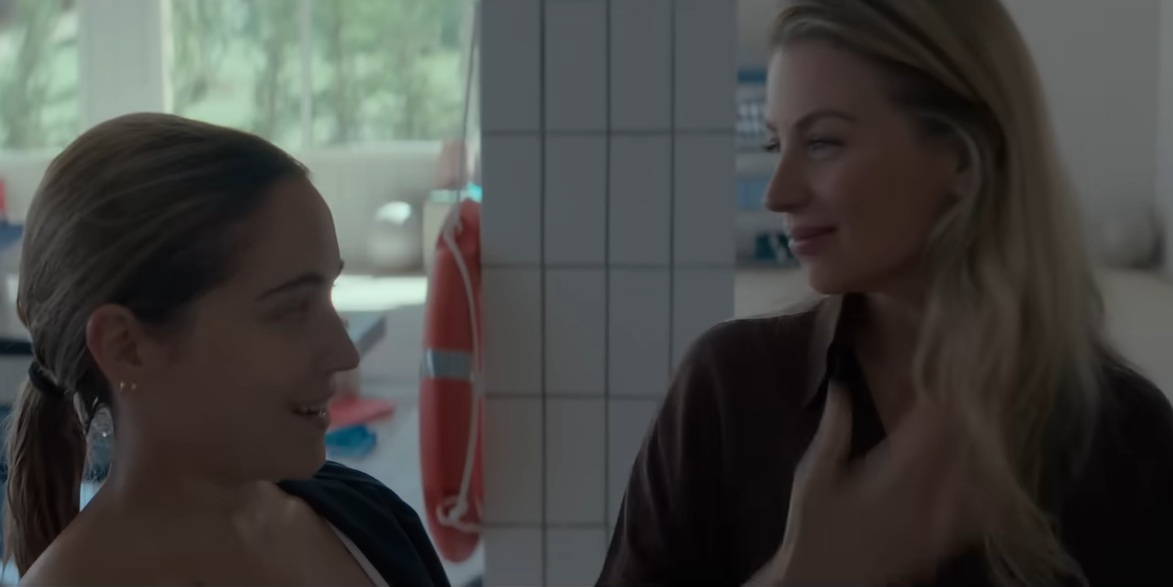
Lucero and Fernando look like the perfect wealthy couple from the outside. Successful careers, beautiful home, happy children—everything appears carefully curated. Behind closed doors, though, their marriage has become emotionally distant and physically empty.
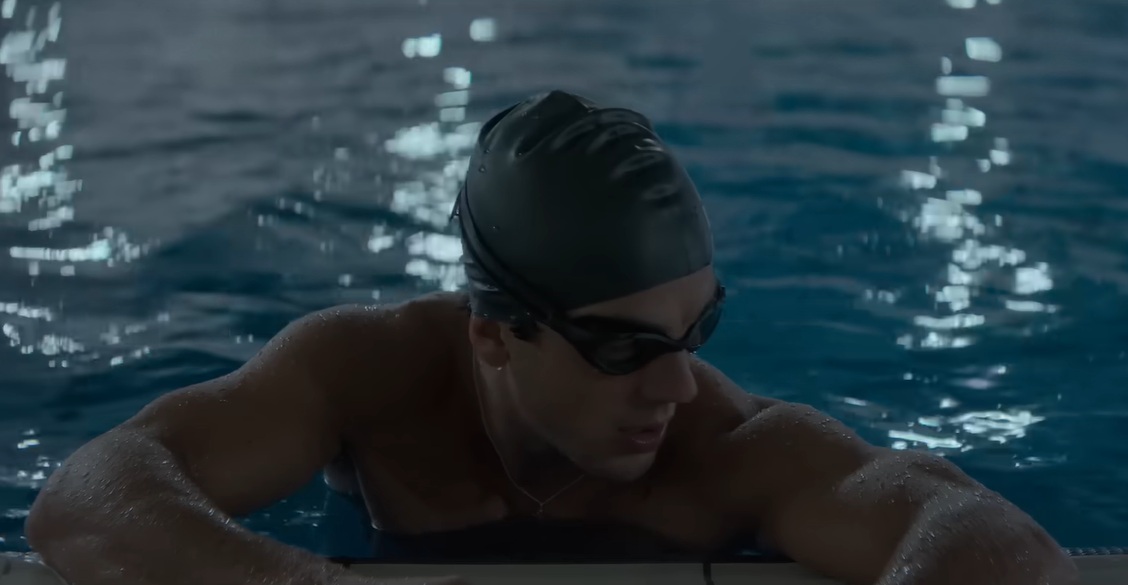
Lucero searches for excitement elsewhere, beginning a secret relationship with Matías, the family’s young swimming instructor. What initially feels like an escape quickly becomes impossible to control.
At the same time:
- Viviana develops genuine feelings for Matías.
- Matías becomes increasingly possessive.
- Secrets pile up faster than anyone can manage.
By the final act, every conversation feels like a ticking time bomb.
Why Matías Becomes the Real Threat
One detail I appreciated is that the movie doesn’t portray Matías as simply a charming younger lover.
As events unfold, he becomes increasingly reckless.
Instead of quietly ending the affair or walking away, he keeps inserting himself deeper into the family’s personal life. He enjoys creating tension, dropping hints, and watching everyone become uncomfortable.
That shift changes everything.
Lucero is no longer dealing with a secret romance.
She’s dealing with someone capable of destroying her marriage, her career, and her children’s future.
Whether viewers sympathize with her or not, that’s the moment the thriller stops being about infidelity and starts becoming a survival story—albeit an extremely twisted one.
The Pool Scene Timeline Explained
The biggest source of confusion is that the movie jumps between perspectives instead of presenting events in chronological order.
Viewed in sequence, the night becomes much easier to understand.
| Timeline | What Happens | Why It Matters |
|---|---|---|
| 1 | Julián secretly drugs Matías. | He unknowingly creates the conditions that make everything else possible. |
| 2 | Viviana discovers the affair. | Her emotional reaction causes Matías to fall and suffer a severe head injury. |
| 3 | Fernando finds Matías alive. | Instead of helping, he chooses revenge over compassion. |
| 4 | Lucero arrives last. | She makes the conscious decision to finish what the others started. |
This structure is exactly why so many people leave the movie arguing over who actually killed Matías.
Technically, there isn’t a simple answer.
Did Julián Kill Matías?
I don’t think so.
Julián absolutely bears responsibility for drugging him, but there’s no indication he expected anyone to die.
His motivation seems surprisingly simple.
He sees Matías as someone causing chaos around his sister and within his family, so he decides to neutralize him using sedatives. It’s irresponsible and dangerous, but it isn’t planned murder.
Ironically, that decision ends up becoming the perfect cover for what follows.
Without the drugs, investigators likely would’ve questioned the circumstances much more closely.
Viviana’s Push Changes Everything
For me, this is the emotional turning point of the movie.
Viviana isn’t acting out of calculated hatred.
She’s devastated.
Within moments she discovers that:
- the man she trusted has betrayed her,
- her own mother has been lying,
- her feelings meant almost nothing to Matías.
Her shove is impulsive.
Unfortunately, Matías is already heavily impaired.
Instead of catching himself, he crashes backward, slamming his head before ending up in the pool.
It’s one of those moments where a split-second emotional decision permanently changes multiple lives.
Fernando Makes the First Deliberate Choice
Fernando’s scene is probably the hardest to watch.
Unlike Viviana, he has time to think.
Unlike Julián, he understands what’s happening.
Unlike everyone before him, he has an opportunity to save Matías.
Instead, he refuses.
Even worse, he physically attacks an already injured man before walking away.
That’s why I see Fernando as the first family member who knowingly chooses death over mercy.
The movie never tries to justify it.
It simply lets viewers sit with that uncomfortable decision.
Lucero Commits the Final Act
The last confrontation is quieter than I expected.
There isn’t a dramatic speech.
There isn’t a huge struggle.
Matías genuinely believes Lucero has returned to rescue him.
Instead, she realizes that saving him would almost certainly expose everything.
Rather than protecting her lover, she protects her children.
She forces him underwater until he stops fighting.
That’s the moment where every remaining possibility disappears.
Afterward, there are no more accidents.
Only silence.
Why Nobody Goes to Prison
This is probably the ending that frustrated the most viewers.
We’ve spent nearly two hours watching lies spiral into violence.
Surely someone gets caught.
Instead, the investigation reaches a completely different conclusion.
The toxicology report shows Matías had been heavily sedated.
Combined with the head wound and drowning, authorities determine the death was accidental.
From a forensic perspective, everything lines up.
The family never needs to invent an elaborate story because the physical evidence tells one for them.
That’s an incredibly cynical twist.
Sometimes justice doesn’t fail because criminals are brilliant.
Sometimes the evidence simply points investigators in the wrong direction.
The Ending Isn’t Really About Murder
What stayed with me wasn’t Matías’ death.
It was the final family scene afterward.
At first glance, everything appears normal again.
The beautiful house.
The expensive furniture.
The smiling family.
But absolutely nothing is normal anymore.
Their marriage somehow becomes stronger—not because they rediscover romance, but because they now share something darker than love.
A secret.
They’ve become partners in survival.
Every member of the household understands what happened, even if nobody ever says it aloud.
That’s what gives the ending its lingering psychological weight.
The family wins.
Yet they also lose the ability to ever be innocent again.
My Take on the Ending
I think Desire works best when viewed less as a murder mystery and more as a character study.
The film isn’t asking who killed Matías.
It asks how many small moral compromises it takes before ordinary people become capable of something unimaginable.
Every member of the Cortina family has a moment where they could stop the chain reaction.
Nobody does.
Some act out of jealousy.
Some out of fear.
Some out of instinct.
By the end, guilt belongs to everyone, even if their degrees of responsibility differ.
That’s why the final shot feels so unsettling.
The family has preserved its reputation, wealth, and comfortable lifestyle.
What they sacrificed to keep it is something they’ll never be able to recover.
And every quiet evening beside that immaculate swimming pool will be another reminder of the night their perfect life disappeared beneath the surface.
Frequently Asked Questions
Who actually killed Matías?
Lucero delivers the final fatal act by holding Matías underwater, but the tragedy results from a chain of actions involving every member of the Cortina family.
Was Matías already dying before Lucero arrived?
He had suffered a serious head injury and was struggling to stay alive, but the film strongly suggests he was still alive until Lucero deliberately drowned him.
Why didn’t Fernando save him?
Fernando chooses revenge over compassion after learning about the affair and being taunted by Matías, making a conscious decision to leave him to die.
Why do the police rule it an accident?
The sedatives in Matías’ system, combined with the head trauma and drowning, create convincing forensic evidence supporting an accidental death.
Could there be a sequel?
The ending feels intentionally self-contained. While anything is possible with streaming hits, the story works precisely because it leaves the Cortina family trapped with their secret instead of facing traditional justice.