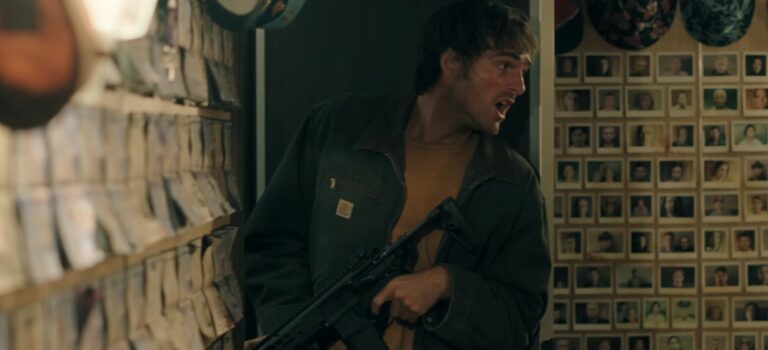
There is something almost funny about watching Jack Reacher walk into a situation where absolutely nobody asked for his help — and knowing that, within minutes, the situation is going to become everyone’s problem.
That feeling is back in Reacher Season 4, but this time the show takes a noticeably darker and more political route. Prime Video’s latest chapter, released on August 12, 2026, moves away from the more straightforward revenge-driven stories of earlier seasons and drops Reacher into a conspiracy that starts with one frightened woman on a Philadelphia subway.
And honestly? I think that change works.
The fourth season adapts Lee Child’s Gone Tomorrow, but it is far from a page-for-page translation. The writers have made some pretty aggressive changes, especially around the Hoth family and the larger geopolitical background. Some longtime book fans are going to hate those decisions. Others will probably argue that the changes were necessary.
I landed somewhere in the middle.
The bones of Gone Tomorrow are still recognizable, but Reacher Season 4 feels like the show is deliberately trying to build its own identity rather than simply recreate the novel on television.
The Subway Scene That Starts Everything
The season wastes very little time setting the mood.
It is around 2:00 AM. The subway is almost empty. Reacher is sitting among a handful of exhausted passengers when he notices a woman whose behavior immediately sets off every alarm in his head.
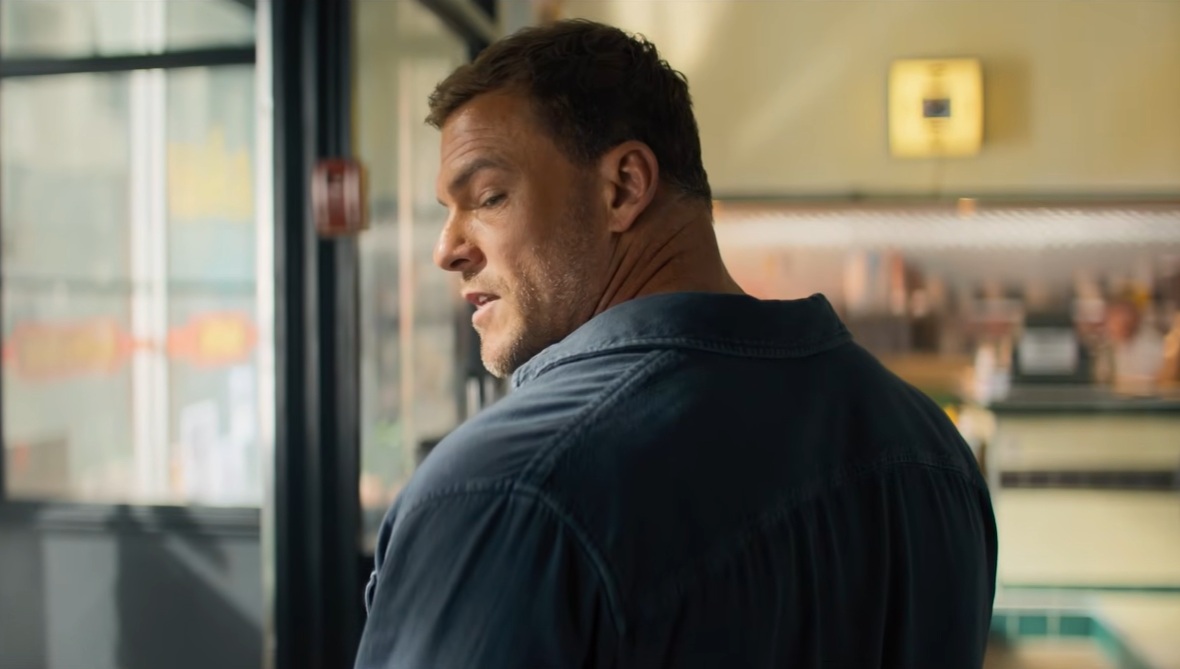
Her name is Susan Merrick, and Reacher becomes convinced that she may be carrying a bomb.
This is where the season gets interesting because Reacher doesn’t simply charge in like an action hero. His military background kicks in. He watches. He calculates. He tries to read the situation before making a move.
Then everything goes horribly wrong.
Susan pulls a handgun and kills herself.
There is no giant explosion. No convenient last-second rescue. Just a deeply unsettling death that leaves Reacher with more questions than answers.
That scene is important because it explains exactly why Reacher gets involved. He isn’t chasing revenge. He isn’t protecting someone close to him. He simply doesn’t believe the story he’s being given.
That is classic Reacher.
He has this almost irritating inability to leave a mystery alone when the official explanation doesn’t make sense.
And this time, that instinct drags him into something much bigger than a subway suicide.
Philadelphia Gives the Season a Different Personality
Moving the story from New York to Philadelphia was one of the adaptation choices I liked most.
We’ve already spent plenty of time with Reacher in New York territory, particularly during Season 2. Philadelphia gives the series a rougher, more industrial atmosphere that suits the story’s increasingly paranoid tone.
The city almost feels like another character.
Dark rail yards, empty streets, transit stations and anonymous government buildings create a visual world that feels less glamorous and more uncomfortable. Reacher isn’t wandering through a postcard version of Philadelphia. He’s moving through a city where everybody seems to know something — and nobody wants to say it.
That makes the season feel closer to a neo-noir thriller than a traditional action series.
And that’s a welcome change.
Reacher’s New Investigation Partners
Reacher doesn’t solve this one completely on his own.
Two characters become particularly important to the investigation: Detective Tamara Green and Jacob Merrick, Susan’s brother and a local police officer.
Green essentially fills the role of Theresa Lee from the novel, although the television version gives the character a different identity and dynamic.
Jacob, meanwhile, gives the story something Reacher himself doesn’t have: a personal connection to Susan.
That creates an interesting contrast.
Reacher wants answers because the circumstances surrounding Susan’s death don’t add up. Jacob wants answers because she was his sister.
The two motivations overlap, but they’re not identical, and that gives their partnership more emotional weight than I expected.
The Congressman at the Center of the Storm
Eventually, the investigation leads toward Congressman John Sampson, played by Marc Blucas.
Sampson isn’t presented as some cartoon villain sitting in a dark room rubbing his hands together. His real weapon is influence. He’s a powerful politician with ambitions that extend far beyond Congress, and his biggest problem is the possibility that someone knows what he did during the war.
Susan apparently discovered information that could destroy his political career.
And suddenly her death doesn’t look random anymore.
The deeper Reacher digs, the uglier things become. Military secrets, political manipulation, private mercenaries and government connections begin forming one increasingly nasty web.
Sampson’s presidential ambitions raise the stakes considerably. This isn’t simply a corrupt politician trying to hide an embarrassing chapter from his past. We’re talking about someone potentially preparing to take his ambitions all the way to the White House.
Naturally, Reacher is not impressed.
The Hoth Twist Changes Almost Everything
This is where book readers are likely to have the strongest reaction.
The television adaptation completely reworks Lila Hoth and her mother, Amisha Hoth.
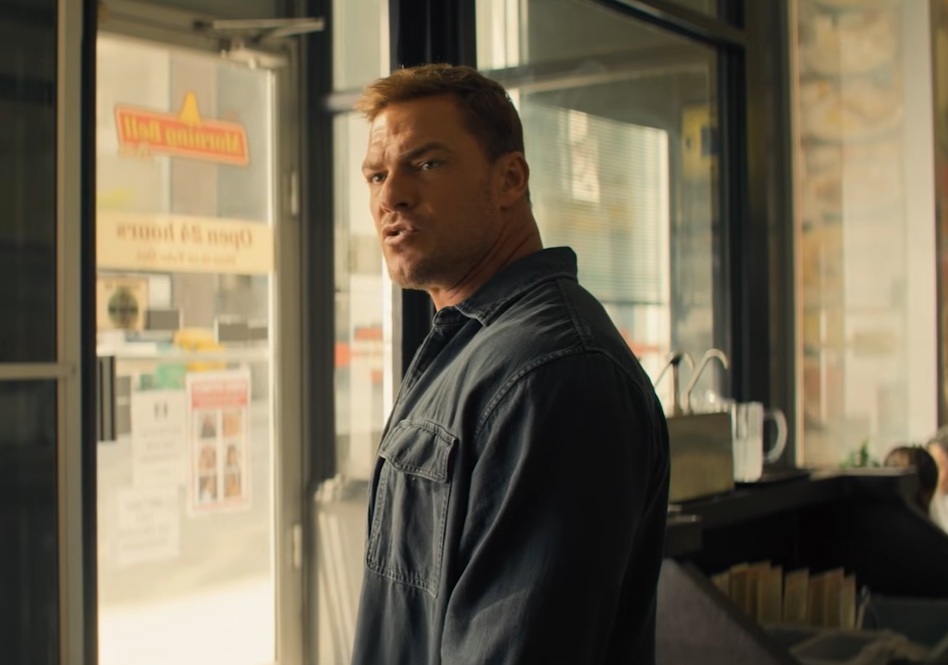
At first, Lila tells Reacher a story that sounds painfully straightforward. She claims Congressman Sampson is her biological father and that she needs a bone marrow match because she is suffering from a terminal illness.
It is exactly the kind of story designed to make someone lower their guard.
Reacher, unfortunately for Lila, is probably the worst possible person to lie to.
He keeps digging.
And eventually the entire story collapses.
Lila isn’t a dying daughter desperately looking for her biological father. She is an investigative journalist operating undercover, and her real objective is to expose Sampson’s wartime history before he can turn his political ambitions into something much bigger.
That is a major departure from Lee Child’s novel.
| Element | Novel | Season 4 |
|---|---|---|
| Hoth family | Connected to an Al Qaeda plot | Reworked around investigative journalism |
| Lila’s identity | Part of the terrorist conspiracy | Undercover investigative journalist |
| Amisha | Svetlana Hoth | Amisha Hoth |
| Main threat | Post-9/11 geopolitical revenge | Political corruption and buried wartime secrets |
| Story focus | Terrorism and international conflict | Political power, journalism and cover-ups |
Personally, I understand why the writers did it.
Trying to transplant the novel’s original post-9/11 geopolitical material directly into a 2026 television season could have felt dated or awkward. The new version gives Lila a different purpose while keeping the central idea intact: Reacher cannot trust the first story he’s told.
Still, I can absolutely understand why book purists are annoyed.
The original Hoth storyline is one of the things that makes Gone Tomorrow distinctive, and changing it this dramatically means that longtime readers are essentially watching a familiar mystery wearing a new disguise.
The Action Is Still Brutal
Thankfully, the political material doesn’t turn Reacher into a talking-head drama.
There are still plenty of moments where the show remembers exactly what audience members came here for.
Reacher gets hunted through Philadelphia by professional killers, corrupt operatives and mercenaries. There are shootouts, ambushes and close-quarters fights, including a particularly nasty knife confrontation.
What I enjoyed most is that Reacher still fights like Reacher.
He’s not elegant.
He’s not flashy.
He’s terrifyingly practical.
When he decides somebody needs to go down, he doesn’t waste much time worrying about whether the fight looks cool on camera.
That said, I did notice that some of the action feels more traditionally Hollywood than the grounded brutality of Season 1. A few chase sequences and explosions feel like the show is reaching for spectacle when the character doesn’t really need it.
Reacher is at his best when violence arrives suddenly and ends even faster.
The longer the show stretches an action sequence, the less distinctive it feels.
The Season 4 Ending Explained
The final episodes bring Reacher, Tamara Green and Jacob Merrick directly toward Sampson and the people protecting him.
The investigation eventually leads to a heavily guarded compound, where the conspiracy finally starts collapsing under the pressure of Reacher’s investigation.
And yes, Reacher gets to do what Reacher does best.
He tears through the opposition.
The physical confrontation is brutal, but the more satisfying part of the finale is watching Sampson’s carefully constructed political future fall apart. The secrets surrounding his wartime activities are finally secured, meaning his presidential ambitions are effectively finished.
For Susan Merrick, however, there is no happy ending.
She is still dead.
That matters.
The finale doesn’t magically undo the tragedy that started the season. What Reacher accomplishes is much more basic: he makes sure Susan’s death wasn’t buried beneath a convenient official explanation.
That is probably the most Reacher-like victory imaginable.
Reacher Season 4 Episodes 1-6 Recap: The Complete Gone Tomorrow Conspiracy Breakdown
What Fans Are Saying About Season 4
The reaction around fan communities has understandably focused on the adaptation changes.
A few themes seem to dominate the discussion:
- Philadelphia: Generally praised as a refreshing change of scenery and a strong fit for the darker tone.
- The Hoth storyline: Easily the most controversial adaptation decision.
- Action scenes: Mostly well received, although some viewers feel the show occasionally leans too hard into Hollywood spectacle.
- The political conspiracy: A lot of viewers seem to appreciate the more modern angle, particularly the emphasis on journalism and political corruption.
- Reacher himself: Still the biggest reason to watch, with Alan Ritchson continuing to sell the character’s unusual combination of intelligence, intimidation and dry detachment.
The Hoth changes are where I expect the debate to continue.
If you came to Season 4 expecting Gone Tomorrow with the serial numbers barely scratched off, you’re probably going to be frustrated. If you’re approaching it as a television adaptation that borrows Child’s characters and basic mystery while rebuilding the surrounding story, the changes make considerably more sense.
My Take: A Risky Reacher Season That Mostly Pays Off
For me, the biggest success of Season 4 is that Reacher finally feels like it is willing to surprise its own audience.
The formula could have become very predictable by now: Reacher arrives somewhere, finds trouble, uncovers a conspiracy, punches approximately half the population of the town, solves the mystery and walks away.
Season 4 still has those ingredients, obviously. We’re not pretending this is suddenly a quiet character drama.
But the motivation is different.
A stranger dies.
Reacher becomes suspicious.
One question leads to another.
Before he knows it, he’s tangled up with politicians, journalists, mercenaries and secrets buried in America’s wartime past.
That structure gives the season a slower pulse and a slightly more paranoid atmosphere.
Alan Ritchson remains the anchor. He understands that Reacher doesn’t need to constantly announce how dangerous he is. Half the fun is watching him stand silently in a room while everyone else slowly realizes they’ve made a terrible mistake.
The season isn’t perfect. I think some of the action could have been tighter, and I can sympathize with fans who aren’t happy about what happened to the original Hoth storyline.
But as a television season, it takes a genuine swing.
And I’d rather watch Reacher take a few risks than spend eight episodes repeating the exact same trick.
With Season 5 already set to adapt Lee Child’s Make Me, the next chapter should bring another major shift in location and mystery. If Season 4 proved anything, it’s that Reacher doesn’t necessarily need to stay faithful to every page of the books to remain recognizable.
Give the man a mystery, a bad cup of coffee, a few people lying to his face and somewhere for him to walk afterward.
He’ll probably figure out the rest.