
If you thought Fauda Season 4 was going to end with another bloody operation, a few emotional speeches, and Doron Kabilio walking away battered but victorious, the finale had a very different plan.
It was brutal.
The Season 4 ending threw Doron and his entire team into one of the nastiest traps the series has ever staged. Characters who had survived years of missions, betrayals, shootings, kidnappings, and political chaos were suddenly lying wounded in the streets of Jenin. Doron, normally the man who keeps moving when everyone else freezes, was reduced to crawling between his fallen teammates and praying.
And then the screen went black.
That was the real cruelty of the finale. The show didn’t simply kill characters. It made viewers wait years to find out who actually survived.
With Fauda Season 5 arriving on Netflix on September 8, 2026, that cliffhanger finally matters again. So let’s go back to Jenin, unpack what really happened, and look at why Season 5 is taking the franchise in a much darker direction.
Why Season 4 Was Always Building Toward Disaster
Season 4 expanded Fauda beyond the familiar West Bank setting.
Brussels and Lebanon became part of the story, and that expansion mattered because the threat facing Doron’s unit was no longer a local problem that could be solved with one carefully planned raid.

Everything started with Captain Gabi Ayub.
Gabi was lured into a trap in Brussels by Omar Tawalbe and subsequently captured by Hezbollah operatives. The team initially believed he was dead. When they eventually discovered that Gabi was alive, the situation was arguably even worse.
He had been tortured.
And he had been forced to reveal sensitive information about Israeli intelligence operations, including details that could expose members of the Mistaaravim unit and their families.
That information eventually became ammunition for Adel Tawalbe, Omar’s cousin and one of Season 4’s most dangerous antagonists.
Adel wasn’t simply interested in surviving another encounter with Doron. He wanted to turn the team’s own identities and emotional weaknesses against them.
That distinction becomes crucial in the finale.
The Fauda Season 4 Ending Explained: The Jenin Trap
The final operation in Jenin initially appears to be a success.
Israeli forces believe Adel has been eliminated. The immediate threat seems finished.
But anyone who has watched Fauda for more than five minutes knows that this is exactly when you should start worrying.
Adel is alive.
Worse, he has prepared the battlefield.
The Mistaaravim unit enters Jenin undercover, expecting the operation to unfold according to their plan. Instead, they walk directly into a coordinated ambush.
And this isn’t one of those firefights where Doron and the others magically find a way through.
The team is completely exposed.
Gunfire erupts from multiple directions. The streets become a killing zone. The undercover advantage disappears almost instantly, and several members of the unit are hit.
The sequence is deliberately chaotic, but the emotional beats are painfully clear.
Who Was Shot in the Season 4 Finale?
| Character | What Happens in the Finale | Season 5 Status |
|---|---|---|
| Sagi Tzur | Shot multiple times during the ambush | Returns |
| Nurit | Critically wounded while trying to protect the team | Returns |
| Steve Pinto | Shot in the torso and left struggling to breathe | Returns |
| Eli | Separated from the group and incapacitated | Returns |
| Doron Kabilio | Survives and confronts Adel | Returns |
The important point is that the aerial shot was designed to make survival look uncertain.
Sagi appears finished. Nurit is seriously wounded. Steve looks barely alive. Eli disappears from the central action.
For years, viewers had to debate whether the series had genuinely killed some of its most recognizable characters.
That uncertainty was intentional.
Doron’s Decision About Maya Makes Everything Worse
There is another part of the finale that deserves more criticism than it usually gets.
Doron warns Maya Binyamin to stay away from her brother’s funeral.
On the surface, it looks like Doron is trying to save her.
Emotionally, I understand it.
Strategically? It’s a disaster.
Maya is an Israeli-Arab police officer and the sister of Omar and Adel Tawalbe. She has spent the season trapped between her professional responsibilities, her marriage, and her family.
Doron knows exactly how complicated that situation is.
Yet he still makes the decision.
And that decision helps create the opening Adel needs.
This is classic Doron: his greatest strength and his biggest weakness are basically the same thing.
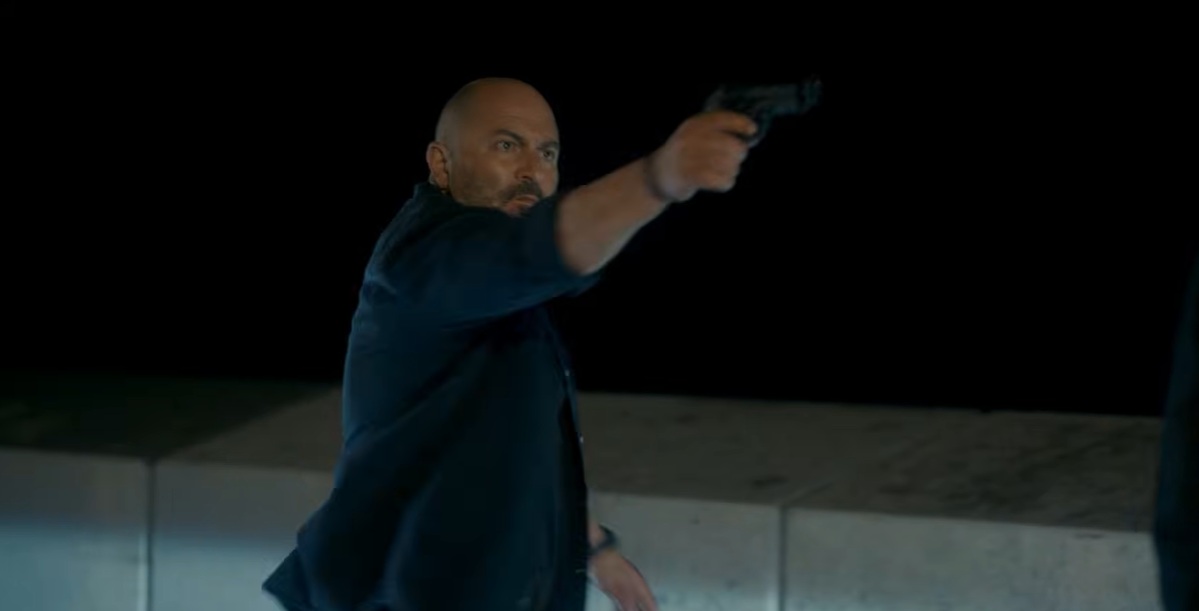
He cares too much.
He gets personally involved.
He convinces himself that he can control the consequences.
Then someone pays the price.
Some fans hated this storyline because they felt an elite operative should never compromise an operation for an emotional impulse. I can’t completely disagree. Doron’s behavior is infuriating.
But I also think that’s the point.
Fauda has never presented Doron as a flawless action hero. He’s impulsive, damaged, obsessive, and frequently incapable of separating personal feelings from operational decisions.
The finale simply pushes that flaw to its ugliest possible consequence.
Does Doron Kill Adel?
Yes.
Doron eventually confronts Adel and kills him.
But there is almost no satisfaction in it.
That’s what makes the scene work.
Normally, eliminating the season’s main antagonist would be the payoff. Here, it’s practically meaningless. Doron has already lost control of the situation, and the people around him are bleeding.
He returns to the courtyard expecting, perhaps, to find survivors.
Instead, he finds devastation.
Doron drops to his knees.
He moves between his wounded teammates.
And then he begins reciting the Shema Yisrael.
That moment is far more powerful than another action sequence could have been. There is no triumphant music. No heroic pose. No feeling that Doron has won.
He hasn’t.
He survived.
Those are very different things.
Who Actually Survived the Fauda Season 4 Finale?
This was the question that dominated fan discussions for years.
The final images deliberately encouraged speculation. Some characters appeared motionless. Others showed tiny signs of life.
Steve’s shallow breathing became one of the biggest pieces of evidence for fans convinced that he wasn’t dead.
Nurit’s condition also created questions because she was shown clutching her stomach after being critically wounded.
Sagi’s situation looked especially grim.
And Eli’s absence from the central frame made his fate difficult to read.
Season 5 ultimately confirms that the core characters survive the massacre, although survival doesn’t mean they simply walk away from Jenin and return to normal.
That distinction is essential.
The ambush doesn’t reset the characters.
It breaks them.
Why Fauda Season 5 Is So Different
Here’s where the upcoming season gets genuinely interesting.
The original Season 5 scripts were reportedly developed before the October 7, 2023 attacks. Then reality changed everything.
The Hamas-led attacks on Israel and the war that followed created a political and emotional environment that made the original fictional storyline feel disconnected from reality.
So Lior Raz and Avi Issacharoff scrapped the existing material and started again.
Honestly, that was probably the only sensible choice.
A show like Fauda lives or dies by its relationship with the world around it. Its appeal has always come partly from the uncomfortable feeling that the events on screen could happen somewhere just outside the frame.
After October 7, that relationship with reality became impossible to ignore.
Season 5 therefore isn’t simply another mission for Doron.
It’s about what happens when the people who spend their lives fighting violence become psychologically consumed by it.
Doron Kabilio Is Broken
The biggest change is Doron himself.
Season 5 finds him dealing with severe psychological trauma and attempting to rebuild some kind of civilian existence through therapy.
That may sound strange for a character who has spent most of his life running toward danger.
But that’s precisely why it works.
Doron has spent years convincing himself that the next mission will solve something.
It never does.
The next mission creates another problem.
Another death.
Another grudge.
Another reason to go back.
Season 5 finally forces him to confront the damage instead of simply shooting his way through it.
Unfortunately for Doron, peace doesn’t last.
An old friend launches an unauthorized revenge mission in Marseille, France, dragging Doron back into the world he was desperately trying to escape.
Why Marseille Changes the Scale of Fauda
The move to Marseille gives Season 5 a noticeably different flavor.
Doron is no longer operating exclusively in the familiar environments of the West Bank. He has to infiltrate pro-Palestinian demonstrations and extremist networks while attempting to stop a major terrorist attack planned against Israel.
That creates a much messier espionage story.
There are fewer obvious lines.
Who is an operative?
Who is an extremist?
Who is simply angry?
Who is seeking revenge?
And who is manipulating everyone else?
That ambiguity is where Fauda has always been at its best.
The international cast, including French actress Mélanie Laurent and Hakim Djaziri, should also give Season 5 a noticeably different cinematic identity.
The Most Interesting Theme: Blood Revenge
The Arabic concept of tha’r, or blood revenge, sits at the heart of the new season.
And this is exactly the kind of theme that suits Fauda.
The series has spent four seasons showing characters responding to violence with more violence. Someone loses a brother. Someone kills an enemy. That enemy’s family wants revenge. Another person retaliates.
Then the cycle starts again.
Season 5 appears ready to ask the question the franchise has avoided answering directly:
What if revenge doesn’t actually fix anything?
That sounds obvious when written down.
On screen, it can be devastating.
Because Doron understands revenge better than almost anyone.
He also understands that it never gives him what he thinks he wants.
October 7 Becomes Part of the Story
Perhaps the heaviest material in Season 5 comes from the decision to directly address October 7.
Two episodes reportedly return to that day and follow Doron, Gabi, and other members of the unit as the attacks unfold.
This is not easy material.
And I don’t expect it to be comfortable viewing.
The creators have spoken about the emotional difficulty of writing these episodes, which makes sense. Fauda has always blurred the line between fictional thriller and contemporary political reality. Here, that line becomes extremely thin.
The risk is obvious: the story could become heavy-handed.
But if the writers resist turning the material into simple political messaging and instead focus on the characters, trauma, fear, and confusion, these could become some of the strongest episodes the series has ever produced.
Idan Amedi’s Real-Life Story Makes Sagi’s Survival Even More Emotional
There is also an uncomfortable real-world parallel surrounding Idan Amedi, who plays Sagi.
In January 2024, Amedi was seriously wounded while serving as a reservist in Israel’s military engineering corps.
He survived and underwent extensive treatment and rehabilitation.
That makes Sagi’s fictional survival feel strangely different when watching Season 5.
The actor and character have both been placed in narratives involving survival, injury, recovery, and war.
It’s one of those situations where reality creates an emotional layer no screenwriter could have planned.
Where to Watch Fauda Season 5 Online Free: Release Date, Streaming Options, and Forum Rumors Exposed
My Take: Was the Season 4 Ending Too Cruel?
Yes.
And that’s exactly why I remember it.
The Season 4 finale annoyed me because it felt almost deliberately cruel to the audience. After spending years with these characters, watching the team seemingly get wiped out and then cutting away without answers felt like a cheap trick.
But after seeing where Season 5 is going, I understand the choice better.
The massacre wasn’t really about killing the characters.
It was about destroying the version of them that existed before it.
Doron can’t return to being the unstoppable operative.
Sagi can’t simply forget what happened.
Nurit can’t erase the fear of losing everything.
Steve and Eli aren’t untouched survivors.
They are people carrying the consequences.
That’s much more interesting than simply giving us another season of tactical raids.
What to Expect From Fauda Season 5
If you’re watching Season 5 expecting the same relentless action from the opening minute, you may be surprised.
There is still violence. There are still undercover operations. There are still betrayals and moments where Doron does something spectacularly reckless.
But the emotional center has shifted.
This is a season about consequences.
- Doron is trying to recover from PTSD.
- The Jenin ambush continues to haunt the team.
- Revenge becomes a central driving force.
- Marseille expands the international scope of the story.
- October 7 directly reshapes the narrative.
- The characters are forced to confront the psychological cost of endless conflict.
And that last point is the one I’m most interested in.
Because Fauda doesn’t need to prove that it can stage another brutal firefight.
We already know it can.
The real challenge is showing what happens after the shooting stops.
That is where Season 5 could either become the smartest chapter of Fauda or collapse under the weight of its subject matter.
Given how aggressively the creators rebuilt the season after October 7, I’m cautiously optimistic.
But I also expect it to hurt.
And honestly, that’s probably the only appropriate way for this story to continue.
Fauda Season 5 premieres on Netflix on September 8, 2026, with 11 episodes continuing Doron Kabilio’s story after the devastating events of Season 4.