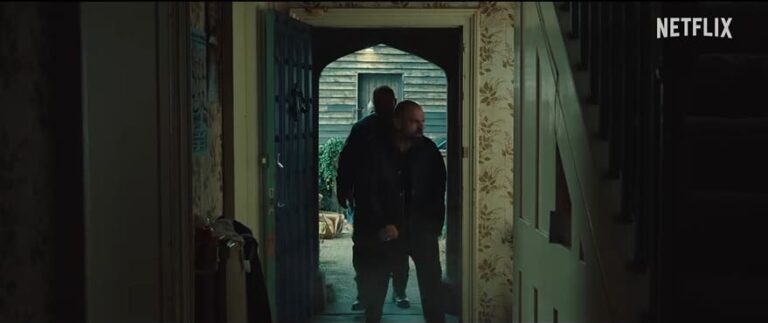
Death of the Pastor’s Wife is not the kind of true-crime documentary you finish and immediately move on from. The three-part Netflix series leaves an uncomfortable question hanging in the air: what exactly happened to Mica Miller, and how much responsibility can be placed on a person who wasn’t physically standing beside her when she died?
That question is at the heart of the series, and frankly, it is also where the documentary becomes most frustrating. The evidence presented is disturbing, the history surrounding Mica’s marriage to pastor John-Paul “JP” Miller is deeply troubling, and yet the legal reality is far less satisfying than the emotional conclusion the series seems to push viewers toward.
Directed by Mike Gasparro and Julia Willoughby Nason, the filmmakers behind other major true-crime projects including Murdaugh Murders and American Murder: Gabby Petito, the Netflix docuseries examines Mica’s life, her increasingly bitter separation from Miller, and her death at Lumber River State Park in North Carolina on April 27, 2024.
Mica was only 30. She was a worship leader, a wife trying to escape a marriage she described as abusive, and, according to the material presented in the documentary, someone who had become increasingly frightened of the man she was trying to leave.
And that makes the ending hit much harder than a standard “mystery solved” documentary.
What Happened to Mica Miller?
The third episode, “What Happened to Mica,” is where the documentary becomes especially difficult to watch. Instead of relying exclusively on interviews, it brings viewers much closer to Mica herself through family recordings, messages, journals and other personal material.
The timeline is brutally simple.
On April 25, 2024, Mica served John-Paul Miller with divorce papers. She had apparently reached the point where leaving was no longer an idea or a threat. She was actually doing it.

According to the documentary, Mica had spent years describing a relationship characterized by multiple forms of abuse. Her writings reportedly referred to emotional, sexual, spiritual, financial and physical abuse. The series also presents allegations that Miller monitored her movements and communications and that she experienced repeated intimidation and harassment.
One detail is particularly chilling because it changes how viewers interpret everything that comes afterward.
Mica had reportedly warned law enforcement that if she were ever found dead from a gunshot wound to the head, investigators should not automatically assume she had killed herself. She believed someone might stage her death.
Then, two days later, she died.
On April 27, Mica traveled to the remote Lumber River State Park. Before her death, she called emergency services, gave her location and said she intended to take her own life. She also asked that her family be told where she was.
That emergency call is one of the strongest pieces of evidence supporting the official suicide determination. Local authorities ultimately concluded that Mica died from a self-inflicted gunshot wound.
And this is where Death of the Pastor’s Wife deliberately refuses to let the story become simple.
The Biggest Question: Was This Suicide or the Result of Coercive Control?
The documentary does not uncover a smoking gun proving that John-Paul Miller physically murdered Mica. That’s an important distinction, and viewers looking for a conventional murder mystery should understand that before watching.
Miller was not at the park when Mica died. The series presents his alibi as establishing that he was not physically present at the moment the fatal shot was fired.
So why does his name remain at the center of the story?
Because the documentary shifts the argument away from physical murder and toward coercive control.
That concept is arguably the most important idea in the entire series. The filmmakers portray Mica as someone who had spent years attempting to escape a relationship in which she allegedly felt watched, controlled, isolated and psychologically worn down.
The allegations presented against Miller include surveillance, manipulation and the use of religion as a mechanism of control. His position as a pastor is particularly significant because, according to the documentary, spiritual authority allegedly became intertwined with his relationship with Mica.
That is where I think the series is at its strongest. It forces the viewer to consider a form of domestic abuse that doesn’t necessarily leave behind a single dramatic piece of physical evidence. Someone doesn’t have to hold a gun to another person’s head to make that person feel trapped.
At the same time, the documentary occasionally gets very close to blurring the line between documenting disturbing circumstances and allowing viewers to reach a criminal conclusion that the available evidence does not establish.
That’s an uncomfortable weakness, but it is also what makes the ending worth discussing.
John-Paul Miller’s Behavior After Mica’s Death
If there is one part of the documentary that seems almost impossible to process without a strong emotional reaction, it is what happened immediately after Mica died.
On April 28, just one day after her death, Miller appeared at Solid Rock Church and preached.
According to the series, the service initially carried on in a surprisingly lighthearted manner. Miller performed a parody song and even referenced biblical stories alongside a Steven Spielberg movie. Only later did he tell the congregation that his wife had died.
The documentary also says he instructed church members not to discuss the circumstances surrounding Mica’s death.
Personally, this is one of the moments where I found the series most unsettling. Whatever explanation Miller may have had for his behavior, the timing is extraordinary. One day after his estranged wife died in circumstances that were already attracting attention, he was standing in front of his congregation performing and preaching.
That doesn’t prove a crime. But emotionally, it is incredibly difficult to watch.
What Happened to Solid Rock Church?
The fallout did not stop with Mica’s death.
Solid Rock Church eventually lost much of the structure and visibility it had previously enjoyed. The original church building and attached school closed in November 2024, and the property was later sold to another church organization.
Miller, however, did not disappear from the pulpit.
The documentary depicts him continuing to preach to a dramatically reduced group of followers. Instead of the larger church environment viewers might expect from his previous position, services were reportedly held in unconventional locations around Myrtle Beach, including a commercial gym and an empty storefront.
That detail says a lot about the aftermath. The institution may have collapsed, but Miller’s religious influence did not completely vanish.
John-Paul Miller’s Second Marriage
Then comes another revelation that is guaranteed to make viewers pause.
On June 1, 2025, a little more than a year after Mica’s death, John-Paul Miller married Suzie Skinner, a former member of his congregation.
The documentary also discusses Skinner’s previous marriage. Her former husband died in 2021, and according to the account presented in the series, the coroner determined that he accidentally fell into a swimming pool while in his wheelchair.
Understandably, this information has generated intense online speculation. But this is one area where viewers need to be extremely careful.
Suspicious timing and uncomfortable associations are not proof of criminal wrongdoing. The documentary raises questions; it does not establish that Skinner or Miller was responsible for her former husband’s death.
True-crime audiences are very good at connecting dots. Sometimes those dots actually belong together. Sometimes they don’t. This is a case where speculation can run far ahead of evidence.
Is John-Paul Miller in Jail? His Legal Status Explained
This is probably the biggest question viewers have after finishing Death of the Pastor’s Wife.
John-Paul Miller was not charged with murdering Mica Miller. The local investigation concluded that her death was a suicide, and the documentary does not present evidence that resulted in a murder prosecution.
But that does not mean Miller escaped the legal system entirely.

According to the timeline presented in the series, a federal investigation eventually focused on allegations surrounding the harassment and treatment Mica experienced rather than charging Miller with physically causing her death.
| Date | Key Event |
|---|---|
| April 25, 2024 | Mica serves John-Paul Miller with divorce papers. |
| April 27, 2024 | Mica dies at Lumber River State Park. |
| April 28, 2024 | Miller preaches at Solid Rock Church and announces Mica’s death. |
| November 2024 | Solid Rock Church’s former building and school close. |
| June 1, 2025 | Miller marries Suzie Skinner. |
| December 2025 | A federal grand jury indicts Miller on two charges. |
| January 2026 | Miller pleads not guilty to the federal allegations. |
| October 2026 | The federal trial is scheduled to begin. |
The two federal charges identified in the documentary are cyberstalking and making false statements to federal investigators.
Miller pleaded not guilty.
That distinction matters. An indictment is an allegation, not a conviction. The federal case has to be decided in court, and the prosecution still has to prove its claims.
Legend of the White Dragon Ending Explained: Erik Reed’s Fate and Final Battle Explained
What the Netflix Ending Really Means
The ending of Death of the Pastor’s Wife isn’t really about revealing a secret killer hiding in plain sight. It’s about asking whether a person’s responsibility for another person’s death can exist somewhere between physical murder and suicide.
The documentary clearly wants viewers to see Mica’s death through the lens of years of alleged coercive control. Her family and friends believe the pressure she experienced was central to what happened. Her writings and previous warnings make the situation even harder to dismiss as a random tragedy.
But legally, those are different questions from whether Miller murdered her.
That gap is exactly why the finale feels so unresolved.
And honestly, I think that’s both the best and most frustrating thing about the series.
I wanted a definitive answer. I wanted the documentary to take every piece of evidence, put it on the table and tell me exactly what happened. Instead, it leaves me with something much messier: a woman who repeatedly said she was afraid, a relationship filled with disturbing allegations, a death officially classified as suicide, and a federal criminal case focused on conduct surrounding the situation rather than a murder charge.
That’s not a satisfying ending. But real life rarely gives true-crime stories the neat ending viewers expect.
The Real Ending Is Still Being Written
Mica’s sisters, Sierra and Anna Francis, and her friends remain central to the documentary’s emotional core. Their participation is clearly about more than solving a mystery. They want Mica’s own words, fears and experiences to remain part of the public record.
And that may ultimately be the most powerful part of the series.
Death of the Pastor’s Wife doesn’t overturn the official determination that Mica died by suicide. It doesn’t establish that John-Paul Miller murdered her. What it does is present a disturbing history that makes the circumstances surrounding that suicide impossible to view in isolation.
The federal case now becomes the next major chapter.
With Miller pleading not guilty and a trial scheduled for October 2026, the story has moved beyond Netflix. The next answers will have to come from evidence tested in court rather than interviews, family testimony or documentary editing.
For me, that’s where the series leaves its biggest impact. The most haunting question isn’t simply “Who killed Mica Miller?” It’s whether the warning signs surrounding her were taken seriously enough while she was still alive.
And that question is considerably harder to shake.