There are superhero endings that make you want to cheer, and then there are endings that leave you sitting through the credits in silence. Legend of the White Dragon belongs firmly in the second category.
After years of waiting, delays, production headaches, and endless speculation from fans, the movie has finally reached audiences. Released in select U.S. theaters on August 28, 2026, through Well Go USA Entertainment, the film arrives with an emotional weight that is impossible to separate from its history. This isn’t just another independent superhero movie. It is the final screen performance of Jason David Frank, and knowing that changes the way almost every scene lands.
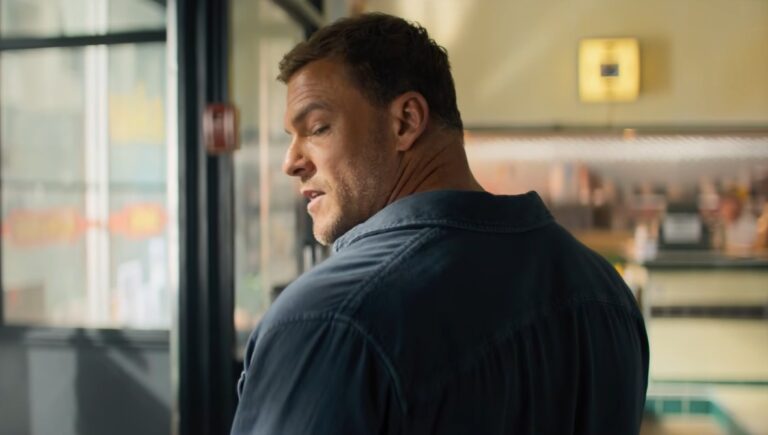
Frank plays Erik Reed, a fallen superhero who has spent three years living as a fugitive after the catastrophic event known as the Dark Day. His reputation is destroyed, his family is separated from him, and the city he once protected believes he was responsible for one of its greatest tragedies.
So when the movie finally reaches its final confrontation between Erik and Dragon Prime, we’re not simply watching two guys in elaborate armor trade punches.
We’re watching a man fight for his name, his family, and one last chance to prove that the hero everyone turned against was still there.
And yes, the ending is tragic.
But there’s considerably more going on underneath that final fight.
What Really Happened During the Dark Day?
The entire story revolves around the consequences of an event that happened three years before the main events of the movie.
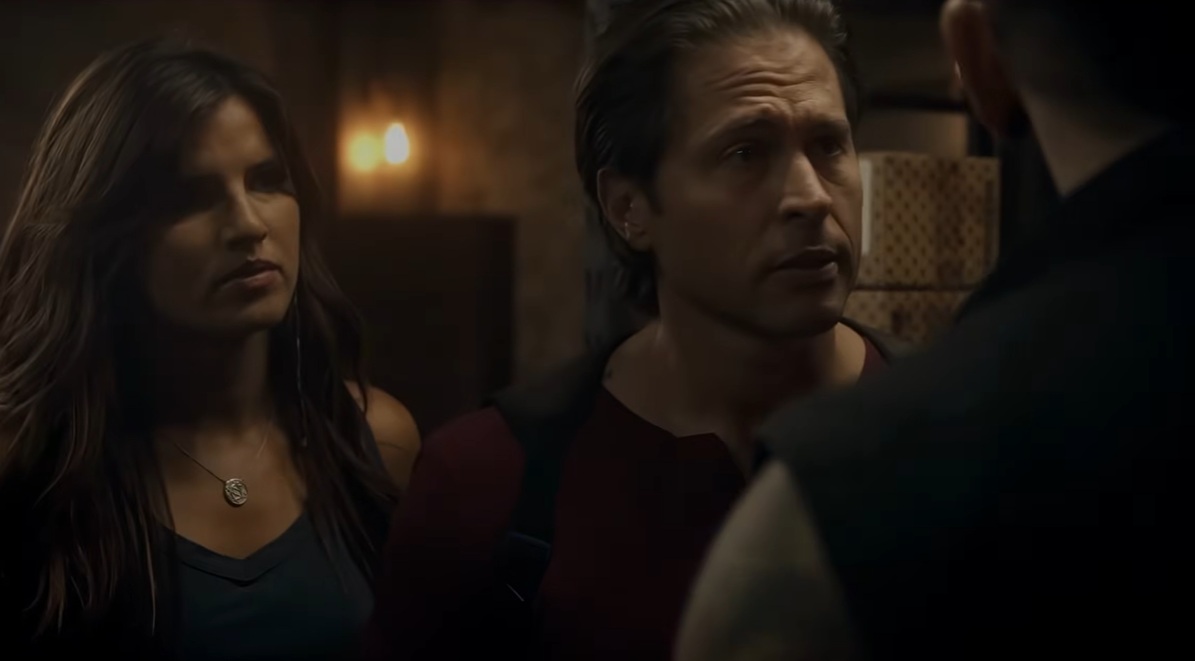
During the Dark Day, the ancient overlord Ashtagor nearly destroyed Virtuo City. Erik Reed fought to stop the catastrophe, but the battle ended with the mystical crystal that powered his abilities being shattered into two pieces.
That’s where everything went horribly wrong for Erik.
Instead of being remembered as the man who tried to save the city, Reed became its scapegoat. A staggering 1,263 people died, enormous sections of the city were destroyed, and Erik’s secret identity was exposed.
The public didn’t see a hero anymore.
They saw the man responsible.
Erik was stripped of his status and forced into hiding. For three years, he lived like someone who had already lost everything, staying away from his wife and daughter while carrying the guilt and anger associated with the Dark Day.
And honestly, this is one of the things I appreciated about the movie. Erik doesn’t feel like a traditional superhero who simply lost his powers and needs to get them back. He lost his entire life.
His superhero identity, his reputation, his home, and most painfully, his family were all taken from him.
That’s why his return to Virtuo City feels personal from the beginning.
Dragon Prime Is More Than Just the Final Villain
Dragon Prime could easily have been reduced to another masked villain whose only job is to wait for the third act.
Thankfully, the character is tied directly into the mythology surrounding Erik and the broken crystal.
The two fragments don’t simply represent lost power. They become the foundation for the prophecy surrounding two opposing dragon entities.
One embodies the White Dragon and the ideals associated with protection and light.
The other becomes a manifestation of darkness, anger, and vengeance.
That’s where Dragon Prime comes in.
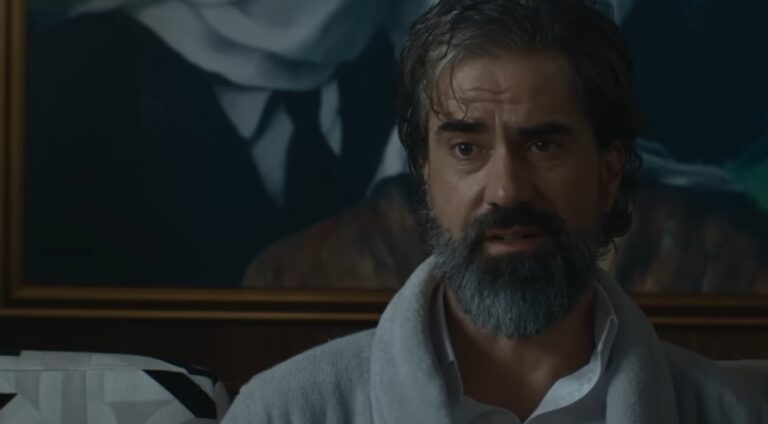
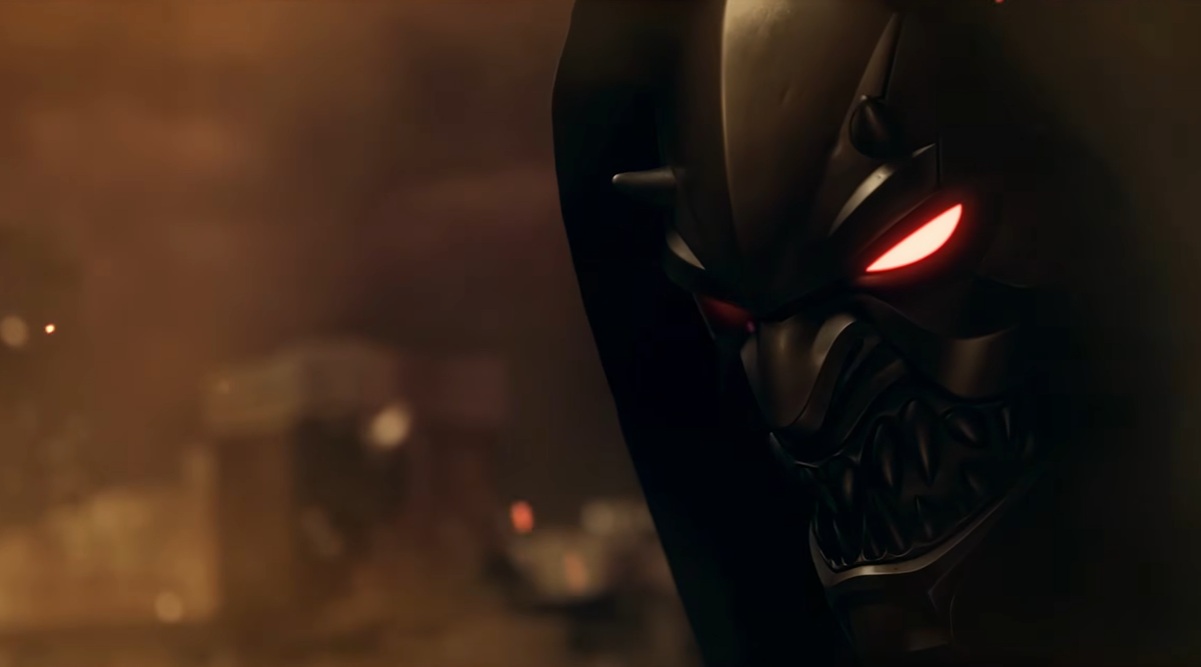
Played by Aaron Schoenke, Dragon Prime is essentially the nightmare version of everything Erik could have become. He isn’t interested in forgiveness. He doesn’t care about rebuilding Virtuo City. His motivation is revenge.
And that makes their eventual confrontation much more interesting than a basic hero-versus-villain setup.
Erik wants to end the cycle. Dragon Prime wants to continue it.
That’s the real fight.
How the Final Battle Between White Dragon and Dragon Prime Plays Out
Once Erik manages to reunite the pieces of the mystical crystal, he can finally reclaim his White Dragon powers.
This leads directly into the movie’s biggest action sequence.
The final battle unfolds against the ruined backdrop of Virtuo City, and I think that setting is an especially smart choice. The destroyed city isn’t just there because the filmmakers needed somewhere dramatic for the characters to fight.
It’s a visual representation of everything Erik has spent the movie trying to fix.
Every destroyed building reminds him of the Dark Day.
Every strike from Dragon Prime brings the past back into the present.
And every time Erik gets back on his feet, he’s essentially refusing to let that past define him.
Dragon Prime attacks with overwhelming aggression. His entire fighting style feels driven by hatred, while Erik is much more controlled. He’s still dangerous, but there’s a sense that he’s fighting defensively rather than because he wants to destroy his opponent.
That’s a significant distinction.
Erik isn’t trying to prove that he’s stronger.
He’s trying to protect the people he loves.
As the fight continues, the White Dragon is forced to push the restored crystal far beyond what his body can safely handle. The power comes at an enormous cost, but Erik refuses to stop.
Eventually, he gains the upper hand.
Dragon Prime is defeated by the power of the fully restored White Dragon crystal, ending the immediate threat to Virtuo City and Erik’s family.
But that’s where the movie pulls the rug out from under the traditional superhero formula.
Does Erik Reed Die at the End of Legend of the White Dragon?
Yes. Erik Reed dies after the final battle.
And this is where the ending hits considerably harder than I expected.
Erik wins the fight, but the victory destroys what remains of his physical strength. He has pushed his body and the mystical crystal beyond their limits, using everything he has left to stop Dragon Prime.
The important thing is that Erik doesn’t die because he loses.
He dies because he wins.
That’s a subtle but crucial difference.
He succeeds in stopping Dragon Prime. He protects his family. He breaks the cycle of vengeance. Most importantly, he finally gets the opportunity to confront the consequences of the Dark Day and prove that the man everyone blamed was never the monster they believed him to be.
His redemption is complete.
And then his body simply can’t keep going.
Erik’s Final Reunion With His Family
For me, this is the scene that defines the entire ending.
After spending three years separated from his wife and daughter, Erik finally gets to be with them again.
There’s no giant superhero speech that needs to explain what this moment means. The emotional impact comes from the fact that Erik has spent the entire movie trying to get back to this exact point.
He’s been running.
He’s been hiding.
He’s been hunted.
He’s been blamed for something he didn’t do.
And after everything, he finally gets to stand beside his family.
But the victory is temporary.
The physical and mystical damage caused by the final battle is too severe. Erik dies peacefully with the people he loves around him.
It’s heartbreaking, particularly because of the real-world context surrounding Jason David Frank.
Frank passed away in 2022, meaning this performance inevitably carries a different emotional meaning than the filmmakers could have originally anticipated.
The fact that his daughter, Jenna Rae Frank, appears as his daughter in the movie makes those scenes even more difficult to watch without thinking about the actor behind Erik Reed.
Why Jason David Frank’s Final Performance Changes the Ending
If this were simply a fictional superhero movie, Erik’s death would already be a powerful ending.
But Legend of the White Dragon has something no other story involving Jason David Frank can ever have again: finality.
Frank spent decades associated with the world of superhero television and martial-arts-driven action. For an entire generation of fans, he wasn’t simply another actor wearing a costume. He was one of the faces of the genre.
That’s why I found the quieter scenes more affecting than some of the biggest action sequences.
The battles are fun. The armor looks great. The mythology gives the movie a larger universe to play with.
But it’s the human moments that stay with you.
Seeing Frank as Erik Reed alongside his real-life daughter adds an uncomfortable but incredibly powerful layer to the movie. The final goodbye between Erik and his family doesn’t feel like just another scripted superhero farewell.
It feels like the ending of an era.
What Happens to Dragon Prime?
Dragon Prime’s story ends with his defeat at Erik’s hands.
His purpose throughout the movie is tied to vengeance, and his obsession with destroying Reed ultimately becomes his weakness. Erik refuses to embrace the same hatred.
That’s why the White Dragon wins.
Not simply because Erik has more power, but because he doesn’t become Dragon Prime.
The villain believes pain has to be answered with more pain. Erik eventually chooses sacrifice instead.
That choice is what separates the two characters.
| Character | Motivation | Final Fate |
|---|---|---|
| Erik Reed / White Dragon | Protect his family and redeem himself | Dies after defeating Dragon Prime |
| Dragon Prime | Revenge against Erik | Defeated in the final battle |
| Erik’s Family | Rebuilding their lives after years of separation | Survive and are finally freed from the conflict |
| Virtuo City | Recovering from the Dark Day | Saved from further destruction |
Is Legend of the White Dragon Setting Up a Sequel?
This is where things get interesting.
The movie clearly establishes a larger mythology involving ancient overlords, mystical powers, superhero teams, prophecies, and a broader universe that could potentially support additional stories.
But Erik Reed’s personal story feels finished.
His journey doesn’t end with a tease. It ends with a sacrifice.
Could another character inherit the White Dragon mantle? Absolutely, at least conceptually. The world created by the Schoenkes leaves plenty of room for other heroes and villains.
But I wouldn’t want a sequel to simply undo Erik’s death.
That would weaken the entire point of his final decision.
If the franchise continues, I’d much rather see new characters explore the consequences of what happened rather than resurrect Erik simply because superhero movies have trained us to expect everyone to come back eventually.
Legend of the White Dragon Ending Explained: Erik Reed’s Fate and the Post-Credits Twist Unpacked
My Take on the Legend of the White Dragon Ending
I’ll be honest: I went into this movie expecting the ending to be emotional, but I didn’t expect it to feel quite this personal.
The movie certainly has its rough edges. It’s an ambitious independent production with a huge amount of mythology, action, visual effects, and superhero lore packed into it. At times, you can feel the long road it took to get here.
But the ending works because it strips away most of that noise.
For all the talk about crystals, prophecies, dragon warriors, ancient evil, and destroyed cities, Erik Reed’s final objective is incredibly simple.
He wants to go home.
He wants his family back.
He wants people to know he wasn’t the villain they believed him to be.
And he gets all three—just not for very long.
That makes the final moments of Legend of the White Dragon less about defeating a villain and more about letting Erik finally put down the burden he’s been carrying since the Dark Day.
Jason David Frank’s final performance therefore becomes more than a superhero swan song. It becomes a farewell that the movie’s creators probably could never have planned in quite this way.
The White Dragon falls, but the idea behind him survives.
And that’s probably the most fitting ending this particular hero could have received.
Erik Reed doesn’t ride into the sunset. He gives everything he has to protect the people waiting for him at home.
For a character whose entire story is about redemption, that’s the one victory that matters.