I went into Wild Horse Nine expecting a Martin McDonagh take on the political thriller, and honestly, I was half-expecting the usual machinery: secret orders, double-crosses, guns, people whispering in dark rooms, and a final revelation designed to make everyone feel clever.
Thankfully, McDonagh has very little interest in making that movie.
Instead, Wild Horse Nine is a nasty, funny, strangely mournful character drama wearing the clothes of a CIA thriller. The political conspiracy matters, obviously, but the film is much more interested in what happens when two men who have spent years doing terrible things suddenly have enough time to think about what those things actually mean.
That is where John Malkovich’s Chris comes in.
The film, which premiered in the main competition at the 83rd Venice International Film Festival on September 3, 2026, moves Martin McDonagh away from the bleak Irish landscapes of The Banshees of Inisherin and into the unsettling isolation of Easter Island during the days surrounding the 1973 Chilean coup.
It is a strange setting for a CIA story.
It is also a perfect one.
Because once Chris and Lee arrive on Rapa Nui, there is nowhere emotionally comfortable for either man to hide.
What Is Wild Horse Nine Actually About?
At first glance, the setup sounds straightforward.
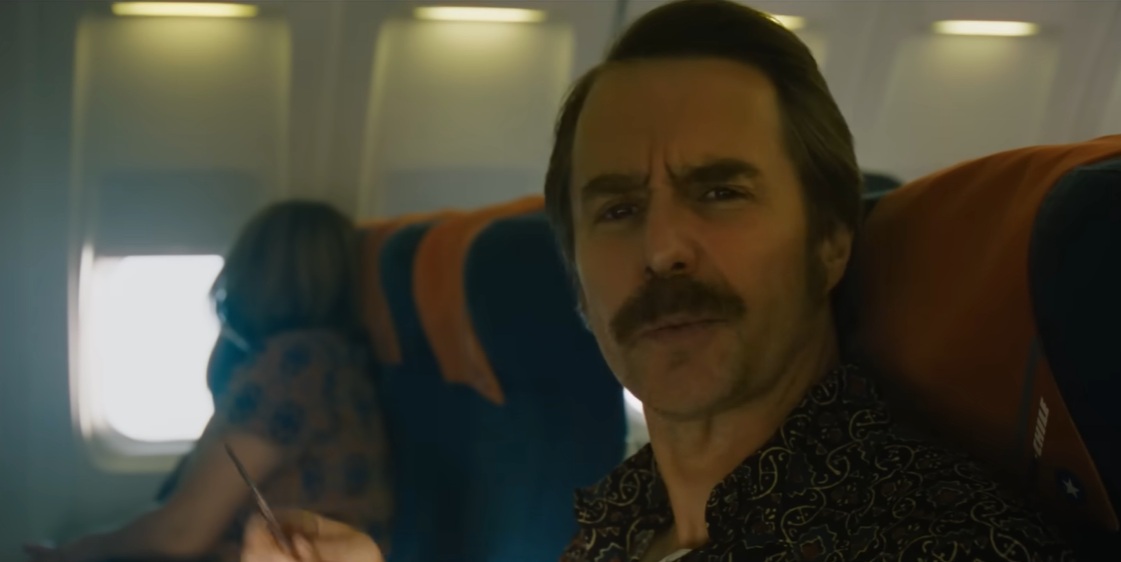
Chris, played by John Malkovich, and Lee, played by Sam Rockwell, are experienced CIA operatives working in the increasingly unstable political atmosphere surrounding Chile in 1973. Their superiors send them away from Santiago to Easter Island shortly before the coup.
Their official purpose is deliberately vague.
The real reason becomes increasingly disturbing.
The men are being watched.
Their loyalty is being measured.
And, eventually, it becomes clear that Chris himself has become a potential liability.
Steve Buscemi’s MJ sits at the center of this machinery. He is the kind of bureaucrat who can discuss something horrific with the casualness of a man ordering lunch. Buscemi plays him with exactly the right amount of absurdity. MJ isn’t a cartoon villain, which makes him considerably more unpleasant.
The terrifying thing about people like MJ is that they don’t need to hate anyone.
They just need to follow the logic of the institution.
Chris has spent years doing exactly that. But something has changed.
He is tired.
Not physically tired. Morally exhausted.
And when he becomes involved with two rebellious local students, played by Mariana di Girolamo and Ailin Salas, the cracks finally become impossible to ignore.
Chris and Lee: The Real Battle of Wild Horse Nine
The strongest part of Wild Horse Nine isn’t the political material. It’s the relationship between Chris and Lee.
These two men feel like they have known each other forever, and McDonagh makes that history count.
Their conversations are funny until they aren’t.
A joke becomes an accusation. An insult becomes a confession. A casual exchange suddenly reveals something awful about their past.
This is where Sam Rockwell is particularly effective.
Lee is volatile, funny, frightening and deeply loyal. He isn’t simply the obedient CIA operative standing opposite the morally awakened Chris. He genuinely cares about Chris. That’s what makes the situation so painful.
Lee isn’t choosing between good and evil. He’s choosing between a person and the system that gave his life meaning.
Chris, meanwhile, is no innocent.
That distinction matters enormously.
The movie doesn’t suddenly turn him into a heroic freedom fighter because he develops sympathy for the students. His past doesn’t disappear. The things he has done don’t get erased because he finally develops a conscience.
McDonagh understands something that a lot of political thrillers conveniently forget: having a conscience late in life doesn’t refund the damage you’ve already caused.
That’s basically the emotional engine of the entire movie.
The CIA Mission Explained
The mission initially appears to be some kind of strategic relocation or surveillance assignment connected to the political crisis in Chile.
It isn’t.
MJ has another purpose.
Chris has become unreliable from the agency’s perspective, and his growing moral discomfort makes him dangerous. He knows too much, asks too many questions, and has reached the point where professional loyalty can no longer automatically override his personal judgment.
So the Easter Island assignment becomes a test.
And potentially a disposal operation.
That revelation changes the relationship between Chris and Lee completely.
Lee is eventually placed in an almost impossible position: follow orders and eliminate his oldest partner, or betray the organization that has defined his entire adult life.
There is no clean choice.
That’s precisely the point.
| Character | What They Represent | Final Emotional State |
|---|---|---|
| Chris | Individual conscience confronting a lifetime of compromise | Resigned, but finally honest with himself |
| Lee | Loyalty to an institution versus loyalty to a friend | Alive, but psychologically devastated |
| MJ | The cold institutional machinery behind political violence | Detached from the human consequences |
| The Students | Youth, resistance and moral clarity | A reminder of what Chris has lost |
The Ending Explained: Why Chris Accepts His Fate
The final confrontation between Chris and Lee takes place among the Moai statues of Rapa Nui, and this is where the movie stops pretending that it is primarily about espionage.
The statues aren’t just atmospheric scenery.
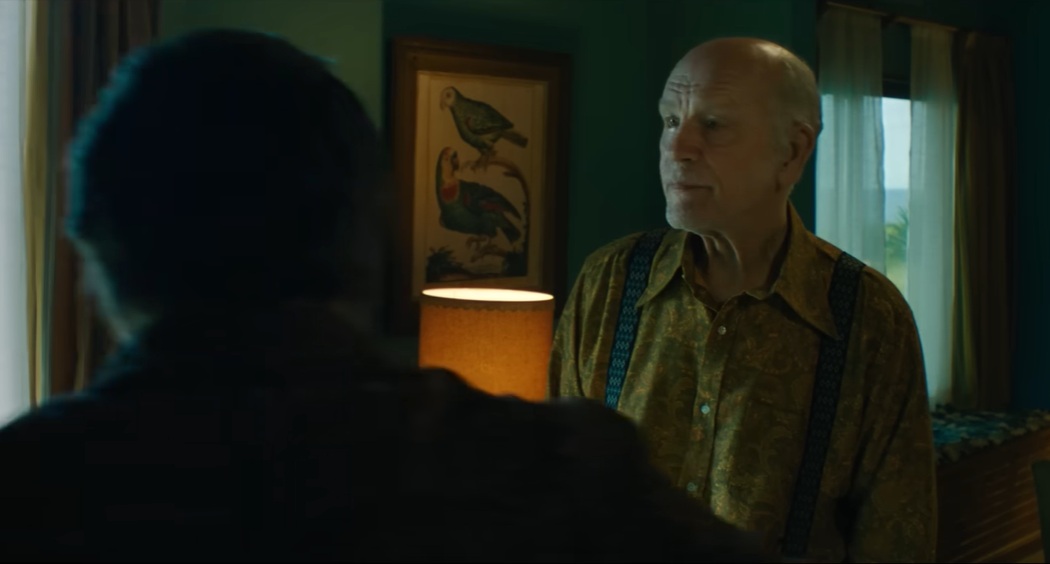
They are watching.
That sounds almost too poetic when written down, but McDonagh’s direction reportedly earns the moment because the scene is so stripped back. The ancient figures stand behind two modern men arguing about loyalty, death and political power.
Chris has a chance to run.
He has a chance to fight.
He has a chance to save himself.
Instead, he chooses to protect the students and accepts that his life may be the price.
I found this decision much more effective than a conventional heroic sacrifice would have been.
Chris doesn’t suddenly become a saint. He simply reaches the point where one more act of obedience would be something he could no longer live with.
And that’s an important difference.
His choice isn’t about becoming good.
It’s about finally refusing to become worse.
What Happens to Lee?
Lee survives.
But surviving isn’t presented as a victory.
That’s one of the cruelest decisions the film makes.
If Lee had died beside Chris, the ending would have been cleaner. Their story could have ended together. Instead, Lee is left behind with the consequences.
He has to live with the knowledge that he chose the institution over his friend.
Whether he actually kills Chris or becomes complicit in the final decision is less important than what happens psychologically afterward.
Lee loses the one relationship that made his brutal professional life feel human.
The CIA can give him another assignment.
Another handler.
Another target.
Another mission.
It can’t give him Chris back.
That is the punishment.
Why Easter Island Matters So Much
This is probably the aspect of the ending that deserves the most attention.
Rapa Nui gives the movie an enormous historical perspective.
Chris and Lee are tiny figures standing beside monuments created centuries earlier. They are temporary. Their agency is temporary. Their political masters are temporary.
The Moai remain.
That contrast is brutal.
The men believe they’re participating in history because they’re involved in a major geopolitical crisis. But the film quietly suggests that history doesn’t care about their sense of importance.
Their secrets will disappear.
Their orders will become footnotes.
Their justifications will age badly.
Their guilt, however, is immediate and personal.
The Moai therefore become a visual representation of memory and legacy. Chris has spent his career hiding behind institutions, missions and national interests. At the end, there is nowhere left to hide.
The Real Meaning Behind the Final Scene
For me, the ending works because Wild Horse Nine refuses to provide the emotional reward that most political thrillers promise.
There is no satisfying exposure of the CIA.
No grand speech.
No courtroom.
No dramatic punishment for MJ.
No convenient moment where history suddenly becomes morally simple.
The Chilean coup still happens.
The machinery keeps moving.
People far away continue making decisions that destroy lives.
And Chris’s individual decision changes almost nothing on the geopolitical scale.
That’s depressing.
It’s also the movie’s strongest idea.
Doing the right thing doesn’t guarantee that the world will reward you for it. Sometimes the only thing it gives you is the knowledge that, at least once, you refused to do the wrong thing.
Wild Horse Nine Plot Twist Explained: Ending Breakdown of Martin McDonagh’s 2026 CIA Thriller
Venice Reactions: The Malkovich-Rockwell Chemistry Steals the Show
The early Venice response has understandably focused heavily on Malkovich and Rockwell.
That pairing is almost unfair.
Malkovich brings a weary, intellectual quality to Chris, while Rockwell makes Lee unpredictable enough that every conversation feels like it could suddenly become violent.
Their scenes have the rhythm of a stage play. McDonagh’s theatrical instincts are obvious, but the film doesn’t feel like a play awkwardly transported to another location. The vast landscapes actually make their verbal confrontations feel even more claustrophobic.
The cinematography from Ben Davis also deserves credit. The movie reportedly combines the lonely scale of a Western with the paranoia of a 1970s political thriller, which is exactly the visual contradiction the story needs.
Carter Burwell’s score adds another layer of unease without turning every scene into an instruction telling the audience what to feel.
And then there’s Steve Buscemi.
MJ could have been irritatingly cartoonish in another actor’s hands. Buscemi instead makes him funny enough to be entertaining and detached enough to be genuinely sinister.
Tom Waits and Parker Posey only add to the film’s wonderfully strange collection of personalities.
My Take on Wild Horse Nine
I think Wild Horse Nine is at its best when it stops worrying about whether it is a political thriller.
The CIA conspiracy is interesting. The historical setting is fascinating. The Easter Island location is visually spectacular.
But Chris and Lee are the reason the film sticks.
I also appreciate that McDonagh doesn’t let Chris off the hook. That could have ruined the entire thing. A lesser version of this story would have given him a noble redemption arc and treated his final decision as proof that he was secretly a good man all along.
He’s not.
He’s a compromised man who finally recognizes the scale of his own compromises.
That’s much uglier.
And much more interesting.
The ending left me more uncomfortable than satisfied, which I mean as a compliment. I don’t think Wild Horse Nine wants applause when the credits roll. It wants you to sit there and think about how easily ordinary people can become part of something monstrous when responsibility is divided into enough small pieces.
The film’s November 6, 2026 theatrical release gives audiences plenty of time to argue about what McDonagh is actually saying here. I suspect that argument will last longer than the plot itself.
Because the ending isn’t really asking whether Chris made the correct decision.
It’s asking a nastier question:
How many wrong decisions can someone make before one good decision stops being redemption and becomes nothing more than the bare minimum?