
There are movies that make you cry because they are designed to. Then there are movies that catch you completely off guard, when you’re expecting one kind of story and suddenly find yourself sitting there thinking about your own family.
That was my experience with Netflix’s Don’t Say Good Luck.
At first glance, the movie looks like a familiar coming-of-age story: a teenage girl gets a shot at the school musical she’s been dreaming about, discovers first love, deals with the usual high school chaos, and tries to figure out who she wants to become. Sunny Sandler plays Sophie Birenbaum, a theater-obsessed sophomore who finally gets a chance to prove herself onstage.
Then the movie pulls the rug out.
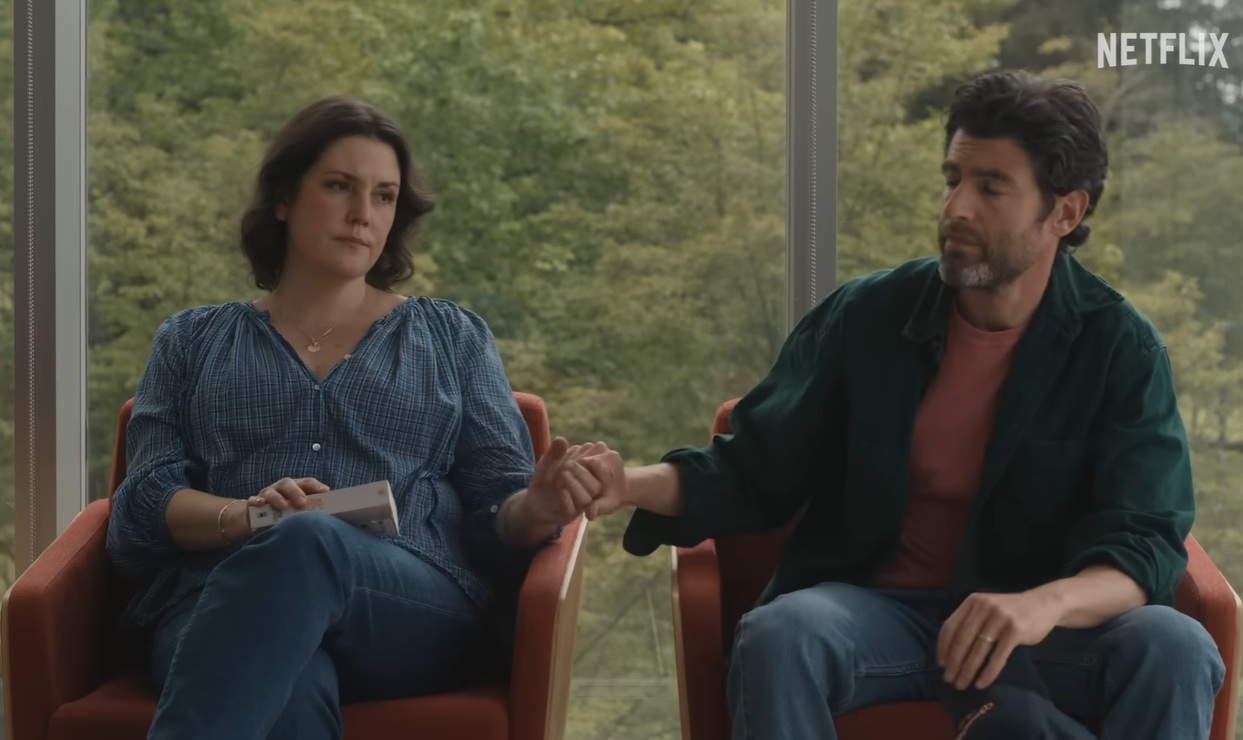
Sophie’s mother, Elizabeth, played by Melanie Lynskey, learns that the cancer she once defeated has returned. Suddenly, every rehearsal, every family dinner and every ordinary conversation between mother and daughter carries a completely different meaning.
And honestly, that’s what makes Don’t Say Good Luck hit so hard. The cancer storyline isn’t treated as the entire point of the movie. It’s something that quietly changes the meaning of everything around it.
Melanie Lynskey Is the Emotional Center of the Movie
I’ve watched Lynskey play plenty of complicated characters, but Elizabeth Birenbaum might be one of her most emotionally effective roles precisely because she isn’t constantly announcing how much she’s suffering.
Elizabeth is still a mom.
She still worries about her kids. She still runs the family deli with her husband Ted, played by Max Greenfield. She still tries to keep the household functioning while her children create the kind of everyday chaos that would be exhausting even without a terminal diagnosis hanging over the family.
That feels much more believable to me than the typical movie version of a parent with cancer, where every scene becomes a dramatic speech about mortality.
Lynskey doesn’t play Elizabeth like someone whose only purpose is to make the audience cry. She plays her like a woman who happens to be sick and desperately wants to keep being herself.
That distinction matters.
Elizabeth knows what’s happening to her, but she also knows her children aren’t ready to understand it in the same way. Sophie, especially, remembers her mother’s first battle with cancer. For her, the diagnosis isn’t an abstract medical problem. It’s the terrifying possibility that the worst thing she remembers from childhood might actually happen again.
And that’s where the movie gets really uncomfortable.
Sophie isn’t simply dealing with the fear of losing her mother. She’s also trying to continue being a teenager.
She has rehearsals. She has a crush. She has friends. She has a musical to perform.
Life refuses to stop just because her family has entered a nightmare.
The Movie’s Most Powerful Idea: Life Doesn’t Pause for Grief
This is probably the part of Don’t Say Good Luck that stayed with me the longest.
Sophie is preparing for a production of Waitress while her mother is becoming increasingly unwell. Those two worlds should feel completely incompatible, but that’s exactly how real life can feel.
Someone can be having the worst week of their life while somebody else is celebrating.
A teenager can be terrified about losing a parent and still get excited about a role in a school play.
A family can be dealing with devastating news and still have to open the deli the next morning.
The movie understands that contradiction instead of trying to solve it.
Sophie’s theatrical ambitions therefore become much more than a subplot. The stage gives her somewhere to put all the emotions she can’t express at home. Her performance becomes an outlet for fear, anger, love and helplessness.
That’s why her rendition of “She Used to Be Mine” carries so much weight. The song isn’t simply a big musical moment. By that point, Sophie’s emotional life and her character’s story have started bleeding into each other.
And Sunny Sandler has to carry that transition without making Sophie feel artificially mature.
For me, that’s one of the biggest surprises of the movie.
The Mall Scene Says More Than Any Hospital Scene Could
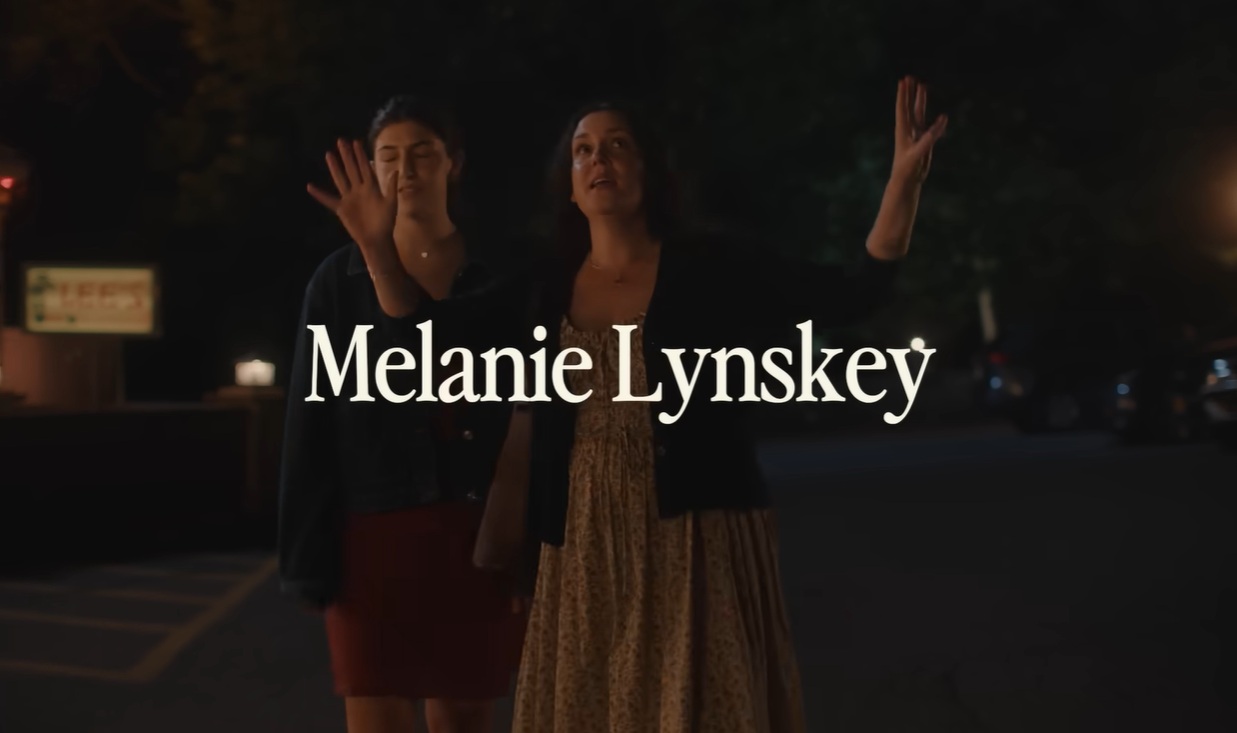
One of my favorite moments is the sequence where Elizabeth takes Sophie to the mall and the two start playing around with exaggerated Southern accents as Sophie prepares for her role.
On paper, it’s almost nothing.
A mother and daughter messing around in public.
People looking at them strangely.
A teenager trying to get into character.
But knowing what Elizabeth is facing makes the scene almost unbearably sad.
She’s creating a normal memory.
Not a grand farewell. Not some perfectly scripted goodbye. Just a silly afternoon with her daughter.
That’s the kind of detail that makes the cancer storyline feel personal rather than manipulative.
The movie doesn’t need Elizabeth to deliver a long monologue explaining how precious her children are. We can see it in the way she spends an ordinary afternoon with Sophie.
And that’s much harder to shake off.
Why Sophie’s Story Works So Well
Sophie could easily have become an irritating version of the “ambitious theater kid” stereotype. Instead, the cancer storyline gives her ambition an emotional dimension.
She isn’t chasing the lead because she wants fame.
She wants something she can control.
At home, she can’t control her mother’s diagnosis. She can’t make her healthier. She can’t guarantee that her family will still look the same six months from now.
Onstage, however, there are lines to memorize, choreography to learn and a performance to deliver.
There is a beginning.
There is an ending.
There are rules.
That contrast gives the musical a surprisingly important role in the story. The stage becomes Sophie’s safe place precisely because real life has stopped making sense.
Her relationship with Jack, played by Jack Champion, adds another layer. Sophie is experiencing first love at exactly the same time she’s confronting the possibility of losing her mother.
That’s an emotionally brutal combination, but it’s also believable. Teenagers don’t get to choose when life becomes complicated.
Elizabeth and Sophie Feel Like Mother and Daughter, Not Movie Characters
The relationship between Lynskey and Sunny Sandler is probably the film’s secret weapon.
Their scenes don’t feel like they’re constantly building toward a dramatic payoff. There are little arguments, awkward moments, teasing and everyday frustration.
That makes the serious scenes land harder.
If every conversation between Elizabeth and Sophie were sentimental, the movie would become exhausting very quickly. Instead, they occasionally behave like any mother and teenage daughter who have spent far too much time around each other.
And then the cancer diagnosis sits underneath all of it.
There’s something especially painful about watching Sophie become more aware of her mother’s condition while still occasionally acting like a normal teenager. She doesn’t suddenly become a perfect, endlessly compassionate daughter. She gets frustrated. She wants her own life. She doesn’t always know what to say.
That’s much more human.
Melanie Lynskey Doesn’t Overplay the Illness
This is where Lynskey’s performance really works for me.
She doesn’t rely on the obvious tricks.
There aren’t endless scenes designed solely around tears. The movie doesn’t turn Elizabeth into a symbol of illness. Instead, Lynskey gives her humor, irritation, warmth and stubbornness.
Even as Elizabeth’s physical condition worsens, you can still feel the person underneath it.
That’s essential because the audience needs to care about Elizabeth as a character, not simply fear her death as a plot event.
Her relationship with Ted also helps. Their marriage isn’t presented as some perfect cinematic romance. They’re parents trying to keep a business and a family running while something enormous is happening behind closed doors.
That normality makes the situation more painful.
The Real-Life Inspiration Makes the Story Feel Different
The screenplay’s emotional foundation comes from writer Laura Hankin’s own experiences with family illness and her connection to theater. That personal background helps explain why the movie feels more interested in emotional truth than conventional disease-movie storytelling.
The theater setting isn’t just decoration.
It feels connected to the story’s central question: what do you do when you can’t change what’s happening to the people you love?
Sometimes you perform.
Sometimes you laugh.
Sometimes you go to the mall.
Sometimes you rehearse a song while trying desperately not to think about what might happen at home.
That doesn’t make the pain disappear. It simply gives you somewhere to put it.
The emotional structure of Don’t Say Good Luck
| Element | What it means for Sophie |
|---|---|
| The school musical | A place where she can escape reality |
| Her mother’s diagnosis | The fear she cannot control |
| Her first romance | A reminder that she’s still growing up |
| Family life | The ordinary world she is afraid of losing |
| The stage | A way to express emotions she can’t say aloud |
Why the Cancer Storyline Is Getting People Talking
I can understand why viewers searching for “Melanie Lynskey cancer storyline” or “Don’t Say Good Luck ending explained” are finding themselves in the middle of a much heavier movie than they expected.
The marketing and cast can make the film sound like a relatively breezy Netflix teen musical. Sunny Sandler, Adam Sandler’s daughter, brings an obvious curiosity factor, while the Happy Madison connection suggests something lighter.
Instead, viewers get a story about a teenager watching her family change in real time.
That contrast is probably part of the reason the movie has generated so much emotional discussion online.
People aren’t only talking about whether the movie is good. They’re talking about what it reminded them of.
That’s always a sign that a film has gotten under people’s skin.
The Part I Didn’t Expect to Think About Afterward
For me, the strongest idea in Don’t Say Good Luck isn’t really about cancer.
It’s about memory.
Elizabeth knows that she may not be able to give her children all the years she wanted to give them. So she tries to give them moments instead.
And Sophie is unknowingly collecting those moments.
The mall.
The rehearsals.
The arguments.
The jokes.
The songs.
The ordinary family routines.
None of them seem especially important while they’re happening. That’s what makes them devastating later.
Melanie Lynskey gives Elizabeth enough personality that you don’t spend the movie simply waiting for something terrible to happen. You spend it watching a mother try to protect the normal life her children still have.
That’s a much more difficult emotional trick.
Don’t Say Good Luck isn’t a movie I’d describe as an easy watch, and I don’t think it’s supposed to be. But it also isn’t relentlessly miserable. There is humor here. There is teenage awkwardness. There is music, romance and the excitement of finally getting the role you’ve wanted.
That’s why the sad parts hurt.
The movie understands that happiness doesn’t become fake just because something terrible is happening at the same time.
And Melanie Lynskey is the reason that idea works.
Elizabeth isn’t remembered as “the character with cancer.” She’s remembered as a mother, a wife, a business owner, a woman with a sense of humor and a person trying to leave something good behind for her children.
That’s what makes her storyline linger long after the curtain comes down.