There are two kinds of Minions movies. The ones where the little yellow chaos machines are simply there to wreck everything around them, and the ones where Illumination actually gives that chaos a strange new playground. Minions and Monsters looks very much like the second kind.
I’ll be honest: when I first heard that the next Minions spin-off was heading into 1920s Hollywood, silent cinema, classic horror, and real monsters, I wasn’t sure what to make of it. It sounds like the sort of pitch that gets thrown around at 2 a.m. after someone has watched three Universal Monster movies in a row.
Then I saw the trailer.
And suddenly the idea makes a ridiculous amount of sense.
Instead of another story about the Minions desperately trying to serve a supervillain, this movie puts them behind the camera. James, Henry, and their fellow Minions want to become filmmakers, and their ambition is hilariously simple: make the scariest movie anyone has ever seen. Naturally, they find an actual spell book, read the wrong things aloud, and discover that making monsters for the movies is much easier when you accidentally summon the real ones.
That setup alone gives Minions and Monsters a completely different personality from the previous entries.
The Trailer Starts Like a Lost Silent Movie
The opening minutes are probably my favorite part of the entire trailer.
Everything suddenly turns grainy, black-and-white, and appropriately old-fashioned, with flickering frames, oversized title cards, dramatic narration, and the kind of visual language you’d expect from a silent-era Hollywood production.
Then you notice the Minions.
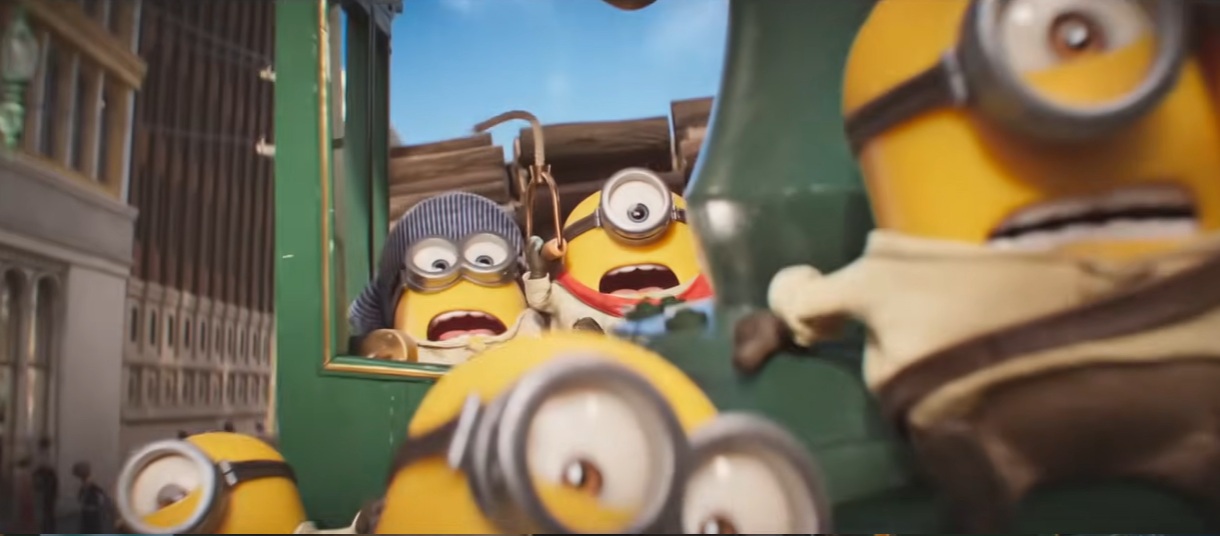
They’re wearing director caps and period suits, stumbling around a studio backlot while trying to operate vintage film cameras. The joke isn’t just that Minions look absurd in old Hollywood clothing. The whole production is falling apart around them.
Lights crash down.
Cables become traps.
Painted backdrops collapse.
And the supposedly glamorous movie set looks like it is being run by the world’s least competent production crew.
That opening is clever because it establishes the movie’s central joke without explaining it: the Minions genuinely believe they are Hollywood professionals.
They absolutely are not.
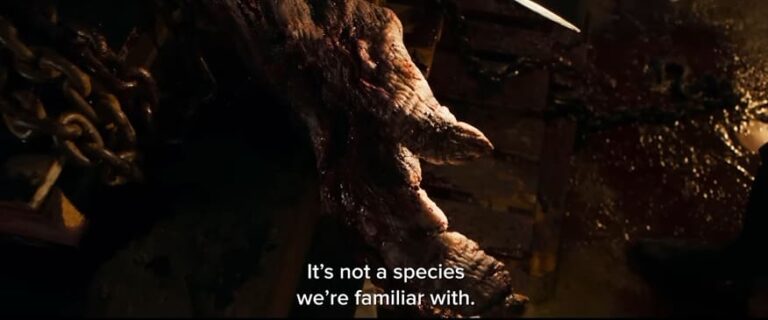
The visual transition into full color is also a great trailer moment. Once James and Henry discover the mysterious chamber underneath the studio, the movie suddenly becomes much bigger and stranger. The old film aesthetic gives way to polished modern animation, blue magical energy, gigantic creatures, and destruction on a scale that the opening sequence doesn’t prepare you for.
That contrast feels intentional.
James and Henry Are a Better Fit for the Story Than Another Supervillain
The biggest structural change here is the Minions’ motivation.
Usually, these characters are looking for someone powerful enough to follow. This time, they have their own dream.
They want to make movies.
James and Henry become the focal characters of this new Minion group, and their obsession with filmmaking gives the story an excuse to explore a side of Hollywood that the franchise hasn’t really touched before.
They’re not chasing treasure. They’re not trying to conquer the world. They’re trying to make a horror movie.
The problem is that their definition of “authentic horror” apparently includes opening a magical book capable of unleashing ancient creatures.
This is exactly the kind of escalating stupidity that works for Minions.
The trailer suggests a simple progression:
- The Minions discover filmmaking.
- Their first horror project needs real monsters.
- They discover an actual spell book.
- The spell goes horribly wrong.
- The creatures escape.
- Hollywood becomes a disaster zone.
- The Minions have to clean up their own mess.
It gives the comedy an actual engine instead of simply stringing together random gags.
The Monster References Are Where Things Get Really Fun
If you’re a horror fan, this trailer has considerably more going on than the average animated comedy preview.
The movie appears to be playing directly with the visual history of classic monster cinema, particularly the Universal era.
The mummy is an obvious standout. Its appearance recalls Boris Karloff’s iconic version of The Mummy, while several shots lean into the exaggerated shadows and unsettling silhouettes associated with early horror filmmaking.
And then there’s the gothic laboratory.
The Minions basically recreate the visual language of Frankenstein, complete with the kind of giant machinery, stone architecture, and theatrical lighting that instantly screams old-school monster movie.
The trailer also appears to borrow from German Expressionism. The distorted shadows and theatrical compositions are particularly reminiscent of movies such as Nosferatu and The Cabinet of Dr. Caligari.
I really like this direction because the references don’t seem to exist solely for movie buffs to point at their screens and yell, “I know that one!”
They’re part of the actual joke.
The Minions are accidentally rebuilding the visual history of horror cinema while trying to make their own movie.
That’s a much better gag.
And Then There’s Goomi
The strangest character introduced in the trailer might be Goomi, a gentle green creature who eventually joins forces with the Minions.
At first glance, Goomi looks like another monster.
Then the trailer makes it clear that he’s basically the opposite.
He’s friendly, sympathetic, and seemingly much more sensible than the yellow troublemakers who summoned the other creatures in the first place.
Trey Parker provides Goomi’s voice, which is an interesting casting choice considering his history with the franchise and his background in comedy. Goomi appears to become the bridge between the Minions and the monsters, and that could give the film an unexpectedly warm center.
I wouldn’t be surprised if Goomi ends up becoming one of those side characters that audiences remember more than expected.
The Human Cast Adds a Completely Different Flavor
The voice cast is honestly stacked.
Christoph Waltz voices Max, a sophisticated Hollywood studio executive who appears to spend much of the movie watching his expensive operation collapse around him. That sounds like a perfect role for Waltz because the humor can come from treating complete nonsense with absolute seriousness.
Then there’s Jeff Bridges, playing Frank and Elwood, two veteran horror filmmakers who understand that the studio has a very bad history. Their characters appear to function partly as the voices of experience while everyone else ignores the obvious warning signs.
Allison Janney plays Olivia, a casting director who apparently reacts to monster-related chaos with the exhausted attitude of someone who has simply seen enough nonsense for one lifetime.
That’s probably my favorite type of animated comedy character: the person who isn’t shocked by the insanity anymore.
Jesse Eisenberg, Zoey Deutch, Bobby Moynihan, and Phil LaMarr round out the human cast, giving the movie a surprisingly broad collection of personalities.
| Character | Voice Actor | Trailer Role |
|---|---|---|
| James & Henry | Pierre Coffin | Minion filmmakers |
| Goomi | Trey Parker | Friendly green creature |
| Max | Christoph Waltz | Panicked studio mogul |
| Frank & Elwood | Jeff Bridges | Veteran horror filmmakers |
| Olivia | Allison Janney | Unimpressed casting director |
| Dort | Jesse Eisenberg | Eccentric screenwriter |
And yes, Pierre Coffin remains the essential ingredient. Whatever the Minions are doing, their strange vocal rhythm is what turns an ordinary gag into a Minion gag.
My Favorite Trailer Moment Is Completely Stupid
There’s a sequence where the Minions attempt to direct one of the giant creatures like an ordinary movie actor.
They give it a tiny chair.
They approach it with a megaphone.
They apparently expect professional behavior from a gigantic monster.
The creature promptly swallows the megaphone.
That’s it.
No complicated joke. No elaborate dialogue.
Just a monster eating a piece of filmmaking equipment while a group of tiny yellow directors look completely confused.
And somehow that tells you exactly what this movie wants to be.
The Final Act Looks Completely Bonkers
The trailer eventually stops pretending this is a small Hollywood comedy and turns into a full-scale monster adventure.
The Minions are shown using biplanes, old movie props, practical stage mechanisms, and theatrical traps to fight creatures that are considerably larger and stronger than they are.
I particularly like the idea of using old filmmaking equipment as weapons and traps. It keeps the climax connected to the movie’s central theme rather than turning it into a generic animated action sequence.
They created the problem through movies.
Now they’re using movies to solve it.
That’s a pretty satisfying loop.
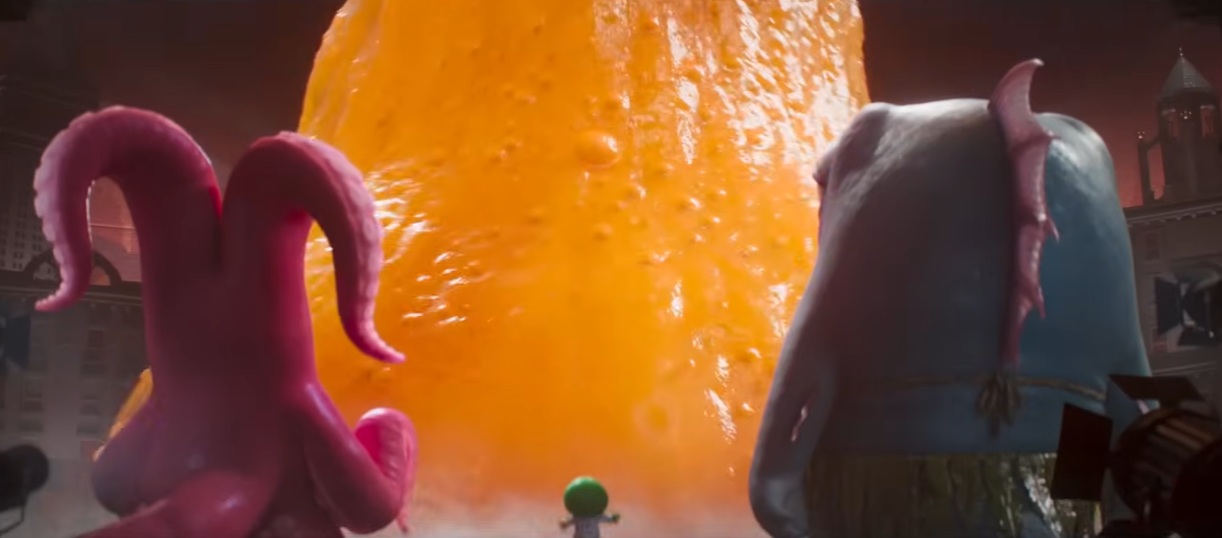
The visual escalation is also huge. Gargoyles come alive, a mummy causes chaos in Los Angeles, and a swamp creature emerges from a studio water tank. What starts as a tiny filmmaking experiment gradually becomes a worldwide catastrophe.
Classic Minions behavior, really.
Why the 1920s Setting Could Be the Secret Weapon
The setting is what makes Minions and Monsters stand out for me.
The franchise has spent years moving through different historical periods and celebrity-inspired adventures, but early Hollywood gives the filmmakers a particularly rich playground.
You’ve got silent movies, giant studio backlots, hand-cranked cameras, theatrical horror sets, biplanes, exaggerated costumes, jazz, old production tricks, and the birth of the movie-star system.
The Minions fit surprisingly well into that world because their comedy has always depended heavily on physical performance.
Silent cinema basically speaks their language.
They don’t need long conversations to be funny. A character tripping over a cable, smashing through a backdrop, or accidentally destroying an expensive set works perfectly with the exaggerated visual comedy of early filmmaking.
That’s probably why the black-and-white opening immediately clicked with me.
It doesn’t feel like the setting was randomly chosen.
The setting actually understands the characters.
The Bigger Easter Egg: Hollywood Itself
The most interesting layer of the trailer isn’t any individual monster reference. It’s the way the movie appears to turn Hollywood history into one enormous playground.
The Minions want to become filmmakers, and while trying to create a fictional horror movie, they accidentally reproduce the aesthetics of the real genre’s past.
The gothic castle resembles classic Frankenstein imagery.
The mummy recalls Karloff-era horror.
The shadows evoke German Expressionism.
The musical style apparently shifts between tense orchestral horror and lively 1920s jazz.
So the movie isn’t merely saying, “Here’s a monster.”
It’s saying, “Here’s the entire history of monster movies, filtered through Minions.”
That gives the concept much more personality than I expected.
Should Fans Be Excited?
For me, this is one of the more promising Minions concepts in a while.
Not because it looks bigger. The franchise has never had trouble making things bigger.
It’s promising because it looks specific.
There is a clear visual identity here. There is a period setting. There is a horror-comedy concept. There are recognizable cinematic references. And the Minions have a goal that naturally creates the plot instead of simply dropping them into another adventure.
The trailer also suggests that the film isn’t embarrassed by its influences. It wants to play with classic monster movies, old Hollywood filmmaking, and silent cinema while still delivering the chaotic comedy people expect from the franchise.
That balance is going to be the tricky part.
If the references become too obvious, the movie could feel like a checklist of famous horror images. If the Minion slapstick overwhelms everything else, the 1920s setting becomes little more than decoration.
But based on the trailer, I’m cautiously optimistic.
Minions and Monsters might actually be the rare franchise spin-off that has a genuinely good reason to exist.
It takes the characters somewhere new without stripping away what makes them recognizable.
And honestly, watching James and Henry accidentally turn an old Hollywood studio into the world’s worst monster-movie set sounds like a much better time than it has any right to be.