There are endings that wrap a movie up neatly, and then there are endings that leave you staring at the screen wondering what the hell you just watched. The Last House belongs firmly in the second category.
Louis Leterrier’s sci-fi thriller spends most of its runtime feeling almost painfully small. One family. One house. Endless rain. No way out. Greta Lee and Wagner Moura carry the story as Ann and Jason Delgado, parents trying to keep their children Graham and Ruth alive while an unexplained force seals their Seattle home from the outside world.
For years, the movie deliberately keeps its apocalypse at arm’s length. We hear things. We see shadows. We catch glimpses of animals and ruined neighborhoods through sheets of rain. But we never get the comfortable satisfaction of knowing exactly what happened.
Then the final act pulls the rug out.
The rain stops. The creatures reveal themselves. The Delgado house collapses. And suddenly Seattle is no longer a city.
It’s an ocean.
That final image, with the Space Needle almost completely swallowed by water, is easily the wildest moment in The Last House. But the flooded Seattle ending isn’t just there to look impressive. It completely changes how the previous five years of the story should be interpreted.
Five Years Inside the Delgado House
The family’s imprisonment begins almost like a bizarre home-invasion scenario without an actual invader.
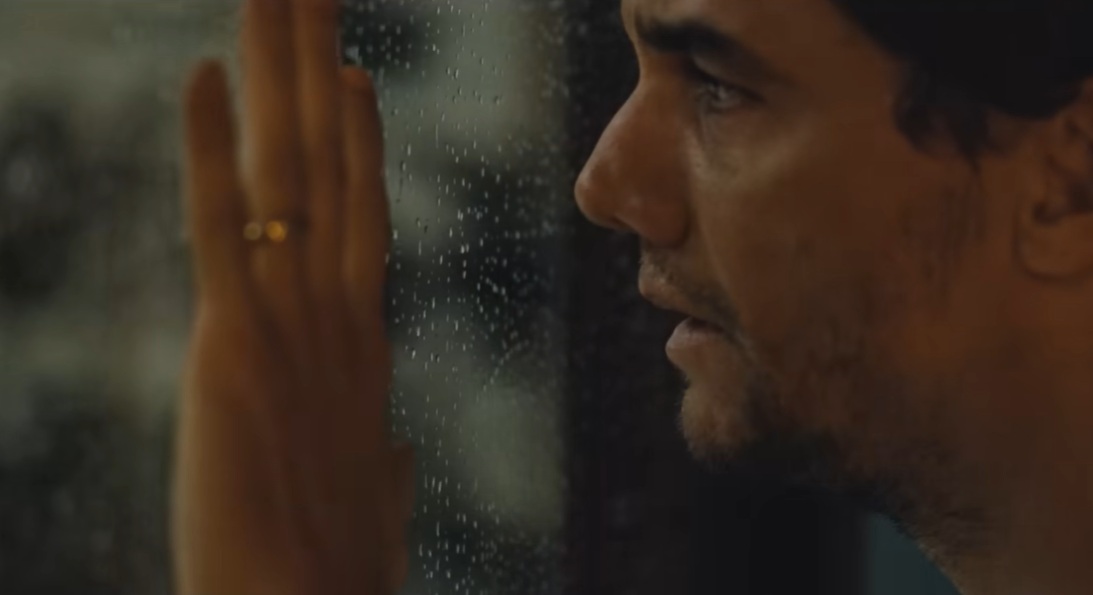
They wake up to discover that the doors and windows of their Seattle home are effectively sealed. There is no visible wall, no futuristic technology and no obvious explanation. The barrier simply exists. Water behaves strangely against the glass, and anything trying to cross the boundary appears to be stopped by an invisible force.
Then they realize something much worse.
Their neighbors are trapped too.
The first months are about survival rather than answers. Electricity disappears. Water supplies become unreliable. Food becomes scarce. Jason starts improvising increasingly desperate ways to obtain resources from the abandoned world outside, including the memorable “chimney fishing” setup that allows the family to catch small animals.
That detail sounds almost ridiculous on paper, but within the movie it becomes one of the clearest signs of how far the family has fallen from normal life.
This isn’t camping.
This is a family slowly adapting to the possibility that civilization has already ended.
Across the street, other households deteriorate. People die from illness, starvation and psychological collapse. The Delgados survive partly because they manage to grow food indoors and collect rainwater. Even then, nothing stays stable forever.
Cassidy, the family dog, eventually dies after the supply of medication runs out.
That loss matters more than it might seem. The movie keeps using animals to contrast human behavior with the mysterious creatures outside. Ruth especially sees them as living beings rather than monsters, which becomes extremely important later.
Year Five Is When Everything Falls Apart
By the fifth year, the house itself is becoming a prison that may no longer be physically capable of protecting them.
The constant rain has weakened the surrounding ground, and the foundations are sinking. Jason’s desperation eventually leads him beneath the house, where the family discovers something crucial: the underground sewer system isn’t protected by the same barrier.
Ann has lost enough weight during the years of rationing that she can squeeze through the pipes.
It’s an ugly, claustrophobic sequence, but it’s also the moment the movie finally allows Ann to get close to the things that have been tormenting them from a distance.
She encounters one of the strange aquatic creatures.
And that’s where the movie’s survival story turns into something much bigger.
The Creature Finally Comes Inside
The family’s carefully maintained balance collapses when one of the creatures enters the house.
The lower floors flood with seawater. Their crops are destroyed. Their drinking water is contaminated. The safe little ecosystem they’ve spent years constructing disappears almost instantly.
At this point, there isn’t really a “wait it out” option anymore.
They have to fight.
Jason puts together a bizarre improvised trap using whatever the family has left, including a car tire, bowling ball and homemade harpoon system. It’s exactly the kind of scrappy nonsense that makes survival thrillers fun when the characters have absolutely nothing left to work with.
The plan is chaotic.
It also works.
The creature is eventually pinned inside the house while water continues rising around the family.
Jason now has something he’s wanted for five years: power over the thing responsible for their imprisonment.
And that’s where The Last House makes its most interesting decision.
Ruth Changes the Ending
Jason threatens the creature and demands that it remove the barrier.
The creature doesn’t cooperate.
The house is collapsing. Water is everywhere. The family is exhausted, terrified and running out of time. Killing the creature would seem like the most obvious solution, especially after everything the Delgados have endured.
Ruth refuses to see it that way.
She asks her father to let it live.
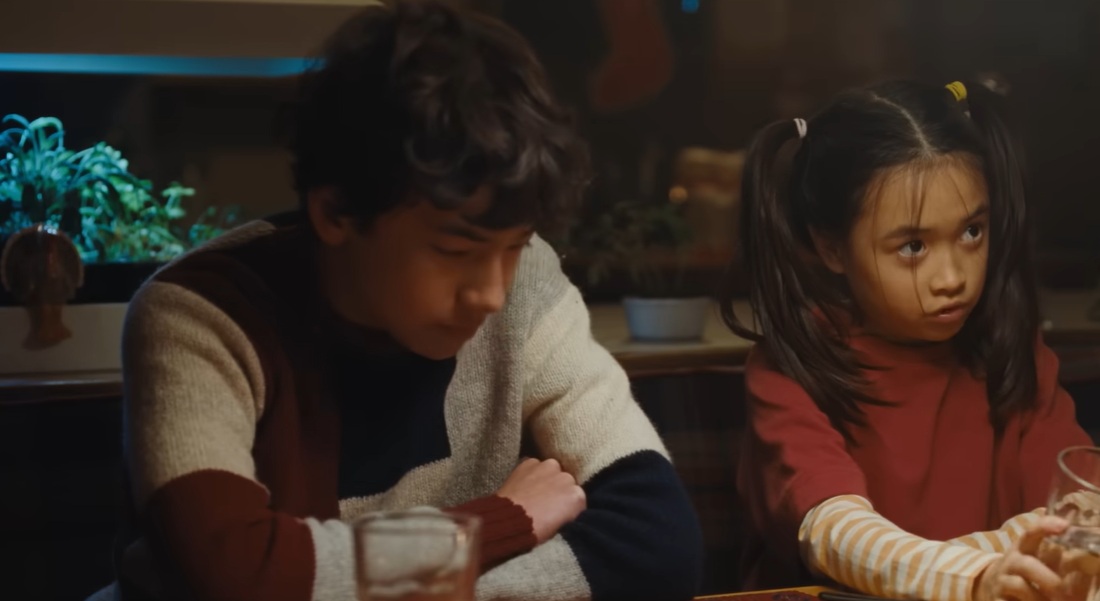
It’s a small decision, but it is effectively the emotional key to the entire movie.
Ruth has spent years treating the strange creatures differently from the adults around her. Where Jason sees an enemy, she sees an animal. Where the adults see a force that has destroyed their lives, Ruth recognizes something that may simply be protecting its own world.
Jason finally lowers his weapon.
And the movie’s entire mythology suddenly clicks into place.
Why the Rain Finally Stops
The injured creature escapes and sends a strange low-frequency signal toward the other entities waiting outside. The creatures gather together, and the invisible barriers surrounding the homes finally disappear.
Then the rain stops.
After five years, the Delgado family sees sunlight again.
But there is almost no celebration because what they discover outside is horrifying.
The world has been transformed.
The water has swallowed Seattle. Streets, houses and infrastructure are gone beneath a massive flooded landscape. The famous Space Needle barely rises above the surface, looking less like a landmark and more like the remains of a civilization that no longer exists.
This is the image that completely recontextualizes the movie for me.
The family wasn’t sitting inside a house while the world waited patiently for them to come outside.
The world was changing around them the entire time.
| Story Element | What It Really Means |
|---|---|
| Five years of rain | The environmental catastrophe never stopped |
| Invisible barriers | Human settlements were deliberately isolated |
| Wild animals outside | Nature continued without human control |
| The sea creatures | Guardians or reclaimers rather than simple monsters |
| Ruth’s mercy | Humanity’s chance to coexist |
| Flooded Seattle | The old civilization is effectively gone |
| The radio “Hello” | Other survivors may still exist |
So What Are the Rain Creatures?
This is probably the part that will generate the most arguments among viewers.
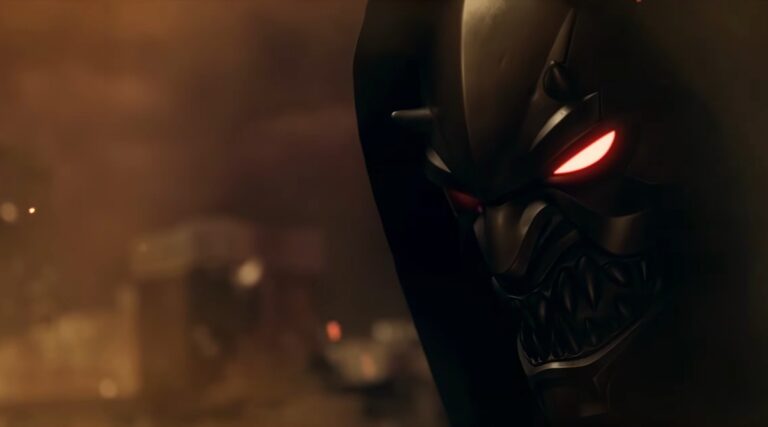
The creatures aren’t presented as conventional aliens. They’re ancient organisms associated with the deepest parts of Earth’s oceans. Their behavior suggests intelligence, but not necessarily human-style intelligence. They don’t explain themselves, negotiate or deliver speeches about their motivations.
Honestly, I think that’s one of the movie’s better choices.
Giving them a five-minute villain monologue would have destroyed a lot of the mystery.
Instead, their actions tell the story.
Humanity has polluted the oceans and treated the natural world as something endlessly exploitable. The creatures respond by effectively removing humans from the equation. The five-year lockdown becomes a kind of forced ecological quarantine.
And while that sounds horrifying from the family’s perspective, the movie keeps slipping in visual evidence that the planet itself is recovering.
Animals roam.
Human infrastructure decays.
Nature takes back spaces that once belonged to people.
The creatures aren’t necessarily trying to destroy Earth.
They’re trying to take it back.
That’s a much more uncomfortable idea.
The Flooded Seattle Ending Is About More Than Survival
The Seattle reveal works because the movie doesn’t suddenly give the family their old lives back.
There is no miraculous restoration of electricity. No military rescue. No helicopters arriving over the horizon. No convenient explanation that everything will return to normal.
Instead, Ann, Jason, Graham and Ruth emerge into a world they don’t recognize.
They eventually find a boat and rename it Cassidy, a bittersweet tribute to the dog they lost during the lockdown.
That little detail might actually be one of my favorite moments in the ending. After spending five years fighting to preserve their old life, they finally move forward by carrying a piece of it with them.
The boat isn’t taking them home.
There is no home anymore.
Who Says “Hello” on the Radio?
Then comes the final question.
While traveling across the flooded landscape, Jason uses the radio to send a message into the silence. He doesn’t know whether anyone is listening.
For several seconds, there’s nothing.
Static.
Then a voice answers.
“Hello?”
That’s it.
We don’t get a name. We don’t see the speaker. We don’t learn where the transmission came from.
And I absolutely prefer it that way.
The obvious implication is that the Delgados aren’t the only people who survived. Somewhere beyond the flooded Seattle region, other communities may have endured the same catastrophe.
But the radio message also prevents the ending from becoming completely bleak.
There are survivors.
There is communication.
There is still a human future.
It’s just not the future these characters expected.
The Last House Creatures Explained: What Are the Rain Monsters in the 2026 Netflix Movie?
What The Last House Is Really Saying
For me, the strongest part of the ending isn’t the flooded city or even the creatures. It’s the uncomfortable moral question underneath everything.
What if humanity isn’t automatically entitled to its old world?
The Delgados spend five years believing the creatures are cruel because they’ve taken away their freedom. From their perspective, that’s completely understandable. They’re prisoners in their own home, watching people die and slowly losing everything they love.
But Ruth introduces another perspective.
Maybe survival isn’t about defeating whatever threatens you.
Maybe it’s about learning when not to destroy it.
Jason’s decision to spare the creature doesn’t magically repair the world. It doesn’t resurrect the dead. It doesn’t bring Seattle back.
What it does is demonstrate that at least one human being can recognize another form of life as something other than an enemy.
That’s why the creatures leave.
And that’s why the final “Hello” feels so important.
The Delgado family isn’t returning to the old world. They’re entering a new one.
The flooded Seattle skyline is essentially a graveyard for the civilization they knew, while the radio transmission is the first tiny signal of whatever comes next.
And honestly, that’s a much more interesting ending than another generic apocalypse movie where everyone simply survives and starts rebuilding the same society that caused the problem in the first place.
The Last House leaves its characters alive, but it doesn’t let them go back.
They have to learn how to live in a world that no longer belongs entirely to humanity.
Maybe that’s the real twist hiding underneath all that rain.