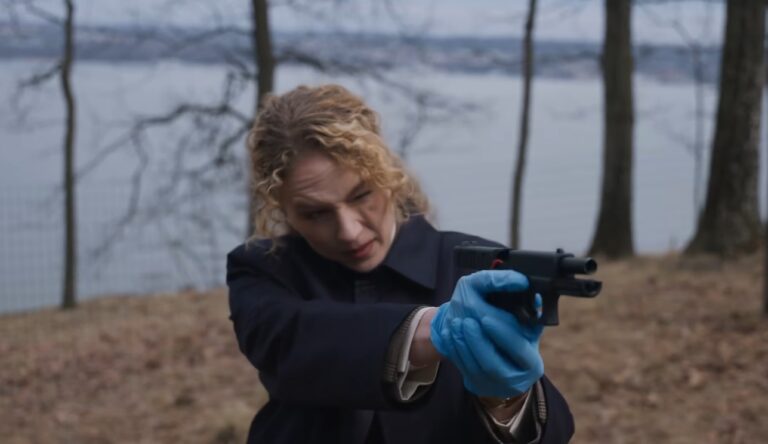
Blade Runner 2099 has one hell of a problem before it has even premiered: it has to follow Blade Runner and Blade Runner 2049. That is not a normal franchise burden. Those two movies practically defined their own corner of science fiction, and the second Denis Villeneuve film somehow managed to expand the mythology without turning it into disposable franchise material. So when Amazon Prime Video announced a new eight-episode limited series set another 50 years later, my first reaction was excitement followed almost immediately by suspicion.
Then the plot details started leaking, and suddenly the whole thing became much more interesting.
Blade Runner 2099 is not simply going back to neon streets, replicants, flying cars and detectives wandering around miserable Los Angeles. The biggest idea attached to the series completely reverses the social order established by the previous stories. Replicants are no longer the disposable workforce hiding from human authorities. They won. Humans are the ones struggling to survive.
That is a bold direction. It also creates a much harder story to screw up, because the writers now have to convince us that this enormous change happened naturally during the 50-year gap. If they pull that off, this could be the most ambitious Blade Runner story since 1982. If they don’t, it risks feeling like fan fiction with an Amazon budget.
Blade Runner 2099 Plot Explained Everything We Know About the Prime Video Sequel
The Blade Runner 2099 Plot Finally Turns the Franchise Upside Down
The basic premise is surprisingly simple. Blade Runner 2099 takes place five decades after Blade Runner 2049, in a Los Angeles that has gone through an enormous political and social transformation. Replicants have become the dominant power, occupying positions that once belonged almost exclusively to humans.
That means corporations, government institutions and law enforcement are now largely controlled by replicants. Humans have been pushed into an inferior position, with some attempting to survive outside the system and others trying desperately to blend into it.
I actually prefer this idea to another story about humans secretly exploiting replicants while one heroic replicant discovers the truth. We’ve already seen versions of that conflict. Blade Runner 2099 has a chance to ask the much uglier question: what happens when the oppressed group finally gets control?
And no, that doesn’t automatically make the replicants heroes. That’s exactly where the premise becomes interesting.
The new Los Angeles is reportedly being presented through a visual concept described as ‘Sunshine Noir.’ Instead of drowning everything in permanent rain and blue-orange neon, the series can use bright daylight, sterile architecture and oppressive heat to create its unease. Some fans already seem nervous about this change, and I understand why. The dirty, wet streets are practically part of Blade Runner’s DNA.
But copying the look of the 1982 movie forever would be even worse. A world controlled by replicants 100 years after the original film shouldn’t look exactly like 2019 Los Angeles with better CGI.
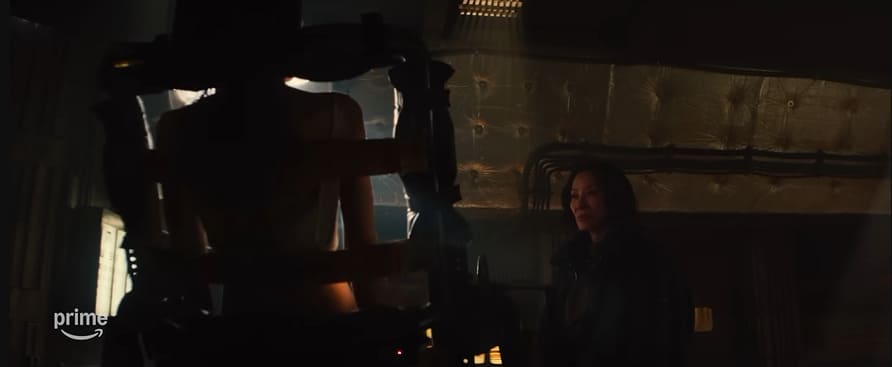
Olwen Could Be the Most Interesting Blade Runner in Years
Michelle Yeoh plays Olwen, and this is easily one of the casting choices I’m most curious about. Olwen is herself a replicant, but she’s also a Blade Runner working for the dominant replicant establishment. That single detail completely changes the meaning of the job.
Deckard operated in a world where replicants were hunted because humans considered them dangerous property. Olwen exists in the opposite reality. She hunts rogue replicants because her society needs order, and that distinction could become one of the strongest ideas in the entire series.
There is another problem hanging over her head: Olwen is approaching the end of her lifespan.
That immediately gives the character a ticking clock. She isn’t some unstoppable futuristic cop who can return for another season whenever the writers need her. Her body is failing, and she knows it. That puts her much closer to Roy Batty’s existential desperation than to the standard action-hero Blade Runner archetype.
Honestly, Michelle Yeoh is exactly the kind of performer this role needs. If the writing gives her enough room, Olwen could carry the emotional weight of the entire miniseries without needing constant exposition about what replicants are or why they matter.
Cora Is the Human Who Has Learned to Disappear
Hunter Schafer plays Cora, a human fugitive who has spent most of her life hiding behind false identities. She isn’t simply running from one organization or one detective. She has built her entire existence around pretending to be somebody else.
Her situation gets considerably more dangerous when she adopts the identity of a replicant.
That is where the partnership with Olwen becomes genuinely compelling. One character is a replicant pretending to represent a stable society while approaching the end of her life. The other is a human pretending to belong to the ruling class because she has no other way to protect herself and her brother.
They are both lying about who they are. That’s the kind of character setup I want from Blade Runner.
The best stories in this franchise have never really been about laser guns or futuristic vehicles. They’ve been about people who aren’t sure what they are, what they remember, or whether the identity imposed on them actually means anything. Cora and Olwen fit that tradition almost perfectly.
The Rogue Replicant Investigation Is Only the Surface
The reported story begins with Olwen and Cora investigating a criminal group made up of rogue replicants. On paper, that sounds almost too familiar. A Blade Runner tracking dangerous replicants is hardly revolutionary.
But apparently the investigation becomes much bigger than that.
The two women uncover a corporate and political conspiracy connected to the balance of power between humans and replicants. What begins as a criminal investigation eventually threatens the entire structure of Los Angeles.
This is where I have mixed feelings. Blade Runner works best when the big conspiracy stays personal. The moment everything becomes ‘the fate of humanity,’ I’m immediately less interested. Give me Olwen trying to understand what she leaves behind. Give me Cora desperately protecting her brother. Give me two people who don’t trust each other being forced to work together.
The political upheaval should matter because it destroys those characters’ lives, not because someone needs to deliver a giant speech about the future of civilization.
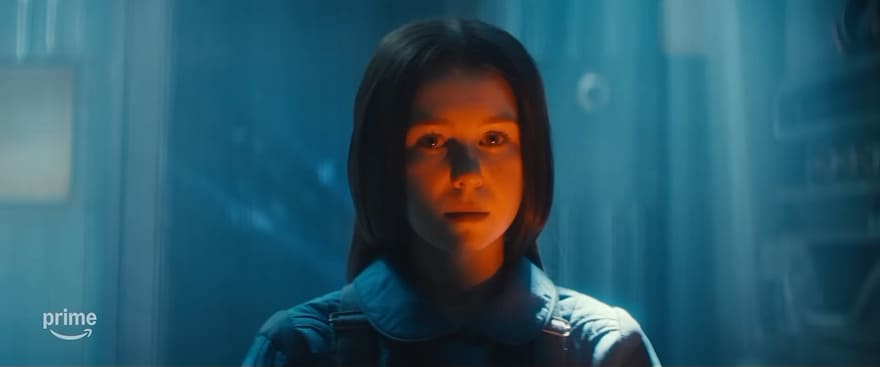
The Replicant Revolution Apparently Changed Everything
One of the biggest unanswered questions after Blade Runner 2049 was what would happen to the replicant underground. Freysa and the resistance were clearly laying the groundwork for something much larger, but the movie ended before we could see whether that movement would actually succeed.
Blade Runner 2099 appears to answer that question in a pretty dramatic way: the revolution won.
We still don’t have every detail about how the transition happened, and that’s probably a good thing. A 50-year historical gap gives the writers enormous room to invent wars, political movements, technological breakthroughs and disasters that transformed the world.
The important part is that the series shouldn’t treat the revolution as a simple victory. If replicants now control governments and corporations, someone had to build that system. Someone had to decide who gets power. Someone had to decide what happens to humans who refuse to accept the new order.
That’s where the story can get nasty in exactly the right way.
Why the ‘Sunshine Noir’ Look Could Actually Work
I understand why longtime fans are suspicious of the brighter visual direction. Blade Runner without endless rain sounds wrong at first. The original movie practically taught an entire generation what cyberpunk should look like.
But Blade Runner 2099 shouldn’t be Blade Runner 1982 again.
A sterile, sun-drenched Los Angeles could arguably make the world more disturbing. Rain hides things. Darkness hides things. Neon creates visual noise. Bright sunlight exposes everything, and a clean futuristic city can feel much more authoritarian than a filthy cyberpunk alley.
If the production actually uses that contrast intelligently, ‘Sunshine Noir’ could become more than a marketing phrase. Imagine immaculate buildings, beautiful public spaces and perfectly controlled streets where humans know they’re being watched. That sounds much more uncomfortable to me than another alley filled with steam and neon signs.
What Fans Are Getting Wrong About Blade Runner 2099
Some of the online discussion has already focused heavily on whether the series can match the visual style of the movies. That’s understandable, but I think it’s the least interesting question.
The real test is whether the writers understand why Blade Runner became Blade Runner.
- It isn’t the rain. It’s the feeling that technology has made life easier while making people less certain about themselves.
- It isn’t the neon. It’s the contrast between enormous technological progress and miserable human existence.
- It isn’t the replicant gimmick. It’s the uncomfortable question of whether an artificial person can be more human than the people who created them.
- It isn’t the detective plot. It’s the gradual collapse of certainty surrounding identity, memory and morality.
If Blade Runner 2099 understands those things, I don’t care if half the series happens under bright sunlight.
My Biggest Concern Is Also the Show’s Biggest Opportunity
Here’s the part I’m still not completely sold on: the premise is almost too convenient.
Replicants becoming the dominant species is a huge historical development. You can’t just mention it in episode one and expect viewers to accept it. I want to know what happened between 2049 and 2099. I want consequences. I want political fractures inside replicant society. I want humans who collaborated with the new regime. I want replicants who think their leaders have become exactly like the humans they replaced.
Most importantly, I don’t want a simplistic ‘humans bad, replicants good’ reversal.
That would completely miss the point.
The franchise has always been strongest when neither side gets a clean moral victory. Replicants can be sympathetic and terrifying. Humans can be cruel, pathetic, generous or brave. The whole thing becomes interesting precisely because the categories keep falling apart.
Blade Runner 2099 Story Details at a Glance
| Element | Reported Details |
|---|---|
| Setting | Los Angeles, 50 years after Blade Runner 2049 |
| Format | Eight-episode limited series |
| Olwen | Replicant Blade Runner played by Michelle Yeoh |
| Cora | Human fugitive played by Hunter Schafer |
| Main Conflict | Rogue replicants, political power and a wider conspiracy |
| Visual Direction | ‘Sunshine Noir’ rather than traditional rain-soaked cyberpunk |
Does Blade Runner 2099 Actually Need the Previous Movies?
Apparently not. The series is being positioned as a standalone story, which is a smart decision. I love Blade Runner lore, but I don’t want every episode spending twenty minutes explaining references to Deckard, K or Wallace Corporation just to prove that the writers did their homework.
At the same time, anyone who has watched the previous films should have more to chew on. The history of the replicants, the events of 2049 and the unresolved questions surrounding their rebellion should give the new story additional layers without becoming homework.
That’s the ideal situation: new viewers understand the story, longtime fans understand the implications.
My Verdict So Far
I’m cautiously excited about Blade Runner 2099, and that’s honestly more than I expected when the project was first announced. The idea of flipping the franchise’s power structure is strong, Michelle Yeoh as a dying replicant Blade Runner is an excellent hook, and Cora’s identity crisis gives the story a personal angle instead of making it another giant sci-fi spectacle.
But I’m not giving Amazon a free pass just because the words ‘Blade Runner’ are attached to it.
The franchise deserves better than expensive visuals wrapped around shallow philosophy. If the series treats the human-versus-replicant reversal as nothing more than a cool plot twist, it will collapse pretty quickly. If it actually explores what happens when yesterday’s victims become tomorrow’s rulers, things could get fascinating.
And that’s the version I want to see.
Blade Runner 2099 has the opportunity to make the franchise uncomfortable again. That’s a much better goal than simply making another beautiful cyberpunk show. Give me characters who make terrible choices for understandable reasons. Give me a Los Angeles that feels unfamiliar. Give me a replicant government that isn’t automatically evil or benevolent. Give me Olwen staring at the end of her life while the society she serves decides what her existence was worth.
If the series goes that far, I’ll forgive it for the lack of rain.