There is one part of The Lord of the Rings mythology that has always fascinated me more than it probably should: the Nazgûl.
Not because they are the loudest villains in Tolkien’s world. They aren’t. We barely know who most of them were. They arrive in The Lord of the Rings already broken, already terrifying, already reduced to those unforgettable black figures screaming through the night. Tolkien deliberately keeps their pasts in the shadows.
And honestly, that makes them even creepier.
The Rings of Power Season 3 has an opportunity to change that. Instead of introducing the Nine as fully formed Ringwraiths, the series is reportedly going much further back and showing what these men looked like before Sauron completely erased their identities.
That is the version of the Nazgûl story I’ve been waiting to see.
Because watching nine ordinary rulers slowly convince themselves that accepting Sauron’s gift is a good idea sounds infinitely more interesting than simply watching nine villains put on rings and suddenly become monsters.
Neagley Season 1 Release Date 2026: Cast, Plot, and Everything to Know About the Reacher Spin-off
Season 3 Is Going After the Darkest Part of the Second Age
The next chapter of The Rings of Power is expected to move deeper into the consequences of Sauron’s manipulation. Eregion has fallen, the political landscape of Middle-earth is becoming increasingly unstable, and the forging of the One Ring is pushing the story toward the mythology audiences already know.
But the Nine Rings might be the most disturbing part of the whole storyline.
The genius of Tolkien’s original concept is that Sauron doesn’t need to conquer every kingdom by force. He gives powerful men exactly what they think they want.
- More influence.
- More wealth.
- More authority.
- More time.
And then he takes everything.
That’s a much nastier form of evil than simply sending an army through the gates.
The men who eventually become the Nazgûl don’t have to believe they’re serving evil. In fact, that’s probably the entire point. They can believe they’re saving their kingdoms, protecting their people, defeating rivals or reclaiming power that was stolen from them.
That makes their eventual transformation genuinely tragic.

What Exactly Is a Nazgnagôl?
One of the more intriguing ideas associated with Season 3 is the introduction of the term Nazgnagôl, a designation for the men during their transition toward becoming the Ringwraiths we know.
The distinction matters.
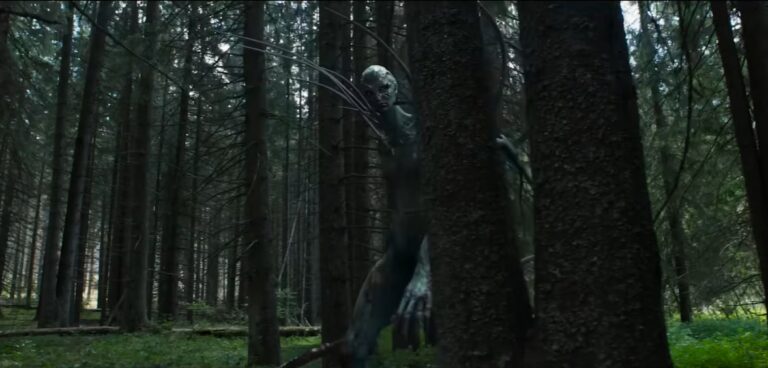
These aren’t yet the silent, spectral servants from The Lord of the Rings. They are still flesh and blood. They still have ambitions, personalities and political identities. They can ride horses, wear armor and interact with the world as ordinary men.
But the rings are already changing them.
The terminology reportedly draws on Tolkien’s Black Speech, with the idea of a ‘ring-servant’ describing exactly what these characters are becoming.
And I actually love this approach.
It gives the transformation a middle stage. Instead of:
Man → Ring → Nazgûl
we get something much uglier:
Man → Powerful Ring-bearer → Corrupted ruler → Nazgnagôl → Nazgûl
That slow progression gives the writers room to make the downfall hurt.
Khamûl Could Be the Key to the Whole Story
The biggest confirmed piece of this puzzle is Khamûl the Easterling, played by Zubin Varla.
For Tolkien fans, Khamûl is a particularly exciting choice because unlike most of the Nine, he actually has a name in Tolkien’s writings. He is associated with the East and is traditionally described as second only to the Witch-king among the Ringwraiths.
His connection to Rhûn also gives Season 3 a chance to finally pay off one of the show’s more mysterious story threads.
And this is where I think The Rings of Power could get surprisingly good.
Khamûl doesn’t need to start out as a cartoon villain. In fact, he shouldn’t.
Imagine being a ruler watching your territory collapse while another supernatural power threatens everything you’ve built. Then Sauron arrives and doesn’t immediately demand your loyalty. Instead, he offers a solution.
A ring.
Power.
A chance to reclaim what you lost.
Of course you’re tempted.
That’s the trap.
Sauron’s Best Weapon Is Not the Ring — It’s the Lie
The most interesting thing about Sauron has always been his ability to make terrible ideas sound reasonable.
That’s why his relationship with the future Nazgûl could become one of the strongest elements of Season 3.
Khamûl might genuinely believe he’s making a political decision. He isn’t kneeling before darkness because he wants to become a monster. He wants to win.
And that distinction is everything.
Sauron doesn’t necessarily need to tell him, ‘Wear this and become my slave.’
He can tell him:
‘Wear this and become strong enough to protect your people.’
That’s the kind of manipulation that works.
The future Ringwraiths can remain the heroes of their own stories for a surprisingly long time. Every terrible decision can have a justification. Every act of violence can be explained as necessary.
Until eventually there is nothing left to justify.
The Gollum Comparison Makes Perfect Sense
Actor Zubin Varla has compared the transformation to Gollum’s gradual corruption, and that is probably the best comparison possible.
The One Ring didn’t turn Sméagol into Gollum in five minutes.
It wore him down.
It fed his obsession.
It rewarded his worst instincts.
It isolated him.
The Nine Rings can work in a similar way.
At first, the benefits are intoxicating. The wearer becomes more powerful and influential. His lifespan stretches unnaturally. His wealth and status increase. His perception of the world changes as he begins to experience things ordinary men cannot.
What’s the problem with that?
The problem is that the price isn’t immediately visible.
That’s where I expect Season 3 to become genuinely uncomfortable.
The future Nazgûl should not look like monsters right away. They should look like successful men who have started becoming strangely wrong.
Maybe they stop sleeping.
Maybe their faces become increasingly unnatural.
Maybe they begin seeing things nobody else can see.
Maybe the people around them notice that their king hasn’t aged while everyone else has.
Those little details would make the transformation much more disturbing than simply throwing a ghostly cloak over them.
Who Are the Other Eight?
This is where the fandom is going to have an absolute field day.
Tolkien never provided detailed identities for most of the Nine. That leaves The Rings of Power with enormous creative freedom.
And fans have already started connecting dots.
Kemen
Kemen remains one of the most obvious candidates.
As Pharazôn’s son, he already has access to privilege, political power and an enormous sense of entitlement. His personality also makes him extremely vulnerable to Sauron’s style of manipulation.
Give Kemen a ring and tell him that it can make him powerful enough to escape living in his father’s shadow?
Yeah. I can see that happening.
Theo
Theo is a much more interesting possibility because his story could actually be tragic.
He’s already experienced loss, violence and the temptation of dark power. His connection to the mysterious sword hilt in the earlier seasons made him one of the characters fans immediately associated with darker forces.
If Theo eventually accepts a ring because he believes he needs more strength to protect others, that would hurt far more than simply making him evil.
I’d rather see that.
The Unknown Kings
The remaining candidates could also come from places the series has only begun exploring.
Harad, Rhûn, Umbar and Númenórean factions offer plenty of room for new rulers and warlords.
And with a significant time jump, the show can introduce characters who weren’t previously established without making the world feel artificially crowded.
That may actually be the smartest route.

The Nine Should Be Tragedies, Not Just Boss Fights
This is the part I’m most interested in.
We’ve already seen what the Nazgûl look like at the end of their journey. We know where they end up.
The suspense isn’t really what happens to them.
It’s how they allow it to happen.
That’s a much harder story to pull off.
If Season 3 simply has nine arrogant men receive rings and become evil, it’ll feel painfully predictable. But if each man has a believable reason for accepting Sauron’s gift, suddenly the story becomes something much darker.
- One wants revenge.
- One wants to protect his kingdom.
- One wants immortality.
- One wants political influence.
- One wants to defeat a rival.
- One wants to save his family.
And Sauron can give every single one of them exactly what they ask for.
That’s the horror.
Why the Nazgûl Story Could Change The Rings of Power
For all the controversy surrounding The Rings of Power, the show has always had one enormous advantage: it is playing in a period of Tolkien’s mythology where there are huge gaps to fill.
The Nazgûl are one of those gaps.
Season 3 can take characters who eventually become some of Middle-earth’s most terrifying figures and remind us that they were once human beings with names, families, kingdoms and ambitions.
That’s potentially far more powerful than another giant battle sequence.
I want to see the moment when a future Ringwraith realizes something is wrong.
I want to see him try to remove the ring.
I want to see him discover that he can’t.
And most importantly, I want to see Sauron watching from the shadows, completely aware that the trap has already closed.
That is the Nazgûl origin story worth telling.
If The Rings of Power actually commits to that slow, ugly transformation instead of rushing toward the familiar black-robed monsters, Season 3 could finally give these legendary villains something they have almost never had on screen:
a human story.
And considering how we already know it ends, that’s what could make it heartbreaking.