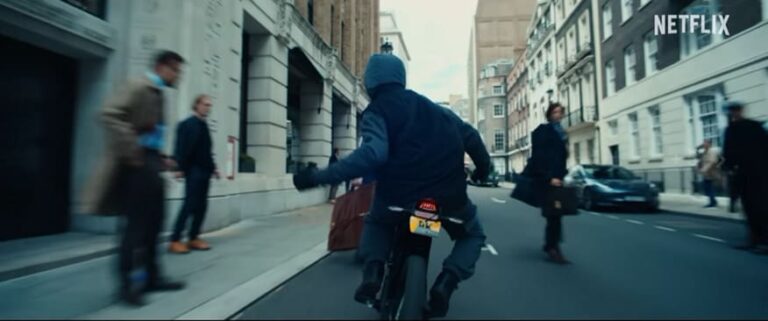
The survival horror genre may be getting one of its nastiest cinematic reinventions yet. Zach Cregger’s Resident Evil reboot is scheduled to hit theaters on September 18, 2026, and everything about the project suggests that this version is less interested in untangling the franchise’s old movie continuity and more interested in making Raccoon City feel dangerous again. Early test-screening chatter has even compared its approach to a horror-flavored Mad Max: Fury Road — a strange comparison at first, but one that makes more sense once you look at the reported pace and physicality of the film.
Cregger is not simply filming one of the Capcom games scene for scene. The story takes its own route, yet it keeps its hands firmly on the foundations of Resident Evil lore. At the heart of it sits the Umbrella Corporation, along with three scientists whose secret work helps turn an already bad night in Raccoon City into something much worse. They are not the familiar names fans have spent years arguing about. That is probably for the best.
For months, horror communities, Reddit discussions, YouTube theory channels, and fan forums have been picking apart every trailer frame, poster, production image, and alleged behind-the-scenes leak. The biggest question has been what Umbrella’s Science Division is actually doing in this new 2026 timeline. Instead of leaning on William Birkin, Albert Wesker, or other established corporate figures, the film introduces Dave, Pauline, and Carl, played by Zach Cherry, Kali Reis, and Paul Walter Hauser.
Those three characters appear to be much more than background scientists waiting for the monsters to break through the door. Their research, their conflicting attitudes toward Umbrella, and their reactions to the outbreak seem to be directly tied to Bryan’s nightmare. To understand where this story is going, you have to understand the people waiting for him beneath Raccoon City.
Resident Evil 2026 Plot Summary: Leaks, Rumors, and What to Expect From Zach Cregger’s Horror Reboot
Bryan’s Delivery Leads Straight Into Umbrella’s Trap
The main character is Bryan, played by Austin Abrams, and there is something deliberately ordinary about his setup. He is a medical courier, not a trained soldier or one of the legendary survivors from the games. His job sounds simple enough: deliver a high-priority package to a remote hospital in Raccoon City.
Of course, this is Resident Evil, so nothing stays simple for long. Bryan has no idea that his delivery is connected to an active viral disaster, and the package turns out to be the final piece of a much larger puzzle. Over the course of a single night, Raccoon City collapses into chaos, forcing Bryan to push through mutated creatures and increasingly hostile surroundings in order to reach an underground Umbrella laboratory.
That laboratory becomes the real center of the story. Somewhere beneath the city are the scientists responsible for the research, and they possess information that could potentially lead to a cure or stabilizing agent. They may also be sitting on the knowledge that could make the outbreak even worse. Bryan arrives looking for answers, but what he finds is a group of people who have already lost control of the thing they created.
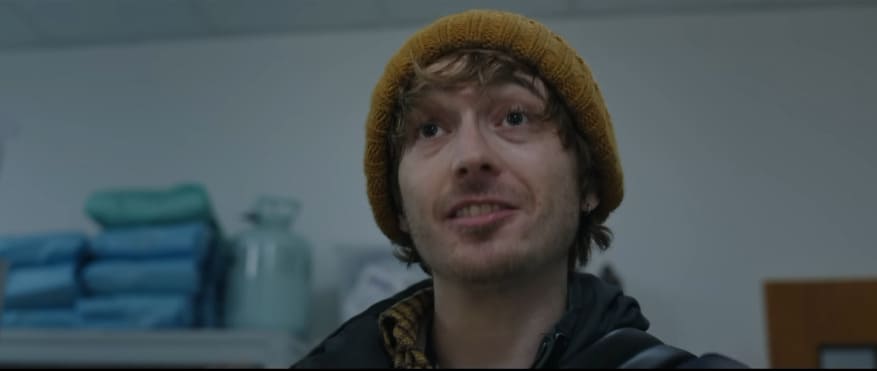
Who Are Umbrella’s New Scientists?
Dave — Zach Cherry
Dave, played by Zach Cherry, appears to be the most recognizable kind of Umbrella employee: brilliant enough to work inside the system, but nowhere near powerful enough to control it. That distinction matters. He does not seem to be written as some cartoon villain who spends the movie laughing beside a bubbling test tube.
Fan speculation has instead painted Dave as a mid-level corporate researcher who gradually became involved in Umbrella’s bioweapons program without fully understanding how catastrophic the project could become. He is intelligent, capable, and complicit, but possibly not prepared for what happens when the theories on his computer screens become flesh-and-blood monsters.
That makes his role especially interesting once the infection reaches the upper levels of the facility. Dave is trapped inside the laboratory while the containment systems begin to fail around him. The corporate procedures that were supposed to protect everyone suddenly mean very little. His panic becomes a useful window into the horror of realizing that the company you trusted has built a facility that cannot actually protect its own scientists.
Pauline — Kali Reis
Pauline brings a very different energy to the group. Kali Reis was cast in the role after the character, according to early script information, was originally written for a male actor. The change does more than alter the casting sheet. Reis gives Pauline a hard, physical presence that makes her feel closer to a field operative than a traditional laboratory researcher.
The character is reportedly connected to an ex-military or tactical background, which immediately separates her from Dave and the more academic side of Umbrella’s operation. That background has fueled plenty of fan theories. One popular idea is that Umbrella brought Pauline in specifically to supervise field testing of mutated bioweapons or deal with containment failures when the science stopped behaving as expected.
And that is where the character dynamic gets interesting. Dave is overwhelmed by what is happening, while Pauline is apparently much better equipped to make decisions under pressure. The two do not necessarily want the same thing. As the surviving scientists debate whether the research should be destroyed or carried out of the facility, Pauline’s hardened approach is likely to collide with Dave’s growing fear and Carl’s obsession.
Carl — Paul Walter Hauser
Then there is Carl, played by Paul Walter Hauser, and this is the scientist I would keep the closest eye on. Hauser has a knack for playing people who are difficult to read, slightly strange, and often far more complicated than they first appear. Carl seems tailor-made for that kind of performance.
According to widespread rumors, Carl is the chief scientific mind behind this particular Raccoon City Umbrella branch. His interest in the virus goes well beyond finding a way to stop it. He is reportedly fascinated by its evolution and sees the mutations not as an uncontrollable tragedy, but as a scientific breakthrough that could change everything.
That attitude puts him firmly on the darker side of Umbrella’s philosophy. The monsters are not failures to Carl. They are results. Every mutation is another piece of data, another step in understanding what the virus can become. If the reports about his character are accurate, Carl may be the person who understands exactly how dangerous the experiments are and simply does not care.
Behind-the-scenes material and alleged production leaks have only added fuel to the speculation. Images reportedly show a heavily bloodied Carl standing beside director Zach Cregger on a set that resembles the sterile, cold look of the NEST laboratories from Resident Evil 2. It is a small visual connection, but the atmosphere matters here. Umbrella’s laboratories have always worked best when they look clinical enough to be believable and sinister enough to make you wonder what happened five minutes before the camera arrived.
The Outbreak Is Familiar, But This Isn’t the 1998 Disaster
One of the smarter choices in this version of Resident Evil is its use of a parallel timeline. The outbreak takes place alongside the classic 1998 Raccoon City disaster rather than simply retelling it. That gives Cregger room to borrow the visual language of the 1990s without being trapped by the exact sequence of events fans already know.
That retro atmosphere seems to be important to the film. But the bigger selling point may be the practical effects. Instead of filling the movie with computer-generated monsters, the production reportedly relies heavily on large practical effects and detailed puppetry. For a franchise built around creatures that should feel physical, that choice could make a huge difference.
Social-media reactions to the approach have been largely positive, particularly among fans who want the underground laboratory to feel cramped and filthy rather than like a digital effects showcase. Practical creatures have weight. They occupy the same space as the actors. You can feel that difference, especially in a horror movie where the fear depends on believing that something is actually standing ten feet away from the character.
And the scientists are not protected simply because they work for Umbrella. Quite the opposite. The creatures created by their research eventually turn the laboratory against them. Early test-screening rumors also point toward some extremely graphic body-horror sequences, suggesting that Cregger is willing to push the physical side of the outbreak considerably further than the cleaner action-horror tone of some previous adaptations.
Bryan’s Mutation Could Change the Entire Ending
The ending is where the online speculation gets particularly ugly. One of the most discussed leaked plot points involves Bryan finally reaching the scientists after surviving the facility’s maze-like corridors. The journey reportedly involves puzzle-locked areas, another obvious nod to the structure of the games, with Bryan fighting his way deeper underground until he finally reaches the Umbrella team.
But by the time he gets there, the potential cure or stabilizing agent is apparently completed too late. The timing is cruel, and it fits the franchise far better than a neat heroic escape would. Bryan does not simply walk away after delivering the package. Instead, he begins undergoing a rapid and grotesque mutation.
The transformation reportedly turns him into a monstrous creature with a huge, grotesque tentacle arm. Suddenly, the ordinary courier who spent the entire night trying to survive becomes the biggest threat inside the facility. It is the kind of nasty reversal that makes the whole setup click into place.
And then Bryan turns on the scientists.
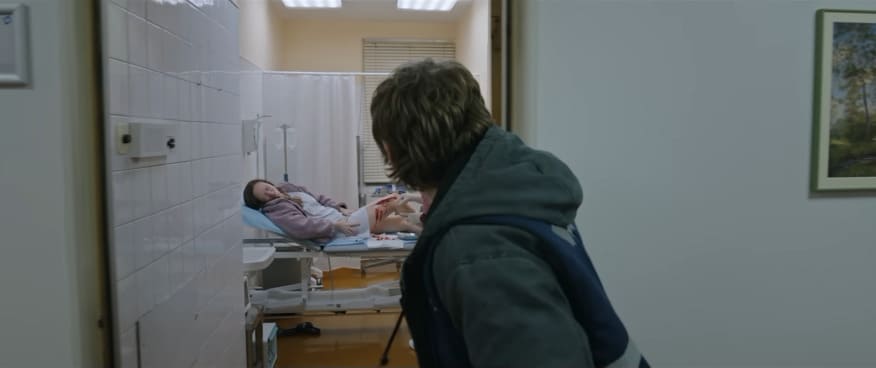
The people who created the research, manipulated the virus, and helped push the project beyond ethical limits are confronted by the biological horror they helped produce. The climax reportedly becomes a frantic confrontation between the mutated protagonist and the Umbrella researchers, with corporate greed finally receiving an answer that has nothing to do with lawsuits, investigations, or public exposure. The virus answers for them.
| Character | Actor | Reported Role |
|---|---|---|
| Dave | Zach Cherry | Umbrella researcher overwhelmed by the outbreak |
| Pauline | Kali Reis | Tactical scientist with possible military experience |
| Carl | Paul Walter Hauser | Chief scientific mind behind the Raccoon City project |
| Bryan | Austin Abrams | Medical courier caught in the outbreak |
Why the Umbrella Scientists Matter
The most appealing part of this setup is that the movie is not relying entirely on the familiar faces that have dominated Resident Evil discussions for decades. Bryan is an ordinary man thrown into an extraordinary disaster, while Dave, Pauline, and Carl represent three different ways of dealing with Umbrella’s nightmare.
- Dave appears to represent the employee who realizes too late that he has helped build something monstrous.
- Pauline brings a tactical mindset to a scientific crisis and may understand containment better than anyone else in the room.
- Carl seems to embody the dangerous ambition at the center of Umbrella’s research, where scientific discovery matters more than human life.
That combination gives the underground laboratory its own internal conflict instead of making the scientists interchangeable exposition machines. They have different priorities, and once the outbreak gets loose, those differences become a liability.
There is also something fitting about making Bryan the person who ultimately threatens them. Umbrella spends so much of the franchise treating ordinary people as disposable variables. Here, the disposable variable becomes the monster that walks back through the laboratory door.
Resident Evil 2026 Has the Right Kind of Horror Setup
If the reported details hold up, Resident Evil has finally found a way to make the Umbrella Corporation frightening without turning it into another superhero-style action villain. The emphasis appears to be on isolation, dread, biological horror, claustrophobic environments, and the ugly consequences of scientific ambition.
That is exactly where the franchise is strongest. The best Resident Evil stories do not need a character firing a rocket launcher every five minutes to create tension. Sometimes a locked laboratory door, a failing containment system, and something breathing on the other side are enough.
Cregger’s decision to create new scientists rather than simply recycle the established cast could also pay off. Dave, Pauline, and Carl have no decades of game history weighing them down, which means audiences can judge them entirely by what they do in this story. Carl’s obsession, Pauline’s pragmatism, and Dave’s fear could become just as important to the horror as the creatures themselves.
The film is set to arrive in IMAX theaters on September 18, 2026. If the practical effects, body horror, underground laboratory setting, and rumored ending all survive the final cut, this could be a very different kind of Resident Evil movie. Not a greatest-hits version of the games. Not another attempt to explain the franchise’s tangled cinematic history. Just one awful night in Raccoon City, a courier carrying the wrong package, and three Umbrella scientists discovering that their own experiment has finally come looking for them.