There are movie twists that make you sit up because you genuinely didn’t see them coming, and then there are twists that make you mentally replay the entire film from the beginning. Wild Horse Nine belongs firmly in the second category.
Martin McDonagh’s 2026 CIA thriller looks, at first, like a strange Cold War adventure stranded on Easter Island. John Malkovich plays Chris, a veteran intelligence operative who has clearly seen too much and slept too little, while Sam Rockwell’s Lee is the younger agent still buying into the mythology of the job. Steve Buscemi’s MJ sits above them, delivering orders with the kind of cheerful weirdness that immediately makes you wonder what he’s not telling them.
And then the movie pulls the rug out.
What I really like about the Wild Horse Nine plot twist is that it doesn’t exist just to shock the audience. Once the truth comes out, practically every conversation between Chris and Lee suddenly feels different. Little complaints, awkward pauses, jokes that seemed throwaway — they start looking like pieces of a much uglier puzzle.
The Setup: Two CIA Agents Sent to the Middle of Nowhere
The story begins in Santiago in the summer of 1973, with Chile heading toward one of the most consequential political crises of the Cold War.
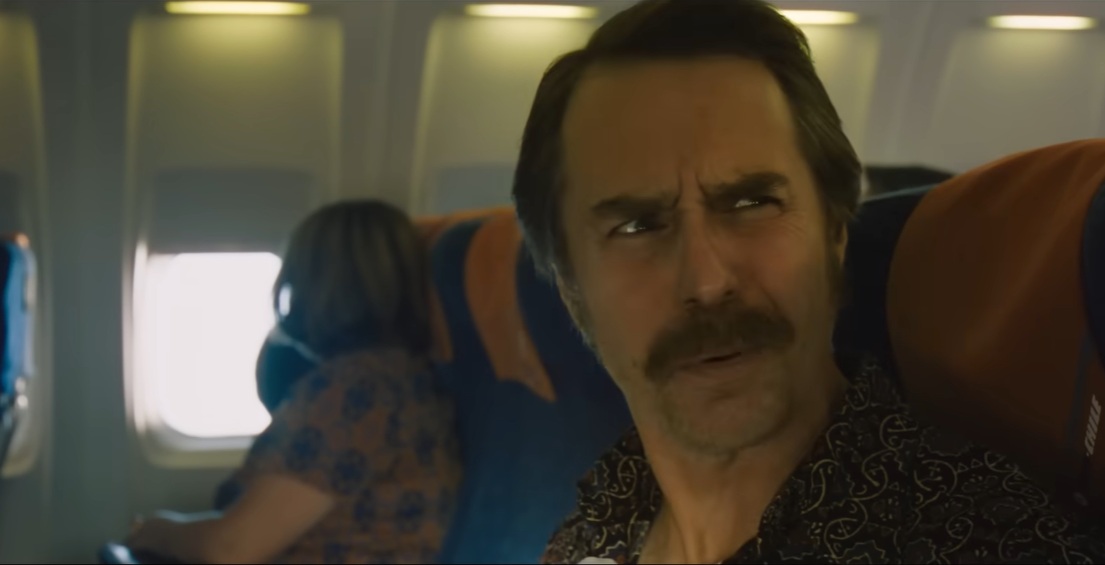
Chris and Lee are CIA operatives working under MJ while the agency helps prepare the ground for the military coup against Salvador Allende. But instead of keeping these two anywhere near the political action, MJ sends them thousands of miles away to Rapa Nui, better known as Easter Island.
At first, it feels almost absurd.
Lee seems to think they’ve drawn the easy assignment. He complains about missing the real action while trying to make the whole thing sound like an exotic vacation. Chris isn’t buying it. He’s been in the intelligence business too long to believe that an order from MJ is ever quite as simple as it sounds.
Their supposed responsibilities involve monitoring communications, watching the island and making sure nothing interferes with the operation taking place on the mainland.
Except something much more interesting happens.
Chris starts spending time with two rebellious local students, played by Mariana di Girolamo and Ailin Salas. They’re openly hostile toward the political forces Chris represents, and their presence forces him to confront something he’s spent decades avoiding: the human cost of the work he’s done.
That’s where Wild Horse Nine becomes much more than a spy story.
Chris Is Finally Starting to Understand What He’s Done
Malkovich’s Chris is probably the character that stayed with me most.
He’s not suddenly transformed into a good man. That’s what makes his arc work. He’s still responsible for horrible things. He’s still spent decades working inside a machine designed to manipulate governments and destroy people considered politically inconvenient.
But he’s tired.
The island gives him enough distance from Washington and Santiago to actually think about his life. The students aren’t abstract political enemies anymore. They’re young people with opinions, fears and futures of their own.
And suddenly Chris is looking at them and seeing the people his career has always reduced to names on files.
Meanwhile, Lee is going in the opposite direction.
He wants to succeed.
He wants recognition. He wants the promotion, the stable future and the approval that comes from being the guy who follows orders when everyone else starts asking uncomfortable questions.
That contrast between the two men is basically the engine of the entire movie.
| Character | What They Represent | Where They End Up |
|---|---|---|
| Chris | Guilt, experience and moral awakening | Begins questioning the system |
| Lee | Loyalty, ambition and obedience | Forced to choose between orders and conscience |
| MJ | Institutional power | Treats both men as disposable assets |
| The Students | The human cost of political ideology | Become witnesses to the agents’ collapse |
Then Wild Horse Nine Drops Its Real Bombshell
Here’s the part that completely changes the movie.
Chris wasn’t sent to Easter Island to protect the Chilean operation. He was sent there to die.
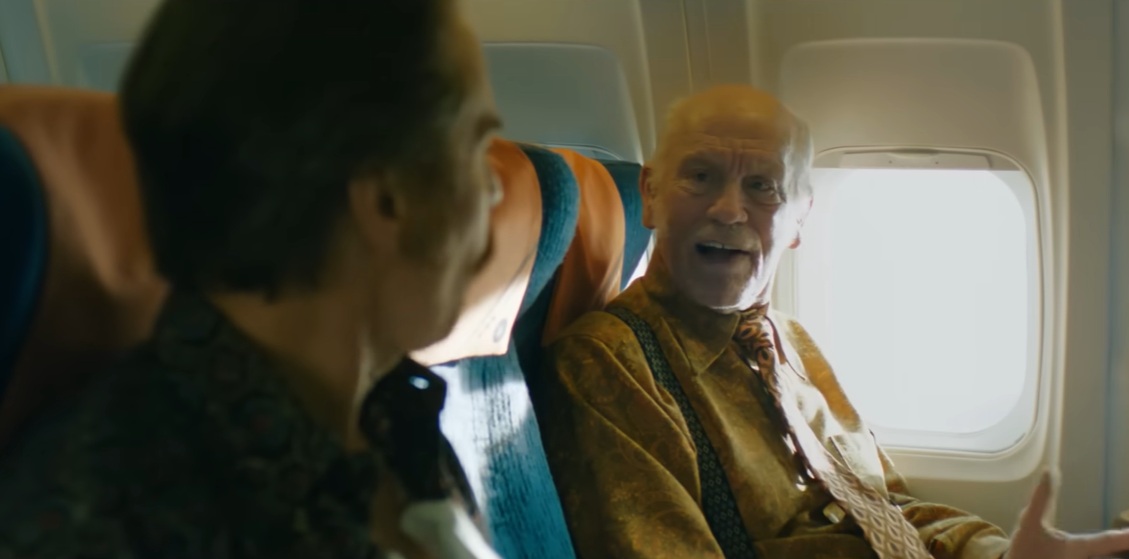
MJ has already decided that Chris has become a liability.
After decades of black-ops work, Chris knows too much. Worse, he’s beginning to talk about it. His guilt is becoming unpredictable, and from MJ’s perspective, an intelligence officer who starts developing a conscience after decades of classified operations is not a tragic hero.
He’s a security problem.
The remote island isn’t a strategic posting.
It’s a graveyard.
And Lee isn’t there by accident either.
This is where the movie gets nasty.
Chris thinks Lee has been dragged into the situation with him. He sees his younger partner as another victim of MJ’s scheme.
Lee already knows.
He was sent there specifically to kill Chris.
That revelation completely changes their relationship. All those arguments suddenly carry another meaning. Lee’s frustration about being away from Santiago wasn’t necessarily frustration at all. His constant bickering with Chris helped maintain the illusion that they were simply two irritated colleagues stuck together on a miserable assignment.
Lee’s real job was to keep Chris comfortable until the coup succeeded.
Then pull the trigger.
The Best Part? Lee Isn’t a Secret Villain
This is where I think McDonagh avoids the obvious route.
Lee could have been written as some cartoonishly evil CIA killer. Instead, he’s genuinely attached to Chris.
That’s what makes the final confrontation uncomfortable.
Chris isn’t discovering that his enemy has been pretending to be his friend. He’s discovering that his friend has agreed to become his executioner.
MJ has reportedly offered Lee a promotion and financial security for Marge in exchange for completing the assignment. It’s the kind of deal that sounds incredibly attractive when you’re sitting in an office and the person you’re supposed to eliminate is just a name on a piece of paper.
It’s very different when you’re standing in front of that person.
Especially when that person practically raised you professionally.
The Moai Scene Is Where Everything Collides
The confrontation beneath the Moai statues is probably the sequence I’d expect people to be discussing for years.
There isn’t some huge superhero-style showdown. Chris doesn’t suddenly become an action hero. Instead, he talks.
And honestly, that feels much more threatening.
He tells Lee what the agency will eventually do to him.
They will replace him.
That’s the ugly truth Chris finally understands. Lee thinks obedience will buy him security, but Chris knows the institution doesn’t reward loyalty forever. It consumes useful people and replaces them when they’re no longer useful.
Chris spent his entire career believing he was one of the people controlling the machine.
Now he realizes he was always another component inside it.
That’s the tragedy.
What the Ending Actually Means
The ending deliberately refuses to give us the satisfying answer we’d normally expect from a thriller.
Lee hesitates.
The CIA cleanup team arrives.
The students become involved.
Violence finally erupts, but there is no clean victory. Nobody walks away feeling like they’ve beaten the system.
And that’s exactly the point.
The coup succeeds back in Chile while these characters are destroying one another on a remote island.
The contrast is brutal.
Thousands of miles away, history is being rewritten through military force. On Rapa Nui, Chris, Lee and the students are dealing with the personal consequences of that same machinery.
The Moai remain standing.
The spies don’t.
That image says almost everything.
Why the Twist Works So Well
For me, the biggest strength of the Wild Horse Nine ending is that the twist isn’t actually about discovering a secret.
It’s about discovering what the characters already are.
Chris discovers that the organization he served doesn’t need him anymore.
Lee discovers that loyalty can turn into complicity.
MJ never has that revelation because he doesn’t need one. He’s already completely comfortable with the logic of disposable people.
And the students? They’re the only characters who never bought into the idea that these men were heroes in the first place.
That’s why their presence matters so much.
The Three Layers of the Twist
- The political layer: The CIA operation is part of the wider Cold War struggle surrounding Chile.
- The personal layer: Chris is betrayed by the man he considers his protégé.
- The existential layer: Both men discover that the system they’ve served has no loyalty to them.
The third one is the killer.
Wild Horse Nine Isn’t Really About Who Pulls the Trigger
A conventional thriller would make the big question: Will Lee kill Chris?
McDonagh makes the more interesting question: What happens to a person who realizes that following orders has destroyed his ability to live with himself?
That’s much harder to answer.
Even if Lee refuses to kill Chris, the damage is already done. He knows what he agreed to do. Chris knows that Lee agreed to do it. Their relationship can never return to what it was.
And if Lee does kill him, he becomes exactly what Chris warned him about.
Either way, there is no clean escape.
That’s why the ending feels so bleak without becoming empty.
My Take on the Wild Horse Nine Plot Twist
I went into this expecting a cynical Cold War spy movie with McDonagh’s usual acidic dialogue and eccentric characters. What I wasn’t expecting was how aggressively the movie would turn the CIA mission inward.
The Easter Island setting is especially effective because it makes the whole thing feel slightly unreal. You’ve got these enormous ancient statues watching two modern intelligence officers argue about loyalty, politics and murder while an entire country is approaching catastrophe.
It’s darkly funny.
It’s also incredibly sad.
And the fact that Chris finally develops a conscience at exactly the moment the agency decides he has to disappear is classic McDonagh cruelty.
If there’s one thing I think audiences will argue about, it’s whether Lee’s hesitation represents genuine redemption or simply fear. Personally, I don’t think the movie gives us enough evidence to call it redemption. He’s already crossed a line by accepting the assignment.
His hesitation just proves that there is still a human being underneath the uniform.
That’s not the same thing as forgiveness.
Wild Horse Nine seems most interested in that uncomfortable space between those two ideas. You can regret what you’ve done and still be responsible for it. You can love someone and still betray them. You can serve a powerful institution for decades and discover, far too late, that the institution never loved you back.
And those Moai statues?
They don’t care who won.
They’ve seen people come and go for centuries.
By the time the credits roll, that’s probably the most unsettling thing about the entire movie.