There are superhero movies that feel like products, and then there are movies that feel like someone spent years trying to make a very personal idea become real. Legend of the White Dragon belongs firmly in the second category for me.
The film has finally reached select theaters through Well Go USA Entertainment on August 28, 2026, arriving on National Power Rangers Day. That date alone gives the movie an extra emotional layer, but knowing that this is Jason David Frank’s final on-screen performance makes almost every scene involving Erik Reed hit differently.
Frank passed away in November 2022, long before audiences could see the finished film. The production had already been through years of delays, including the COVID-19 pandemic, industry strikes, and the enormous challenge of completing a project whose leading man was suddenly no longer here.
So when the credits finally rolled, I wasn’t thinking only about whether the ending worked as a superhero story. I was thinking about what the movie was trying to leave behind.
And yes, the ending is more complicated than it first appears.
What Really Happened to Erik Reed?
The story begins three years after an event known as Dark Day, the disaster that completely changed Erik Reed’s life.
Erik, operating as the White Dragon, fought the ancient evil known as Ashtagor. He won the battle, but the victory came at an enormous cost. 1,263 civilians were killed, Virtuo City was devastated, and the public quickly stopped seeing Erik as a hero.
Instead, he became the person they blamed.
His identity was exposed, his reputation collapsed, and Erik was forced into hiding. For more than three years, he lived as a federal fugitive while trying to protect the people closest to him.
That’s where I think the movie’s central idea becomes much more interesting than the usual “fallen hero gets his powers back” storyline.
Erik doesn’t really want to become the White Dragon again because he misses being powerful. He wants his life back.
He wants to see his wife. He wants to be there for his daughter. He wants to stop running.
The broken White Dragon crystal becomes a physical representation of that situation. Its two halves are separated, just like Erik’s old life has been torn apart.
When Erik returns to Virtuo City, he joins forces with people from his past to find the missing pieces and restore the crystal. Naturally, things become considerably more complicated once Dragon Prime enters the picture.
Dragon Prime’s Identity Changes the Entire Story
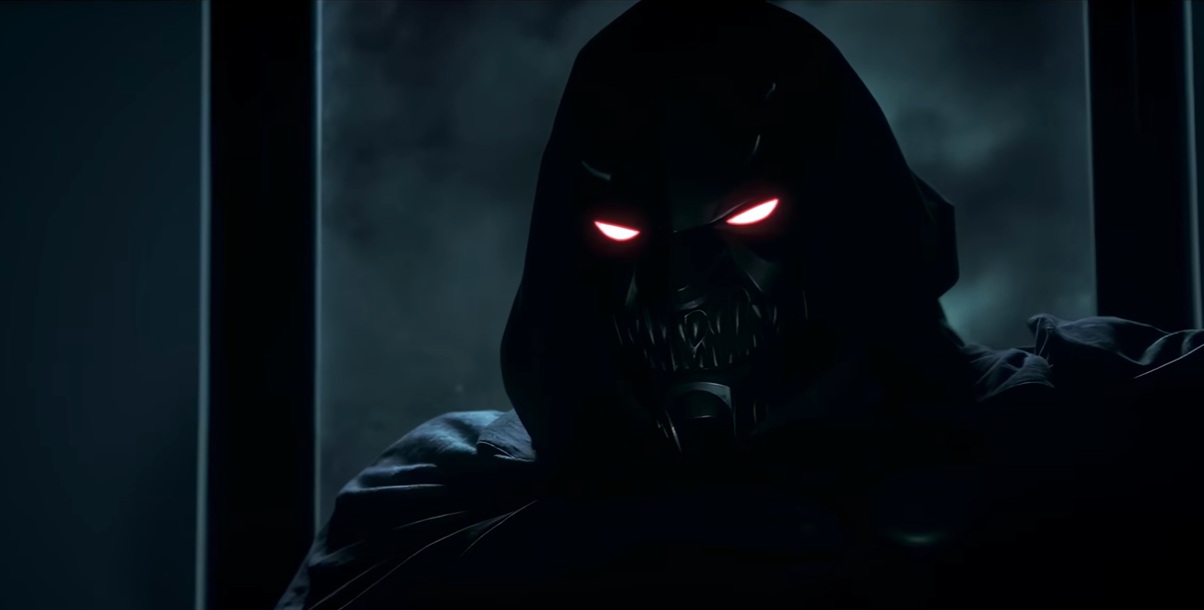
Dragon Prime initially looks like the kind of villain you’d expect from a tokusatsu-inspired superhero movie: huge armor, intimidating presence, fiery powers and an almost obsessive hatred of the hero.
But the movie eventually reveals that there is something much more personal underneath all that armor.
Dragon Prime is a victim of Dark Day.
The man inside the armor, played by director and co-writer Aaron Schoenke, lost people he loved during the catastrophe. Rather than accepting Erik’s explanation or seeing him as a hero who made an impossible choice, he sees the White Dragon as responsible.
And honestly, this is one of the stronger ideas in the movie.
Dragon Prime isn’t simply evil because the script needs a villain. His hatred comes from grief. From his perspective, Erik Reed is not the man who saved the city.
He’s the man who failed to save his family.
That distinction matters.
The movie establishes that both the White Dragon and Dragon Prime are connected to the same mysterious crystal mythology. One represents the light, while the other embraces a darker force built around anger and vengeance.
In other words, they’re not just two guys wearing different suits.
They’re two completely different answers to the same tragedy.
Erik asks whether someone can accept responsibility without becoming consumed by guilt.
Dragon Prime decides that guilt isn’t enough. Somebody has to pay.
The White Dragon vs. Dragon Prime: Who Wins?
The final battle is exactly what you’d expect from a film carrying this kind of tokusatsu DNA: armor, energy attacks, martial arts and plenty of dramatic movement.
But the actual resolution isn’t about who has the stronger punch.
Once Erik manages to reunite the pieces of the White Dragon crystal, he can finally return to his full armored form. Dragon Prime comes at him with everything he’s got, repeatedly throwing the deaths of the 1,263 victims back in his face.
And Erik doesn’t simply brush those accusations aside.
That’s what makes the final confrontation work for me.
He knows people died. He knows that the destruction of Dark Day cannot simply be erased because he technically defeated Ashtagor. He has spent years carrying that guilt, losing his home and being separated from his family.
The easy ending would have been for Erik to destroy Dragon Prime and declare victory.
Instead, he chooses mercy.
Erik defeats Dragon Prime but refuses to kill him. That decision is arguably the most important moment in the entire film because it shows how far Erik has come.
Dragon Prime believes justice requires revenge.
Erik finally understands that repeating the same cycle won’t undo what happened.
The White Dragon therefore becomes more than a superhero identity. It becomes a choice.
Protection instead of revenge. Sacrifice instead of domination.
That’s the real victory.
Does Erik Reed Die at the End?
No. Erik Reed survives the main story.
That’s worth making clear because the movie puts him through enough punishment that his fate can certainly feel uncertain during the final act.
His physical and emotional journey leaves him changed, but the ending doesn’t kill Erik off. Instead, he gets the thing he’s been fighting for since the beginning: a chance to return to his family and stop living like a ghost.
His reunion with his wife and daughter is arguably more significant than the superhero victory itself.
After three years of hiding, Erik can finally stand in front of his family without pretending to be someone else.
It’s not a magical reset. The deaths from Dark Day still happened. His reputation isn’t repaired with a single speech. The city isn’t suddenly perfect.
But Erik has finally stopped running.
For a movie built around enormous battles and fantasy mythology, I actually appreciated that the emotional payoff is relatively simple.
He just wants to go home.
What Does the Post-Credits Scene Mean?
Now we get to the part that’s likely to generate the most discussion: the post-credits scene.
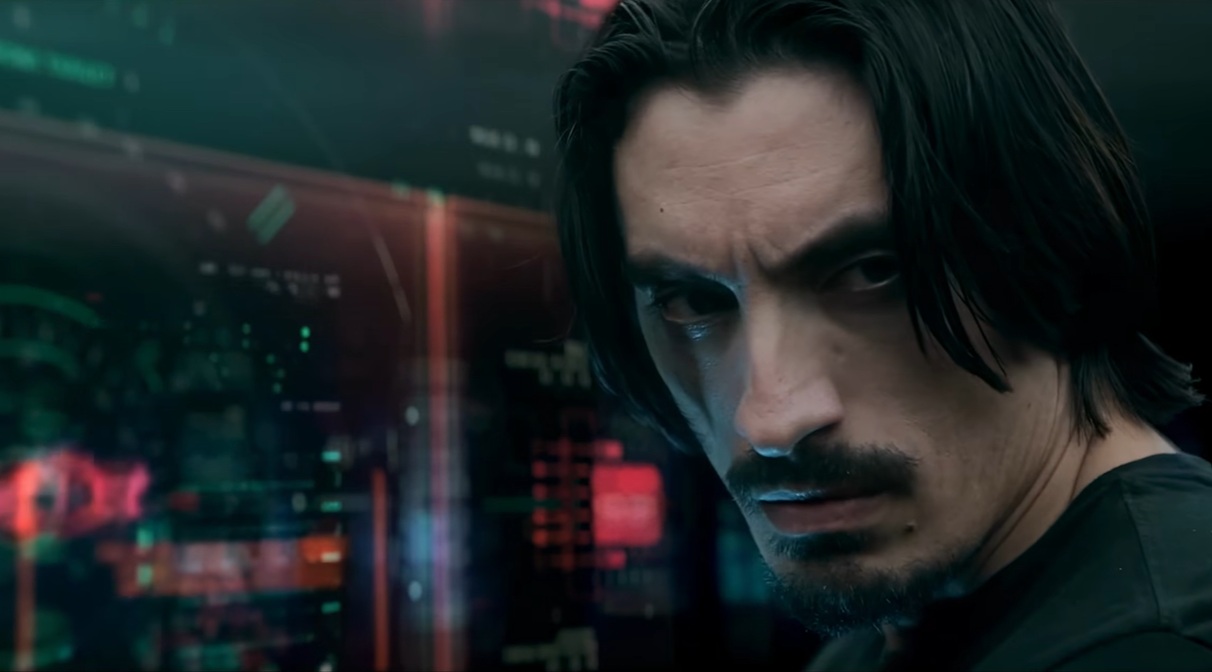
After the main story appears to settle Erik’s immediate conflict, the movie adds another tease suggesting that the White Dragon’s world is nowhere near finished.
The scene points toward a much larger threat and makes it clear that the mythology introduced throughout the movie could continue in another chapter.
On paper, that’s hardly unusual.
Almost every modern superhero franchise loves a post-credits tease.
Here, however, the scene feels strangely bittersweet because of everything we know outside the movie.
Jason David Frank is no longer here.
So the idea of a traditional sequel starring Frank as Erik Reed creates an obvious problem that the movie itself cannot solve.
Why Some Fans Don’t Like the Tease
Some viewers have argued that the movie should have ended without setting up another installment.
I understand that reaction.
There’s something powerful about treating Legend of the White Dragon as a final farewell to Jason David Frank rather than the first chapter of another franchise. A completely closed ending could have given the film a stronger sense of finality.
Especially because Frank’s performance now carries an emotional significance nobody could have fully anticipated when the movie was originally being made.
Why I Think Keeping It Makes Sense
At the same time, I don’t think the post-credits scene should simply be dismissed as a mistake.
This project was designed as something bigger than one movie. It came out of the Bat in the Sun team and a crowdfunding campaign built around the idea of creating an original superhero universe.
Removing the sequel tease would fundamentally change the filmmakers’ original intention.
And there’s another possibility that makes the scene particularly interesting.
The White Dragon doesn’t necessarily have to mean Erik Reed forever.
With Jenna Frank playing Erik’s daughter, the film has an obvious avenue for continuing the legacy if the creators ever decide to pursue it. A future story could explore the daughter inheriting the mantle rather than trying to replace Jason David Frank directly.
That would obviously be a difficult story to get right. But as a concept, I think there’s something genuinely compelling about it.
The character could continue without pretending that Erik Reed’s story—or Jason David Frank’s story—never ended.
The Whisper Man 2026 Ending Explained: The True Meaning Behind the Twisted Final Scenes
The Ending’s Biggest Theme Is Family
For all the talk about crystals, ancient prophecies, armored villains and superhero mythology, Legend of the White Dragon is ultimately a story about family.
That’s what makes Erik’s ending more satisfying to me than simply seeing him defeat Dragon Prime.
His greatest loss wasn’t his armor.
It wasn’t his reputation.
It wasn’t even his freedom.
It was the years he lost with the people he loved.
The White Dragon crystal is broken, and Erik is broken with it. Reassembling the artifact doesn’t magically repair everything, but it gives him the opportunity to confront the past instead of hiding from it.
Dragon Prime represents the opposite response. He takes tragedy and turns it into an identity.
That’s why their final battle works on a symbolic level. They’re both products of the same catastrophe, but they choose completely different paths.
| Character | What Dark Day Represents | Choice |
|---|---|---|
| Erik Reed / White Dragon | Guilt and responsibility | Protection and mercy |
| Dragon Prime | Grief and anger | Revenge |
| Erik’s Family | What Erik is trying to regain | Hope and connection |
| The Crystal | The divided mythology of the universe | Balance between light and darkness |
Where the Movie Leaves the White Dragon Universe
The ending doesn’t completely close the door on Virtuo City or its mythology.
That’s intentional.
There are still questions surrounding the larger cosmic conflict, the origins of the crystal and the forces hinted at by the post-credits sequence. The movie clearly leaves room for another story.
Whether that story should actually happen is a different question.
Personally, I think Legend of the White Dragon works best when viewed as Erik Reed’s story first and a franchise launch second. The larger mythology is fun, but the emotional core is much stronger.
That’s also why Jason David Frank’s performance feels so important here. Even with the film’s uneven pacing and ambitious mythology, there’s an unmistakable sense that you’re watching an actor who genuinely cared about this character and this project.
The final image isn’t really about whether the White Dragon can defeat the next monster.
It’s about whether Erik can finally stop being defined by the worst day of his life.
And for me, that’s what the ending gets right.
Erik Reed survives. Dragon Prime is defeated but not executed. The White Dragon legend remains open for the future, while Erik’s personal journey reaches a much quieter kind of victory: he gets the chance to return to his family.
The post-credits scene may point toward another chapter, but the movie itself feels like a goodbye as much as a beginning.
And considering everything that happened behind the scenes, that makes Legend of the White Dragon a surprisingly emotional final chapter for Jason David Frank.