There are some books you read once and move on from. Then there are books that get under your skin and stay there. Peter Heller’s The Dog Stars is firmly in the second category for me.
That’s exactly why Ridley Scott’s 2026 movie adaptation had me nervous.
Turning a post-apocalyptic novel into a movie is already a tricky job. Turning The Dog Stars into a big-screen thriller is even harder because Heller’s book isn’t really built around conventional blockbuster storytelling. It’s quiet, fragmented, lonely, strange, and deeply personal. A huge part of its power comes from Hig’s thoughts, memories, routines, and the tiny pieces of beauty he notices while trying to stay alive.
So when Ridley Scott stepped behind the camera, with Mark L. Smith and Christopher Wilkinson adapting the screenplay, the obvious question wasn’t simply whether the movie was “good.”
It was whether it still felt like The Dog Stars.
After looking at the major story changes, character relationships, structure, and the way the movie handles some of the novel’s most important moments, my answer is pretty straightforward: yes, but don’t expect a scene-for-scene recreation of the book.
The Movie Gets the Heart of the Story Right
The biggest relief for fans is that the film keeps the basic setup intact.
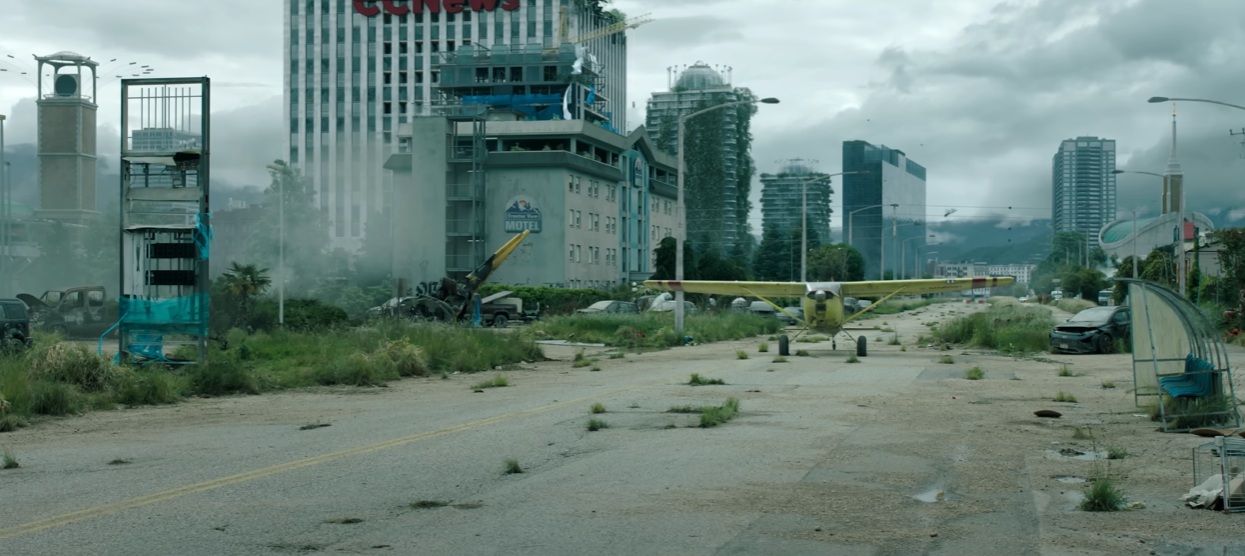
Nine years after a devastating influenza pandemic wipes out much of civilization, Hig lives at an abandoned Colorado airfield with his dog Jasper and his difficult, heavily armed neighbor Bangley. Hig flies patrols in his old Cessna, watches the surrounding wilderness, and tries to maintain some connection with the world that existed before everything collapsed.
That relationship between Hig and Bangley is especially important.
They aren’t friends in any traditional sense. In fact, there are plenty of moments when they seem like two people who would never voluntarily spend five minutes together. Yet their survival depends on each other. Hig brings empathy, observation, and a softer understanding of the world. Bangley brings paranoia, firepower, and an almost obsessive determination to keep their territory secure.
The movie understands that contradiction.
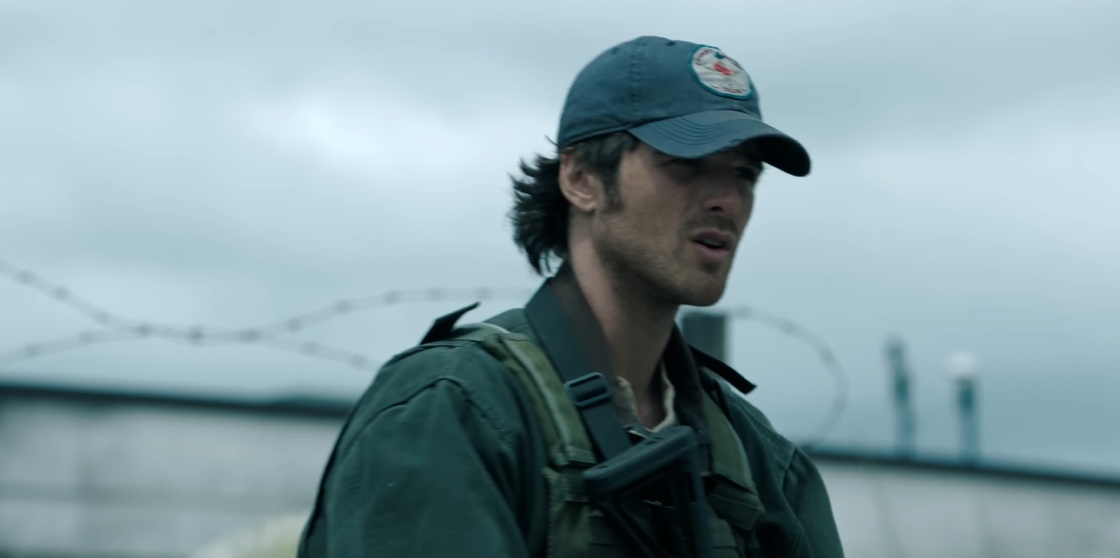
Jacob Elordi’s Hig is noticeably more outwardly expressive than the character often feels on the page, but the underlying loneliness is still there. Josh Brolin’s Bangley, meanwhile, has exactly the kind of intimidating presence you’d expect from a man who treats every distant noise as a potential death sentence.
Their partnership remains one of the strongest parts of the adaptation.
Hig’s Cessna Still Matters
One thing I was particularly happy to see preserved is Hig’s relationship with his airplane.
The 1956 Cessna isn’t just transportation. In the novel, flying gives Hig a strange sense of freedom that barely exists anywhere else in his life. Up in the air, he can look at the damaged world from a distance. He can patrol the area, listen to his radio, search for signs of life, and briefly escape the claustrophobic reality of the airfield.
The film gives those sequences plenty of visual space, and it should.
This is where Ridley Scott’s strengths really become obvious. Wide mountain landscapes, lonely airfields, endless stretches of wilderness and a tiny aircraft moving through an enormous sky create exactly the kind of imagery that cinema can deliver better than prose.
The Mennonite storyline also remains part of the adaptation, including Hig’s attempts to help a struggling community by bringing medical supplies and other essentials.
These quieter moments matter because they prevent The Dog Stars from becoming just another post-apocalyptic shootout movie.
Jasper Is Still the Emotional Breaking Point
If you’ve read the novel, you already know that Jasper isn’t simply Hig’s dog.
He’s Hig’s connection to his old life.
He’s companionship. Memory. Routine. Love.
And that’s why Jasper’s fate is one of the most important moments in the entire story.
The movie understands this.
Rather than treating Jasper as disposable emotional bait, the adaptation uses his death as a genuine turning point for Hig. His already fragile sense of stability collapses, forcing him to leave the relative safety of his familiar territory and pursue the mysterious radio signal that has been haunting him.
For me, this is one of the clearest signs that the filmmakers understood the emotional architecture of Heller’s novel. You can change scenes. You can compress chapters. You can add action. But if you remove the emotional reason Hig keeps moving forward, you’ve lost the story.
Thankfully, that doesn’t happen here.
Where the Movie Takes Major Liberties
This is where book purists will probably have the most to say.
The novel’s structure is deliberately messy. Hig’s memories don’t arrive in neat chronological order. His thoughts drift between the pandemic, his wife Melissa, his unborn child, Jasper, flying, fishing, survival, and whatever is happening directly in front of him.
That’s part of what makes the novel feel so intimate.
A movie can’t easily reproduce several hundred pages of fragmented internal narration without becoming painfully slow or confusing. Scott and the screenwriters therefore make the understandable choice to give the story a more conventional forward momentum.
The result is easier to follow, but it also loses some of the dreamlike quality that makes Heller’s writing special.
Book vs. Movie: The Biggest Differences
| Element | Peter Heller’s Novel | 2026 Movie |
|---|---|---|
| Story structure | Fragmented and memory-driven | More linear and streamlined |
| Hig’s inner world | Extremely important | Replaced largely by visual storytelling |
| Bangley | Harsh, paranoid survival partner | More visibly confrontational |
| Jasper | Emotional anchor | Major catalyst for Hig’s journey |
| Flying | Quiet routine and freedom | Bigger cinematic spectacle |
| Grand Junction | Intimate and mysterious | Expanded into a larger dramatic setting |
| Action | Short, brutal bursts | More frequent and visually elaborate |
| Hig and Cima | Slow emotional connection | Faster, more conventional romance |
That last point is probably going to divide viewers.
Hig and Cima’s relationship in the novel has an awkward, damaged quality that feels believable because neither character is exactly prepared for romance. They’ve survived too much. Their connection develops through shared trauma, uncertainty, and small moments.
The movie pushes that relationship forward more quickly.
I understand why.
Two hours of cinema doesn’t have the same breathing room as Heller’s novel. Still, I preferred the slower progression in the book. The rushed romantic beats occasionally feel like the screenplay is reminding us that this is a movie rather than allowing the relationship to develop naturally.
Grand Junction Gets Much Bigger
The biggest creative gamble comes later in the story.
The movie expands the Grand Junction section considerably and introduces a larger community with its own strange rules, personalities, and threats. Darlene, played by Allison Janney, becomes an important figure in this expanded version of the story.
This is a substantial departure from the more intimate atmosphere of the novel.
Heller’s world often feels frightening because it is empty. Scott’s film sometimes goes in the opposite direction. It creates larger groups, bigger confrontations, and more obvious physical danger.
Personally, I’m torn on this change.
As a fan of the book, I miss some of that eerie emptiness. As someone watching a movie in a theater, though, I can understand why the filmmakers wanted a third act with more momentum.
Scott knows how to stage large-scale tension. The expanded community gives him room to do that.
Ridley Scott Turns Quiet Horror Into a Bigger Thriller
This may be the single biggest difference between the two versions.
Heller’s The Dog Stars isn’t constantly trying to scare you. Sometimes the most memorable parts are Hig fishing, maintaining equipment, flying over the landscape, remembering Melissa, or simply appreciating something beautiful in a world that has almost completely lost its humanity.
The movie is more restless.
There are bigger confrontations. The Reapers feel more like a conventional cinematic threat. Violence arrives with greater visual impact, and the pacing rarely sits still for as long as the book does.
That doesn’t necessarily make the adaptation worse.
It makes it different.
And honestly, I think that’s the right way to approach this movie. If Scott had attempted to reproduce Heller’s internal narration literally, we might have ended up with an incredibly faithful adaptation that simply didn’t work as a film.
Instead, he takes the emotional skeleton of the novel and builds a more cinematic body around it.
Does Hig Find the Source of the Radio Transmission in The Dog Stars (2026)? Ending Explained
Peter Heller’s Reaction Makes a Difference
One detail that should reassure longtime readers is Peter Heller’s own reaction to the movie.
According to the promotional discussion surrounding the adaptation, Heller initially had understandable reservations about handing his first novel over to Hollywood. That’s hardly surprising. Writers spend years building imaginary worlds, and watching someone else reinterpret that world can be terrifying.
But his response after seeing the finished movie was reportedly very positive.
Heller has spoken about being overwhelmed by the opening imagery, particularly Hig flying the Cessna over the landscape. The scale of the cinematography apparently brought back memories of writing the original novel and the place where he first started putting the story together.
That’s significant to me.
An author doesn’t have to love every decision an adaptation makes. But when the person who created the world can look at the finished movie and still recognize something personal in it, that’s a good sign.
So, Is The Dog Stars Movie Faithful to the Book?
Yes — but faithful in spirit rather than in structure.
If you’re expecting every chapter, memory, conversation, and internal monologue from Peter Heller’s novel to appear exactly as written, you’re going to be disappointed.
The 2026 movie is more linear. It’s more action-heavy. It expands Grand Junction, accelerates certain relationships, and turns some of the novel’s quieter dangers into bigger cinematic set pieces.
But the important pieces survive.
Hig is still a lonely man trying to remain human after the world has collapsed. Bangley is still his brutal but necessary counterweight. Jasper remains central to Hig’s emotional journey. The Cessna remains a symbol of freedom. The radio signal still represents the possibility that something better might exist beyond the boundaries Hig has built around himself.
And underneath all the action, the movie still understands what made Heller’s novel special: this isn’t really a story about surviving the apocalypse. It’s about figuring out what makes survival worth doing.
That’s why I think fans should give Ridley Scott’s The Dog Stars a chance.
Don’t go in expecting the book to be projected onto a giant screen.
Go in expecting a filmmaker to interpret it.
For me, that’s where the adaptation works best. It doesn’t preserve every page, but it preserves enough of Hig’s lonely journey to feel like the same story wearing a very different set of clothes.