For more than seventy years, Wile E. Coyote has suffered one humiliating disaster after another. He has been flattened, exploded, burned, electrocuted, launched into canyon walls, and dropped from impossible heights. And somehow, after every catastrophe, he gets back up and orders another product from Acme.
That might be the funniest part of the classic Looney Tunes formula. It is also exactly why the premise of Coyote vs. Acme is so satisfying.
At some point, enough has to be enough.
The basic idea behind the movie is wonderfully obvious: Wile E. Coyote finally realizes that maybe he isn’t the only problem. Maybe the company selling him rocket skates that explode on contact deserves some of the blame.
That realization turns decades of cartoon violence into a legal battle against the most notoriously unreliable corporation in animation history.
And honestly? It is difficult to think of a more deserved lawsuit.
The Real Reason Wile E. Coyote Sues Acme
The simple answer is that Acme products keep failing in spectacular and extremely dangerous ways.
Wile E. Coyote spends his life trying to catch the Road Runner. Instead of relying entirely on his own abilities, he repeatedly buys complicated gadgets, traps, explosives, vehicles, and other equipment from Acme.
The problem is that these products almost never work as advertised.
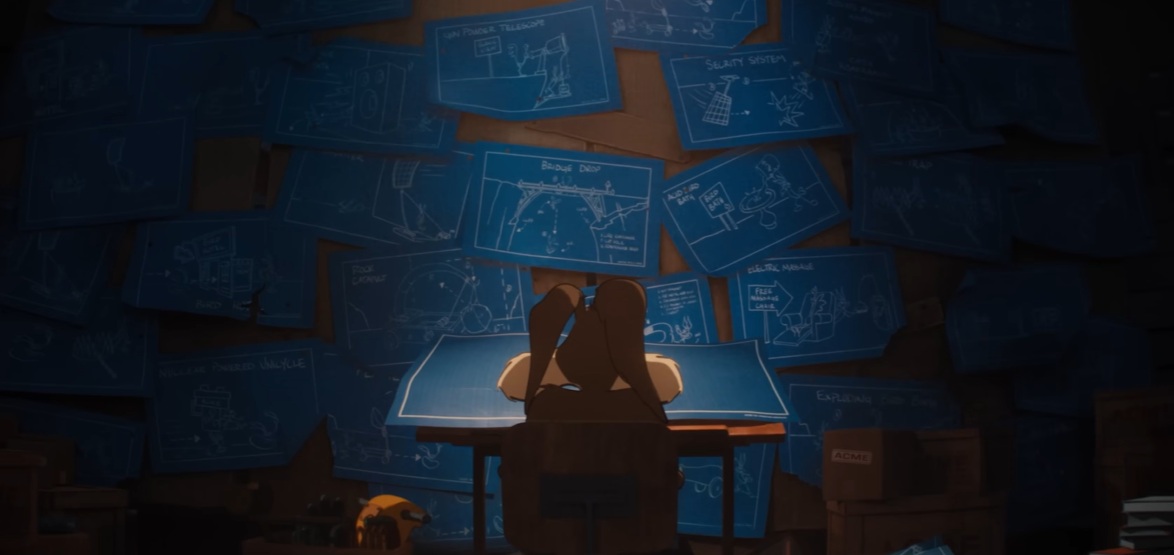
Or, to be more precise, they often work just long enough to destroy the person who bought them.
Imagine ordering rocket-powered roller skates designed to help you chase an incredibly fast bird. Instead of accelerating safely down the road, the skates send you directly into a mountain.
That is not exactly a minor customer service issue.
Over the years, the Coyote’s shopping history has become a museum of catastrophic product failures:
- Rocket skates that send him into solid rock
- Jet engines that malfunction or explode at the worst possible moment
- Boulders, traps, magnets, and explosives that backfire on their owner
- Slingshot-style devices that launch him into cliffs instead of his target
- Experimental gadgets that seem to have been tested on exactly one customer: Wile E. Coyote
Eventually, the obvious question becomes impossible to ignore.
How many explosions does one customer have to survive before the manufacturer gets investigated?
That is the emotional engine behind Coyote vs. Acme. The lawsuit is funny because the entire history of the character is absurd, but the premise also works because the complaint itself feels weirdly reasonable.
The Coyote did not buy one defective toaster.
He apparently spent decades purchasing products from a company whose business model seems to be: ship first, ask questions never.
The Breaking Point: Why This Time Is Different
One of the smartest things about the premise is that Wile E. Coyote does not suddenly become a completely different character.
He is still obsessed with catching the Road Runner.
He is still willing to create absurdly complicated plans for a problem that could probably be solved with a sandwich and a net.
But eventually, he starts looking at the evidence.
The receipts.
The wreckage.
The mountains with suspiciously Coyote-shaped holes in them.
For decades, every failure has been treated as another joke. The Coyote gets flattened, shakes himself back into shape, and starts again.
This time, he stops.
That is what gives the story its hook. The character finally decides that being endlessly resilient does not mean he has to accept endless abuse.
And Acme has a lot to answer for.
The company’s products are not simply ineffective. They are frequently hazardous in ways that should make any competent safety inspector faint on the spot.
A rocket should not randomly detach.
A trap should not target the customer.
A magnet designed to attract prey should probably not summon a freight train.
These are not minor defects.
These are lawsuits waiting to happen.
Kevin Avery and the Beginning of the Legal War
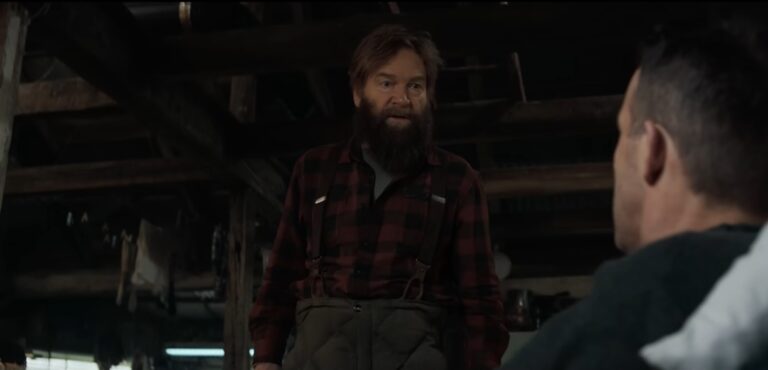
The Coyote’s case brings him into contact with Kevin Avery, played by Will Forte.
Kevin is not introduced as some legendary courtroom genius. He is a struggling lawyer dealing with small cases and trying to keep his practice alive. He is exactly the kind of person who might expect an easy settlement, collect a modest fee, and move on to the next billboard advertisement.
Then Wile E. Coyote walks into his life.
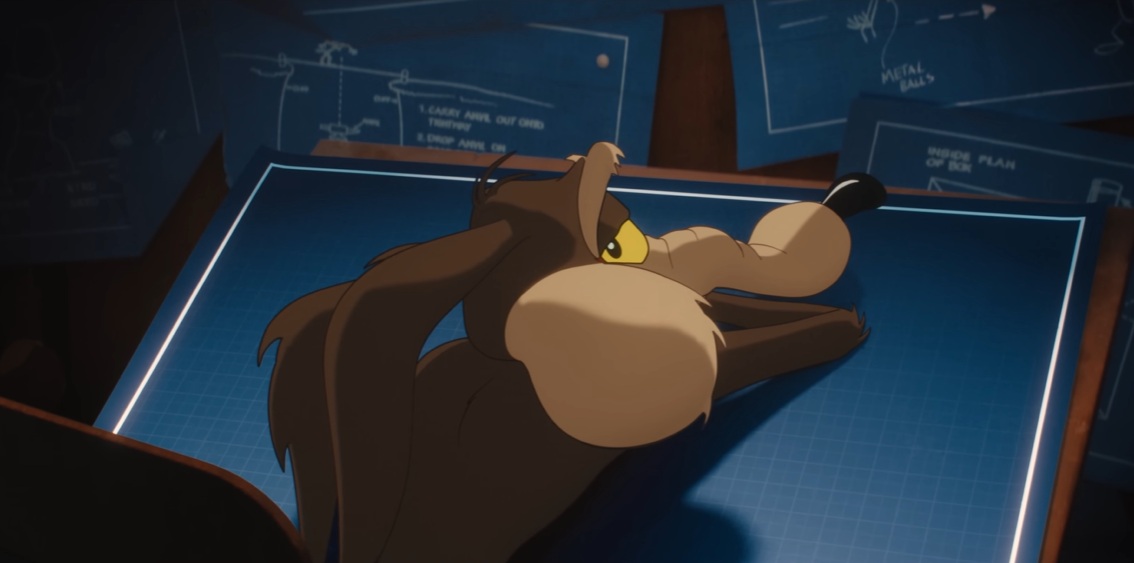
What initially appears to be a simple injury claim quickly becomes something much bigger.
The Coyote does not want a replacement gadget.
He does not want a discount coupon.
He wants Acme to be held accountable for decades of dangerous products.
That changes everything.
The lawsuit expands beyond one broken invention and becomes a direct attack on the corporation’s entire history of selling equipment that repeatedly causes catastrophic injuries.
And this is where the concept becomes much more interesting than a single extended Looney Tunes gag.
The case raises a surprisingly sharp question:
Is Wile E. Coyote actually responsible for his failures, or has Acme been selling dangerously defective products to a desperate customer for years?
The answer is probably somewhere between those two extremes.
Let’s be honest: the Coyote’s decision-making is not always flawless.
Building a massive rocket-powered device to catch one bird is not exactly the behavior of a man—or coyote—with a strong risk-management department.
But that does not automatically excuse the manufacturer.
If a customer uses your product incorrectly, that is one thing.
If your product repeatedly explodes before the customer can even use it, you may have a different problem.
Acme’s Defense: Blame the Coyote
Of course, a corporation like Acme is not going to walk into court and casually admit:
“Yes, our products have been turning customers into piles of ash for several decades.”
The defense instead attacks the consumer.
That strategy is painfully believable.
Acme’s legal team argues that Wile E. Coyote is reckless, obsessed, and incapable of using equipment safely. His endless failed attempts to catch the Road Runner become evidence against him.
From Acme’s perspective, the problem is not the rocket.
The problem is apparently the person standing on it.
John Cena’s Buddy Crane represents the full corporate response: polished, aggressive, confident, and determined to turn the victim into the defendant.
It is an excellent setup because audiences already know the history.
We have watched the Coyote suffer.
We know what Acme products do.
Trying to convince us that everything was his fault is exactly the kind of shameless argument that makes the legal conflict work.
Why the Lawsuit Works Beyond the Cartoon Joke
The strongest part of Coyote vs. Acme is that the central joke has real satirical potential.
Wile E. Coyote is not just suing over one bad product. He is challenging a giant corporation with unlimited resources, powerful lawyers, and an enormous public image to protect.
The case naturally touches on several major issues:
| Legal Issue | The Coyote’s Argument |
|---|---|
| Product Liability | Acme’s equipment repeatedly causes direct injuries |
| Negligence | Dangerous products appear to reach customers without proper safety measures |
| Warranty Failures | The equipment frequently fails to perform its advertised purpose |
| Consumer Blame | Acme argues that the Coyote is responsible for his own injuries |
| Corporate Power | A massive company can overwhelm an individual customer through money and influence |
That last point matters.
The story is fundamentally an underdog battle.
One silent coyote.
One struggling lawyer.
One enormous corporation.
It is ridiculous, obviously. But the emotional structure is surprisingly classic.
Someone who has been ignored for years finally decides to fight back.
The Ian Frazier Connection
The idea of putting Wile E. Coyote into a legal dispute has deeper roots than the movie itself.
The concept draws inspiration from Ian Frazier’s famous satirical work involving the character and the legal consequences of Acme’s disastrous products.
That connection makes perfect sense. The Looney Tunes universe has always been built around cartoon logic, and legal language is a fantastic way to expose just how insane that logic becomes when treated seriously.
Once lawyers start discussing things like product testing, liability, damages, evidence, and corporate responsibility, the traditional Coyote formula suddenly looks completely different.
A falling anvil is no longer just a punchline.
It is Exhibit A.
The giant rocket is not a gag.
It is physical evidence.
And that enormous collection of failed inventions becomes something even more dangerous to Acme than the Road Runner ever was:
documentation.
Coyote vs Acme Movie 2026: Plot, Cast, and Release Date Guide
Why the Story Became So Meta
There is another reason the movie’s central conflict feels especially fitting.
Coyote vs. Acme itself became part of a much larger conversation about what happens when major corporations control the fate of finished creative work.
The irony is almost too perfect.
Here is a movie about a small character fighting a giant corporation that treats him as disposable.
And the movie itself spent years surrounded by real-world corporate controversy before eventually reaching audiences.
That gives the story an extra layer that you simply cannot manufacture.
Watching Wile E. Coyote stand up to Acme is entertaining on its own. But the broader history surrounding the film makes the premise feel even sharper. The fictional corporation becomes a symbol of something much bigger: what happens when an individual, a creator, or a consumer finally refuses to be ignored by an institution with far more money and power.
That is why the story lands.
It is not because anyone genuinely believes a cartoon coyote could file paperwork, survive a deposition, or sit through a corporate mediation session without an anvil falling through the ceiling.
It works because the emotional idea underneath the comedy is real.
Wile E. Coyote Might Actually Have a Case
Here is my honest opinion: Acme is in serious trouble.
Yes, the Coyote is reckless.
Yes, many of his plans are completely absurd.
Yes, attempting to catch the Road Runner with military-grade explosives probably raises some questions about personal responsibility.
But Acme cannot keep hiding behind the phrase “user error” when its products appear to malfunction with the consistency of a cursed subscription service.
There is a difference between a customer making a bad decision and a product actively trying to kill the customer.
Wile E. Coyote has spent decades surviving equipment failures that would have bankrupted almost any normal company through lawsuits alone.
The fact that he continued buying from Acme might actually be the most unrealistic part of the entire Looney Tunes universe.
So why does Wile E. Coyote sue Acme?
Because eventually, after enough explosions, cliffs, anvils, rockets, and humiliating defeats, the Coyote finally recognizes the obvious truth.
The Road Runner may be impossible to catch, but Acme is impossible to trust.
And instead of ordering one more gadget, he does something genuinely unexpected.
He fights back.
That is the genius of Coyote vs. Acme. It takes one of animation’s oldest running jokes and asks what would happen if the victim finally stopped laughing along.
The answer is a courtroom battle that gives Wile E. Coyote something he has almost never had in seventy-plus years of chasing the Road Runner:
a chance to win.