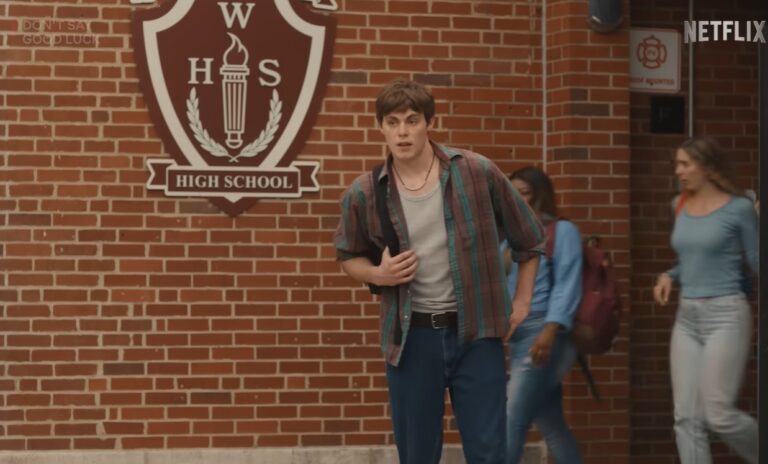
There are plenty of coming-of-age movies that confuse emotional storytelling with making teenagers miserable for two hours. Don’t Say Good Luck could have easily gone down that road. A teenage girl gets the lead in a school musical just as her mother’s cancer returns. There is romance, family tension, friendship drama, and a big emotional performance waiting at the end. On paper, it sounds almost dangerously engineered to make you cry.
Thankfully, the actual movie is much smarter than that.
Netflix’s Don’t Say Good Luck finds its strongest moments not in the obvious tearjerker scenes, but in the uncomfortable little spaces between them. It understands that grief does not politely wait until after rehearsal. Sometimes you have to memorize lyrics while worrying about your mother. Sometimes your best friend wants to talk about her own life when you can barely keep your own together. Sometimes the person who needs you most is also the person you desperately want to be angry with.
That messy contradiction is what makes this 2026 coming-of-age dramedy work.
Sophie Gets the Role She Never Expected
Just before her audition, Sophie accidentally overhears a private conversation after her father Ted’s phone calls her by mistake. The news is devastating: her mother’s cancer, previously believed to be in remission, has returned.
It is an almost cruelly timed revelation. Sophie has to walk onto a stage moments later and perform as if her life hasn’t just been ripped open.
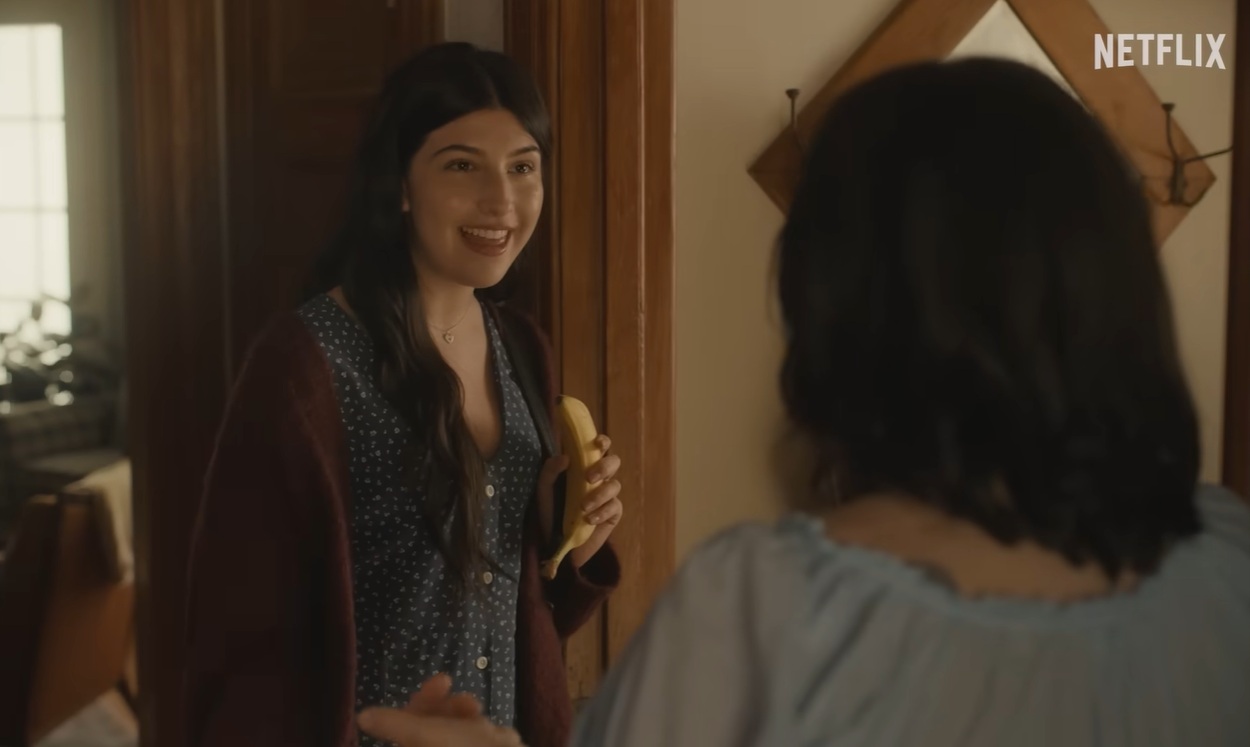
Instead of destroying her audition, the emotional shock gives Sophie something the theater director, Ms. Parker, cannot ignore. Her performance suddenly has vulnerability behind it. There is genuine pain underneath the words, and Ms. Parker sees something special.
Sophie gets the role of Jenna Hunterson.
And honestly, this is where I expected the movie to become predictable.
It doesn’t.
The lead role isn’t treated as Sophie’s magical escape from reality. If anything, it makes her life more complicated. Rehearsals consume her time. The songs demand emotional commitment. She has to work with classmates who already have their own expectations about who should have received the part.
Most importantly, Sophie now has to perform a character whose emotional journey starts to mirror her own.
That connection between Sophie and Jenna in Waitress is one of the film’s best ideas. The musical isn’t just decoration. It becomes the language Sophie uses when ordinary conversation stops being enough.
The Movie’s Real Conflict Happens at Home
While Sophie is learning choreography and working through rehearsals, her family is dealing with something far more serious.
Elizabeth, Sophie’s mother, is becoming increasingly ill. Melanie Lynskey gives the character warmth without turning her into a saintly symbol of motherhood. Elizabeth is funny, stubborn, affectionate, occasionally frustrating, and still deeply invested in her daughter’s life.
That matters.
The movie refuses to make Elizabeth’s illness the entirety of her personality. She remains a mother who wants to know about rehearsals, jokes with Sophie, and tries to preserve normal family routines even while her physical condition deteriorates.
Some of the scenes showing the effects of treatment are difficult to watch. There is fatigue, weakness, and the exhausting reality of a household slowly adapting to the possibility of loss.
Ted, played by Max Greenfield, is stuck in the middle of all of it. He is trying to keep the family functioning while running the local deli and looking after Sophie’s younger twin brothers, Caleb and Ethan.
I particularly liked that the movie doesn’t turn Ted into the stereotypical emotionally absent father. He is overwhelmed, not uncaring. There is a difference, and the script understands it.
The Grandparents Add Much-Needed Complexity
Sophie’s grandparents could have been disposable supporting characters. Instead, they become an important part of the film’s emotional architecture.
Linda, played by Bebe Neuwirth, responds to the family’s crisis by imposing order. Schedules, cleanliness, routines—anything that creates the illusion that the situation can still be controlled.
Sophie understandably hates this.
Her grandfather Dale, played by Steve Buscemi, takes the opposite approach. He gives Sophie room to feel whatever she needs to feel. He doesn’t try to fix her. He doesn’t tell her to be strong. He simply allows her to fall apart.
One of the movie’s most affecting ideas is that support doesn’t always mean having the right answer. Sometimes it means being the person who stays in the room when someone else finally stops pretending they’re okay.
That sounds simple, but Don’t Say Good Luck gets a surprising amount of mileage from it.
The Romance Works Because It Doesn’t Take Over
The inevitable school romance is here. Jack Champion plays Jack Davis, who gets cast as Dr. Pomatter opposite Sophie.
Normally, this is where a movie like this would start losing me.
The guy is charming. The girl is emotionally wounded. They rehearse together. They spend more time together. Feelings develop. Cue predictable teenage romance.
Fortunately, the movie keeps its priorities straight.
Jack isn’t some perfect fantasy boyfriend dropped into Sophie’s life to rescue her from grief. He’s awkward, kind, occasionally goofy, and dealing with his own insecurities. Their relationship develops through small interactions rather than giant romantic declarations.
More importantly, the film understands that Sophie doesn’t need a boyfriend to complete her emotional journey.
That restraint makes the romance considerably more believable.
Friendship Gets Messier, Too
Sophie’s relationship with her best friend Carolyn is arguably just as interesting.
Scarlett Estevez plays Carolyn as a teenager who is moving into a new stage of her own life, including questions surrounding her sexuality and identity. Meanwhile, Sophie is increasingly consumed by her mother’s illness.
This creates a painfully recognizable problem: two friends can love each other and still grow apart for a while.
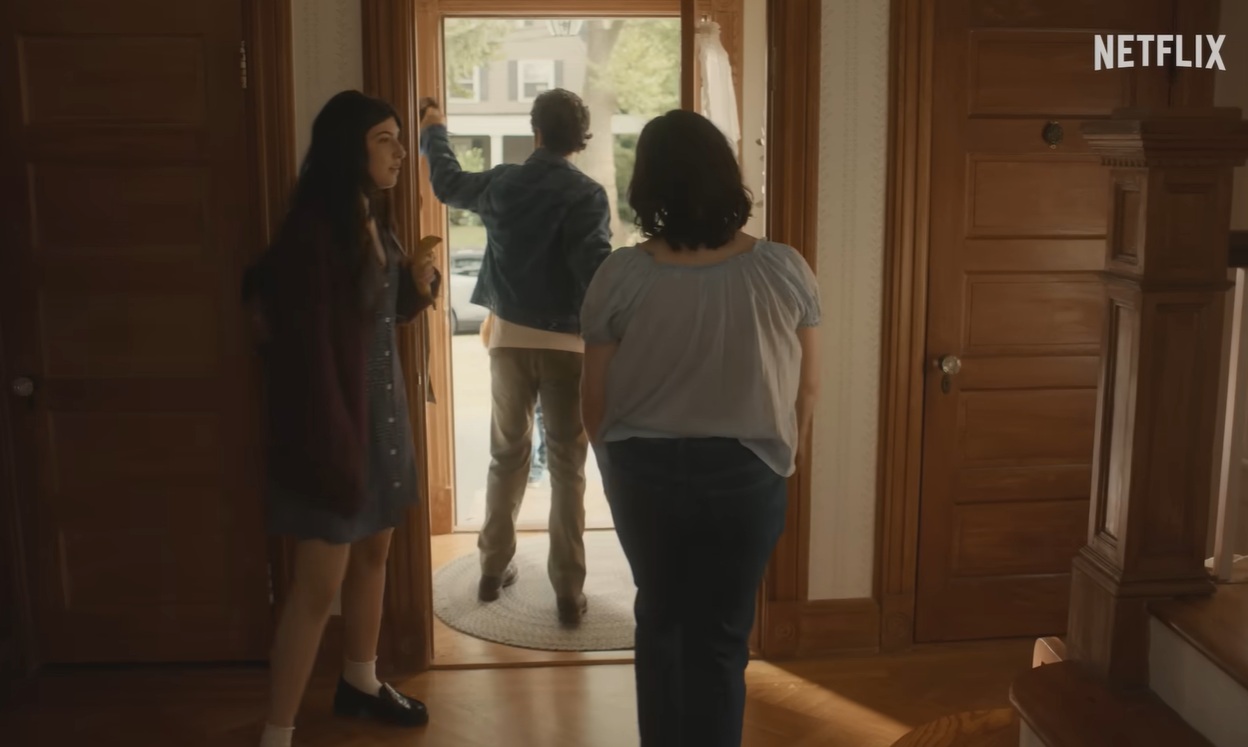
Carolyn isn’t selfish for wanting to experience her own teenage life. Sophie isn’t selfish for being unable to focus on it. Neither girl is really wrong, which makes their tension much more effective than a manufactured friendship breakup.
The movie gives both characters space to be complicated.
I wish more teen dramas trusted their audiences enough to do this.
Why Waitress Is More Than a School Musical
The choice of Waitress is not accidental.
Jenna’s story involves an unhappy life, uncertainty, resilience, and the desperate need to imagine something beyond the circumstances trapping her. For Sophie, performing that story becomes almost therapeutic.
She can say things through Jenna that she cannot say as herself.
The contrast between stage and reality is especially effective because the film never suggests that theater magically cures grief. Sophie doesn’t sing a song and suddenly feel better. She doesn’t discover some inspirational life lesson that makes her mother’s illness easier to accept.
Instead, art gives her somewhere to put the pain.
That’s a much more convincing idea.
And the film’s title ties directly into that philosophy.
Elizabeth is deeply invested in Sophie’s performance, and her insistence on saying “break a leg” rather than “good luck” becomes a recurring joke between mother and daughter. What starts as theater superstition gradually becomes something more intimate. Elizabeth wants Sophie to keep performing, keep dreaming, keep being sixteen—even when her own future is becoming frighteningly limited.
That’s where the title stops feeling cute and starts hurting.
The Mall Scene Might Be My Favorite
Not every great moment in Don’t Say Good Luck involves crying.
One of the best sequences has Sophie and Elizabeth visiting a shopping mall while Sophie practices the Southern accent required for Jenna. Instead of turning this into another heavy mother-daughter conversation, the two start talking to shopkeepers in exaggerated Southern voices.
It’s funny. It’s awkward. It’s wonderfully ordinary.
And that’s precisely why it works.
The scene captures something the movie understands better than many grief dramas do: people don’t stop laughing because someone is dying.
They still go shopping. They still make stupid jokes. They still annoy each other. They still have afternoons where nothing particularly important happens.
Those moments can become more precious than the grand speeches.
What to Expect From the Ending
I’m deliberately not going to explain how the final performance plays out or what ultimately happens with Elizabeth.
The movie earns the right to keep those moments for itself.
What I will say is that the entire story gradually pushes Sophie toward the production’s biggest emotional challenge. Ms. Parker repeatedly tells her that her performance of “She Used to Be Mine” isn’t quite there yet.
Sophie has the technical ability. She has the voice. She knows the character.
What she’s missing is the kind of emotional understanding that cannot simply be taught in rehearsal.
The tragedy is that life is giving her that understanding whether she wants it or not.
That makes the eventual convergence of Sophie’s real life and her performance genuinely powerful rather than merely manipulative.
Don’t Say Good Luck Ending Explained: A Deep Dive Into The Heartbreaking Netflix Weepie
My Take on Don’t Say Good Luck
I went into Don’t Say Good Luck expecting a fairly standard Netflix tearjerker with a musical-theater gimmick.
I was wrong.
Yes, the movie absolutely wants you to cry. It isn’t shy about that. There are moments where you can practically feel the emotional machinery working.
But the difference is that the characters are strong enough to make those emotions feel earned.
Sunny Sandler is the biggest surprise. Sophie could have become an irritatingly fragile protagonist, but Sandler gives her enough humor, stubbornness, insecurity, and teenage awkwardness to make her feel like an actual sixteen-year-old. Melanie Lynskey is equally strong, particularly because Elizabeth never becomes nothing more than “the sick mom.”
The supporting cast also keeps the film from collapsing under its own sadness. Even Jon Lovitz gets some welcome comedic moments as Lenny, the deli cook.
What Works Best
- Sunny Sandler’s lead performance gives Sophie real personality beyond her grief.
- Melanie Lynskey makes Elizabeth warm, funny, and painfully human.
- The Waitress storyline feels organically connected to Sophie’s emotional journey.
- The romance stays secondary instead of hijacking the movie.
- The family dynamics are messy enough to feel believable.
- Humor appears naturally instead of being used as an escape from every serious moment.
- The film understands that grief and ordinary teenage life can exist simultaneously.
Where I Had Reservations
The movie isn’t flawless.
A few plot beats feel conspicuously engineered, particularly the accidental phone call that exposes Elizabeth’s diagnosis. There are also moments when the emotional symbolism is so obvious that I wanted the screenplay to trust me a little more.
And yes, some scenes are clearly designed to destroy your composure.
I didn’t always mind that. But occasionally I could practically see the movie reaching for the tissue box.
Still, those complaints feel relatively minor compared with what the film gets right.
| Element | My Take |
|---|---|
| Story | Strong and emotionally grounded |
| Sunny Sandler | Excellent surprise |
| Melanie Lynskey | Outstanding |
| Romance | Sweet without taking over |
| Family drama | The film’s strongest material |
| Musical elements | Actually meaningful |
| Humor | Well-placed and necessary |
| Emotional impact | Bring tissues |
Don’t Say Good Luck ultimately works because it doesn’t pretend grief is a neat journey from sadness to acceptance. Sophie doesn’t suddenly become wise because something terrible happens. Her family doesn’t magically know what to say. Her friends don’t always understand her. Even the adults around her are improvising.
That’s life.
And that’s why this Netflix coming-of-age movie landed harder for me than I expected.
It is sentimental, absolutely. Sometimes almost aggressively so. But underneath the obvious emotional manipulation is a genuinely compassionate film about teenagers trying to remain teenagers while confronting something far beyond their emotional vocabulary.
The theater isn’t an escape from Sophie’s reality.
It’s the place where she finally learns how to face it.