
If you are planning to watch The Mandalorian & Grogu in theaters and think you can simply remember “Mando, Baby Yoda, space cowboys” and call it a day, I have bad news: Star Wars has never been that simple.
The upcoming theatrical movie directed by Jon Favreau is not some isolated adventure that happens to feature Din Djarin and Grogu. It grows directly out of years of The Mandalorian storytelling, while also sitting inside a much larger corner of the Star Wars timeline. That means there are characters, factions, weapons, political conflicts and emotional beats that will land very differently depending on what you have actually watched.
And honestly, this is where Disney’s Star Wars continuity can become exhausting.
You shouldn’t have to complete half a dozen shows just to understand one movie. Thankfully, you don’t. I have gone through the essential material and separated the genuinely important episodes from the stuff you can safely leave for another weekend.
If you want the best Mandalorian watch order before The Mandalorian & Grogu, here is the version I would actually recommend.
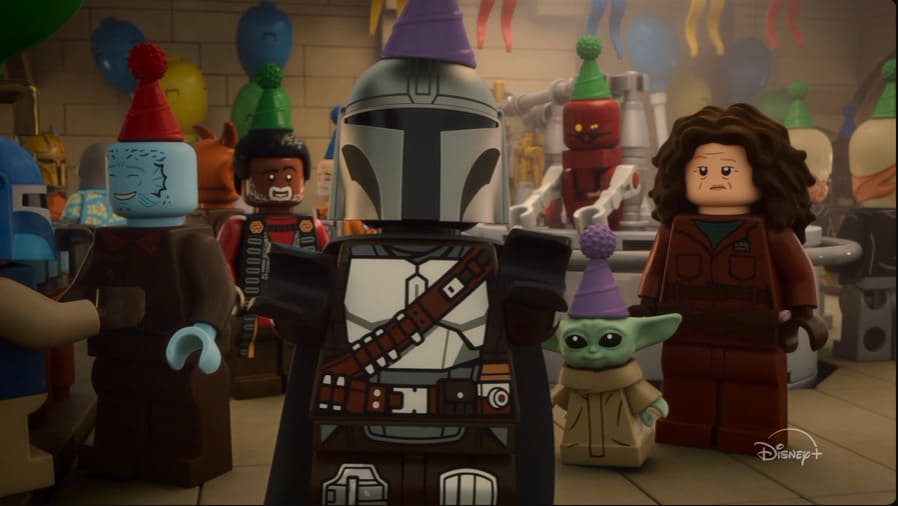
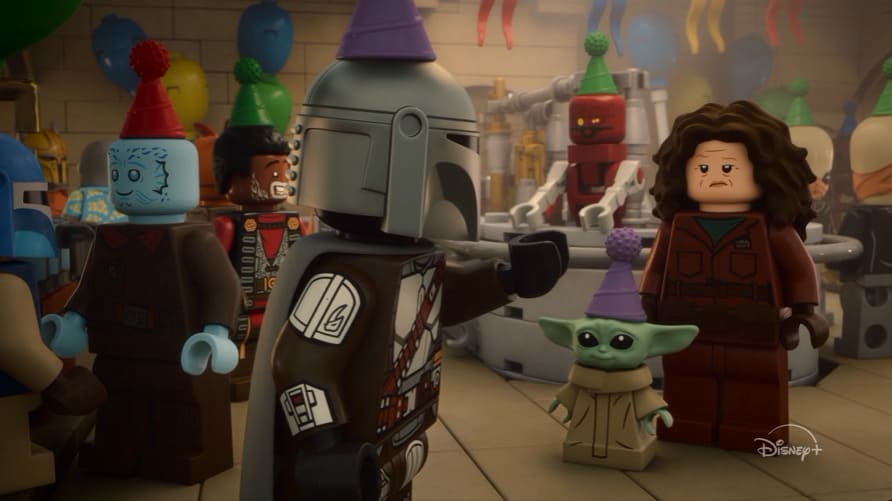
LEGO Star Wars The Mandalorian Special Canon Order: Timeline Explained
Start With The Mandalorian Seasons 1 and 2
There is no shortcut around this.
If you haven’t watched the first two seasons of The Mandalorian, stop looking for a condensed YouTube explanation and just watch them. The relationship between Din Djarin and Grogu is the entire emotional foundation of this story, and summaries cannot reproduce why certain moments matter.
The Mandalorian Season 1: Where It All Starts
Season 1 introduces Din Djarin as a Mandalorian bounty hunter working on the rougher edges of the galaxy after the fall of the Empire.
His life is basically contracts, credits and surviving the next job. Then he accepts a mysterious assignment involving a very young Force-sensitive child.
That child is Grogu.
Yes, this is the season that gave the world “Baby Yoda,” even though that isn’t actually his name. More importantly, it establishes why Din eventually stops treating Grogu as cargo and starts treating him as family.
You also get the first major pieces of Mandalorian culture, the Imperial remnants still operating after the Empire’s defeat, and the introduction of Moff Gideon as a much bigger threat than a disposable villain of the week.
Do not skip Season 1. Even if you remember the major events, the character development matters.
The Mandalorian Season 2: Everything Gets Bigger
Season 2 is where the show starts pulling much harder on the wider Star Wars universe.
Din is trying to find a way to return Grogu to the Jedi, and that mission brings him into contact with characters and ideas that were previously confined to animation or the classic films.
This season also reveals Grogu’s real name and gives us some of the most important appearances in the entire modern Star Wars era.
But the finale is the real reason you need to watch it before the movie.
The relationship between Din and Grogu changes dramatically, and the consequences of that separation don’t simply disappear. They lead directly into one of the strangest decisions Disney made with this entire franchise.
And that brings us to The Book of Boba Fett.
The Book of Boba Fett Is Not Optional
This is the part of the watch order that still annoys me.
The Book of Boba Fett is marketed as a Boba Fett series. Fair enough. But if you’re following Din Djarin and Grogu, three episodes suddenly become essential Mandalorian viewing.
I’m talking about Chapters 5, 6 and 7.
If you skipped the series because you weren’t interested in Boba Fett’s story, you can still go back and watch these chapters before continuing.
Why?
Because the show quietly performs the job of The Mandalorian Season 2.5.
Chapter 5 follows Din after the Season 2 finale and explores what happens when his relationship with Mandalorian tradition becomes increasingly complicated. Chapters 6 and 7 then deal heavily with Grogu, his Jedi training and the impossible choice placed in front of him.
Most importantly, Din and Grogu reunite here.
Then The Mandalorian Season 3 begins as though you already know all of that.
That’s a terrible viewing experience for anyone who skipped The Book of Boba Fett. You suddenly have characters talking about events you never saw, and the emotional weight of the reunion is simply gone.
So, yes. Watch Chapters 5–7.
You don’t necessarily need the entire Boba Fett series for the Mandalorian storyline, but these three episodes are absolutely worth your time.
The Mandalorian Season 3: Din’s Story Gets More Complicated
Season 3 is where the series stops feeling like a simple father-and-son road trip through the galaxy.
The story becomes much more interested in Mandalore itself.
Din, Grogu and Bo-Katan Kryze become central to a much larger conflict involving Mandalorian history, competing factions and the future of their homeworld.
This is also where the significance of the Mythosaur becomes much clearer.
If Seasons 1 and 2 were primarily about Din protecting Grogu, Season 3 asks a different question:
What does Din actually want to be?
A bounty hunter? A member of a religious sect? A Mandalorian warrior? A father?
The answer isn’t as straightforward as it used to be.
And Bo-Katan becomes increasingly important. If you only know her from the live-action show, some of her history may seem like a lot of exposition. It isn’t. Her character is tied deeply to the animated Star Wars timeline.
Which means we’re heading into The Clone Wars.
Star Wars: The Clone Wars — The Lore You Should Actually Watch
I am not going to tell you to watch all seven seasons of The Clone Wars before the movie.
You absolutely can. It’s fantastic.
But if your goal is specifically to understand the Mandalorian side of the story, there are much smarter choices.
The Mandalore Trilogy
The Season 2 Mandalore storyline introduces the political and cultural conflict surrounding Mandalore.
You see a very different version of the planet from the one presented in The Mandalorian. Duchess Satine represents a pacifist vision of Mandalore, while Death Watch wants to drag the culture back toward its warrior traditions.
That conflict matters because modern Mandalorian characters are still dealing with the consequences.
The Death Watch and Darth Maul Arc
Season 5 expands the story considerably.
This is where Bo-Katan’s history becomes much more meaningful, while Darth Maul’s involvement pushes Mandalore into one of its darkest periods.
If you’re interested in understanding why Mandalore is so fractured, these episodes are absolutely worth watching.
The Siege of Mandalore
Season 7 is essential Star Wars television.
It is also one of the best animated arcs Lucasfilm has produced.
The Siege of Mandalore gives you another perspective on the destruction and suffering that shaped the planet’s future. It connects Mandalorian history to the final days of the Clone Wars and gives the franchise’s later live-action stories much more emotional context.
You don’t need to watch every episode of The Clone Wars to appreciate The Mandalorian, but these arcs add a lot.
Star Wars Rebels: Watch This for the Darksaber
If you’re wondering why everyone in The Mandalorian cares so much about an oddly shaped black lightsaber, Star Wars Rebels has your answer.
The Darksaber isn’t simply another lightsaber.
It represents Mandalorian leadership, history and legitimacy. And its connection to Mandalore is one of the most important pieces of lore carried from animation into live action.
The episodes I would prioritize are:
- Season 3, “Trials of the Darksaber”
- Season 3, “Legacy of Mandalore”
- Season 4, “Heroes of Mandalore”
These episodes make Bo-Katan’s storyline considerably easier to understand.
They also show how the Empire’s treatment of Mandalore eventually leads toward the devastation referenced throughout The Mandalorian.
Ahsoka Season 1: The Bigger Threat
Now we reach the part that may matter most if The Mandalorian & Grogu expands beyond another relatively contained adventure.
Watch Ahsoka.
Not because Din Djarin is suddenly going to become an Ahsoka character. He isn’t.
Watch it because the series expands the political situation surrounding the New Republic and the remnants of the old Imperial power structure.
And, of course, there is Grand Admiral Thrawn.
The Imperial Remnant is not just a collection of random former stormtroopers hiding in caves. The wider story suggests something much more organized and dangerous developing behind the scenes.
The Mandalorian Season 3 already starts pointing toward that larger conflict. Ahsoka pushes it much further.
If the movie wants to make the Mandoverse feel like one interconnected theatrical storyline rather than another standalone mission, this is the material most likely to matter.
My Recommended Watch Order
There are three sensible ways to approach this.
| Watch Level | What To Watch | Best For |
|---|---|---|
| Essential | The Mandalorian S1–S2, Boba Fett Chapters 5–7, The Mandalorian S3 | Anyone short on time |
| Live-Action Complete | The Mandalorian S1–S3, The Book of Boba Fett, Ahsoka | Fans who want the wider Mandoverse |
| Lore Complete | Selected Clone Wars, Rebels, The Mandalorian S1–S3, Boba Fett 5–7, Ahsoka | Hardcore Star Wars fans |
The Fastest Route
If the movie is almost here and you don’t have time for a Star Wars marathon, do this:
- The Mandalorian Season 1
- The Mandalorian Season 2
- The Book of Boba Fett — Chapters 5, 6 and 7
- The Mandalorian Season 3
That’s the core.
You will understand Din and Grogu, their relationship, the state of Mandalore and the major events that lead into the movie.
The Version I Would Choose
Personally, I’d add Ahsoka.
Not because every episode is equally essential. It isn’t. But because the larger Imperial conflict feels increasingly important, and going into a theatrical Star Wars movie with that context makes more sense than pretending the wider galaxy doesn’t exist.
If you have extra time, then go backward into The Clone Wars and Rebels.
Those shows reward the effort.
The Ultimate Star Wars Watch Order Before The Movie
For viewers who want the full experience without watching hundreds of episodes, this is the sweet spot:
- The Clone Wars — Season 2, Episodes 12–14
- The Clone Wars — Season 5, Episodes 14–16
- The Clone Wars — Season 7, Episodes 9–12
- Star Wars Rebels — Season 3, Episodes 15–16
- Star Wars Rebels — Season 4, Episodes 1–2
- The Mandalorian — Seasons 1 and 2
- The Book of Boba Fett — Chapters 5–7
- The Mandalorian — Season 3
- Ahsoka — Season 1
That is a serious commitment, but unlike some Star Wars marathon lists, almost every selection has a reason for being there.
What You Can Safely Skip
Here’s the part I wish more watch-order guides would admit.
You don’t need to watch everything.
You don’t need every episode of The Clone Wars. You don’t need to rewatch the entire Skywalker Saga. You don’t need to memorize every Imperial officer introduced since 2019.
And you definitely don’t need to watch something just because a Star Wars fan on Reddit insists that one background character is “secretly important.”
The heart of this movie is still Din and Grogu.
The lore should enhance that relationship, not bury it under homework.
Is All This Really Necessary for The Mandalorian & Grogu?
Honestly? Probably not.
That’s the funny thing about Star Wars. Fans can turn preparation into a second job.
If you’ve already watched The Mandalorian Seasons 1–3 and the relevant Book of Boba Fett chapters, you’re in a perfectly good position. Everything else is bonus context.
But if you want those little details to hit harder — the Mandalorian symbols, Bo-Katan’s history, the Darksaber legacy, the devastation of Mandalore and the looming Imperial threat — the animated shows are where the extra texture comes from.
And that’s why I wouldn’t approach this as a checklist.
Watch the core story first. Then add the lore because you actually want it.
The Mandalorian & Grogu has a difficult job ahead of it. It has to work as a theatrical Star Wars movie while carrying the baggage of several seasons of television and a growing shared universe. That’s a lot. The last thing fans need is another film that assumes everyone has completed a graduate course in continuity.
So my advice is simple: watch Din and Grogu’s story first, fill in Mandalorian history second, and chase the wider Mandoverse only if you still want more.
That way, when the lights finally go down and Grogu appears on the big screen, you’re not sitting there trying to remember which animated character owned which lightsaber fifteen years ago.
You’re watching the story you actually came for.