There is something almost painfully appropriate about the way Coyote vs. Acme has spent years trying to escape its own disaster. A finished movie was shelved by Warner Bros., fans refused to let it disappear, Ketchup Entertainment eventually acquired the rights, and now the film is finally heading to theaters on August 28, 2026. The strangest part is that the movie’s real-life history already sounds like something Wile E. Coyote would accidentally trigger with a defective Acme rocket.
But there is one big problem with the endless ‘Coyote vs. Acme ending explained’ articles floating around online: the movie has not officially been released yet. As of August 13, 2026, its wide theatrical release is still scheduled for August 28. That means claims describing a complete courtroom victory, a specific final trap, or Wile E. smiling after another spectacular failure should not be presented as confirmed plot details.
And honestly, that makes the movie’s eventual ending even more interesting.
We already know the central setup. After years of being destroyed by Acme products while chasing the Road Runner, Wile E. Coyote finally decides that enough is enough. He teams up with Kevin Avery, a struggling billboard accident lawyer played by Will Forte, and takes Acme Corporation to court. Standing against them is Buddy Crane, played by John Cena, an intimidating attorney with a personal connection to Kevin’s professional past.
The premise is ridiculous.
It is also weirdly perfect.
Will Coyote vs Acme Be on HBO Max? Streaming Updates and Where to Watch
Wile E. Coyote Finally Gets to Fight Back
For decades, Wile E. Coyote has been one of animation’s greatest punching bags. He orders something from Acme, sets it up with absolute confidence, and then watches his carefully constructed plan turn against him. Rocket skates become a catastrophe. Explosives become a catastrophe. Magnets become a catastrophe. Even the simplest idea somehow ends with Wile E. staring into the middle distance after gravity has reminded him who is actually in charge.
The brilliant thing about Coyote vs. Acme is that it asks a question the cartoons almost never bothered asking:
What if Wile E. actually sued the company responsible?
The official synopsis confirms that the story centers on exactly that conflict, with Wile E. and Kevin taking on Acme and Buddy Crane. It also describes Acme as a profit-driven corporation behind the Coyote’s endless catastrophes.
That changes Wile E. from a character simply trapped in an eternal chase into someone actively challenging the rules of his world.
And that is where I think the movie has a chance to land something genuinely satisfying.
The Courtroom Is More Than a Joke
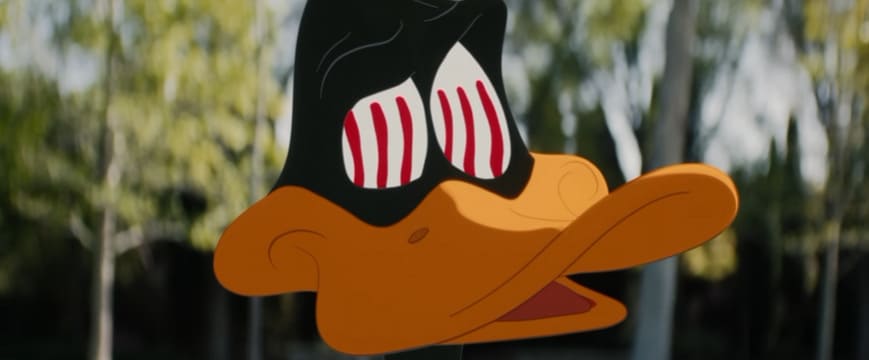
The courtroom material could easily have become the weakest part of the movie. Put a cartoon coyote in front of a judge and surround him with lawyers, paperwork and legal arguments, and you have a setup that could become painfully gimmicky within five minutes.
Thankfully, the footage and descriptions released so far suggest that the filmmakers understand the absurdity and are leaning into it.
One previewed courtroom sequence has John Cena’s Buddy Crane delivering a polished opening argument while Wile E. sits beside Kevin holding an ‘Acme Sucks’ sign. Even the judge gets a cartoonish courtroom prop, which tells you exactly what kind of movie Dave Green is making.
I like this approach much more than trying to make the legal battle completely realistic.
This is not A Few Good Men with a coyote.
It is a Looney Tunes movie that happens to understand courtroom comedy.
Kevin Avery also appears to have his own reason for taking the case seriously. He is not presented as some brilliant superstar attorney who has been waiting his entire career for a case against Acme. Quite the opposite. He is a down-on-his-luck lawyer, and the case gives him something personal to fight for. His relationship with Wile E. becomes an important part of the story rather than simply functioning as a mechanism to move the plot from one gag to another.
Will Wile E. Coyote Actually Beat Acme?
This is the question everyone wants answered.
And right now, there is no reliable official confirmation of the exact ending.
That distinction matters because the movie’s marketing has revealed the premise and some major characters, but not a complete third-act breakdown. The official material confirms that Wile E. uncovers a corporate conspiracy and launches an all-out battle against Acme, but it does not provide a verified scene-by-scene account of the final courtroom verdict.
So if you have seen articles claiming that the jury definitely awards Wile E. millions, that Acme is forced to rebuild its entire manufacturing operation, or that a particular courtroom trap destroys Buddy Crane’s defense, treat those details cautiously.
They may be spoilers circulating online.
They may also simply be invented.
And there is a massive difference between the two.
| What We Know | What Has Not Been Confirmed |
|---|---|
| Wile E. sues Acme | The exact verdict |
| Kevin Avery represents him | The precise final courtroom stunt |
| Buddy Crane represents Acme | Whether Acme is completely defeated |
| A corporate cover-up is part of the story | The exact final scene |
| Wile E. remains obsessed with the Road Runner | Whether he finally changes his approach |
The Real Ending May Be About Failure
Even without knowing the final scene, there is an obvious thematic direction here.
Wile E. Coyote cannot simply become successful.
That would completely misunderstand the character.
If he catches the Road Runner and lives happily ever after, what exactly are we supposed to do with the remaining 75 years of cartoon history? Wile E. is not interesting because he occasionally loses. He is interesting because losing never convinces him to stop trying.
That distinction could make the ending work beautifully.
The strongest possible resolution would not be Wile E. suddenly becoming competent. It would be Wile E. finally realizing that his failures do not have to define him.
There is a big difference between being defeated and choosing to keep going.
And Wile E. has always been very good at the second one.
The Road Runner Problem
There is also an amusing existential problem hiding underneath the entire movie.
What happens if Wile E. gets everything he wants?
Imagine Acme is defeated. Imagine Wile E. receives compensation. Imagine Kevin wins the case. Imagine the corporation is forced to admit that its products really are catastrophically unreliable.
What does Wile E. do on Monday morning?
Probably try to catch the Road Runner.
That is why I would be disappointed if the movie ended with Wile E. simply abandoning the chase. The entire point of the character is that he is incapable of giving up. His obsession is ridiculous, destructive and occasionally self-inflicted, but it is also strangely admirable.
The filmmakers have an opportunity to make that contradiction the emotional heart of the ending.
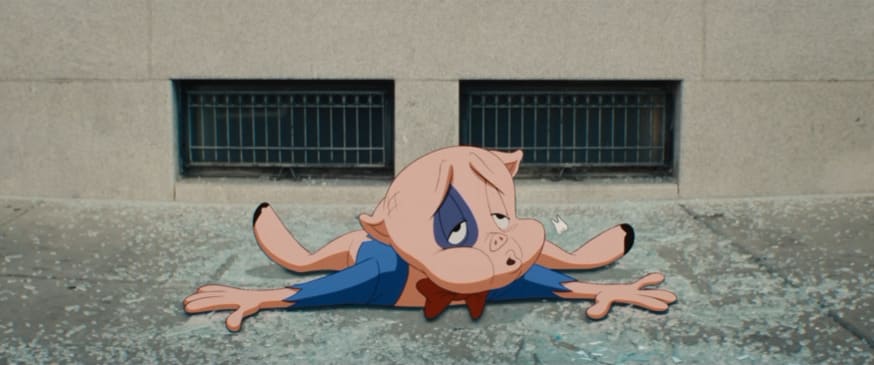
The Most Interesting Meta Joke Is the Movie Itself
This is where Coyote vs. Acme gets almost too perfect.
Warner Bros. announced in 2023 that the completed film would not be released, with the studio pursuing a tax write-off. The decision caused enormous backlash, particularly because the movie had already been completed. After years of uncertainty, Ketchup Entertainment acquired the worldwide rights in 2025, and the film was eventually scheduled for a theatrical release in 2026.
Think about that for a second.
The movie is about a character who spends his entire life getting destroyed by a gigantic corporation.
Then the movie itself gets trapped in a corporate decision that threatens to prevent anyone from ever seeing it.
That is almost absurdly on-brand.
The film’s resurrection also gives the story an uncomfortable extra layer. Wile E. is fighting to prove that the system has treated him unfairly. Meanwhile, the people who made the film spent years fighting for the movie itself to escape a studio vault.
You could not write a cleaner meta-joke if you tried.
Why the Final Smile Matters
If the filmmakers have any sense, the ending should not turn Wile E. into a completely different character.
He should still fail.
He should still get flattened.
He should still stare at the camera after some catastrophically stupid invention has exploded directly in his face.
But perhaps the difference is that the failure belongs to him now.
That sounds strange, but it is actually an important distinction.
For years, Wile E. has been dependent on Acme’s products. The company sells him the dream of finally catching the Road Runner, takes his money, and then leaves him underneath another boulder.
If the lawsuit gives him freedom from that cycle, his future failures can become something different. He is no longer simply a victim of a broken system. He is an obsessive inventor who keeps making terrible decisions because, deep down, he loves the challenge.
That would be a much more satisfying character arc than simply handing him a check.
Coyote vs. Acme Has Already Won One Battle
Whatever happens during the final courtroom sequence, the movie has already pulled off something remarkably appropriate.
It survived.
A completed film that once looked destined to vanish is now scheduled for a wide theatrical release on August 28, 2026. Ketchup Entertainment’s release campaign has even embraced the movie’s bizarre history, turning the fact that audiences nearly never saw it into part of its identity.
That makes Coyote vs. Acme more than another Looney Tunes experiment for me.
It is a movie about persistence that had to become persistent itself.
And if the eventual ending gives Wile E. Coyote one more spectacular failure before he dusts himself off and starts drawing another blueprint, I suspect that will be exactly the right note.
Not because he finally wins.
Because he refuses to stop trying.
Just don’t call any specific final courtroom verdict confirmed until the movie actually reaches theaters. Right now, the ending is still waiting behind the same door Wile E. has been trying to kick down for decades.
And considering this movie’s history, that feels almost hilariously appropriate.