Every time a new summer blockbuster gets announced, one question seems to dominate movie discussions before anyone has even seen a full trailer: How long is it?
That’s exactly what’s happening with The End of Oak Street, David Robert Mitchell’s upcoming sci-fi thriller produced by J.J. Abrams and Bad Robot. At 100 minutes, the movie is noticeably shorter than what audiences have come to expect from modern event films, and that alone has sparked endless debates across movie communities.
Personally, I think we’re asking the wrong question.
A movie doesn’t become better because it lasts three hours. Some of my favorite thrillers leave me wanting more—not because they feel incomplete, but because they know exactly when to end. Looking at everything we know about The End of Oak Street, I actually think its runtime could end up being one of its biggest advantages.
Is The End of Oak Street a Monster Movie? Genres, Plot, and Theories Explained
Why Everyone Is Talking About the Runtime
Modern blockbusters have gradually become longer with almost every passing year. Comic book movies, fantasy adventures, and franchise sequels regularly push well beyond the two-and-a-half-hour mark, making audiences expect every major release to follow the same formula.
Because of that trend, seeing a movie built around dinosaurs, science fiction, mystery, and survival come in at just 100 minutes immediately caught everyone’s attention.
Movie forums quickly filled with familiar questions.
- Will the story feel rushed?
- Can the characters receive enough development?
- Will the mystery be properly explained?
- Did the studio remove important scenes?
They’re reasonable concerns, especially for a film with such an unusual premise. But shorter doesn’t automatically mean incomplete.
A Strange Concept That Doesn’t Need Endless Lore
One of the biggest reasons I’m looking forward to The End of Oak Street is how unapologetically strange the premise sounds.
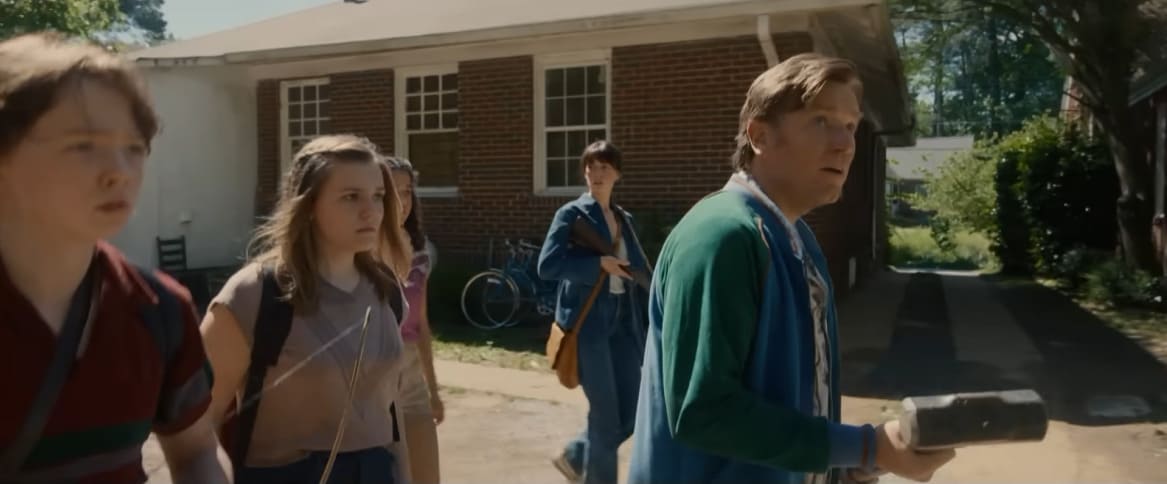
Instead of another global catastrophe filled with military operations and scientific briefings, the story reportedly follows an ordinary suburban family whose peaceful neighborhood is suddenly transported into a prehistoric wilderness populated by deadly dinosaurs.
That’s already an incredible hook.
What makes it exciting is its simplicity. Rather than juggling dozens of locations and side characters, the story stays focused on a single family facing an impossible situation.
Sometimes the unknown is far more compelling than a lengthy explanation. Some science-fiction films spend so much time detailing every rule of their fictional universe that they accidentally remove the mystery that made the concept interesting in the first place.
If this film leaves viewers with a few unanswered questions while delivering an intense survival story, I honestly won’t consider that a flaw.
David Robert Mitchell Isn’t Known for Conventional Blockbusters
Anyone familiar with David Robert Mitchell’s previous work knows that atmosphere has always been one of his greatest strengths.
His films don’t rely on constant exposition or oversized action scenes. Instead, they slowly build unease until even ordinary environments begin to feel unsettling.
That approach makes him an unexpectedly perfect director for a dinosaur thriller.
Rather than treating every dinosaur encounter as a spectacle designed only to impress visually, I expect the creatures to become sources of genuine suspense. Long stretches of silence, uncertainty, and carefully controlled pacing often create far stronger tension than nonstop explosions.
Those qualities don’t require an epic runtime. In many cases, suspense actually becomes weaker when a film lingers longer than necessary.
Longer Doesn’t Always Mean Better
One thing I’ve noticed over the past several years is that many blockbuster movies seem afraid of editing themselves.
Instead of telling a focused story, they often include:
- multiple unnecessary subplots,
- an oversized supporting cast,
- extended action scenes,
- future sequel setups,
- and repeated emotional moments that don’t add much to the overall experience.
None of those elements automatically improve a movie.
Some of the most memorable thrillers ever made remain effective precisely because they stay focused on one central idea without constantly expanding the narrative.
As a movie fan, I’d rather watch a perfectly paced 100-minute thriller than spend three hours waiting for a story to finally reach its destination.
A Smaller Setting Could Be the Movie’s Biggest Advantage
Another detail that makes The End of Oak Street stand out is its deliberately intimate setting.
Unlike traditional dinosaur adventures that span islands, laboratories, or entire continents, this story reportedly keeps most of its action centered on a single suburban neighborhood.
That immediately makes the danger feel more personal.
Imagine familiar places suddenly transformed into survival zones.
- Backyards become hunting grounds.
- Children’s playgrounds turn into dangerous territory.
- School buses become makeshift shelters.
- Quiet suburban streets become escape routes.
That contrast between everyday suburban life and prehistoric predators feels far more original than simply watching another massive dinosaur park fall apart.
The smaller scope also supports the shorter runtime. A tightly focused story doesn’t need endless detours if the emotional core remains with one family trying to survive.
Could a 100-Minute Runtime Help at the Box Office?
Beyond the creative discussion, there are practical reasons why the runtime could actually benefit Warner Bros.
| Factor | Potential Benefit |
|---|---|
| 100-minute runtime | Allows theaters to schedule more screenings each day. |
| Late August release | Faces less direct competition from major franchise films. |
| Original concept | Appeals to audiences looking for something different. |
| Dinosaur survival premise | Offers broad appeal across multiple age groups. |
| Fast pacing | Makes positive word of mouth easier to spread. |
Not every movie needs to become an all-evening commitment. Families, casual moviegoers, and younger audiences often appreciate a film that delivers excitement without demanding three hours of their time.
If the movie earns strong reviews, that accessibility could become a genuine advantage during its theatrical run.
What I Hope the Film Avoids
Even though I’m optimistic, there are still a few things I’d rather not see.
My biggest concern is that the movie could rush into nonstop action immediately after introducing the dinosaurs.
The strongest creature features usually spend time building anticipation before fully revealing the threat. The fear of what’s hiding nearby is often more effective than constantly showing monsters on screen.
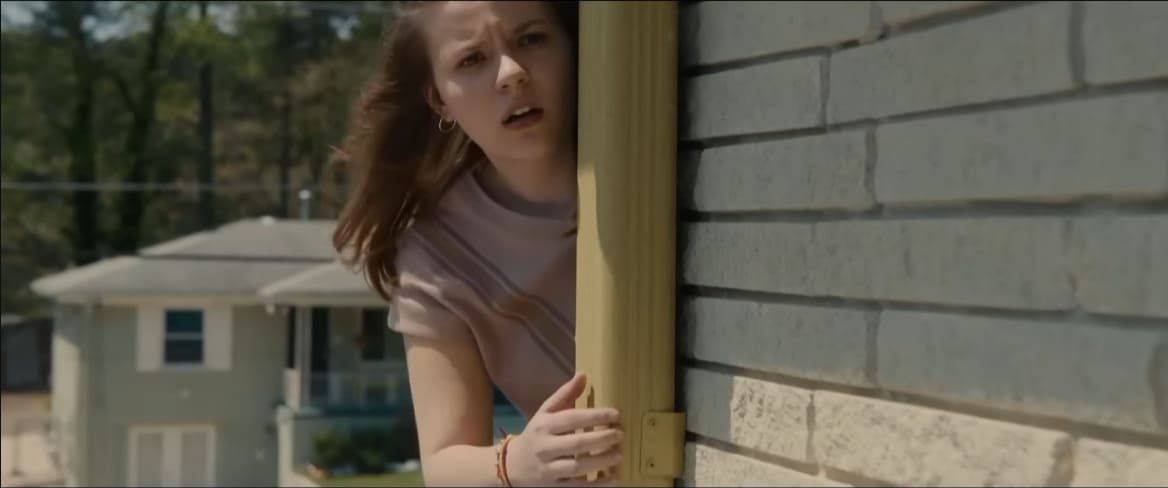
I’m also hoping the Platt family feels believable enough that audiences become emotionally invested in their survival.
Visual effects alone rarely carry a film. If viewers don’t care about the people running from the dinosaurs, even spectacular action sequences lose much of their impact.
Original Sci-Fi Deserves More Support
One reason I’m naturally rooting for The End of Oak Street is simply because it isn’t another obvious sequel.
Hollywood frequently relies on familiar franchises because they’re considered safer financial investments. While there’s nothing wrong with revisiting beloved worlds, completely original science-fiction ideas have become increasingly rare.
Whether this movie becomes a massive hit or only finds a dedicated fanbase later, I always appreciate studios willing to gamble on unusual concepts instead of repeating the same formulas year after year.
If audiences continue asking for more originality, supporting films like this is one of the best ways to encourage studios to keep taking creative risks.
Final Thoughts
I’m not expecting the next massive cinematic universe from The End of Oak Street.
What I’m hoping for is a smart, suspenseful, visually memorable thriller that tells one compelling story without unnecessary distractions.
If David Robert Mitchell delivers that, I genuinely won’t care whether the runtime is 100 minutes or three hours.
Great movies aren’t remembered because they were longer than everything else released that summer. They’re remembered because they leave audiences thinking about them long after the credits roll.
Right now, The End of Oak Street feels like exactly the kind of original blockbuster I’d love to see succeed—a focused science-fiction thriller that values atmosphere, creativity, and pacing over sheer length. If it delivers on that promise, its runtime may end up being one of the smartest creative decisions behind the entire project.