Where was Heart of the Beast filmed? If you watched the trailers and assumed Brad Pitt was dropped somewhere in the frozen Alaskan wilderness, I honestly can’t blame you. The landscapes look brutal, enormous and completely hostile to human life. Snow-covered peaks stretch into the distance, forests seem to go on forever, and the rivers look cold enough to kill you before you’ve even had time to regret falling in.
There is just one problem with that assumption: Heart of the Beast was not filmed in Alaska.
Director David Ayer took his survival thriller to New Zealand’s South Island, using some of the country’s most spectacular and punishing wilderness as a stand-in for Alaska. And judging from what we’ve seen so far, it was a smart decision. Actually, it’s one of those cases where the fake location may end up looking more convincing than the real thing.
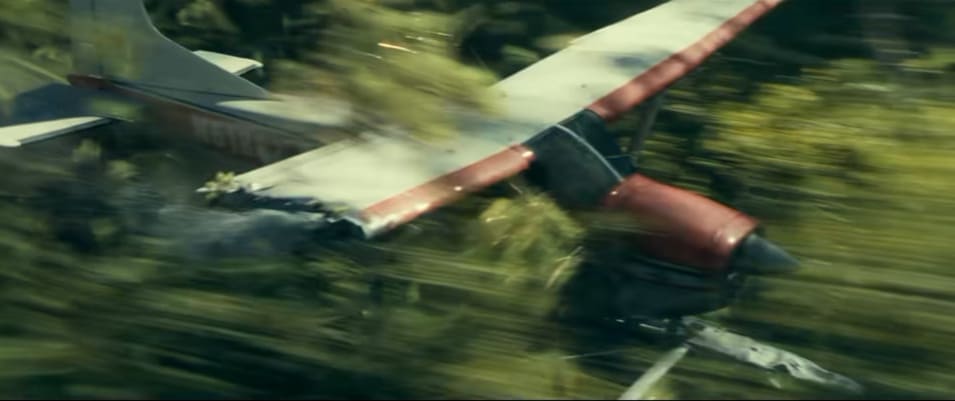
The movie stars Brad Pitt as James Belmont, a former Army Special Forces officer who survives a catastrophic plane crash in the wilderness. His only real companion is Odin, a retired combat German Shepherd. From there, the story becomes a nasty fight for survival involving freezing temperatures, dangerous terrain, wildlife and the psychological baggage Belmont has been carrying for years.
That premise only works if the environment feels genuinely threatening. Ayer clearly understood that. Instead of building everything around obvious studio sets or relying heavily on digital backgrounds, the production went deep into New Zealand’s mountains, forests, rivers and remote valleys.
Why Was the Delgado Family Sealed Inside Their House? The Last House 2026 Ending Explained
Queenstown Was the Heart of the Production
If you’re trying to trace the Heart of the Beast filming locations, Queenstown is the obvious place to start. The famous New Zealand resort town served as the production hub, giving the cast and crew access to roads, accommodation and infrastructure while putting some seriously wild terrain practically on their doorstep.
Queenstown sits beside Lake Wakatipu, surrounded by dramatic mountain ranges, including the unmistakable Remarkables. Those mountains are particularly useful for the film because they immediately sell the illusion of Alaska. Sharp ridgelines, snow-covered slopes and constantly changing weather give the movie the kind of scale that survival films desperately need.
And there’s something almost funny about the contrast. Queenstown is one of New Zealand’s major tourist destinations, packed with people who come for skiing, hiking and adventure sports. Heart of the Beast, meanwhile, wants you to believe that Brad Pitt is fighting to stay alive in the middle of nowhere.
That’s filmmaking for you.
Brad Pitt was also spotted in the Queenstown area during production, including reports of a memorable McDonald’s drive-through encounter. Not exactly the glamorous Hollywood image you’d expect from a movie about an elite soldier battling the wilderness, but honestly, I kind of love it.
Lake Wakatipu and Glenorchy Bring the Isolation
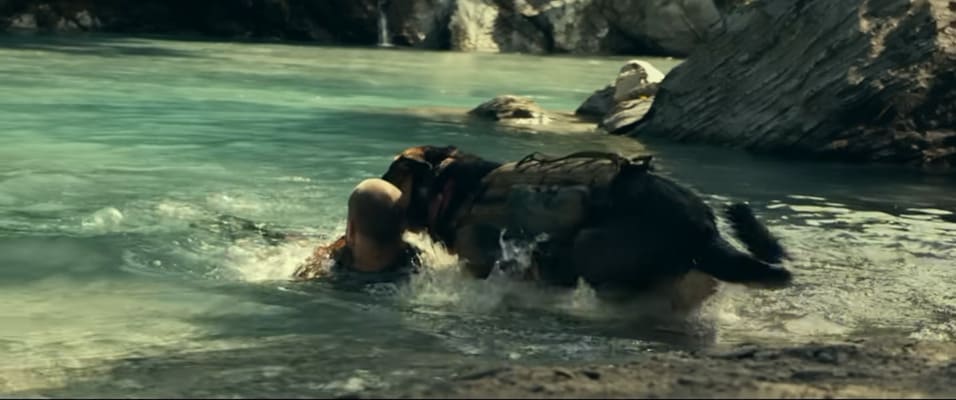
Travel north from Queenstown and you reach Glenorchy, a small settlement that feels like the last stop before civilization gives up completely. The area surrounding Glenorchy and the northern end of Lake Wakatipu became an important part of the movie’s wilderness setting.
Lake Wakatipu provides exactly the sort of cold, unforgiving water you’d expect from an Alaskan survival story. Several sequences connected with Belmont’s struggle after the plane crash use the region’s glacial-looking waters and rocky shorelines to reinforce just how isolated he and Odin really are.
The surrounding river systems are equally useful. Their wide, stony banks create natural locations for scenes involving survival basics such as finding food, fishing and moving through difficult terrain. Nothing about the landscape feels conveniently designed for a movie character. That’s a big part of its appeal.
Glenorchy may be one of the most convincing Alaska substitutes in the entire production. It’s beautiful, but there’s an uncomfortable edge to that beauty. You can look at the mountains and immediately understand how quickly this place could become dangerous if you were injured, exhausted and completely alone.
Mount Aspiring National Park Gets Seriously Wild
For the forest sequences, the production went even deeper into New Zealand’s wilderness with Mount Aspiring National Park.
This is where the movie’s environment stops looking merely spectacular and starts looking genuinely intimidating. The park contains glaciers, enormous valleys, rugged mountain terrain and ancient beech forests. Put a camera in the middle of that landscape, add Brad Pitt, a working dog and a survival scenario, and you’ve basically got everything a director could want.
Ayer reportedly pushed the production toward a rougher, more physical approach. That decision matters because survival movies can fall apart pretty quickly when the environment feels fake. A character can talk about freezing to death for ten minutes, but if the forest around him looks like a comfortable film set, the tension disappears.
Here, the weather itself becomes part of the movie. Rain, mud, slippery slopes and difficult mountain conditions were not simply visual effects added afterward. The crew had to deal with them while filming.
And you can feel that kind of discomfort in a good survival movie. The best scenes don’t look polished. They look miserable.
Milford Sound and Fiordland Provide the Big-Screen Scale
If there’s one location that makes the decision to film in New Zealand completely understandable, it’s Milford Sound and the wider Fiordland region.
Fiordland is ridiculous in the best possible way. Towering cliffs rise straight from dark water, waterfalls crash down enormous rock faces, and mist constantly rolls through the landscape. It doesn’t look like somewhere a human being should casually wander into.
That’s exactly what Heart of the Beast needs.
Some of the production’s most remote mountain material required helicopters because conventional access simply wasn’t practical. The logistics were apparently extremely restrictive, with the crew limited to only a small number of helicopter loads of equipment during shooting days.
Imagine trying to make a Hollywood movie under those conditions. Cameras, lighting equipment, safety gear, costumes and everything else needed for a major production have to get onto a mountain. Then you’ve got Brad Pitt and a canine actor who also have to be positioned correctly. And somewhere in the middle of all this, the weather can decide that filming is over.
That sounds exhausting.
It also explains why the footage looks so impressive. When a character is standing on an isolated ridge surrounded by enormous mountains, there isn’t much reason to fake the background. The real landscape is already doing most of the work.
Why Did Heart of the Beast Film in New Zealand Instead of Alaska?
At first glance, filming an Alaskan survival movie in New Zealand sounds strange. Once you look at the geography, though, the choice becomes much easier to understand.
| Location | What It Brings to the Movie |
|---|---|
| Queenstown | Production base, mountain access and The Remarkables |
| Glenorchy | Remote rivers, rocky terrain and Lake Wakatipu |
| Mount Aspiring National Park | Dense forests, valleys, glaciers and harsh terrain |
| Fiordland / Milford Sound | Massive cliffs, waterfalls, mist and extreme wilderness |
The South Island offers an absurd amount of geographic variety within a relatively manageable production area. You can move from alpine mountains to forests, lakes, rivers and enormous valleys without relocating the entire production thousands of miles.
New Zealand also has a long history of handling physically demanding film productions. Local crews understand difficult terrain, mountain safety and unpredictable weather, while the country’s established film industry makes large-scale international productions far more practical.
There’s also the simple visual argument. On camera, New Zealand can absolutely pass for Alaska. If anything, the South Island sometimes looks so untouched that it feels almost too perfect for a movie.
Did Brad Pitt Really Shoot in These Extreme Locations?
One of the more interesting things about Heart of the Beast is how strongly the production appears to be leaning into real environments. This isn’t a story that can comfortably hide behind green screens all the time. The physical relationship between Belmont, Odin and the landscape is central to the movie.
That doesn’t mean every shot was captured entirely in the wilderness, of course. Big productions use visual effects, controlled environments and production facilities when necessary. But the location work gives the film something money alone can’t easily manufacture: scale that feels real.
And that’s particularly important for the relationship between Belmont and Odin. The dog isn’t just there for a cute emotional subplot. The entire survival dynamic depends on the two characters moving through an environment that genuinely looks capable of killing them.
When Does Heart of the Beast Release?
Heart of the Beast is scheduled to arrive in theaters on September 25, 2026. Until audiences can see the finished movie, the trailers are the best evidence of how effectively New Zealand has been transformed into the Alaskan wilderness.
My biggest takeaway from the footage so far is pretty simple: the location work might be one of this movie’s strongest weapons. The premise is familiar. Man survives disaster, man gets lost, man and dog fight their way home. We’ve seen versions of that story before.
What can make this version stand out is the environment.
If Ayer manages to maintain the same level of physical grit throughout the full movie, those mountains, rivers and forests won’t just be pretty scenery behind Brad Pitt. They’ll become the thing constantly trying to beat him.
And honestly, that’s what I want from a survival thriller. Give me fewer artificial-looking action sequences and more moments where I can practically feel the cold through the screen. Heart of the Beast already looks like it understands that.
New Zealand pretending to be Alaska shouldn’t work this well.
Somehow, it does.