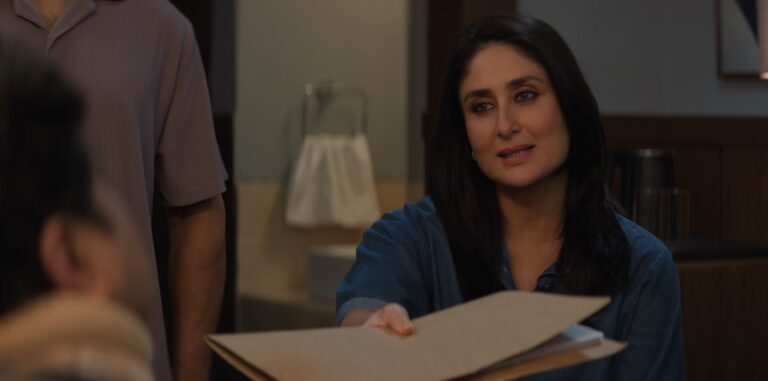
There are crime thrillers that want to entertain you, and then there are films that seem determined to make you uncomfortable. Daayra (2026) clearly belongs to the second category.
Directed by Meghna Gulzar, the filmmaker behind Talvar, Raazi, and Chhapaak, this new crime drama goes straight into the ugliest part of the justice system: the space where law, public anger, police power, politics, and morality stop fitting neatly together.
The film stars Kareena Kapoor Khan and Prithviraj Sukumaran as two senior police officers who find themselves on opposite sides of a deeply controversial investigation. That setup alone would be enough to sell me on the movie. But what makes Daayra particularly interesting is that it doesn’t appear interested in handing the audience a comfortable hero and an obvious villain.
And honestly, that’s exactly what I want from a crime thriller like this.
Instead of turning a horrific case into another excuse for a larger-than-life cop story, Gulzar seems far more interested in asking what happens when everyone involved believes they are protecting justice.
Daayra Release Date, Runtime and Certification
Daayra is scheduled for a worldwide theatrical release on September 18, 2026. The movie has an official runtime of 143 minutes and 16 seconds, putting it at just over two hours and 23 minutes.
That’s a fairly substantial runtime for a modern crime thriller, but the material seems to justify it. This isn’t built around constant action sequences or rapid-fire twists. The tension comes from investigations, conflicting principles, institutional pressure, and the slow realization that the truth may not be nearly as clean as anyone wants it to be.
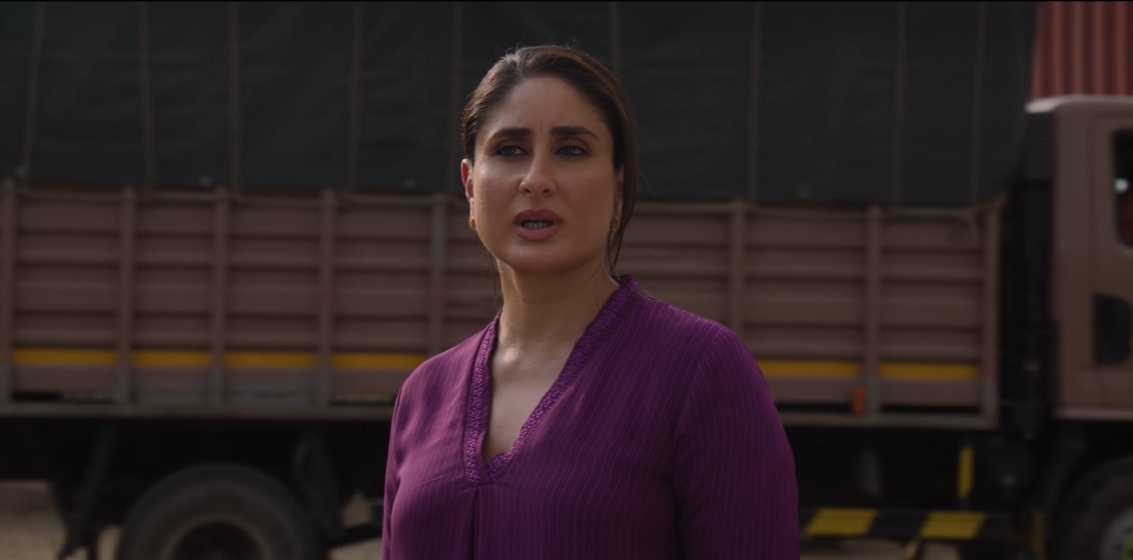
The film received an A certificate from India’s Central Board of Film Certification (CBFC). According to the certification details in the film’s production information, there were no visual cuts. A minor verbal change was requested during the certification process.
The adult rating makes sense considering the movie’s subject matter, violence, and heavier dramatic themes.
| Detail | Daayra (2026) |
|---|---|
| Director | Meghna Gulzar |
| Lead Cast | Kareena Kapoor Khan, Prithviraj Sukumaran |
| Genre | Crime Drama / Thriller |
| Runtime | 143 minutes 16 seconds |
| Certification | A |
| Theatrical Release | September 18, 2026 |
| Production | Junglee Pictures, Pen Studios |
Kareena Kapoor and Prithviraj Sukumaran Are the Real Draw
The casting is probably the biggest reason Daayra has my attention.
Kareena Kapoor Khan plays DCP Ajooni Kohli, a police officer whose approach is rooted in procedure, accountability, and the boundaries of institutional justice.
Opposite her is Prithviraj Sukumaran as DCP Raman Kumar, a character operating from a much harsher understanding of policing. His side of the investigation is shaped by the practical realities of dealing with serious crime, public pressure, and a system that often moves far more slowly than the people demanding immediate action.
That’s a potentially fantastic pairing because neither actor needs to dominate the screen through traditional action-hero theatrics.
Kareena has become particularly interesting in serious material over the past several years. Her work in films such as The Buckingham Murders showed that she can comfortably step away from conventional commercial-star territory when the role gives her something substantial to chew on.
Prithviraj, meanwhile, has built a reputation for performances that can carry considerable internal tension without constantly spelling everything out for the audience.
Put them together in a story where their characters fundamentally disagree about justice, and there is plenty of room for sparks.
A Crime Case That Turns Into a Moral Argument
The central investigation begins with a missing-person case connected to a controversial police encounter, eventually expanding into something much bigger.
This is where Daayra seems to separate itself from a conventional police procedural.
The case isn’t simply about discovering who committed a crime. The investigation becomes a battle over how the justice system should respond to an especially disturbing act, and whether the law should always remain rigid when public emotions are reaching boiling point.
One of the film’s biggest thematic questions revolves around juvenile crime.
What happens when a minor is accused of committing an exceptionally serious and calculated violent act? Should existing protections for juveniles remain absolute, regardless of the circumstances? Or can the severity of the crime justify a fundamentally different response?
There isn’t an easy answer, and the film doesn’t seem interested in pretending there is one.
That’s also where the title Daayra becomes particularly fitting. The story is essentially about boundaries — legal boundaries, moral boundaries, institutional boundaries, and the point at which people decide those boundaries no longer apply.
The Film’s Most Interesting Element: Nobody Gets an Easy Answer
My favorite thing about the premise is its refusal to reduce the conflict to “good cop versus bad cop.”
That formula has been used so many times that it barely has any bite anymore.
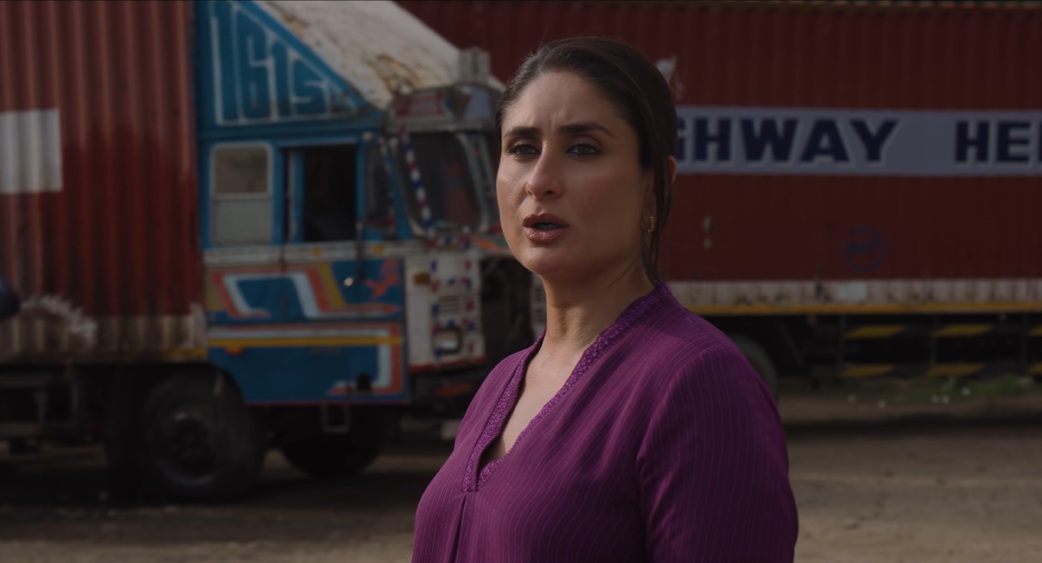
Here, the disagreement appears to be philosophical as much as professional. Ajooni Kohli represents one interpretation of institutional responsibility, while Raman Kumar represents another. Both approaches have consequences, and the movie appears willing to sit inside that uncomfortable space rather than rushing toward a convenient answer.
That’s a risky choice.
A thriller can lose momentum when it becomes too obsessed with its own moral questions. At 143 minutes, Daayra has plenty of room to fall into that trap. But Meghna Gulzar’s previous work suggests she understands how to build tension through investigation and character rather than relying exclusively on plot mechanics.
The supporting cast should help as well.
Jitendra Joshi, Biswapati Sarkar, Kanwaljeet Singh, Achint Kaur, Pragati Mishra, Seema Azmi, and Kshitee Jog all appear in important supporting roles, filling out a world of lawyers, officers, civilians, and other people caught in the machinery surrounding the central case.
That matters because the strongest institutional thrillers aren’t really about one investigation. They’re about how an investigation changes everyone standing near it.
Meghna Gulzar Keeps Things Grounded
Visually, Daayra seems to be going for a very different mood from glossy mainstream Bollywood thrillers.
Cinematographer Saurabh Goswami gives the film a bleak, desaturated visual identity that fits the material. There is no need for everything to look polished or glamorous when the story is dealing with institutional failure and public outrage.
The editing comes from Charu Shree Roy and Meghna Gulzar, and the reported pacing is one of the things I’m particularly curious about.
A 143-minute crime drama has to earn every minute.
If the movie spends too much time explaining its themes, the tension could disappear. If the investigation is allowed to breathe while the character conflicts gradually become more complicated, that runtime could work extremely well.
The music also appears to be an important part of the atmosphere. Ketan Sodha handles the background score, while Amit Trivedi provides the soundtrack, with lyrics by Gulzar.
The promotional track “Sach Ka Daayra” reportedly acts almost like a thematic statement for the movie, focusing on the relationship between truth, perception, and morality.
That sounds much more interesting to me than stuffing a crime thriller with songs simply because it’s an Indian theatrical release.
Why Daayra Could Connect With International Audiences
The appeal of Daayra isn’t limited to Indian audiences.
There is a huge international audience for grounded investigative thrillers right now, particularly viewers who enjoy films and series built around morally complicated cases rather than straightforward action.
Fans of Mindhunter, Zodiac, Sicario, and similar crime dramas may find something familiar in the movie’s atmosphere, although Daayra is firmly rooted in India’s own legal and social realities.
The film’s subject matter also gives it obvious relevance for South Asian audiences living abroad.
For viewers in cities such as New York, Los Angeles, Chicago, Houston, and San Francisco, the theatrical release offers an opportunity to see a major Indian crime drama on the big screen rather than waiting for a streaming debut.
And honestly, this feels like the kind of movie that benefits from a theater.
The claustrophobic investigation, restrained visuals, heavy performances, and increasingly uncomfortable moral arguments should hit differently with a full audience sitting in silence.
Daayra Cast and Crew
The core creative team is packed with established Indian cinema talent:
- Meghna Gulzar — Director and Co-writer
- Kareena Kapoor Khan — DCP Ajooni Kohli
- Prithviraj Sukumaran — DCP Raman Kumar
- Sima Agarwal and Yash Keswani — Co-writers
- Saurabh Goswami — Cinematography
- Charu Shree Roy and Meghna Gulzar — Editing
- Ketan Sodha — Background Score
- Amit Trivedi — Music
- Gulzar — Lyrics
The production comes from Junglee Pictures and Pen Studios, with Vineet Jain, Dhaval Gada, and Amrita Pandey serving as producers.
Daayra (2026) US and EU Cinema Release Time, Cast, Plot, and Theater Guide
Final Thoughts on Daayra
What makes me curious about Daayra isn’t simply the combination of Kareena Kapoor Khan, Prithviraj Sukumaran, and Meghna Gulzar.
It’s the argument at the center of the movie.
The best crime thrillers don’t just ask “Who did it?” They ask what happens after the answer becomes politically inconvenient, morally complicated, or impossible to separate from public anger.
Daayra appears to be built around exactly that tension.
The movie has the ingredients for a serious, uncomfortable theatrical thriller: two heavyweight performers on opposite sides of a justice debate, a controversial investigation, a director with a history of tackling difficult subjects, and a story that deliberately avoids giving the audience a clean moral escape route.
I’m especially interested in seeing how the film handles its central juvenile-crime debate. That’s the kind of subject where a screenplay can become preachy very quickly. If Gulzar keeps the characters human and allows the audience to wrestle with the contradictions instead of constantly telling us what to think, Daayra could become one of those crime dramas that sticks around in your head long after the credits.
And those are usually the movies worth talking about.