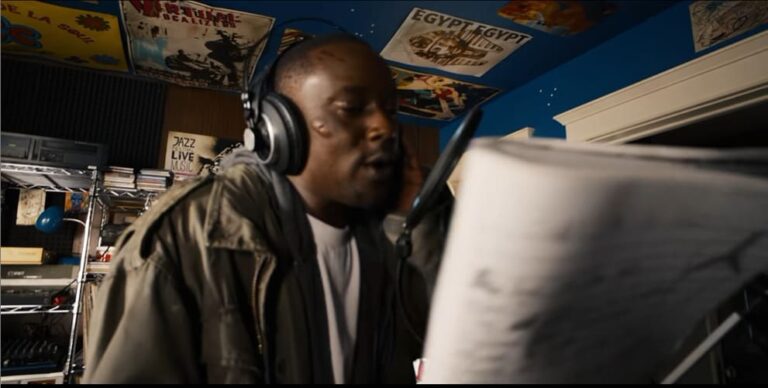
There is a very specific problem with comparing The Whisper Man vs Mindhunter: both deal with serial killers, both are drenched in psychological darkness, and both want you to stare at the ugliest parts of human behavior. But that is where the similarities practically end.
Netflix’s The Whisper Man arrives with an absurd amount of talent behind it. James Ashcroft directs, the Russo brothers’ AGBO produces, and the cast puts Adam Scott, Robert De Niro, and Michelle Monaghan in the same crime thriller. On paper, that sounds like a guaranteed home run.
And yet, after watching it, I completely understand why some viewers are frustrated.
I also understand why others are obsessed with it.
That contradiction is basically the entire movie.
The Whisper Man is not trying to be another Mindhunter. It is warmer, messier, more emotional, more conventional, and considerably more interested in family trauma than criminal psychology. Sometimes that works brilliantly. Sometimes it feels like the movie is taking shortcuts just when things are getting interesting.
If you expect another David Fincher-style examination of serial killers, prepare to be disappointed. If you want a creepy, emotionally charged thriller with a strong cast and an unsettling central mystery, there is plenty here to enjoy.
10 Chilling Thrillers and Movies Like The Whisper Man on Netflix You Must Watch
The Whisper Man vs Mindhunter: Two Very Different Ideas of Horror
The easiest way to understand the difference is to ask a simple question: what exactly is supposed to scare you?
In Mindhunter, the answer is human nature.
The series rarely needs explosions, frantic chases, or traditional horror tricks. Instead, the horror comes from listening to people like Edmund Kemper calmly explain what they did and why they did it. Holden Ford and Bill Tench sit across from murderers in painfully ordinary rooms, asking questions that become increasingly disturbing.
That restraint is what makes Mindhunter so effective.
There is no comfortable distance between the viewer and the subject. The killers aren’t presented as supernatural masterminds. They are human beings capable of horrific decisions, and that reality is far more disturbing than any masked monster.
The Whisper Man takes almost the exact opposite route.
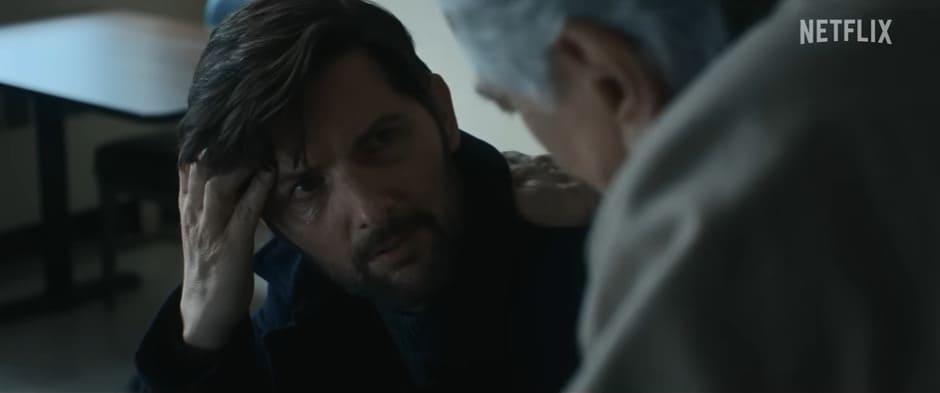
Here, evil becomes a story. A legend. Something parents warn their children about.
The Whisper Man is a serial killer who supposedly lured children by whispering outside their windows. Even the concept sounds like something that could have haunted you as a kid. You know it’s ridiculous. You know there probably isn’t someone standing outside your bedroom.
But you still check the window.
That is where the movie finds its strongest horror imagery.
Tom Kennedy Is Not Holden Ford — And That’s a Good Thing
One mistake I’ve seen repeatedly in discussions of The Whisper Man vs Mindhunter is treating the protagonists as if they are supposed to perform the same function.
They aren’t.
Adam Scott plays Tom Kennedy, a widowed crime writer whose life has effectively collapsed after losing his wife. He moves with his young son Jake, hoping that a new town will give them both some breathing room.
Naturally, that plan lasts about five minutes.
Jake becomes connected to the terrifying legacy of Frank Carter, the imprisoned killer known as the Whisper Man. Suddenly Tom isn’t researching a crime story from a safe distance. His own child is in danger.
That’s a much more emotional setup than anything Mindhunter normally attempts.
Holden Ford wants to understand killers.
Tom Kennedy desperately wants to save his son.
Those motivations create completely different kinds of tension.
And honestly, I think Adam Scott benefits from this material. His performance gives Tom enough vulnerability to make the family drama believable without turning him into a generic action hero. He’s exhausted, frightened, angry and frequently out of his depth.
That makes the character work.
Robert De Niro Steals the Movie
Then there is Robert De Niro.
His role as Pete Willis, the retired detective who originally caught the Whisper Man, is arguably the most interesting character in the film.
Pete isn’t simply the wise old detective who shows up to explain the plot. He carries decades of guilt, regret and unresolved trauma. The fact that the killer he put away is somehow connected to his son’s current nightmare gives the story a generational dimension that Mindhunter deliberately doesn’t pursue.
The scenes between Tom and Pete are where the movie feels most alive.
Their relationship is uncomfortable. They don’t magically become a perfect father-and-son team because a child has disappeared. There is resentment between them, and the movie allows that tension to remain visible.
De Niro also brings exactly the kind of weary presence the role needs. Pete looks like a man who has spent too many years carrying things he should have put down long ago.
That works far better than another hyper-competent retired detective archetype would have.
Where The Whisper Man Falls Short
Here’s where I have to be a little harsh.
The movie sometimes feels too eager to get to the next plot point.
At 114 minutes, The Whisper Man simply doesn’t have the breathing room that Mindhunter had. A television series can spend an entire episode on a conversation that appears insignificant before suddenly revealing why it mattered.
A movie doesn’t have that luxury.
As a result, some developments arrive faster than they should. Certain discoveries can feel convenient rather than earned, and some investigative leaps don’t have the satisfying precision that fans of Fincher’s work have come to expect.
This is probably the biggest reason the comparison with Mindhunter is so unforgiving.
Fincher makes you feel like every detail has been deliberately placed.
The Whisper Man occasionally makes you feel like the story needs to move, so the characters conveniently find the next piece of the puzzle.
That’s a big difference.
And for a serial killer thriller, the investigation should feel clever. When the audience figures out that the characters are being pushed from one revelation to another by the screenplay, tension starts to disappear.
The Whisper Man Works Better as a Nightmare Than a Police Procedural
Interestingly, the movie becomes much stronger when you stop expecting it to behave like Mindhunter.
The Whisper Man himself is more effective as a frightening idea than as a realistic criminal profile.
The whispering.
The windows.
The children’s fear.
The old case.
The sense that something from the past has returned.
Those elements give the movie a gothic quality that makes it feel closer to a modern urban legend than a traditional FBI procedural.
And I genuinely like that.
Serial killer stories have spent decades trying to create the next Hannibal Lecter-style genius. The Whisper Man doesn’t completely escape those conventions, but its strongest imagery comes from something much simpler: the fear of a parent who cannot protect their child.
That’s primal. You don’t need a complicated psychological explanation for it.
Atmosphere Is Doing a Lot of Heavy Lifting
If there is one area where The Whisper Man deserves serious credit, it’s atmosphere.
The movie understands that silence can be more uncomfortable than noise.
Empty streets, dark rooms, isolated houses and nighttime conversations create an oppressive feeling that stays with the story. The film doesn’t need to constantly show the killer to make his presence felt.
That’s especially effective around Jake.
The idea of a child hearing someone whisper outside a window is disturbing precisely because it feels simple. There is no elaborate monster design required. Your imagination does most of the work.
That said, the movie occasionally pushes the creepy atmosphere so hard that it starts feeling manufactured. There are moments where you can practically hear the soundtrack telling you, “Something scary is about to happen.”
I would have preferred more confidence.
The best horror doesn’t always announce itself.
Mindhunter Still Wins the Psychological Battle
If we’re judging these two purely as explorations of criminal psychology, Mindhunter wins comfortably.
There really isn’t much of a contest.
| Category | The Whisper Man | Mindhunter |
|---|---|---|
| Psychological Depth | Strong | Exceptional |
| Serial Killer Realism | Moderate | Excellent |
| Atmosphere | Excellent | Excellent |
| Family Drama | Excellent | Limited |
| Procedural Detail | Moderate | Exceptional |
| Pacing | Faster, sometimes rushed | Slow and deliberate |
| Horror Factor | High | Subtle but disturbing |
| Character Relationships | Family-focused | Profession-focused |
| Biggest Strength | Emotional Tension | Criminal Psychology |
But that doesn’t make The Whisper Man inferior in every respect.
It is trying to make you feel something different.
Mindhunter makes you uncomfortable because it asks you to understand monsters.
The Whisper Man makes you uncomfortable because it puts a family in danger and surrounds them with something that feels almost mythical.
That’s a legitimate distinction.
Why True Crime Fans Are So Divided
The online reaction makes perfect sense to me.
If you came into this movie wanting another meticulous procedural, you are probably going to notice every shortcut. Every convenient clue. Every accelerated revelation. Every moment where the plot seems to bend to keep the story moving.
If you’re coming from horror, gothic thrillers, or emotional crime dramas, you might have a completely different reaction.
You see the creepy imagery.
You see Adam Scott’s increasingly desperate performance.
You see De Niro playing a damaged old detective with unfinished business.
You see the father-son conflict.
And suddenly the movie works.
This is why the phrase “The Whisper Man vs Mindhunter” is slightly misleading. It’s not really a battle between two versions of the same thing. They’re built around different ideas.
One asks, “Why do people become monsters?”
The other asks, “What happens when the monster from the past comes back for your family?”
Those questions naturally produce different movies.
Is The Whisper Man Worth Watching?
Yes — with one fairly important warning.
Don’t watch it expecting Mindhunter.
If you do, you’re setting yourself up to hate a movie for not being something it never promised to be.
Instead, treat The Whisper Man as a dark family thriller with serial killer mythology, strong performances and a deliberately creepy atmosphere. Its plot isn’t always as airtight as I’d like, and some investigative moments could have used considerably more intelligence behind them.
But when the movie focuses on Tom, Pete and Jake, it becomes genuinely compelling.
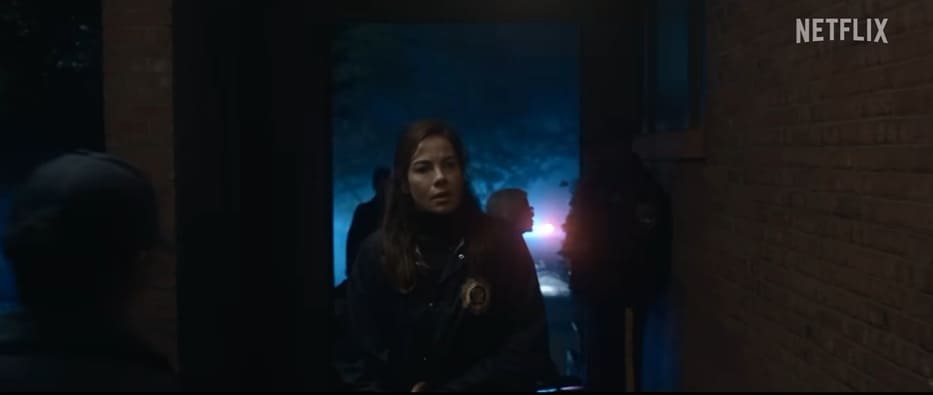
Robert De Niro gives the story gravitas. Adam Scott brings the emotional desperation. Michelle Monaghan adds another layer to the investigation, while the supporting cast helps keep the film from collapsing into a simple father-versus-killer chase.
Is it as precise as Mindhunter?
No.
Is it as psychologically rigorous?
Not even close.
Is it creepy enough to keep you checking the dark corners of the room after the credits?
At its best, absolutely.
And that’s probably the fairest way to look at The Whisper Man. It isn’t the new Mindhunter, and trying to force that comparison onto it does the film a disservice. It’s a messier, more emotional and more conventional thriller that occasionally reaches something genuinely unsettling.
I wish the investigation had been smarter. I wish the screenplay trusted its strongest ideas more often. But I also can’t deny that some of its darker moments got under my skin.
And frankly, for a serial killer movie, that’s worth something.