There was a point when I genuinely wondered whether Mayday could possibly live up to the ridiculous amount of attention surrounding it. Ryan Reynolds. Kenneth Branagh. A Cold War survival story. Soviet territory. Secret military operations. And, somehow, a buddy comedy buried underneath all of that.
On paper, it sounds like the sort of movie that could collapse under its own ideas.
Thankfully, Mayday mostly avoids that trap.
Directed and written by Jonathan Goldstein and John Francis Daley, the filmmaking team behind Game Night and Dungeons & Dragons: Honor Among Thieves, the movie takes the familiar machinery of a Cold War thriller and deliberately throws it into a snowbank. Instead of treating espionage, military paranoia and Soviet-American tensions with endless grim faces and whispering conversations in dark rooms, the film asks a much more entertaining question: What happens when an arrogant American fighter pilot gets stranded behind enemy lines and the only person willing to save him is a retired KGB agent who absolutely loves American movies?
That is the hook. And honestly, it is a fantastic one.
A Cold War Mission Goes Spectacularly Wrong
The story begins in 1987, when the Cold War is still dangerous enough that one mistake in the wrong place could have catastrophic consequences.
Ryan Reynolds plays Lieutenant Troy Kelly, an American Navy pilot whose call sign, “Assassin,” tells you almost everything you need to know about his personality. He is confident, cocky, quick with a joke and clearly accustomed to being the most capable person in the room.
That confidence becomes significantly less useful when his classified reconnaissance mission over Soviet territory goes horribly wrong.
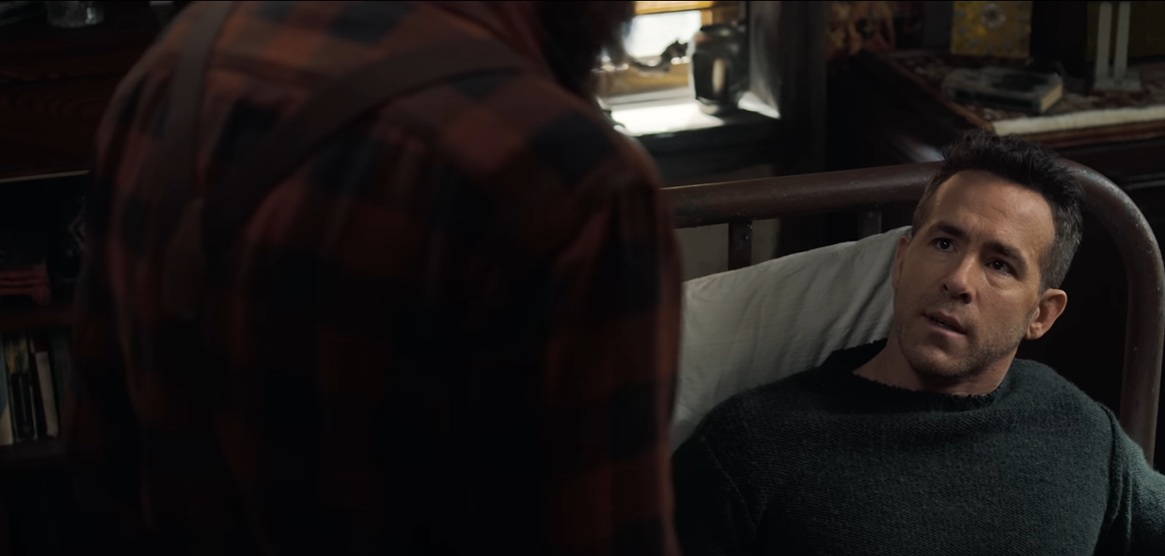
Troy’s aircraft suffers a catastrophic failure, forcing him to eject. Instead of returning safely to American-controlled territory, he crashes into the frozen wilderness deep inside the Soviet Union.
And this is where Mayday gets interesting.
Troy isn’t simply lost. He’s behind enemy lines, injured, isolated and surrounded by a military force that has every reason to hunt him down. A rescue operation isn’t exactly something Washington can casually arrange without risking an international incident.
One wrong move could turn a disastrous mission into something much bigger.
So Troy has to survive.
Unfortunately for him, surviving in the Soviet wilderness isn’t exactly like surviving a Hollywood action movie.
Kenneth Branagh Steals the Premise
Enter Nikolai Ustinov, played by Kenneth Branagh.
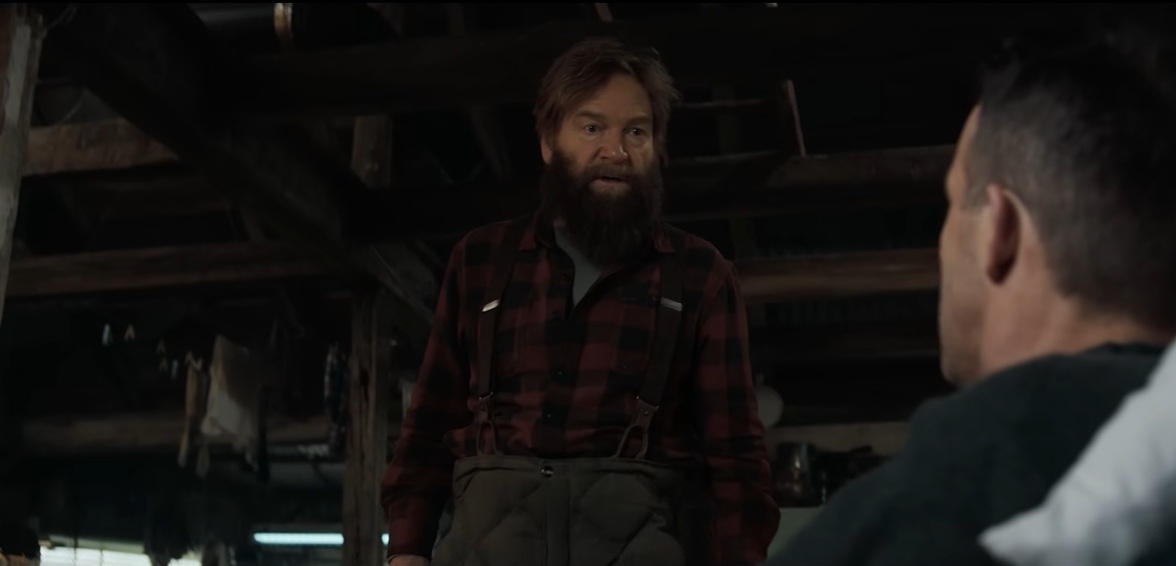
Nikolai is a former KGB operative who has abandoned that life and now lives as a carpenter in relative isolation. He’s older, experienced and considerably less impressed by military bravado than Troy expects.
But there’s one detail that completely changes the relationship.
Nikolai loves American movies.
Not casually. Not in the “I’ve seen a few Hollywood films” sense. He is fascinated by American action heroes and has absorbed their mythology through the movies available to him.
So when he discovers a wounded American pilot lying in the snow, Nikolai doesn’t immediately see an enemy.
He sees something much stranger: a real American action hero who has somehow walked directly out of the movies he loves.
That absurdity gives Mayday its personality.
Nikolai hides Troy inside his remote cabin and attempts to keep him alive. Troy is badly injured, and Nikolai is forced to perform improvised medical treatment with whatever resources he has available.
The situation is brutal.
The dialogue, however, is often hilarious.
Troy expects professional military discipline. Nikolai operates according to decades of survival experience, practical improvisation and a slightly ridiculous understanding of American culture. Neither man is particularly interested in admitting that the other might actually be useful.
And that’s exactly why their relationship works.
Two Men Who Should Absolutely Not Be Working Together
The best thing about Mayday isn’t the aircraft, the Soviet military or even the escape sequences.
It’s Troy and Nikolai.
Reynolds naturally brings his rapid-fire comedic rhythm to Troy, but the character works better when the movie lets him look genuinely vulnerable. Once his aircraft is gone and he’s injured in an unfamiliar country, the cocky pilot persona starts falling apart.
Nikolai has the opposite problem.
He has spent years learning how to survive without depending on anyone. His old identity as a Soviet intelligence operative is behind him, but the skills remain. He understands the terrain, knows how dangerous the authorities can be and has the patience Troy desperately lacks.
The contrast is obvious:
| Troy Kelly | Nikolai Ustinov |
|---|---|
| American Navy pilot | Former KGB operative |
| Impulsive and cocky | Patient and calculating |
| Relies on technology | Relies on experience |
| Loves quick solutions | Plans several moves ahead |
| Trapped behind enemy lines | Knows how to disappear |
This could have become a painfully predictable buddy-comedy formula.
It doesn’t always avoid that territory, but when the chemistry between Reynolds and Branagh clicks, the movie is genuinely fun.
Branagh in particular seems to understand exactly how ridiculous the premise is. He plays Nikolai with enough seriousness to make the character believable while still allowing the comedy to land.
The Escape Becomes the Real Movie
Once Troy recovers enough to move, staying in Nikolai’s cabin is no longer an option.
The Soviet authorities are searching for the missing American pilot, and the pressure keeps tightening.
The two men therefore have to make an impossible journey toward safety.
This is where Mayday shifts from survival comedy into full-blown action adventure.
The escape takes them across frozen terrain, through abandoned and heavily controlled Soviet infrastructure, and eventually into increasingly dangerous encounters with the forces looking for Troy.
One of the major sequences involves a moving train, and this is exactly the kind of ridiculous escalation I wanted from a movie like this. Mayday understands that once you’ve established an American pilot and an ex-KGB carpenter escaping through Soviet territory together, you might as well commit.
There are gunfights. Pursuits. Improvised plans. Military obstacles. Physical comedy.
And, inevitably, arguments.
The movie’s strongest action scenes aren’t necessarily the biggest ones. They’re the moments when Troy and Nikolai have completely different ideas about what they’re doing, yet somehow manage to survive because each man’s strengths compensate for the other’s weaknesses.
The Supporting Cast Gives the Story Some Weight
The movie doesn’t rely entirely on its two leads.
Maria Bakalova brings another layer to the increasingly complicated political landscape, while Marcin Dorociński provides a much more intimidating presence on the Soviet side of the story. His character helps prevent the movie from becoming nothing more than a two-hour joke about cultural misunderstandings.
David Morse also gives the American military side of the story some much-needed gravity.
That balance matters.
If everyone in Mayday were constantly cracking jokes, the Cold War setting would become meaningless. The movie needs genuine danger in order for the comedy to work.
And when it gets that balance right, the contrast is excellent.
Why the 1987 Setting Actually Matters
The late-1980s setting isn’t just decorative wallpaper.
Mayday uses the era to create a world where communication is slower, technology is limited compared with today and crossing a border is an enormous problem. There are no smartphones, instant GPS coordinates or convenient digital escape routes.
That makes Troy’s situation feel considerably more desperate.
The film also plays with the cultural divide between America and the Soviet Union. Nikolai’s obsession with Hollywood is funny, but there’s something surprisingly sincere underneath it.
He has consumed American culture from a distance.
Troy has lived inside it.
Put them together and suddenly the movie has an excuse to explore how films, music and pop culture can create strange connections between people who were raised to consider each other enemies.
That is considerably more interesting than another generic “Americans good, Soviets bad” thriller.
My Biggest Problem With Mayday
I like the concept a lot.
I like the cast even more.
But I wouldn’t pretend Mayday is flawless.
The biggest weakness is that the movie occasionally feels too aware of how clever its own premise is. Some of the humor lands beautifully, while other jokes feel like they’re waiting for the audience to applaud the setup rather than simply allowing the characters to be funny.
There are also moments when the plot conveniently bends around the two protagonists because the movie obviously needs them to remain together.
That’s not fatal.
This isn’t trying to be Tinker Tailor Soldier Spy. It’s an action comedy with a Cold War backdrop. Expecting airtight geopolitical realism from it would be missing the point.
Still, I wanted a little more restraint in places.
When the movie trusts Reynolds and Branagh to simply interact, it is considerably stronger than when it tries too hard to manufacture another big comedic moment.
The Real Surprise Is the Friendship
What I didn’t expect going into Mayday was how much I would care about the relationship underneath all the chaos.
Troy begins the story believing that competence means confidence. Nikolai understands something different: sometimes competence means knowing when to shut up, listen and let someone else lead.
Neither man is exactly what the other expects.
Troy gradually discovers that Nikolai isn’t simply a strange former Soviet agent living in the woods.
Nikolai discovers that Troy isn’t merely the arrogant American pilot he initially sees.
Their friendship develops because they need each other, but it eventually becomes something more genuine.
That’s the emotional engine that keeps the movie from becoming disposable.
Is Mayday Worth Watching?
Absolutely—provided you go in expecting a Cold War action comedy rather than a serious espionage thriller.
The film’s biggest weapon is its central pairing. Ryan Reynolds gives Troy the expected sarcasm and swagger, while Kenneth Branagh gets to play against his usual dramatic image with a character who is simultaneously dangerous, eccentric and weirdly fascinated by American pop culture.
The result is a movie that can jump from military danger to ridiculous comedy without completely losing its identity.
And yes, some jokes miss.
Yes, parts of the escape formula are familiar.
But when Mayday is firing on all cylinders, the combination of 1987 Cold War paranoia, snowy survival, military action and buddy-comedy chemistry is hard to resist.
I went in expecting a disposable Ryan Reynolds vehicle.
What I got was something considerably more entertaining: a strange, energetic two-hander about two men from opposite sides of the Cold War discovering that surviving the apocalypse is easier when you have someone equally irritating standing beside you.
That is a pretty good reason to give Mayday a shot.