There is something oddly satisfying about watching The Mandalorian finally make the jump from Disney+ to the big screen. For years, Din Djarin and Grogu felt like characters who belonged to a smaller, more personal corner of Star Wars. Their story was about found family, surviving the Outer Rim, and figuring out what the Mandalorian Creed actually means to them.
The Mandalorian and Grogu changes the scale without throwing away that foundation.
The movie picks up from the status quo established at the end of The Mandalorian Season 3, and that connection matters more than it might seem at first. Din isn’t starting over. Grogu isn’t simply back to being the mysterious Force-sensitive child from Season 1. Their relationship has moved forward, Mandalore has been reclaimed, and Din has effectively built a new life.
Then the movie comes along and starts pulling those pieces apart.
What I particularly like about this setup is that the film doesn’t need to pretend Season 3 never happened. Instead, it takes the quiet ending of the show and asks a pretty natural question: What happens when Din Djarin’s peaceful new life collides with the dangerous work he has chosen to keep doing?
Where Does The Mandalorian and Grogu Take Place?
The easiest way to understand the movie’s placement is to look at the New Republic era.
The events of The Mandalorian take place after the fall of the Galactic Empire and the events of Return of the Jedi. The first seasons and The Book of Boba Fett occupy the early years after the Empire’s defeat, while Season 3 pushes the story forward.
The movie continues from that period rather than jumping into the era of the sequel trilogy.
| Story | Approximate Timeline |
|---|---|
| Return of the Jedi | 4 ABY |
| The Mandalorian Seasons 1–2 | Around 9 ABY |
| The Book of Boba Fett | Around 9 ABY |
| The Mandalorian Season 3 | Around 11 ABY |
| The Mandalorian and Grogu | Around 12–13 ABY |
| The Force Awakens | 34 ABY |
That leaves a huge amount of history between the movie and the sequel trilogy.
And honestly, that’s one of the most interesting things about this era of Star Wars. The Empire is gone, but the galaxy isn’t suddenly peaceful. The New Republic is still trying to establish itself, Imperial remnants are hiding in the shadows, criminal organizations are adapting, and countless worlds remain outside the reach of the new government.
That’s exactly the kind of environment where Din Djarin makes sense.
Season 3’s Ending Wasn’t Really a Retirement
The final episode of Season 3, “The Return,” initially feels like it is giving Din and Grogu the happy ending they’ve earned.
Mandalore has been reclaimed. The Great Forge is burning again. Moff Gideon’s plans have collapsed. Bo-Katan has brought different Mandalorian factions together.
And Din finally has a home.
Greef Karga gives Din and Grogu land on Nevarro, creating one of the show’s warmest endings. We see Din sitting outside his cabin while Grogu plays nearby, using the Force in his usual mischievous way.
For a moment, it looks like the wandering Mandalorian might finally be done running.
But then comes the small detail that changes everything: Carson Teva and the New Republic.
Din offers to work independently against Imperial remnants. He isn’t signing up for a desk job or becoming a conventional New Republic soldier. He remains a bounty hunter, except now some of his targets are connected to the surviving Imperial network.
That decision is essentially the bridge into the movie.
Din has a home, but he hasn’t stopped being Din Djarin.
Din and Grogu Are Different Now
This is probably the biggest emotional connection between Season 3 and the movie.
Early in the series, Grogu is someone Din has to protect. He carries him, hides him, transports him, and eventually risks almost everything to keep him alive.
Their relationship slowly changes.
By the end of Season 3, Din has formally adopted Grogu. The child isn’t simply his responsibility anymore. Grogu is his son and his apprentice.
That distinction makes a huge difference in the movie.
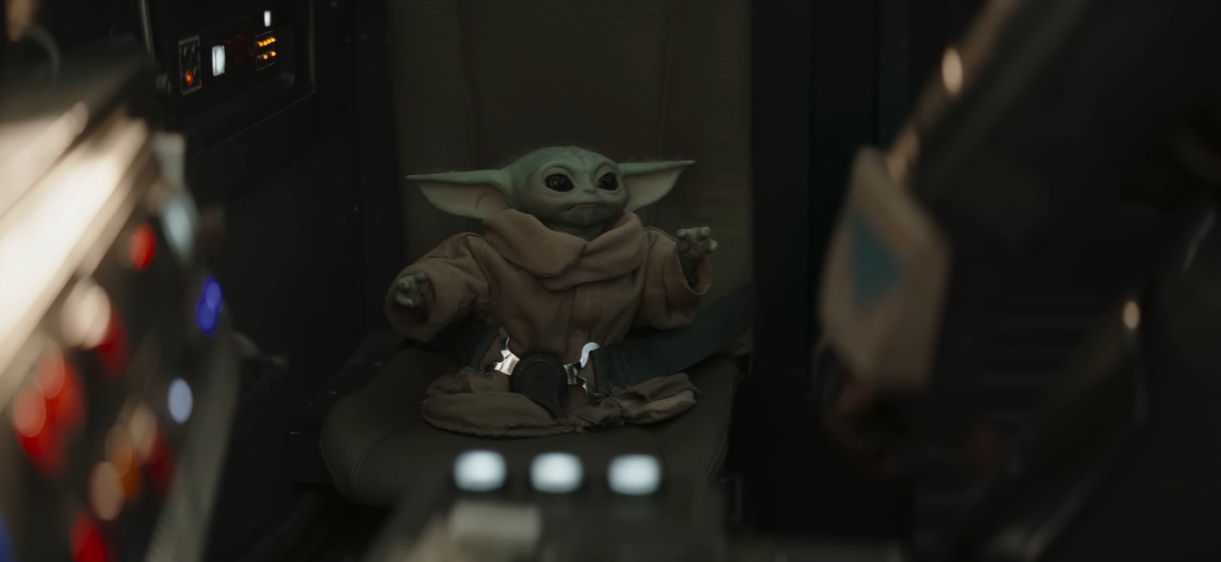
Grogu is no longer just sitting inside a floating pram while Din handles every dangerous situation. He has his own abilities, his own instincts and, increasingly, his own understanding of what it means to be a Mandalorian.
I actually prefer this direction for Grogu.
His story doesn’t have to become “Baby Yoda becomes another Jedi.” The character spent time with Luke Skywalker, but his connection to Din and the Mandalorian culture is just as important. The movie gets to explore what that combination looks like.
A Force-sensitive Mandalorian apprentice is a much more interesting idea than simply turning Grogu into another Jedi.
The New Republic Mission Pulls Them Back Into Trouble
The movie takes the job Din accepted at the end of Season 3 and turns it into the central engine of the story.
Din and Grogu have been operating on the edges of the galaxy, dealing with Imperial remnants and dangerous targets. Their independence gives the New Republic something it desperately needs: someone who can operate where official forces cannot.
That leads Din toward a much bigger threat.
A new Imperial figure, Commander Janu Coyne, becomes the focus of the New Republic’s investigation. Finding Coyne isn’t simply a matter of sending a fleet into space. The intelligence needed to locate him is tied to another power that has survived the fall of the Empire: the Hutts.
And this is where things become very Mandalorian again.
The Hutts aren’t suddenly irrelevant because Jabba is dead. His absence leaves a power vacuum, and the Hutt Twins are positioned to exploit it.
Their price for information is simple enough in theory: find and rescue Rotta the Hutt, Jabba’s young son and heir.
Of course, nothing involving the Hutts is ever actually simple.
Rotta the Hutt Brings the Criminal Underworld Back Into the Story
I like this part of the movie’s setup because it connects the new story to the older Star Wars universe without making everything about the Skywalker family.
Din has spent much of his life dealing with bounty hunters, criminals, mercenaries and people operating outside the law. The Hutt connection feels like a natural extension of that world.
The mission involving Rotta also puts Din and Grogu in a strange position.
They aren’t simply fighting an Imperial army.
They’re navigating a situation where the New Republic, the Hutt syndicates, Imperial remnants and independent bounty hunters all have different interests.
That makes the story feel closer to the original identity of The Mandalorian: a western set in space where every job has another problem hiding underneath it.
What Happened to Din’s Razor Crest?
There is another nice piece of continuity here.
Fans haven’t forgotten the original Razor Crest.
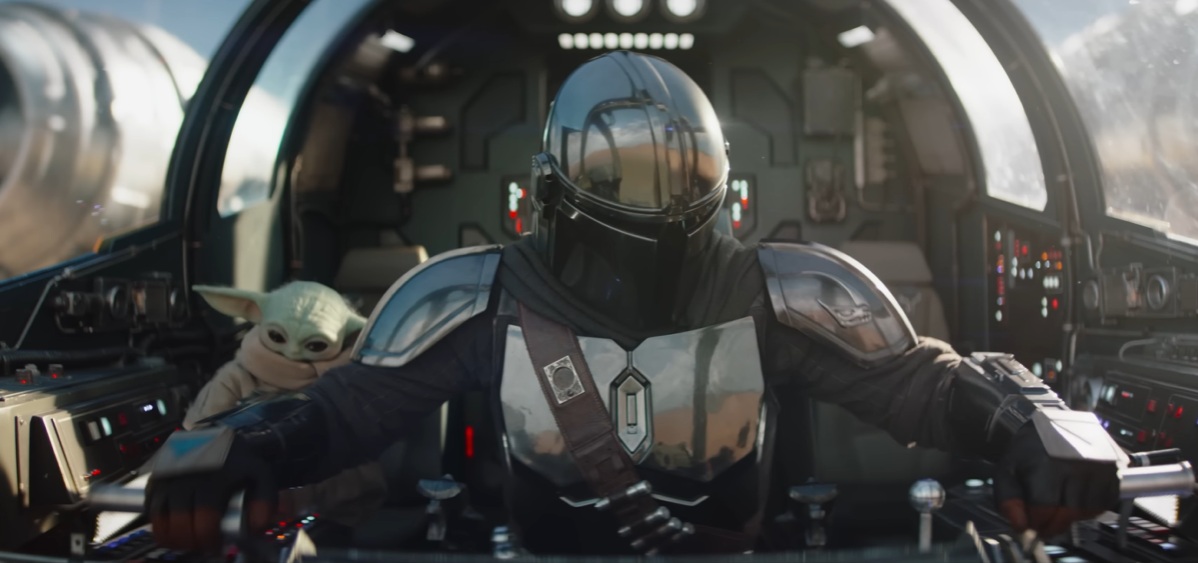
That ship became almost as recognizable as Din himself before its destruction in Season 2. Afterward, Din used the sleek Naboo N-1 Starfighter, which looked fantastic but was never a practical replacement for a ship designed to carry a bounty hunter and his equipment.
The movie addresses that problem by giving Din a larger vessel again.
It makes sense from a storytelling perspective. Din and Grogu are now traveling together as a working team, and a tiny starfighter isn’t exactly ideal for long missions, prisoners, weapons and everything else a Mandalorian might need.
The new ship also gives the movie that familiar feeling of Din having a mobile home again.
It’s not the Razor Crest.
But it fills a similar role.
The Peaceful Nevarro Ending Doesn’t Last
This is where the movie hits Season 3 emotionally.
The cabin on Nevarro represented something Din had rarely been allowed to have: stability.
He had spent most of his life moving from one job to another. Then, finally, he had somewhere to return to.
The Imperial Remnant doesn’t care.
A bounty is placed on Din, and the bounty hunters eventually track him back to his home. The arrival of Embo turns that peaceful sanctuary into another battlefield, and the destruction of the cabin is more than a cool action moment.
It effectively destroys the illusion that Din can simply retire from the dangerous life.
His old existence comes back to collect him.
And Grogu is dragged into that life alongside him.
Grogu Finally Gets to Save His Father
One of my favorite changes in the father-son relationship is the reversal of their usual roles.
Din has spent years saving Grogu.
Now Grogu gets the chance to save Din.
When Din is captured during the conflict involving the Hutt syndicates, Grogu can’t simply wait for someone stronger to arrive. He has to act. With help from the Anzellans, he becomes part of the rescue effort.
That gives Grogu agency.
More importantly, it shows that Din’s decision to raise him as a Mandalorian wasn’t just symbolic. Grogu is becoming someone who can stand beside his father instead of hiding behind him.
His Force abilities remain important, but the movie isn’t treating those powers as his entire identity.
He’s becoming Din Grogu in the fullest sense.
How to Watch The Mandalorian and Grogu Full Movie HD Online: Best Streaming Options
Where Does Din Djarin Go After the Movie?
The movie’s ending also reinforces something that has been true about Din from the beginning.
The New Republic offers him a more permanent position.
He refuses.
That might sound strange after everything he’s done for them, but it fits his character perfectly.
Din doesn’t want to become a government officer. He doesn’t want his entire identity defined by an institution. He wants to choose his own missions, protect the people he cares about and remain connected to the Mandalorian way.
So he keeps his independence.
That doesn’t mean he’s abandoning the New Republic. Quite the opposite. He remains willing to help when the situation calls for it.
The difference is that Din Djarin chooses when and how he fights.
Why the Movie’s Connection to Season 3 Works
The strongest thing about The Mandalorian and Grogu isn’t simply that it continues the plot.
It’s that it continues the character decisions.
- Grogu grows from a protected child into an active Mandalorian apprentice.
- Din becomes a father who has to accept that his son can fight beside him.
- Nevarro represents the peaceful life Din wants but can’t completely maintain.
- The New Republic gives Din a reason to keep working without taking away his independence.
- The Imperial Remnant reminds everyone that the Empire’s defeat didn’t erase its influence.
- The Hutts reconnect the story to the criminal world that has always been part of Din’s adventures.
That’s why the movie feels less like a spin-off and more like the next chapter.
For me, that’s the right approach. The Mandalorian has always worked best when the huge Star Wars mythology is present in the background while the emotional center remains surprisingly simple.
A father.
A son.
A battered ship.
A dangerous galaxy.
And one more job that was supposed to be easy.
It never is.