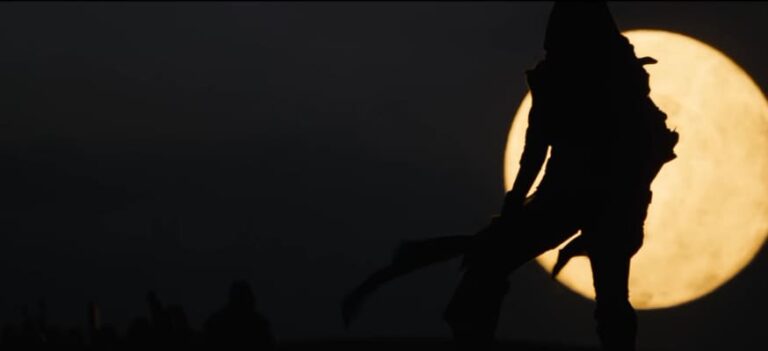
The Last House is the kind of movie that makes a simple question — “What would you do if you couldn’t leave your house?” — suddenly feel genuinely terrifying. Directed by Louis Leterrier and starring Greta Lee and Wagner Moura, this 2026 sci-fi survival thriller takes a very ordinary suburban nightmare and stretches it into something much stranger, darker, and considerably more uncomfortable.
I’ll admit, the premise grabbed me almost immediately. There is something deeply unsettling about being trapped somewhere that is supposed to be the safest place in the world. Your own front door becomes a wall. Your windows become screens rather than exits. The street is right there, close enough to see, yet completely unreachable.
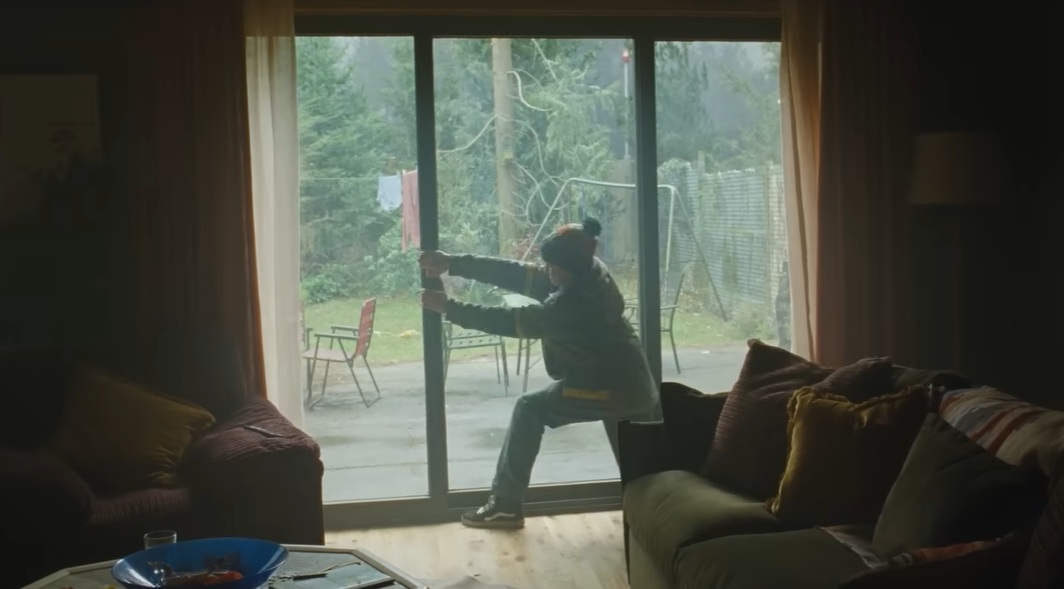
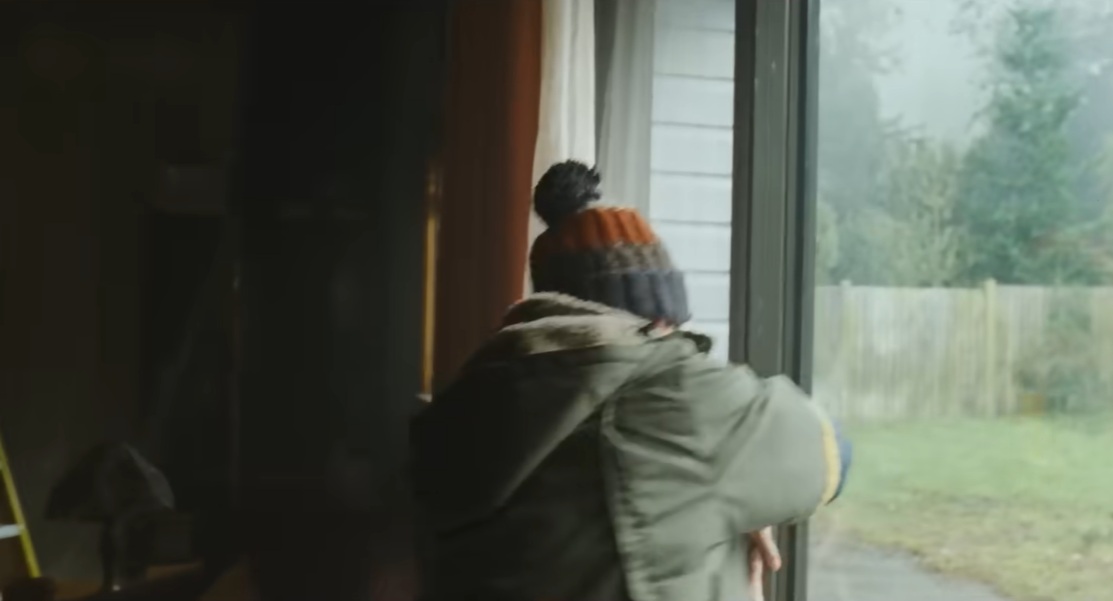
That is the basic nightmare at the heart of The Last House. Ann and Jason Delgado wake up with their children and discover that every possible way out of their home has been sealed by an impossible crystalline barrier. Breaking a window does nothing. The front door refuses to move. Even smashing a car through the garage ends with the vehicle wrecked against something that cannot be seen.
And that is only the beginning.
Where to Watch The Last House in the US
If you are wondering where to watch The Last House legally in the United States, the answer is refreshingly simple. The movie premiered globally on Friday, August 7, 2026, as a Netflix Original and went directly to streaming instead of opening in theaters.
That means US viewers can watch it through an active Netflix subscription. There is currently no need to hunt through multiple digital storefronts trying to find the movie.
| Netflix Plan | What You Get |
|---|---|
| Standard with Ads | Full HD streaming on supported devices with advertising |
| Standard | Full HD streaming without ads on up to two supported devices |
| Premium | 4K Ultra HD, HDR/Dolby Vision, Dolby Atmos and up to four supported devices |
The Last House is not currently available as a traditional rental or purchase through services such as Apple TV, Fandango At Home, Google Play, or Amazon’s digital movie store. Considering how Netflix handles many of its original films, I wouldn’t expect that situation to change quickly.
There is also an interesting consequence to the movie’s release strategy. Because The Last House bypassed a conventional theatrical run and went straight to streaming, it is not eligible for the 2027 Academy Awards under the circumstances described in the film’s release model.
A Brilliantly Simple Horror Setup
The first thing that works about The Last House is how little it needs to explain at the start.
Ann Delgado, played by Greta Lee, is trying to keep her family together while Jason, played by Wagner Moura, approaches the situation more like an engineering problem. Neither response is exactly wrong. That is what makes their conflict interesting.
Jason wants to understand the barrier. Ann wants to understand what is happening to the children.
Then they realize the problem isn’t limited to their own house.
Through windows and improvised messages written on whiteboards, the family discovers that neighboring homes have been sealed too. Every house has effectively become its own prison. There is no reliable internet connection, no cellular service, and no obvious explanation for why this is happening.
This is where the film becomes much more interesting than a standard “family trapped in a house” thriller.
The danger isn’t simply something waiting outside the door. The real threat is time.
Food disappears. Water becomes harder to manage. Electricity becomes unreliable. Familiar household objects slowly stop working. The family has to ration everything, and every failed experiment with the barrier costs them another piece of hope.
Greta Lee and Wagner Moura Carry the Movie
The cast is probably the biggest reason the slower stretches remain watchable.
Greta Lee brings a completely different energy from her acclaimed work in Past Lives. Ann isn’t written as some flawless survival-machine character. She is frightened, exhausted, angry and increasingly desperate. Lee sells those emotional shifts without making them feel like obvious “movie acting.”
Wagner Moura is equally good, especially when Jason’s confidence starts falling apart.
His character’s engineering background gives him a practical role in the family’s survival. He attempts to create water filtration systems from whatever materials remain inside the house and constantly looks for mechanical explanations for something that clearly doesn’t obey normal physics.
But eventually, the problem stops being mechanical.
That is when Moura gets some of his best moments. Jason isn’t just fighting whatever is outside. He’s fighting the possibility that his knowledge may be completely useless.
The House Becomes the Real Main Character
This is probably my favorite idea in the entire movie.
The Delgado house doesn’t remain visually unchanged while the story progresses. It ages with the family.
Walls deteriorate. Wallpaper peels away. Appliances fail. Furniture gets repurposed. Eventually, survival becomes so desperate that the family tears into the hardwood floor and attempts to grow food beneath their own home.
That physical deterioration gives the story a sense of time that dialogue alone couldn’t provide.
You’re not simply told that the family has been trapped for years. You see it.
The production design reportedly involved a large physical set that could be modified as the story moved forward. That decision pays off because the house gradually loses the warm suburban appearance it had at the beginning. By the later stages, it feels almost like a decaying bunker.
Louis Leterrier Goes Smaller — and That’s a Good Thing
Louis Leterrier is probably not the first director you’d expect to make a claustrophobic survival movie.
His career has included huge commercial projects such as Fast X, Now You See Me, and The Transporter. Those films thrive on movement, spectacle and scale. The Last House does almost the opposite.
Here, Leterrier has to make a handful of rooms feel enormous, threatening and increasingly suffocating.
One of the most interesting visual ideas is the repeated use of “frame within a frame” composition. Characters are often filmed through mirrors, holes, narrow gaps and pieces of the house itself. Even when they’re standing in a relatively large room, the cinematography makes them look boxed in.
I loved that choice because it isn’t just visual decoration. The movie’s characters are trapped physically, and the camera keeps reminding us that they are trapped visually too.
The early sections also benefit from the warmer texture of analog cinematography. The suburban environment initially feels familiar and almost comfortable, which makes the transformation into something hostile hit harder.
What Is Actually Outside?
This is where The Last House starts moving away from straightforward survival horror.
Without spoiling the major revelations, the endless rain becomes one of the movie’s central mysteries. Strange silhouettes begin appearing outside. Flooding changes the neighborhood. The environment becomes increasingly alien, and eventually the family realizes that something much more dangerous than bad weather is moving through the streets.
The film mixes cosmic horror, environmental science fiction and family survival drama. There are creatures involved, but they aren’t treated like ordinary movie monsters. Their presence is tied to a much larger idea about humanity’s relationship with nature and the consequences of pushing an ecosystem beyond its limits.
Some viewers will absolutely love this direction.
Others may find it too ambitious for the relatively grounded first half.
I’m somewhere in the middle. I liked the weirdness, but I also understand why some critics have complained that the final act doesn’t completely live up to the rules established earlier. The movie asks some very interesting questions, then occasionally gives answers that feel more convenient than satisfying.
Ruth May Be the Key to Everything
The children aren’t simply background characters waiting for their parents to solve the mystery.
Ruth, the younger daughter, becomes particularly important as the story progresses. She seems to sense something about the creatures outside long before Ann and Jason understand what they’re dealing with.
Her strange connection to the things beyond the barrier gives the final portion of the movie an almost mythological quality. It also raises the biggest question of the story: are the Delgado family and their neighbors actually being punished, protected, studied, or simply caught in something far larger than humanity can understand?
The film doesn’t make every answer comfortable.
Why Critics and Audiences Are Divided
The online response to The Last House has been all over the place, and honestly, that makes sense.
The movie currently sits around 35% on Rotten Tomatoes and 45/100 on Metacritic, reflecting a critical response that has been considerably colder than the enthusiasm surrounding some aspects of the film online.
The biggest complaint concerns the screenplay. Matthew Robinson’s script spends a long time building rules around the mysterious barrier, resource management and the increasingly strange environment. That slow construction creates tension, but it also creates expectations.
When the final act starts introducing more conventional monster-movie ideas, some of those carefully established rules become harder to reconcile.
Personally, I think this is where the movie is going to split viewers.
If you need every piece of science fiction mythology to fit together perfectly, the final stretch may frustrate you. If you enjoy movies that leave some strange corners unexplained, there is plenty here to chew on after the credits.
What Fans Are Talking About Online
Discussion around The Last House has focused heavily on the premise, the visual symbolism and the ending. Reddit communities, Letterboxd users and movie-review channels have been debating whether the film’s ideas are genuinely original or simply a polished studio version of concepts seen in recent experimental horror.
One comparison that keeps coming up is the 2025 German sci-fi thriller Brick, which also plays with the idea of people being inexplicably trapped inside their own homes.
The comparison is fair, although the execution is very different. The Last House has considerably more money behind it, a larger cast, bigger visual ambitions and a director accustomed to mainstream spectacle.
There is also plenty of praise for the cinematography. Fans have been freezing frames and sharing shots that reveal how frequently the characters are boxed inside architectural shapes. Mirrors, doorways, floor openings and narrow corridors repeatedly turn the house into a visual prison.
Those details are exactly the sort of thing I appreciate in a thriller. Even when the story isn’t working perfectly, the filmmakers are still giving you something to look at.
Hunter Doohan in Evil Dead Burn (2026): Role, Shocking Fate, and Character Ending Explained
Is The Last House Worth Watching?
Yes — especially if you like ambitious sci-fi horror that isn’t afraid to get strange.
I wouldn’t call The Last House flawless. The middle section can drag, and the final act asks the audience to accept some fairly big leaps. There are also moments where the screenplay seems caught between wanting to be an intelligent psychological thriller and wanting to deliver a full-blown creature feature.
But the good stuff is genuinely good.
Greta Lee and Wagner Moura make the family believable. The deteriorating house gives the movie an unusually strong sense of time. Leterrier’s direction is more restrained than his blockbuster work, and the visual framing creates a constant feeling of confinement.
Most importantly, the movie has an idea.
It isn’t simply “family trapped in house while monsters attack.” It is asking what happens when the things we depend on — technology, infrastructure, food systems, electricity, even the walls protecting us — suddenly stop working.
And that makes the basic premise surprisingly effective.
If you’re in the US and already have Netflix, The Last House is an easy movie to add to your weekend watchlist. Turn the lights down, put your phone away and give it enough attention to appreciate the visual details. Just don’t expect every mystery to receive a perfectly neat answer.
Sometimes the most interesting horror is the kind that leaves you staring at the ceiling afterward, wondering whether the explanation you were given actually makes sense.